Loading...
Done
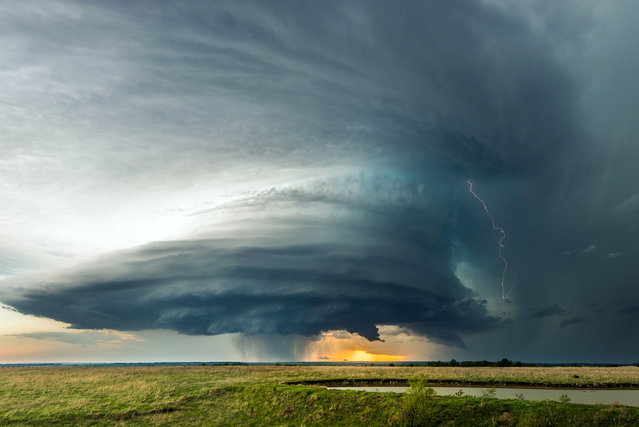
Talk about being in the eye of the storm! These stunning snaps show breath-taking storms from an extraordinary up-close perspective. Taken by daredevil storm chaser Dennis Oswald, from Neuss, Germany, the amazing pictures capture spectacular storms from around the globe. Having chased storms for nearly 15 years, experienced Dennis gets right in the action to get these incredible shots. Here: scenic mothership supercell just north of Howard, Kansas. (Photo by Dennis Oswald/Caters News)

Talk about being in the eye of the storm! These stunning snaps show breath-taking storms from an extraordinary up-close perspective. Taken by daredevil storm chaser Dennis Oswald, from Neuss, Germany, the amazing pictures capture spectacular storms from around the globe. Having chased storms for nearly 15 years, experienced Dennis gets right in the action to get these incredible shots. Here: scenic mothership supercell just north of Howard, Kansas. (Photo by Dennis Oswald/Caters News)
Details
11 Oct 2015 08:07:00
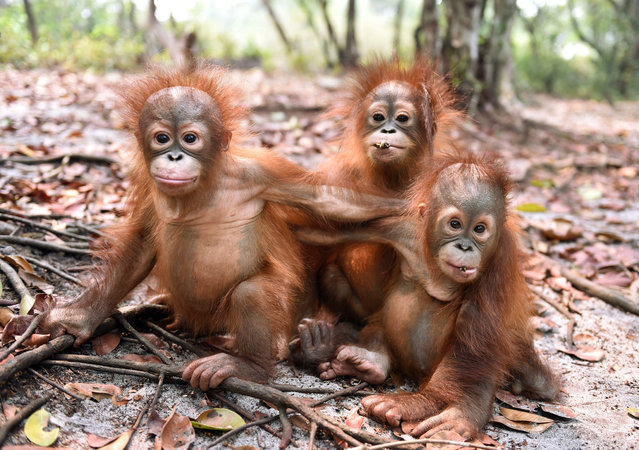
This handout picture taken and released by the Borneo Orangutan Survival Foundation (BOSF) on October 26, 2015 shows baby orangutans, which had previously suffered from respiratory problems, playing at a nursery in the rehabilitation centre operated by the BOSF on the outskirts of Palangkaraya in Central Kalimantan. (Photo by AFP Photo/Borneo Orangutan Survival Foundation/Indrayana)

This handout picture taken and released by the Borneo Orangutan Survival Foundation (BOSF) on October 26, 2015 shows baby orangutans, which had previously suffered from respiratory problems, playing at a nursery in the rehabilitation centre operated by the BOSF on the outskirts of Palangkaraya in Central Kalimantan. Endangered orangutans are falling victim to a devastating haze crisis that has left them sick, malnourished and severely traumatised as fires rage through Indonesia's forests, reducing their habitat to a charred wasteland. (Photo by AFP Photo/Borneo Orangutan Survival Foundation/Indrayana)
Details
02 Nov 2015 08:05:00
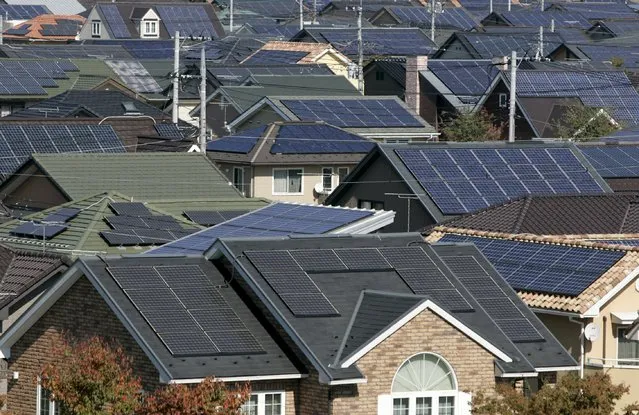
Rooftops of solar powered houses are pictured in Ota, 80 km northwest of Tokyo in this October 28, 2008 file photo. One by one, Japan is turning off the lights at the giant oil-fired power plants that propelled it to the ranks of the world's top industrialised nations. With nuclear power in the doldrums after the Fukushima disaster, it's solar energy that is becoming the alternative. (Photo by Yuriko Nakao/Reuters)

Rooftops of solar powered houses are pictured in Ota, 80 km northwest of Tokyo in this October 28, 2008 file photo. One by one, Japan is turning off the lights at the giant oil-fired power plants that propelled it to the ranks of the world's top industrialised nations. With nuclear power in the doldrums after the Fukushima disaster, it's solar energy that is becoming the alternative. Solar power is set to become profitable in Japan as early as this quarter, according to the Japan Renewable Energy Foundation (JREF), freeing it from the need for government subsidies and making it the last of the G7 economies where the technology has become economically viable. (Photo by Yuriko Nakao/Reuters)
Details
24 Nov 2015 08:04:00
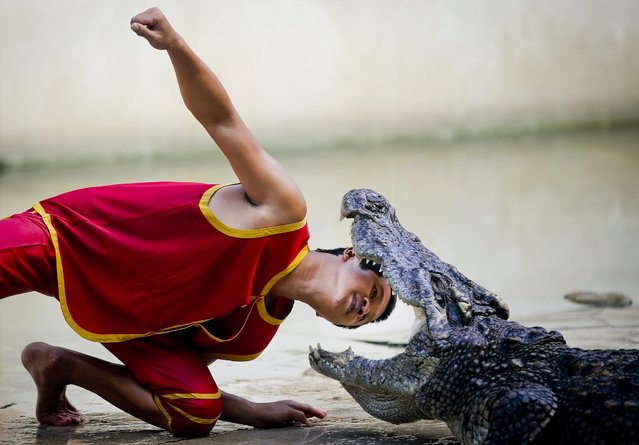
A picture made available 27 November 2015 shows a handler putting his head between the gaping fangs of a crocodile during a show at the Samutprakarn Crocodile Farm and Zoo, Samutprakarn province, outside Bangkok, Thailand, 26 November 2015. The farm and zoo claims to be the world's largest crocodile farm with more than 80,000 freshwater and marine crocodiles, and offers shows such as crocodile wrestling to attract tourists. (Photo by Diego Azubel/EPA)

A picture made available 27 November 2015 shows a handler putting his head between the gaping fangs of a crocodile during a show at the Samutprakarn Crocodile Farm and Zoo, Samutprakarn province, outside Bangkok, Thailand, 26 November 2015. The farm and zoo claims to be the world's largest crocodile farm with more than 80,000 freshwater and marine crocodiles, and offers shows such as crocodile wrestling to attract tourists. (Photo by Diego Azubel/EPA)
Details
28 Nov 2015 08:51:00
Darth Mykolaiovych Vader, who is dressed as the 'Star Wars' character Darth Vader, poses for a picture as he dries his mask and helmet with a hairdryer in the bathroom of his apartments in Odessa, Ukraine, December 2, 2015. (Photo by Valentyn Ogirenko/Reuters)

Darth Mykolaiovych Vader, who is dressed as the “Star Wars” character Darth Vader, poses for a picture as he dries his mask and helmet with a hairdryer in the bathroom of his apartments in Odessa, Ukraine, December 2, 2015. Darth Vader was bent on galactic domination, but his Ukrainian namesake enjoys more mundane pursuits: local politics, walking the family dog and a spot of embroidery. The Ukrainian citizen, who has changed his name to Darth Mykolaiovych Vader, ran for the post of local mayor in October, his political backers dressed as Stormtroopers. In his trademark black outfit, he is a regular sight around Odessa, a major port city on southern Ukraine's Black Sea coast. (Photo by Valentyn Ogirenko/Reuters)
Details
13 Dec 2015 08:06:00
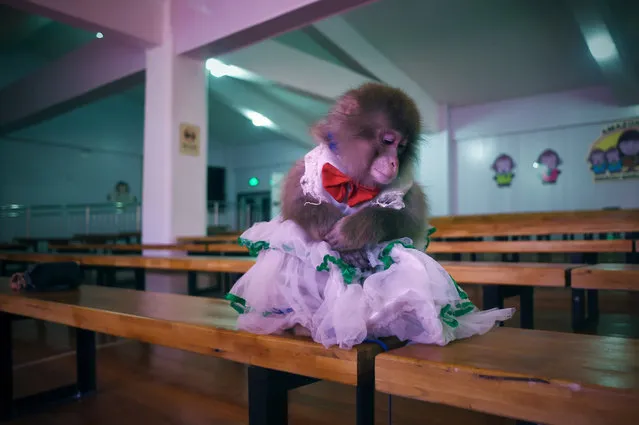
This picture taken on January 26, 2016 shows a monkey sitting on a bench during rehearsal at a monkey training school in a zoo in Dongying, eastern China's Shandong province. Shows featuring performing simians, popular in China and throughout Asia, are expecting a boost in the Lunar New Year of the monkey, which begins on February 8. But they are facing a growing backlash from Chinese people concerned about animal welfare. (Photo by Wang Zhao/AFP Photo)

This picture taken on January 26, 2016 shows a monkey sitting on a bench during rehearsal at a monkey training school in a zoo in Dongying, eastern China's Shandong province. Shows featuring performing simians, popular in China and throughout Asia, are expecting a boost in the Lunar New Year of the monkey, which begins on February 8. But they are facing a growing backlash from Chinese people concerned about animal welfare. (Photo by Wang Zhao/AFP Photo)
Details
09 Feb 2016 13:30:00
A picture made available on 07 March 2016 shows visitors petting and holding a Fennec fox, native to the Sahara, in the petting room at the Little Zoo Cafe, a business built to capitalize on Thais' love for exotic animals, and food, on the outskirts of Bangkok, Thailand, 05 March 2016. (Photo by Barbara Walton/EPA)

A picture made available on 07 March 2016 shows visitors petting and holding a Fennec fox, native to the Sahara, in the petting room at the Little Zoo Cafe, a business built to capitalize on Thais' love for exotic animals, and food, on the outskirts of Bangkok, Thailand, 05 March 2016. The cafe boasts Fennec foxes, Meerkat, native to parts of Africa, Silver Fox, Raccoon and Chinchillas, along with a menu of Thai food and Cheesecake, among other sweet deserts. Nature is a faraway fantasy in the bustling exhaust-filled cement city of Bangkok, fuelling a demand to own and be close to exotic pets. The trend to be near to a species that was once wild, in a city environment, far from the natural setting, has drawn criticism but continues to grow. (Photo by Barbara Walton/EPA)
Details
13 Mar 2016 09:38:00
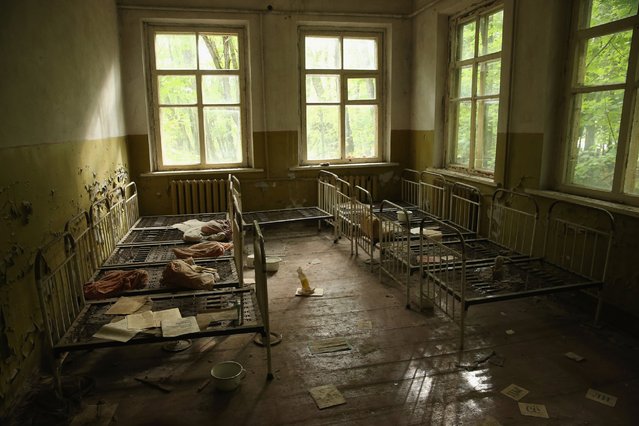
The 30th anniversary of the meltdown at the Chernobyl nuclear plant that caused large amounts of radioactive particles to be released into the air will be commemorated on April 26, 2016. Photojournalist Sean Gallup returned to the area to document the lasting effects of the world's worst nuclear power plant accident. Pictured, children's beds are seen in an abandoned kindergarten in Kopachi village located inside the Chernobyl exclusion zone, Sept. 29, 2015, near Chernobyl, Ukraine. (Photo by Sean Gallup/Getty Images)

The 30th anniversary of the meltdown at the Chernobyl nuclear plant that caused large amounts of radioactive particles to be released into the air will be commemorated on April 26, 2016. Photojournalist Sean Gallup returned to the area to document the lasting effects of the world's worst nuclear power plant accident. Pictured, children's beds are seen in an abandoned kindergarten in Kopachi village located inside the Chernobyl exclusion zone, September 29, 2015, near Chernobyl, Ukraine. (Photo by Sean Gallup/Getty Images)
Details
14 Apr 2016 12:01:00