Loading...
Done
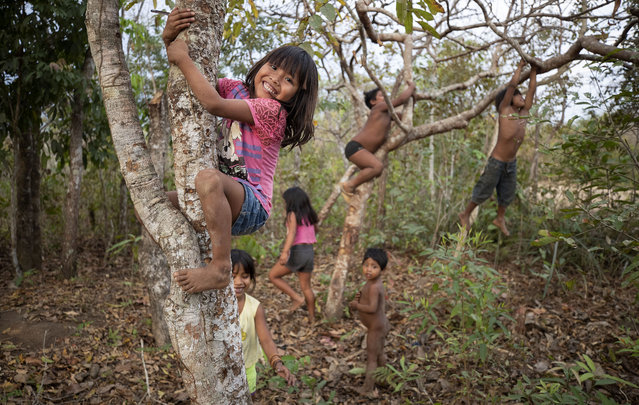
In this August 26, 2019 photo, children of the Nambikwara Sarare tribe climb trees as they play in their indigenous reserve in the southwestern Amazon, near Conquista D'Oeste, in the Brazilian state of Mato Grosso. About 98% of all Brazil’s indigenous lands lie within the Amazon. (Photo by Andre Penner/AP Photo)

In this August 26, 2019 photo, children of the Nambikwara Sarare tribe climb trees as they play in their indigenous reserve in the southwestern Amazon, near Conquista D'Oeste, in the Brazilian state of Mato Grosso. About 98% of all Brazil’s indigenous lands lie within the Amazon. (Photo by Andre Penner/AP Photo)
Details
31 Aug 2019 00:01:00
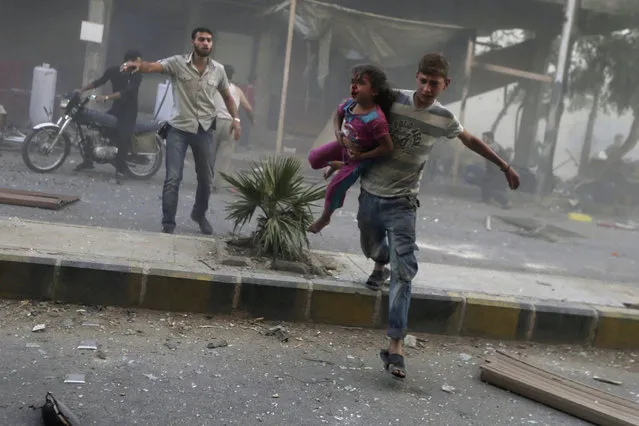
A man carries an injured girl after what activists said were five air strikes by forces loyal to Syria's President Bashar al-Assad in Douma, eastern al-Ghouta, near Damascus September 11, 2014. (Photo by Bassam Khabieh/Reuters)

A man carries an injured girl after what activists said were five air strikes by forces loyal to Syria's President Bashar al-Assad in Douma, eastern al-Ghouta, near Damascus September 11, 2014. (Photo by Bassam Khabieh/Reuters)
Details
26 Mar 2016 12:40:00
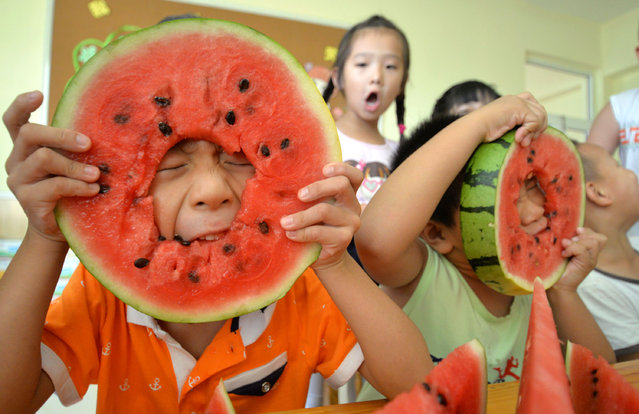
Children eat watermelons to meet the “beginning of autumn” at a kindergarten in Handan, China on August 7, 2015. Chinese tradition to eat watermelons or peaches before that day symbolises “biting away summer”. The solar term ‘beginning of autumn’ falls on 8 August this year. (Photo by Xinhua/REX Shutterstock)

Children eat watermelons to meet the “beginning of autumn” at a kindergarten in Handan, China on August 7, 2015. Chinese tradition to eat watermelons or peaches before that day symbolises “biting away summer”. The solar term ‘beginning of autumn’ falls on 8 August this year. (Photo by Xinhua/REX Shutterstock)
Details
11 Aug 2015 14:29:00
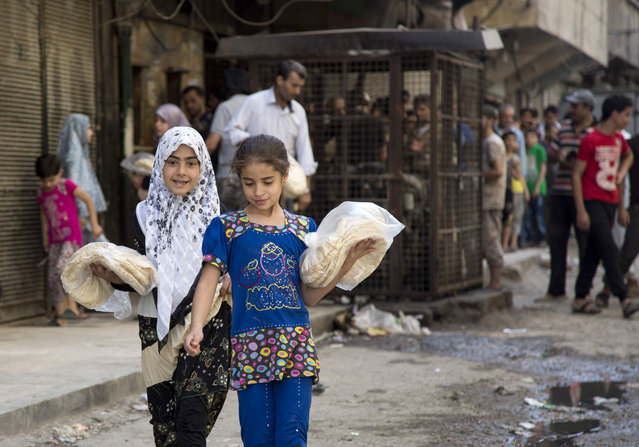
Syrian girls carry bags with bread as people queue up outisde a bakery in a rebel held neighbourhood in the northern city of Aleppo on July 12, 2016. Since mid-2012, Aleppo has been roughly divided between government control in the west and rebel control in the east, and has suffered enormous destruction in the war that has killed more than 280,000 people nationwide. Last week, a government advance brought regime troops within firing range of the Castello Road, the only remaining supply route into the opposition-held east, effectively severing rebel neighbourhoods from the outside world. With their route to the outside world cut, there is no new flour coming to the city's bakeries, and fuel to light their ovens is also now hard to find. (Photo by Karam Al-Masri/AFP Photo)

Syrian girls carry bags with bread as people queue up outisde a bakery in a rebel held neighbourhood in the northern city of Aleppo on July 12, 2016. Since mid-2012, Aleppo has been roughly divided between government control in the west and rebel control in the east, and has suffered enormous destruction in the war that has killed more than 280,000 people nationwide. Last week, a government advance brought regime troops within firing range of the Castello Road, the only remaining supply route into the opposition-held east, effectively severing rebel neighbourhoods from the outside world. With their route to the outside world cut, there is no new flour coming to the city's bakeries, and fuel to light their ovens is also now hard to find. (Photo by Karam Al-Masri/AFP Photo)
Details
08 Aug 2016 10:02:00
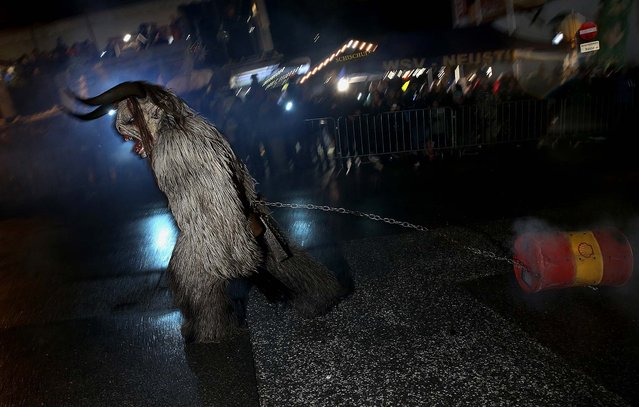
A participant dressed as the Krampus creature pulls a barrel of fire past onlookers during his search for delinquent children in Neustift im Stubaital. (Photo by Sean Gallup)

“Krampus is a beast-like creature from the folklore of Alpine countries thought to punish children during the Yule season who had misbehaved, in contrast with Saint Nicholas, who rewards well-behaved ones with gifts. Krampus is said to capture particularly naughty children in his sack and carry them away to his lair”. – Wikipedia. Photo: A participant dressed as the Krampus creature pulls a barrel of fire past onlookers during his search for delinquent children in Neustift im Stubaital. (Photo by Sean Gallup)
Details
05 Dec 2013 08:29:00
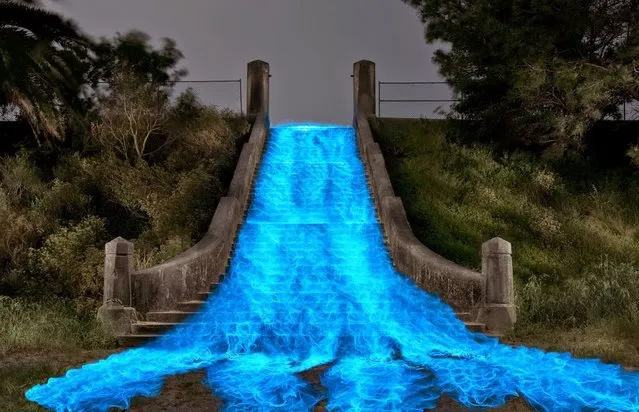
Winner of the NSW (New South Wales) prize: Peter Solness said: “I wanted to re-imagine the lost waterways, so I got my light-painting tools to work. In this image, water is being released from the top of the historic Centennial Park No. 2 Reservoir, which was built in 1925 and holds 90 megalitres of water. After 89 years of incarceration these waters now run free!”. (Photo by Peter Solness/Head On)

Touching and dramatic portraits and landscape shots have won prizes at Australia's prestigious photography prize. Photo: Winner of the NSW (New South Wales) prize: Peter Solness said: “I wanted to re-imagine the lost waterways, so I got my light-painting tools to work. In this image, water is being released from the top of the historic Centennial Park No. 2 Reservoir, which was built in 1925 and holds 90 megalitres of water. After 89 years of incarceration these waters now run free!”. (Photo by Peter Solness/Head On)
Details
21 May 2014 11:11:00
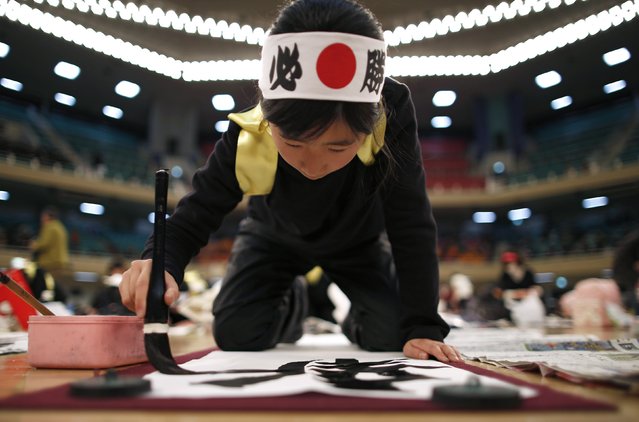
A Japanese girl participates in a calligraphy contest to the celebrate the New Year in Tokyo January 5, 2015. Over 3,000 calligraphers, having qualified in country wide competitions throughout Japan, took part in the annual contest to celebrate the new year. (Photo by Issei Kato/Reuters)

A Japanese girl participates in a calligraphy contest to the celebrate the New Year in Tokyo January 5, 2015. Over 3,000 calligraphers, having qualified in country wide competitions throughout Japan, took part in the annual contest to celebrate the new year. (Photo by Issei Kato/Reuters)
Details
06 Jan 2015 11:51:00
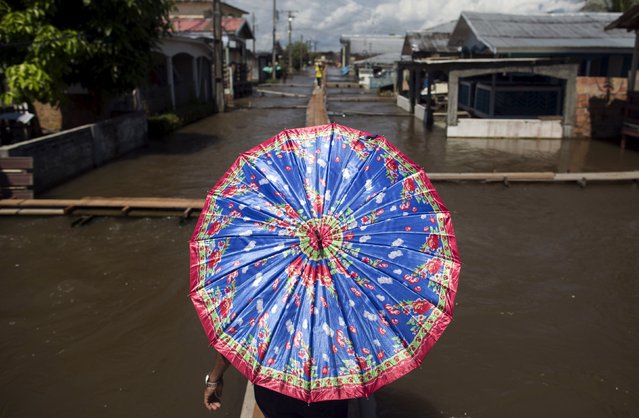
A resident walks on a makeshift walkway above a flooded street from the rising Rio Solimoes, one of the two main branches of the Amazon River, in Careiro da Varzea of Amazonas State, Brazil, June 30, 2015. According to the state Civil Defense, more than 460,000 people were affected by strong rains in the state. (Photo by Bruno Kelly/Reuters)

A resident walks on a makeshift walkway above a flooded street from the rising Rio Solimoes, one of the two main branches of the Amazon River, in Careiro da Varzea of Amazonas State, Brazil, June 30, 2015. According to the state Civil Defense, more than 460,000 people were affected by strong rains in the state. (Photo by Bruno Kelly/Reuters)
Details
02 Jul 2015 14:03:00