Loading...
Done
«Photoswapped» By Paul Ripke

“Photoswapped: Mum and dads switch heads with their children in freakiest photos you'll ever see. It is a position that many young children would love to be in. And now these strange and sometimes unnerving images show what it would actually be like if babies swapped roles, and heads, with their mother or father. The photos, created by top advertising photographer Paul Ripke, are so eye-catching that they have swept across the world online”. (Photo by Paul Ripke/Barcroft Media via Fame Pictures)
Details
14 Jan 2012 12:44:00
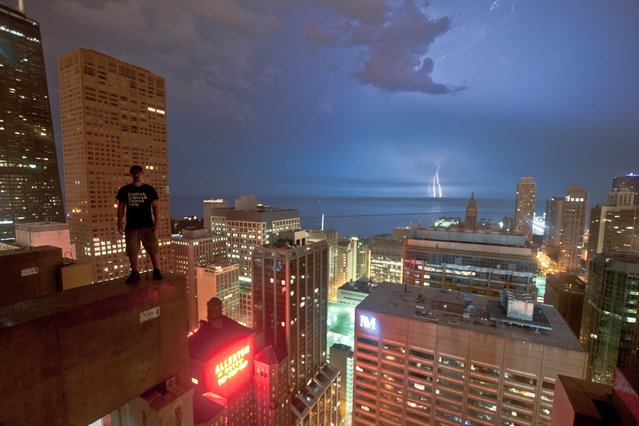
Bradley Garrett stands on the edge of the Ritz-Carlton Chicago as lightning strikes in the distance in Chicago, US. (Photo by Bradley L. Garrett/Barcroft Media)

These photographs are the work of urban explorer Dr Bradley Garrett who made headlines back in 2012 when he posted a series of snaps from the top of The Shard skyscraper while it was still under construction. Garrett, now a researcher at the University of Oxford, took these shots during his time with the London Consolidation Crew (LCC), a loose collection of urban explorers based in the English capital. Photo: Bradley Garrett stands on the edge of the Ritz-Carlton Chicago as lightning strikes in the distance in Chicago, US. (Photo by Bradley L. Garrett/Barcroft Media)
Details
24 Sep 2013 08:09:00
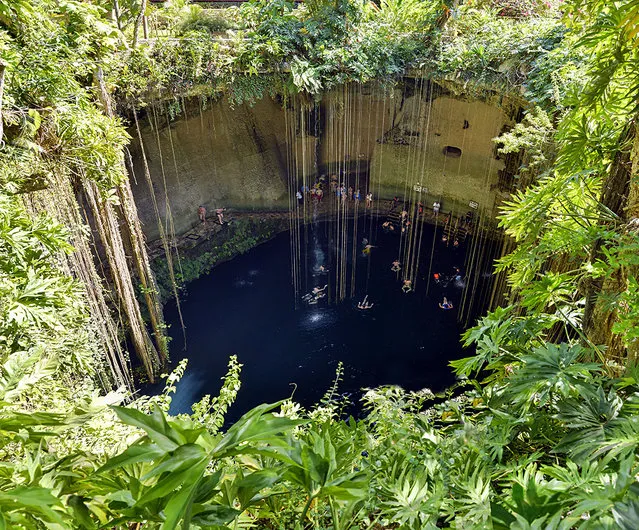
Cenote In Mexico

A cenote is a natural phenomenon, a sinkhole in the Earth’s surface. The Yucatan Peninsula in Mexico has an estimated 7,000 cenotes because it is primarily made up of porous limestone. For millions of years, rainfall slowly ate away at the limestone and a huge system of underground caves and caverns was formed. Many filled with water from rain or from the underground water table. When the roof of a water filled cave collapses, a cenote is born. The water found in a cenote may be fresh water, salt water, or both. Structurally it may be completely open, like a lake, almost completely closed with just a small opening at the top, or somewhere in between.
Details
06 Oct 2013 09:45:00
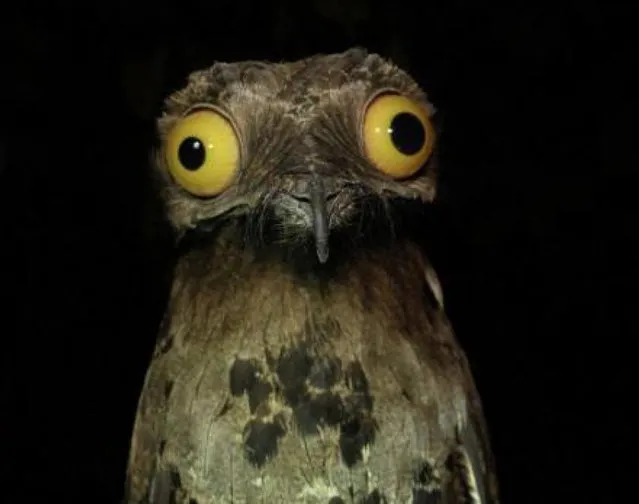
Nightjars And Pooto Bird

Potoos (family Nyctibiidae) are a group of near passerine birds related to the nightjars and frogmouths. They are sometimes called Poor-me-ones, after their haunting calls. There are seven species in one genus, Nyctibius, in tropical Central and South America.
These are nocturnal insectivores which lack the bristles around the mouth found in the true nightjars. They hunt from a perch like a shrike or flycatcher. During the day they perch upright on tree stumps, camouflaged to look like part of the stump. The single spotted egg is laid directly on the top of a stump.
Details
20 Jan 2014 14:34:00
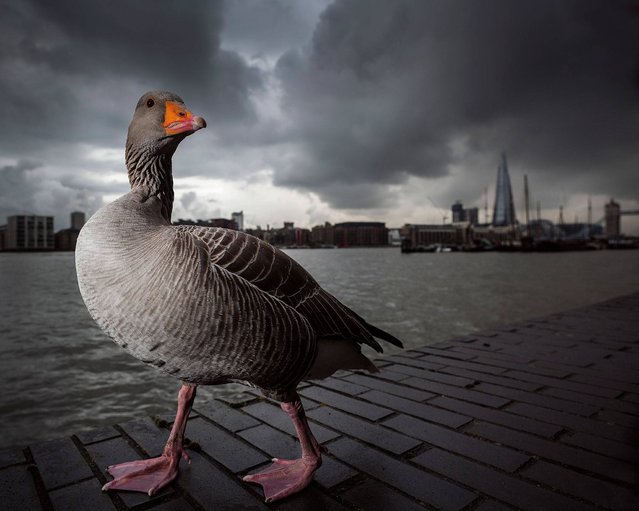
“Urban Tourist (Graylag Goose)”. Urban category and overall winner. (Photo by Lee Acaster/British Wildlife Photography Awards 2014)

The British Wildlife Photography Awards winners have been revealed, with Lee Acaster from Suffolk taking home the top prize for his shot of a Graylag Goose in London. Acaster, who received £5,000, photographed the animal against an ominous London skyline, with The Shard clearly visible in the background. Here: “Urban Tourist (Graylag Goose)”. Urban category and overall winner. (Photo by Lee Acaster/British Wildlife Photography Awards 2014)
Details
02 Sep 2014 12:24:00
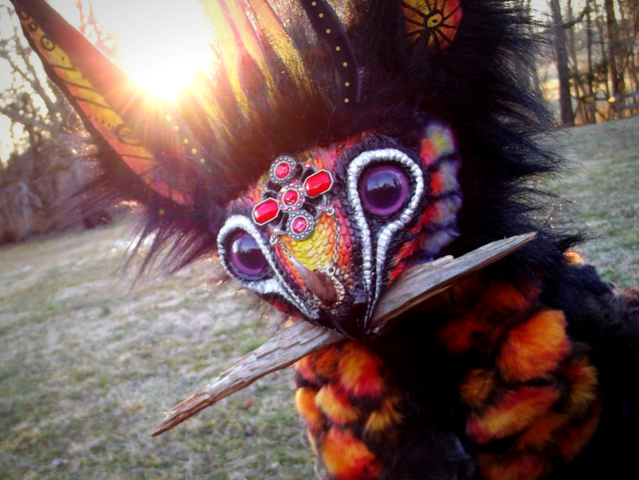
Fantasy Animals By Wood-Splitter-Lee

This deviantART artist Wood-Splitter-Lee creates her own animal sculptures without the use of any dead carcasses. The basis of each animal's shape is made out of materials such as wood, clay and chicken wire, and is then wrapped up in a soft padding. On top of that, she adds imitation fur that she hand dyes and as many details and decorative elements as she sees fit. The result are truly one-of-a-kind fantasy creatures.
Details
30 Jun 2014 12:31:00
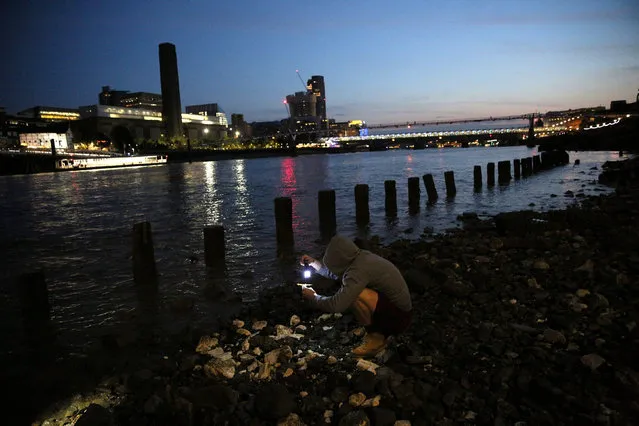
A mudlark uses a torch to look for items on the bank of the River Thames in London, Britain June 06, 2016. Mudlarking is believed to trace its origins to the 18th and 19th century, when scavengers searched the Thames' shores for items to sell. These days, history and archaeology fans are the ones hoping to find old relics such as coins, ceramics, artifacts or everyday items from across centuries. They wait for the low tide and then scour specific areas of exposed shores. "If you're in a field you could be out all day long, with the river you're restricted to about two or three hours," mudlark Nick Stevens said. While many just use the naked eye for their searches, others rely on metal detectors for which a permit from the Port of London Authority is needed. Digging also requires consent. (Photo by Neil Hall/Reuters)

A mudlark uses a torch to look for items on the bank of the River Thames in London, Britain June 06, 2016. Mudlarking is believed to trace its origins to the 18th and 19th century, when scavengers searched the Thames' shores for items to sell. These days, history and archaeology fans are the ones hoping to find old relics such as coins, ceramics, artifacts or everyday items from across centuries. their finds with the Portable Antiquities Scheme. Any item over 300 years old must be recorded. (Photo by Neil Hall/Reuters)
Details
27 Aug 2016 10:43:00
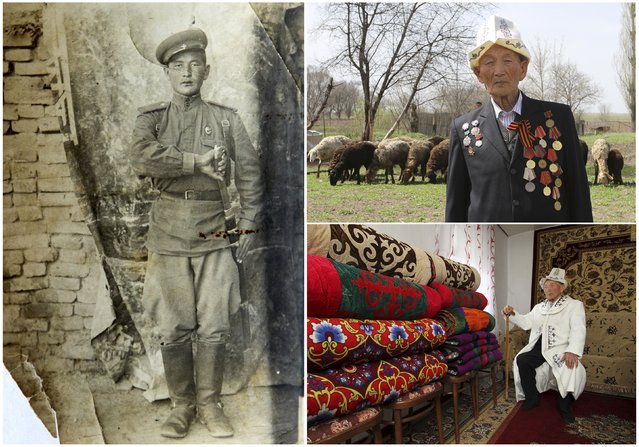
World War Two veteran Abla Begaliyev, 91, is seen in an undated handout picture (L), poses for a picture in Arashan (Top R) and at home in Kyrgyzstan April 14, 2015. Begaliyev served in the border guard cavalry from February 1942 until April 1947. Originally from Kyrgyzstan, he fought on the Ukrainian front and relocated to the border with Afghanistan at the end of World War Two. (Photo by Vladimir Pirogov/Reuters/Family handout (L))

World War Two veteran Abla Begaliyev, 91, is seen in an undated handout picture (L), poses for a picture in Arashan (Top R) and at home in Kyrgyzstan April 14, 2015. Begaliyev served in the border guard cavalry from February 1942 until April 1947. Originally from Kyrgyzstan, he fought on the Ukrainian front and relocated to the border with Afghanistan at the end of World War Two. As the world marks the 70th anniversary of the end of World War Two, Reuters photographers the length and breadth of the former Soviet republics (CCCP) captured portraits of Red Army veterans, mostly now in their 80s and 90s, today and through archive pictures at the time. More than 20 million Soviet citizens were killed in the war. (Photo by Vladimir Pirogov/Reuters/Family handout (L))
Details
08 May 2015 14:22:00