Loading...
Done
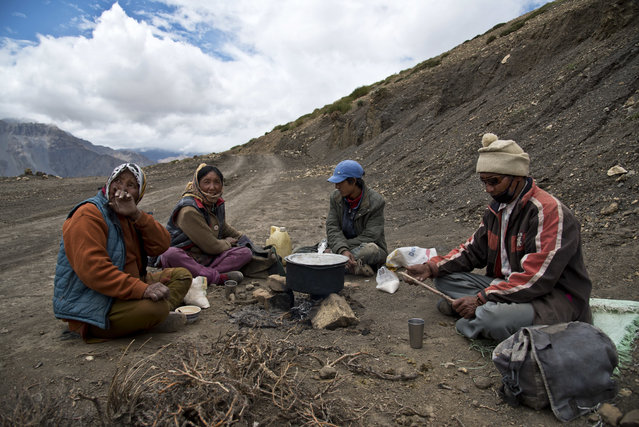
In this August 17, 2016, photo, from left to right, Chhering Chodom, 60, Tashi Yangzom, 50, Lobsang Chhering, 27, and Dorje Tandup, 58, drink milk tea on the side of the road. For centuries, the sleepy valley nestled in the Indian Himalayas remained a hidden Buddhist enclave forbidden to outsiders. Enduring the harsh year-round conditions of the high mountain desert, the people of Spiti Valley lived by a simple communal code – share the Earth's bounty, be hospitable to neighbors, and eschew greed and temptation at all turns. That's all starting to change, for better or worse. Since India began allowing its own citizens as well as outsiders to visit the valley in the early 1990s, tourism and trade have boomed. And the marks of modernization, such as solar panels, asphalt roads and concrete buildings, have begun to appear around some of the villages that dot the remote landscape at altitudes above 4,000 meters (13,000 feet). (Photo by Thomas Cytrynowicz/AP Photo)

In this August 17, 2016, photo, from left to right, Chhering Chodom, 60, Tashi Yangzom, 50, Lobsang Chhering, 27, and Dorje Tandup, 58, drink milk tea on the side of the road. For centuries, the sleepy valley nestled in the Indian Himalayas remained a hidden Buddhist enclave forbidden to outsiders. Enduring the harsh year-round conditions of the high mountain desert, the people of Spiti Valley lived by a simple communal code – share the Earth's bounty, be hospitable to neighbors, and eschew greed and temptation at all turns. That's all starting to change, for better or worse. (Photo by Thomas Cytrynowicz/AP Photo)
Details
15 Sep 2016 09:22:00
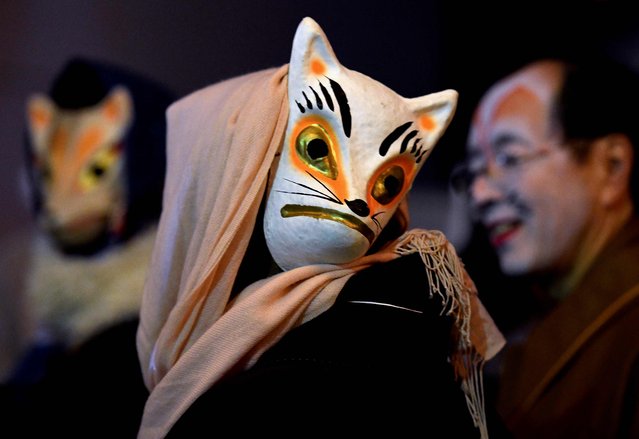
Residents in fox makeup participate in the Oji Fox parade to thank the outgoing and welcome the incoming year at the Oji Inari shrine in Tokyo late on December 31, 2017. (Photo by Toshifumi Kitamura/AFP Photo)

Residents in fox makeup participate in the Oji Fox parade to thank the outgoing and welcome the incoming year at the Oji Inari shrine in Tokyo late on December 31, 2017. (Photo by Toshifumi Kitamura/AFP Photo)
Details
30 Jan 2018 06:58:00
Bo (pictured) is president and co-founder of Grown Men On Bikes (GMOB), one of the oldest groups at Slow Roll. Bo spent $1,300 getting a one-off low-rider custom bike build – but that’s just the start. “Once I go back in it’s going to get big”, he says. “I’m going to get a custom seat, wheels, paint” … The finished bike could cost around $3,000 – but would still be far cheaper than pimping a car. “This is much better. It’s a community. We party”. (Photo by Nick Van Mead)

“We take rusty old junk and we put love into it”. The old Motor City has a unique style in bicycles these days: from fat wheels and fake fuel tanks to stretched cycles with powerful sound systems – and even a family-sized BBQ. “Detroit’s custom bike scene developed alongside Slow Roll, a weekly cycle ride started in 2010 by Jason Hall and Mike MacKool. Now upwards of 2,000 people turn up each Monday to cruise a different part of the city. The week I go the crowd seems evenly split between black and white, male and female, city and suburbs. It’s the most inclusive cycle event I’ve ever witnessed”. (Photo by Jason Walker/Slow Roll Monday Nights)
Details
03 Nov 2016 12:33:00
Water pools on top of a water lily leaf after rain at Benchakitti Forest Park in Bangkok, Thailand on September 27, 2023. (Photo by Jorge Silva/Reuters)

Water pools on top of a water lily leaf after rain at Benchakitti Forest Park in Bangkok, Thailand on September 27, 2023. (Photo by Jorge Silva/Reuters)
Details
13 Nov 2023 00:03:00
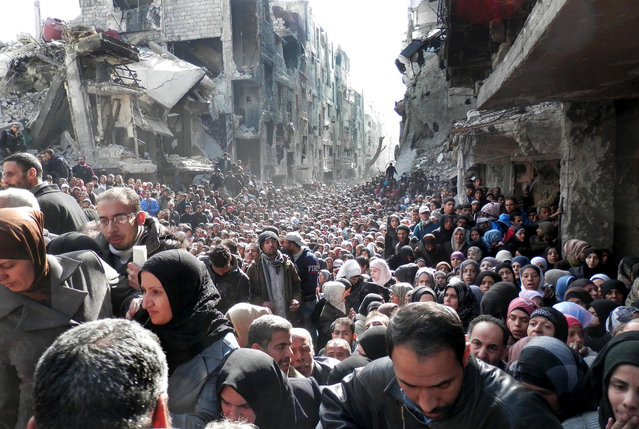
In this January 31, 2014 file photo released by the United Nations Relief and Works Agency for Palestine Refugees in the Near East (UNRWA), shows residents of the besieged Palestinian camp of Yarmouk, queuing to receive food supplies, in Damascus, Syria. That year, the U.N. was able to deliver food to about five percent of people in besieged areas including Yarmouk, while today estimates show the organization is reaching less than one percent. (Photo by UNRWA via AP Photo)

In this January 31, 2014 file photo released by the United Nations Relief and Works Agency for Palestine Refugees in the Near East (UNRWA), shows residents of the besieged Palestinian camp of Yarmouk, queuing to receive food supplies, in Damascus, Syria. That year, the U.N. was able to deliver food to about five percent of people in besieged areas including Yarmouk, while today estimates show the organization is reaching less than one percent. (Photo by UNRWA via AP Photo)
Details
07 Feb 2016 06:36:00
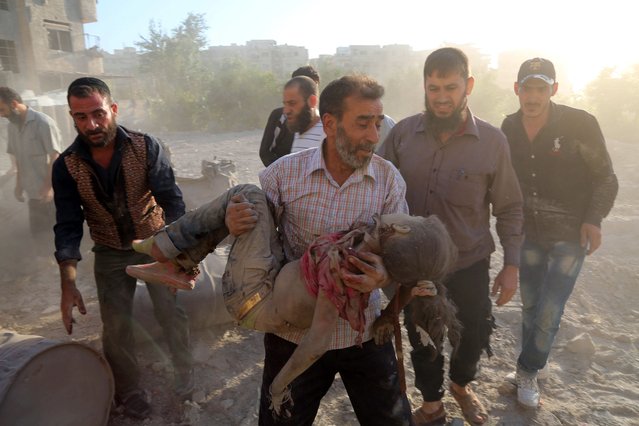
A Syrian man carries the body of a girl following a reported airstrike on Kafr Batna, in the rebel-held Eastern Ghouta area, on the outskirts of the capital Damascus, on September 30, 2016. Air raids on several rebel-held towns in the Eastern Ghouta region killed at least 17 people including eight children, the Syrian Observatory for Human Rights monitor said. (Photo by Amer Almohibany/AFP Photo)

A Syrian man carries the body of a girl following a reported airstrike on Kafr Batna, in the rebel-held Eastern Ghouta area, on the outskirts of the capital Damascus, on September 30, 2016. Air raids on several rebel-held towns in the Eastern Ghouta region killed at least 17 people including eight children, the Syrian Observatory for Human Rights monitor said. (Photo by Amer Almohibany/AFP Photo)
Details
01 Oct 2016 10:33:00
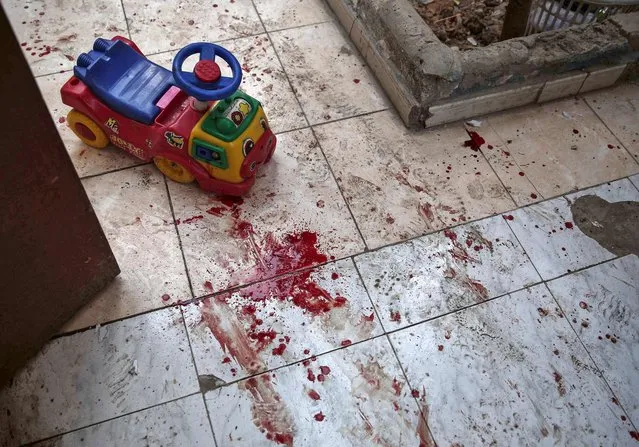
A picture shows the blood stained floor of a kindergarten following reported shelling in the rebel-held area of Harasta, on the northeastern outskirts of the capital Damascus, on November 6, 2016. At least four children were killed and 19 people injured in the government strike in Harasta, according to the Syrian Observatory for Human Rights. (Photo by Sameer Al-Doumy/AFP Photo)

A picture shows the blood stained floor of a kindergarten following reported shelling in the rebel-held area of Harasta, on the northeastern outskirts of the capital Damascus, on November 6, 2016. At least four children were killed and 19 people injured in the government strike in Harasta, according to the Syrian Observatory for Human Rights. (Photo by Sameer Al-Doumy/AFP Photo)
Details
07 Nov 2016 11:53:00
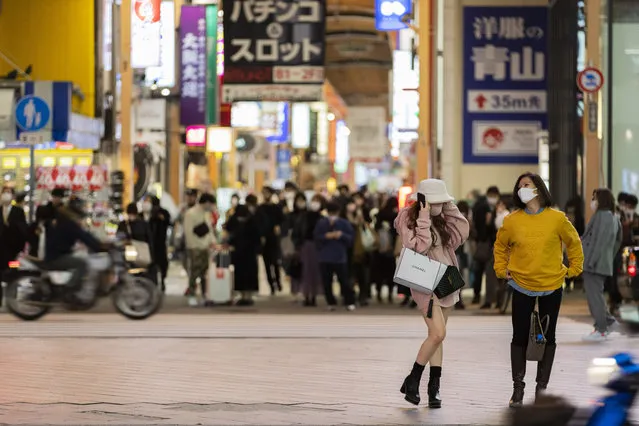
People wearing face masks to help curb the spread of the coronavirus wait to walk across a traffic intersection in Osaka, western Japan, Thursday, November 26, 2020. (Photo by Hiro Komae/AP Photo)

People wearing face masks to help curb the spread of the coronavirus wait to walk across a traffic intersection in Osaka, western Japan, Thursday, November 26, 2020. (Photo by Hiro Komae/AP Photo)
Details
08 Dec 2020 00:05:00