Loading...
Done
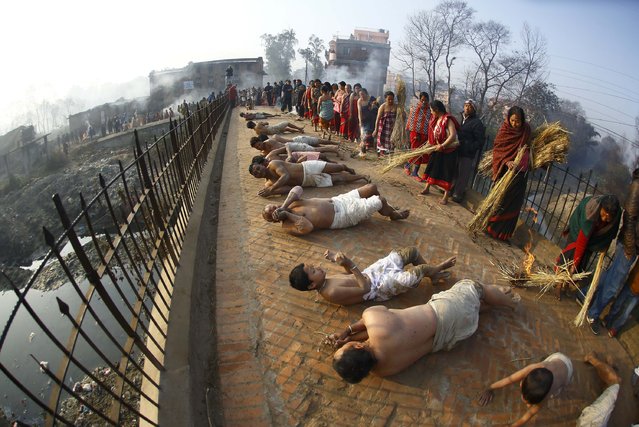
Devotees offer prayer by rolling on the street during the final day of the month-long Swasthani festival of Bhaktapur, near Kathmandu, February 3, 2015. During the festival, devotees recite one chapter of a Hindu tale daily from the 31-chapter sacred Swasthani Brata Katha book, that is dedicated to God Madhavnarayan and Goddess Swasthani, alongside various other gods and goddesses and the miraculous feats performed by them. (Photo by Navesh Chitrakar/Reuters)

Devotees offer prayer by rolling on the street during the final day of the month-long Swasthani festival of Bhaktapur, near Kathmandu, February 3, 2015. During the festival, devotees recite one chapter of a Hindu tale daily from the 31-chapter sacred Swasthani Brata Katha book, that is dedicated to God Madhavnarayan and Goddess Swasthani, alongside various other gods and goddesses and the miraculous feats performed by them. The devotees also go on pilgrimages to various temples, perform religious rituals, take a holy bath in the rivers and fast for a month, especially among women who believe fasting helps in their family's well-being or in getting them a good husband. (Photo by Navesh Chitrakar/Reuters)
Details
04 Feb 2015 12:44:00
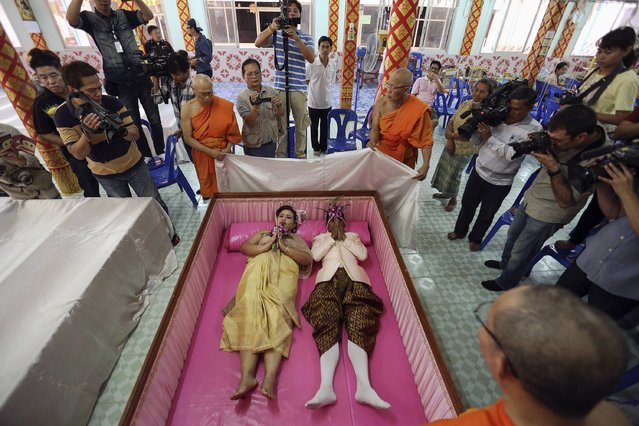
People take pictures and Buddhist monk chants as a groom and a bride lay inside a pink coffin during their wedding ceremony at Wat Takien temple in Nonthaburi province, on the outskirts of Bangkok February 14, 2015. (Photo by Damir Sagolj/Reuters)

People take pictures and Buddhist monk chants as a groom and a bride lay inside a pink coffin during their wedding ceremony at Wat Takien temple in Nonthaburi province, on the outskirts of Bangkok February 14, 2015. Ten Thai couples laid in the pink coffin starting 9:09 AM on Saturday during the wedding ceremony organised by the Buddhist temple on Valentine's Day. Couples believe laying briefly in the coffin will get rid of bad luck and usher happiness into their lives. (Photo by Damir Sagolj/Reuters)
Details
16 Feb 2015 13:36:00
The Lun-class Ekranoplane was used by the Soviet Navy starting in 1987, and wasn't retired until the late 1990s, after the Soviet Union's fall. (Igor113)

“The Lun-class ekranoplan (NATO reporting name Duck) was a ground effect vehicle (GEV) designed by Rostislav Evgenievich Alexeev and used by the Soviet and Russian navies from 1987 until sometime in the late 1990s. It “flew” using the lift generated by the ground effect of its large wings when close to the surface of the water – about four metres or less. Although they might look similar and/or have related technical characteristics, ekranoplans like the Lun are not aircraft, seaplanes, hovercraft, or hydrofoils – ground effect is a separate technology altogether. The International Maritime Organization classifies these vehicles as maritime ships. The name Lun comes from the Russian for harrier”. – Wikipedia (Photo by Igor113)
Details
08 Aug 2014 10:51:00
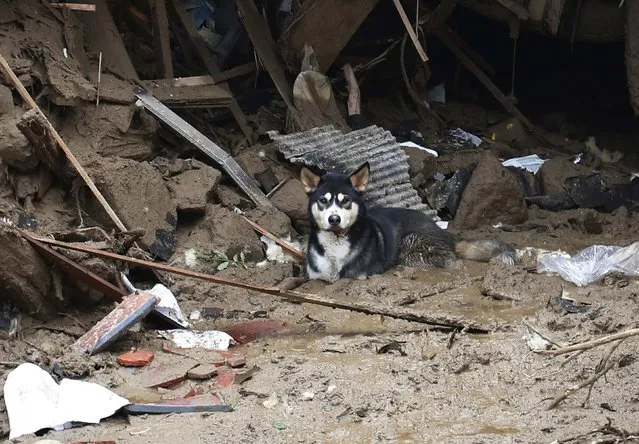
A dog takes a rest under a destroyed house at a site where a landslide swept through a residential area at Asaminami ward in Hiroshima, western Japan, August 20, 2014. (Photo by Toru Hanai/Reuters)

A dog takes a rest under a destroyed house at a site where a landslide swept through a residential area at Asaminami ward in Hiroshima, western Japan, August 20, 2014. At least 36 people, including several children, were killed in Japan on Wednesday, when landslides triggered by torrential rain slammed into the outskirts of the western city of Hiroshima, and the toll could rise further, police said. Seven people were missing after a month's worth of rain fell overnight, loosening slopes already saturated by heavy rain over the past few weeks. (Photo by Toru Hanai/Reuters)
Details
21 Aug 2014 10:13:00
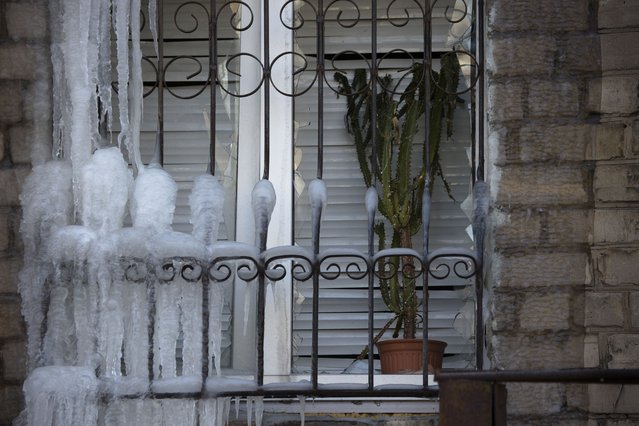
In this photo taken on Monday, October 27, 2014, a cactus stands at a broken window in a damaged house after shelling not far from Donetsk airport in the town of Donetsk, eastern Ukraine. (Photo by Dmitry Lovetsky/AP Photo)

In this photo taken on Monday, October 27, 2014, a cactus stands at a broken window in a damaged house after shelling not far from Donetsk airport in the town of Donetsk, eastern Ukraine. Donetsk, which has lost about 400,000 of its 1 million pre-war population, is bracing to a winter ahead. In a climate like eastern Ukraine's, where temperatures typically stay below zero all winter, the damage to the critical infrastructure and lack of effort to provide adequate shelter to people whose homes were destroyed could literally mean a death from the cold. (Photo by Dmitry Lovetsky/AP Photo)
Details
06 Nov 2014 09:06:00
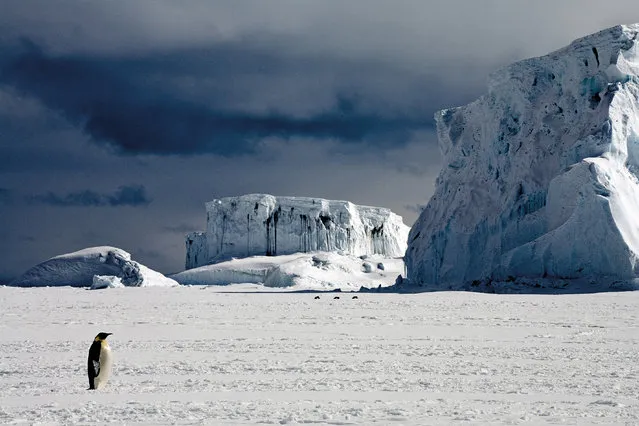
Image from Camille Seamans new book, “Melting Away”. (Photo by Camille Seaman/Barcroft Media)

Documenting the effects of climate change first hand over the past eight years, Camille Seaman fears we may be on the road to the last iceberg. Photographing the enormous frozen floats at both poles for the past eight years, the Californian adventurer has seen the receding ice shelves and experienced the changing warmer weather. Feeling that her intimate and emotional work documents a snapshot of history, Camille presents her series “The Last Iceberg” as a study of what she sees as the personality of each huge iceberg. Drawing parallels with the famous novel, “The Last of the Mohicans”, Camille, 42, wonders whether these unique, almost alien natural features will become a thing of the past or part of nature's renewal process. (Photo by Camille Seaman/Barcroft Media)
Details
02 Dec 2014 12:10:00
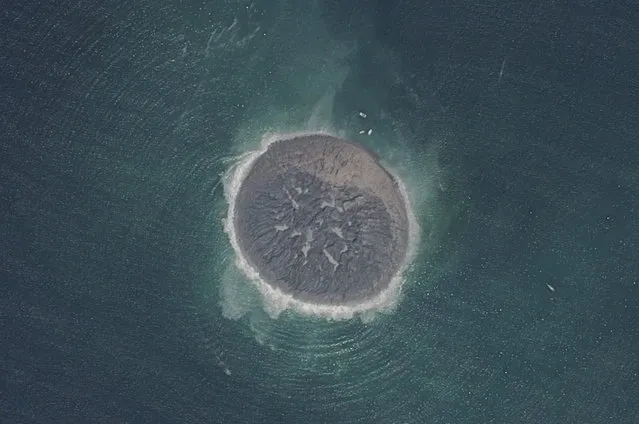
This handout picture taken by Pleiades satellite and released on September 27, 2013 shows a small island of mud and rock created by the huge earthquake that hit southwest Pakistan has fascinated locals but experts – who found methane gas rising from it – say it is unlikely to last long

This handout picture taken by Pleiades satellite and released on September 27, 2013 shows a small island of mud and rock created by the huge earthquake that hit southwest Pakistan has fascinated locals but experts – who found methane gas rising from it – say it is unlikely to last long. The 7.7-magnitude quake struck on September 25 in Baluchistan's remote Awaran district, killing at least 271 people and affecting hundreds of thousands. The island is about 60 to 70 feet (18 to 21 metres) high, up to 300 feet wide and up to 120 feet long and sits about 650 feet from the coast. (Photo by AFP Photo/CNES/Distribution Astrium Services)
Details
01 Oct 2013 08:23:00
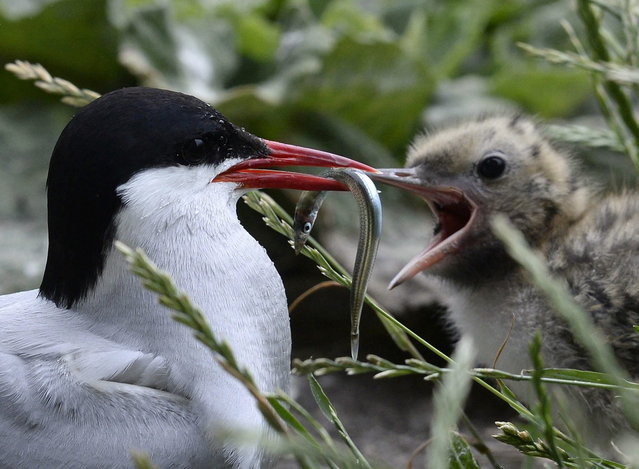
An arctic tern feeds its chick on the Farne Islands off the Northumberland coast, northern England July 8, 2013. (Photo by Nigel Roddis/Reuters)

An arctic tern feeds its chick on the Farne Islands off the Northumberland coast, northern England July 8, 2013. The Farne Islands, which lie off the coast of northeast England, are home to a huge array of wildlife. The islands are owned and protected by the British conservation charity, the National Trust, which says they host some 23 species of seabird, as well as a substantial colony of grey seals, who come to have their pups there in the autumn. Every five years the National Trust carries out a census of the islands' population of puffins, and this year's survey showed there were almost 40,000 nesting pairs on the islands – an 8 percent rise from 2008. (Photo by Nigel Roddis/Reuters)
Details
11 Dec 2013 09:21:00