Loading...
Done
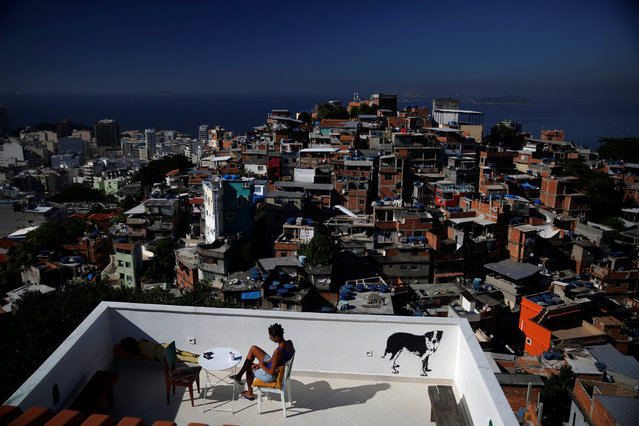
A woman sits on a terrace at Tiki hostel in Cantagalo favela, in Rio de Janeiro, Brazil, April 16, 2016. (Photo by Pilar Olivares/Reuters)

A woman sits on a terrace at Tiki hostel in Cantagalo favela, in Rio de Janeiro, Brazil, April 16, 2016. Hostels in a few of Rio's more than 1,000 slums serve not only as a cheap housing alternative for the more adventurous among the estimated 500,000 foreign tourists expected to arrive for the Olympics in August. The establishments also open up the rich culture of the city's shantytowns for travellers, giving them a glimpse into once “no-go” areas where about one-fifth of Rio's population lives. (Photo by Pilar Olivares/Reuters)
Details
04 May 2016 12:18:00
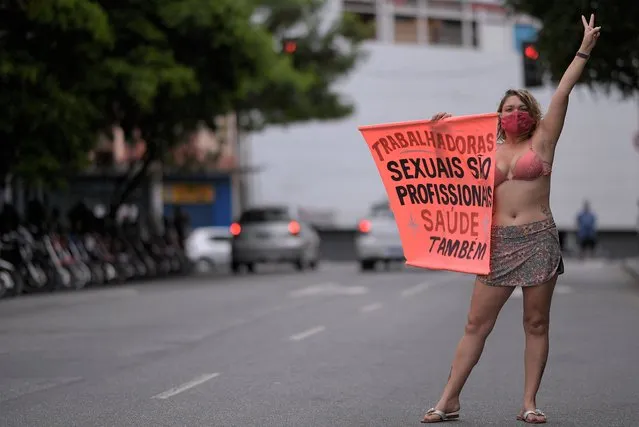
A sеx worker protests at Rua Guaicurus, the main bohemian area of Belo Horizonte, state of Minas Gerais, Brazil on April 5, 2021, asking to be considered a priority group to receive the vaccine agaisnt COVID-19. (Photo by Douglas Magno/AFP Photo)

A sеx worker protests at Rua Guaicurus, the main bohemian area of Belo Horizonte, state of Minas Gerais, Brazil on April 5, 2021, asking to be considered a priority group to receive the vaccine agaisnt COVID-19. (Photo by Douglas Magno/AFP Photo)
Details
04 Feb 2022 07:35:00
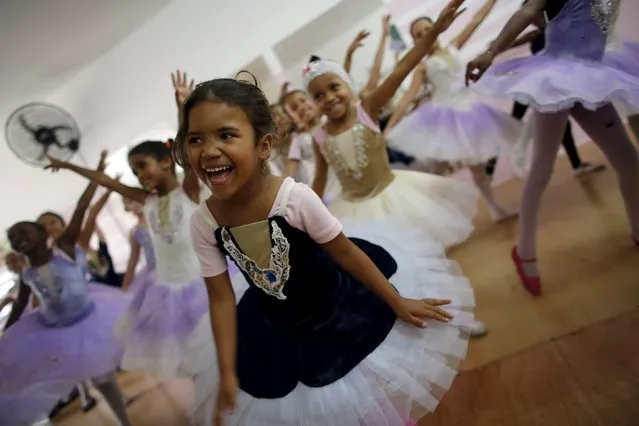
Young girls take ballet lessons at the New Dreams dance studio in the Luz neighborhood known to locals as Cracolandia (Crackland) in Sao Paulo, Brazil, August 14, 2015. (Photo by Nacho Doce/Reuters)

Young girls take ballet lessons at the New Dreams dance studio in the Luz neighborhood known to locals as Cracolandia (Crackland) in Sao Paulo, Brazil, August 14, 2015. For the young girls learning to jump and plie, the dance studio provides a way forward and out of the difficult environment they have grown up in. Brazil is one of the world's highest consuming countries of crack cocaine, and Cracolandia, or “Crack Land”, located in the outskirts of Sao Paulo, is one of the most intense and brutal hubs. (Photo by Nacho Doce/Reuters)
Details
18 Aug 2015 13:59:00
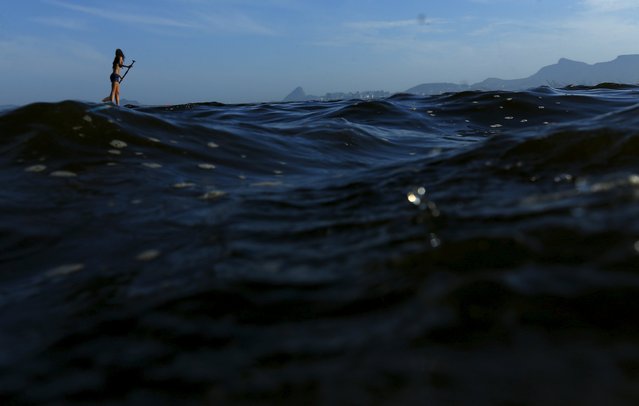
A girl paddles on her stand-up board on the waters of Guanabara bay at Bica beach in Rio de Janeiro Brazil, January 10, 2016. (Photo by Ricardo Moraes/Reuters)

A girl paddles on her stand-up board on the waters of Guanabara bay at Bica beach in Rio de Janeiro Brazil, January 10, 2016. Few features capture the beauty, or the problems, of one of the world's most dramatic urban landscapes like Guanabara Bay - the finger-like inlet that forms the shoreline and harbor for Rio de Janeiro. The bay, which carves into southeast Brazil from the Atlantic Ocean, literally gave Rio its name when Portuguese mariners mistook it for a “rio”, or “river”. Four centuries later, the bay is preparing to welcome another sort of seafarer – Olympic sailors, who will navigate the bay when the 2016 Rio Olympics kick off in August. (Photo by Ricardo Moraes/Reuters)
Details
28 Apr 2016 12:13:00
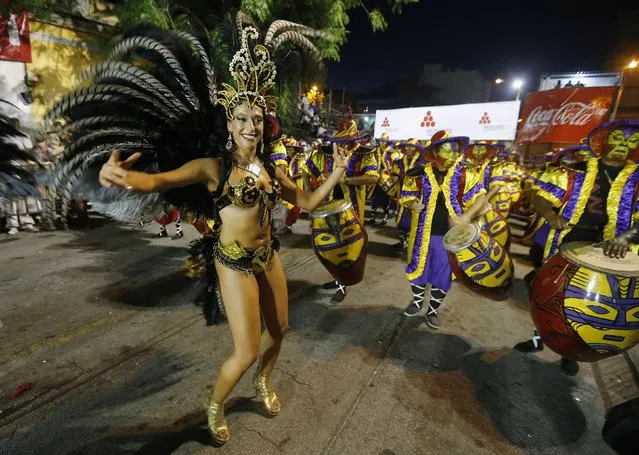
A member of a comparsa, a Uruguayan carnival group, dances during the Llamadas parade in Montevideo February 5, 2015. Thousands of people crowd the capital's Barrio Sur as costumed drummers and dancers kick off the street fiesta known as Llamadas which has traditional Afro-Uruguayan roots. The fiesta, also known in Spanish as “The Calls”, started during the colonial period as a slave parade on the city streets. (Photo by Andres Stapff/Reuters)

A member of a comparsa, a Uruguayan carnival group, dances during the Llamadas parade in Montevideo February 5, 2015. Thousands of people crowd the capital's Barrio Sur as costumed drummers and dancers kick off the street fiesta known as Llamadas which has traditional Afro-Uruguayan roots. The fiesta, also known in Spanish as “The Calls”, started during the colonial period as a slave parade on the city streets. (Photo by Andres Stapff/Reuters)
Details
08 Feb 2015 11:44:00
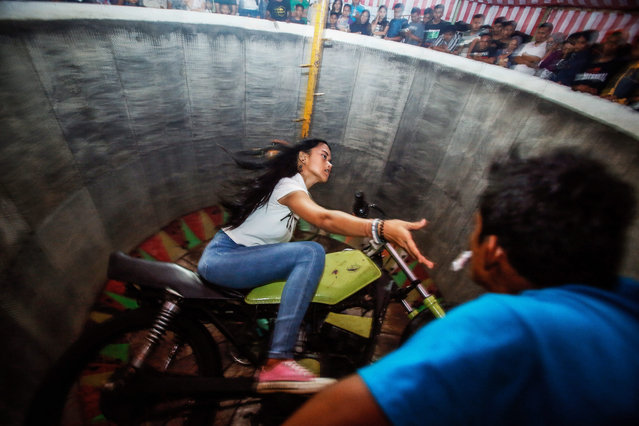
A picture made available on 16 August 2016 shows a young dare devil motorbike rider, Karmila Purba, 18, reaching for a tip while riding her motorbike inside a barrel locally known as “Tong Setan” or Davil's Barrel, at a traditional night carnival in Deliserdang, North Sumatra, Indonesia, 13 August 2016. (Photo by Dedi Sinuhaji/EPA)

A picture made available on 16 August 2016 shows a young dare devil motorbike rider, Karmila Purba, 18, reaching for a tip while riding her motorbike inside a barrel locally known as “Tong Setan” or Davil's Barrel, at a traditional night carnival in Deliserdang, North Sumatra, Indonesia, 13 August 2016. (Photo by Dedi Sinuhaji/EPA)
Details
18 Aug 2016 11:39:00
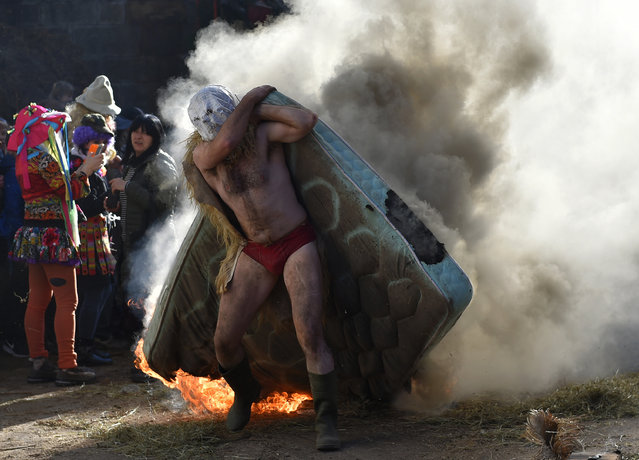
A masked participant carries a burning matress during the ancient carnival of Zubieta, in the northern Spanish Navarra province on January 30, 2018. The yearly three day festivities, revolving mainly around agriculture and principally sheep hearding, run on the last Sunday, Monday and Tuesday of January where Navarra Valley locals from two villages dress up and participate in a variety of activites as they perform a pilgrimage through each village. (Photo by Ander Gillenea/AFP Photo)

A masked participant carries a burning matress during the ancient carnival of Zubieta, in the northern Spanish Navarra province on January 30, 2018. The yearly three day festivities, revolving mainly around agriculture and principally sheep hearding, run on the last Sunday, Monday and Tuesday of January where Navarra Valley locals from two villages dress up and participate in a variety of activites as they perform a pilgrimage through each village. (Photo by Ander Gillenea/AFP Photo)
Details
01 Feb 2018 08:52:00
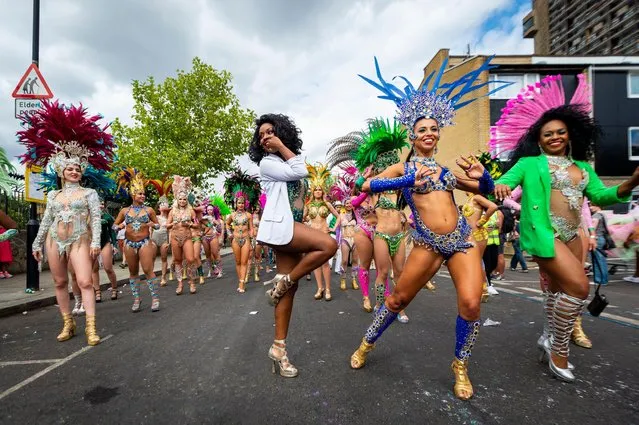
Members of the London School of Samba at the start of the Grand Finale of Notting Hill Carnival in London on August 29, 2022 which has returned to the capital for the first time in three years after being cancelled due to the Covid-19 pandemic. Europe's largest street festival celebrates Caribbean culture and is expected to welcome over 1 million people each day. (Photo by Stephen Chung/Alamy Live News)

Members of the London School of Samba at the start of the Grand Finale of Notting Hill Carnival in London on August 29, 2022 which has returned to the capital for the first time in three years after being cancelled due to the Covid-19 pandemic. Europe's largest street festival celebrates Caribbean culture and is expected to welcome over 1 million people each day. (Photo by Stephen Chung/Alamy Live News)
Details
08 Nov 2023 05:29:00