Loading...
Done
Conversations with History by Photographer David Emitt Adams

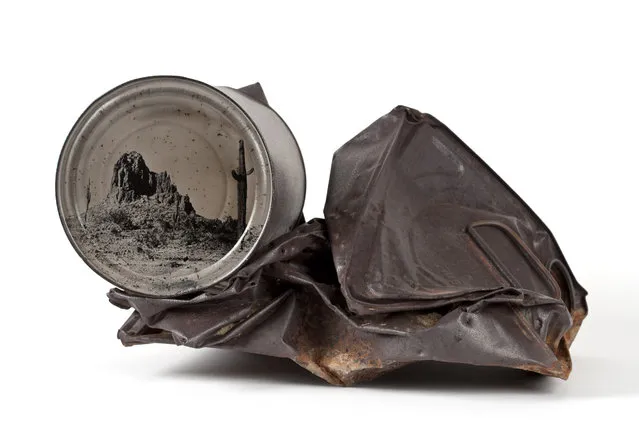
Photographer David Emitt Adams creates tintypes on discarded cans he collects from the Sonoran Desert. In his artist statement, Adams says that some are more than four decades old, which have earned a deep reddish-brown, rusty coloration. (Photo by David Emitt Adams)
Details
19 Mar 2014 05:24:00
Hikaru Cho believes that we should challenge our imaginations to create new work using traditional tools, not fancy computers and software. (Photo by Jim Marks/PA Wire)

Hikaru Cho believes that we should challenge our imaginations to create new work using traditional tools, not fancy computers and software. (Photo by Jim Marks/PA Wire)
Details
06 Mar 2014 10:06:00
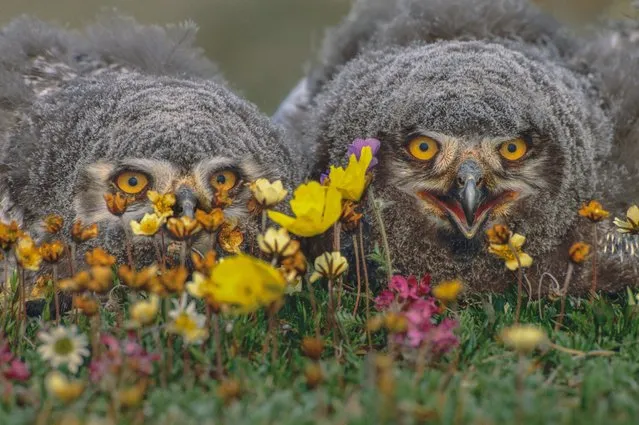
Snowy owlets (Bubo scandiacus), Arctic National Wildlife Refuge, Alaska, USA. “A pair of gray-feathered snowy owlets hunker down in the abundant flowers that flourish in the dropping-enriched soil of their nest mound”. (Photo by Art Wolfe/Art Wolfe Stock)

The photography of Art Wolfe covers the globe, capturing landscapes, wildlife, and cultures from every continent; here he talks through a selection of his favourite images. Art Wolfe is an American photographer and conservationist. His photographs have been noted by environmental advocacy groups for their “stunning” visual impact. Here: Snowy owlets (Bubo scandiacus), Arctic National Wildlife Refuge, Alaska, USA. (Photo by Art Wolfe/Art Wolfe Stock)
Details
19 Mar 2018 00:05:00
Descendants of American Southerners Wearing Confederate-era dresses and uniforms dance during a party to celebrate the 150th anniversary of the end of the American Civil War in Santa Barbara d'Oeste, Brazil, Sunday, April 26, 2015. For many of the residents of Santa Barbara d'Oeste and neighboring Americana, in Brazil's southeastern Sao Paulo state. (Photo by Andre Penner/AP Photo)

Descendants of American Southerners Wearing Confederate-era dresses and uniforms dance during a party to celebrate the 150th anniversary of the end of the American Civil War in Santa Barbara d'Oeste, Brazil, Sunday, April 26, 2015. For many of the residents of Santa Barbara d'Oeste and neighboring Americana, in Brazil's southeastern Sao Paulo state, having Confederate ancestry is a point of pride and is celebrated in high style at the annual “Festa dos Confederados”, or “Confederates Party” in Portuguese. (Photo by Andre Penner/AP Photo)
Details
28 Apr 2015 13:30:00
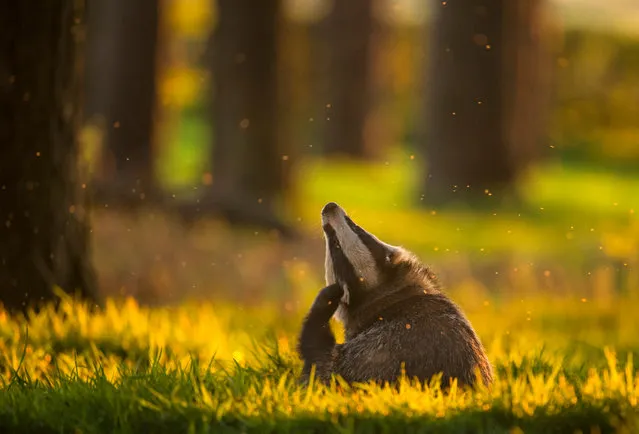
Andrew Parkinson, animal behaviour category winner: Crepuscular Contentment, Derbyshire. “In 15 years of working with badgers I’ve never seen a badger sit out in the open to have a scratch. I was sat concealed behind a tree and downwind so it was especially nice that the badger had his back to me, demonstrating just how inconspicuous and inconsequential my presence was”. (Photo by Andrew Parkinson/British Wildlife Photography Awards 2017)

Andrew Parkinson, animal behaviour category winner: Crepuscular Contentment, Derbyshire. “In 15 years of working with badgers I’ve never seen a badger sit out in the open to have a scratch. I was sat concealed behind a tree and downwind so it was especially nice that the badger had his back to me, demonstrating just how inconspicuous and inconsequential my presence was”. (Photo by Andrew Parkinson/British Wildlife Photography Awards 2017)
Details
10 Nov 2017 09:01:00
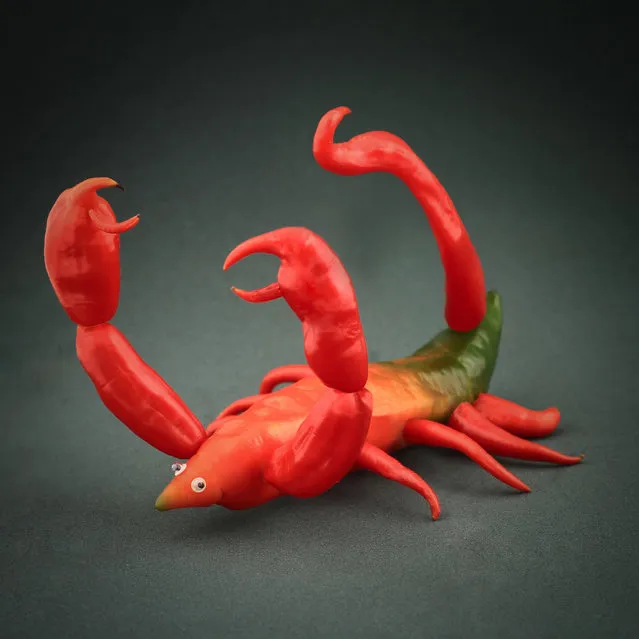
“Red Pepperpion. (Photo by Vanessa Dualib)

“Red Pepperpion. Red Pepperpions are secretive, nocturnal arachilli which can be spotted in kitchens of arid climates all around the world.

Red Pepperpions are equipped with a delicious (and depending on the quantity...deadly!) stinger at the end of its tail. If you happen to get bitten (or if you bite him!) it will produce a burning sensation on your taste nerves.

However, there is no need to worry, since the fact is that his potent stinger is usually only used when hunting or whenever the Pepperpion feels like he might become part of someones meal...

At daylight or when encountering a larger foe, such as a Saucier Chef, they retreat into burrows inside the fridge or hide beneath the oven”. (Photo and comment by Vanessa Dualib)


Details
08 Feb 2013 09:24:00
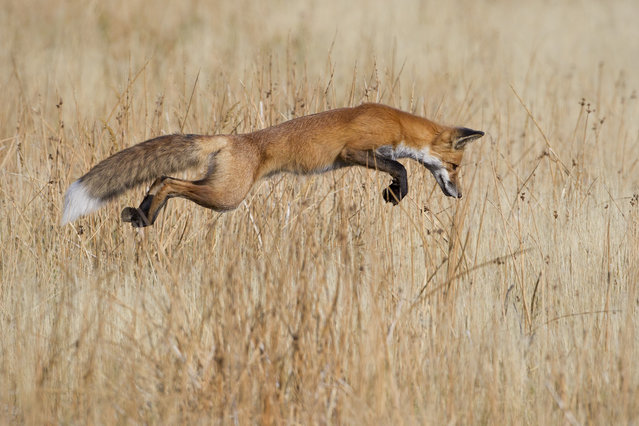
Canada: “Lucky pounce”. (Photo by Connor Stefanison/Wildlife Photographer of the Year 2013)

The winners of The London’s Natural History Museum's prestigious Wildlife Photographer of the Year for 2013 have finally been unveiled. Selected from almost 43,000 entries from 96 countries, the winners offer a glimpse of the stunning array of natural beauty on our planet. Photo: Canada: “Lucky pounce”. “Anticipating the pounce – that was the hardest part”, says Connor, who had come to Yellowstone National Park, Wyoming, USA, in search of wildlife as much as the spectacular landscape. He had found this fox, his first ever, on his last day in the park. It was so absorbed in hunting that Connor had plenty of time to get out of the car and settle behind a rock. It quartered the grassland, back and forth, and then started staring intently at a patch of ground, giving Connor just enough warning of the action to come. When it sprung up, Connor got his shot. And when it landed, the fox got his mouse. (Photo by Connor Stefanison/Wildlife Photographer of the Year 2013)

Details
17 Oct 2013 08:12:00
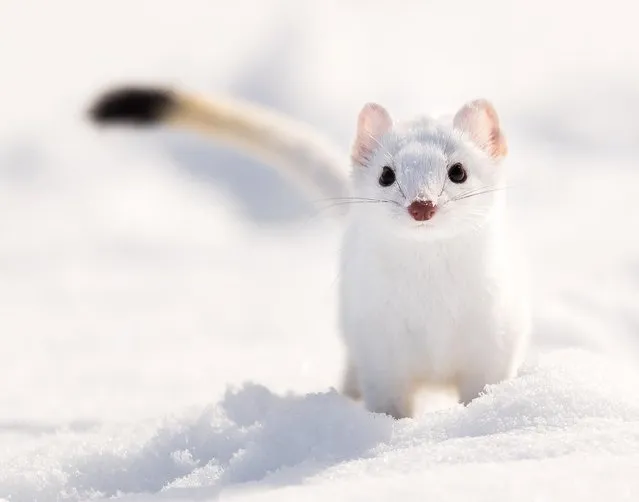
On Dale A. Browne’s first trip to Yellowstone, he “got the best shot” he’d ever taken after chasing this weasel for 30 minutes. The trip for the 58-year-old from Manassas, Va., was a gift from his wife and an opportunity to improve his photography skills with the help of guide and professional photographer Tom Murphy. (Murphy did not assist in the taking of this photo). (Photo by Dale A. Browne)

On Dale A. Browne’s first trip to Yellowstone, he “got the best shot” he’d ever taken after chasing this weasel for 30 minutes. The trip for the 58-year-old from Manassas, Va., was a gift from his wife and an opportunity to improve his photography skills with the help of guide and professional photographer Tom Murphy. (Murphy did not assist in the taking of this photo). (Photo by Dale A. Browne)
Details
26 Jul 2016 10:31:00