Loading...
Done
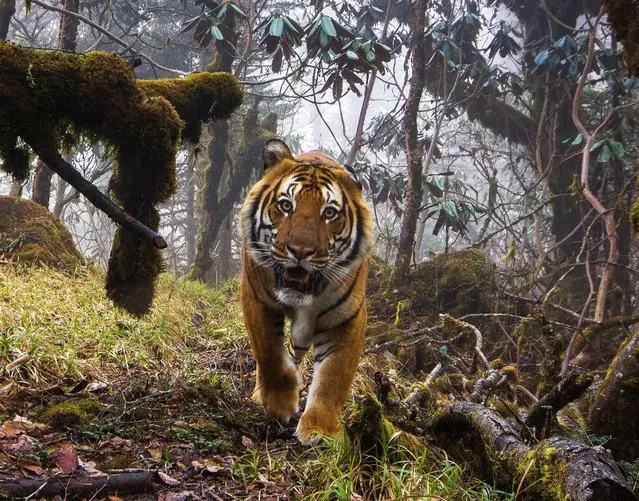
Rare images of wild tigers in Bhutan, captured by camera traps, show tigers and other animals using high-altitude wildlife corridors which are lifelines to isolated tiger populations and critical to genetic diversity, conservation and growth. Here: A wild Bengal tiger (Panthera tigris tigris) captured on a camera trap in corridor eight at an altitude of 3,540 metres in Trongsa, Bhutan. (Photo by Emmanuel Rondeau/WWF UK/The Guardian)

Rare images of wild tigers in Bhutan, captured by camera traps, show tigers and other animals using high-altitude wildlife corridors which are lifelines to isolated tiger populations and critical to genetic diversity, conservation and growth. Here: A wild Bengal tiger (Panthera tigris tigris) captured on a camera trap in corridor eight at an altitude of 3,540 metres in Trongsa, Bhutan. (Photo by Emmanuel Rondeau/WWF UK/The Guardian)


Details
02 Aug 2017 06:49:00
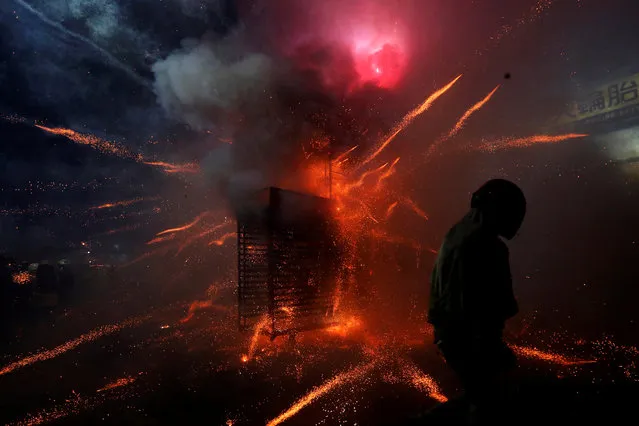
A participant wearing a motorcycle helmet gets sprayed with firecrackers, during the “Beehive Firecrackers” festival at the Yanshui district in Tainan, Taiwan on March 1, 2018. (Photo by Tyrone Siu/Reuters)

A participant wearing a motorcycle helmet gets sprayed with firecrackers, during the “Beehive Firecrackers” festival at the Yanshui district in Tainan, Taiwan on March 1, 2018. According to Taiwan's Tourism Bureau, the “beehive” festival started in the late 1885 as a request to the gods to spare Yanshui from a cholera outbreak which was making its way through the villages. (Photo by Tyrone Siu/Reuters)
Details
05 Mar 2018 00:03:00
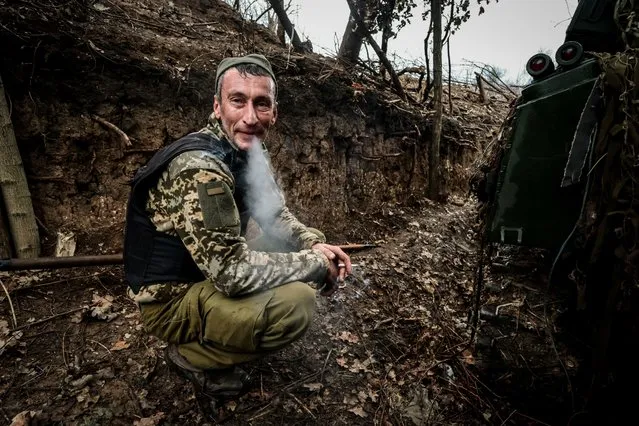
A Ukrainian serviceman of the 65th mechanized brigade smoke on position of a Soviet-made 2s1 Gvozdyka 120mm howitzer in the Zaporizhia region, Ukraine, 15 November 2023, amid the Russian invasion. Russian troops entered Ukrainian territory in February 2022, starting a conflict that has provoked destruction and a humanitarian crisis. (Photo by Kateryna Klochko/EPA)

A Ukrainian serviceman of the 65th mechanized brigade smoke on position of a Soviet-made 2s1 Gvozdyka 120mm howitzer in the Zaporizhia region, Ukraine, 15 November 2023, amid the Russian invasion. Russian troops entered Ukrainian territory in February 2022, starting a conflict that has provoked destruction and a humanitarian crisis. (Photo by Kateryna Klochko/EPA)
Details
09 Dec 2023 00:07:00
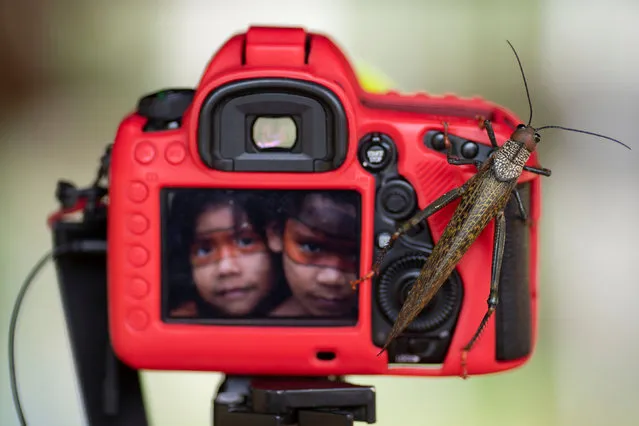
A grasshopper rests on a photographic camera during a meeting in the village of Alto Jamari called to face the threat of armed land grabbers invading the Uru-eu-wau-wau Indigenous Reservation near Campo Novo de Rondonia, Brazil on January 30, 2019. (Photo by Ueslei Marcelino/Reuters)

A grasshopper rests on a photographic camera during a meeting in the village of Alto Jamari called to face the threat of armed land grabbers invading the Uru-eu-wau-wau Indigenous Reservation near Campo Novo de Rondonia, Brazil on January 30, 2019. (Photo by Ueslei Marcelino/Reuters)
Details
16 Mar 2019 00:03:00
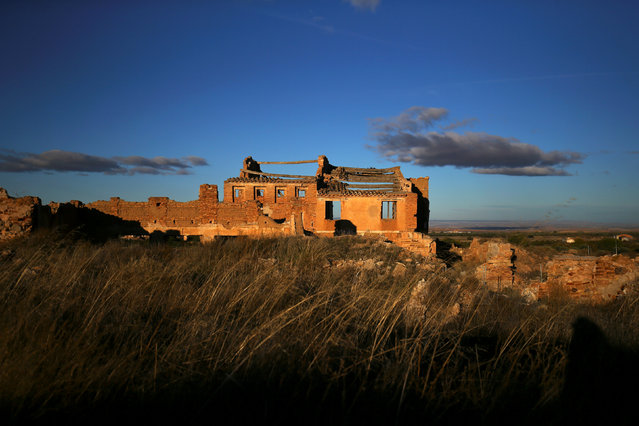
Ruins of a building are seen in the old village of Belchite, in northern Spain, November 13, 2016. (Photo by Andrea Comas/Reuters)

Ruins of a building are seen in the old village of Belchite, in northern Spain, November 13, 2016. Almost 80 years ago Tomas Ortin fled under the cover of night from his home in the small town of Belchite on Spain's northern plains to escape with hundreds of others from one of the bloodiest battles of the country's civil war. At 94 years old, Ortin now lives just across the road from Belchite, which has lain in ruins since Republican forces attacked it, a symbol of the destruction caused by the 1936-1939 war in which an estimated 500,000 people died. (Photo by Andrea Comas/Reuters)
Details
30 Nov 2016 12:31:00
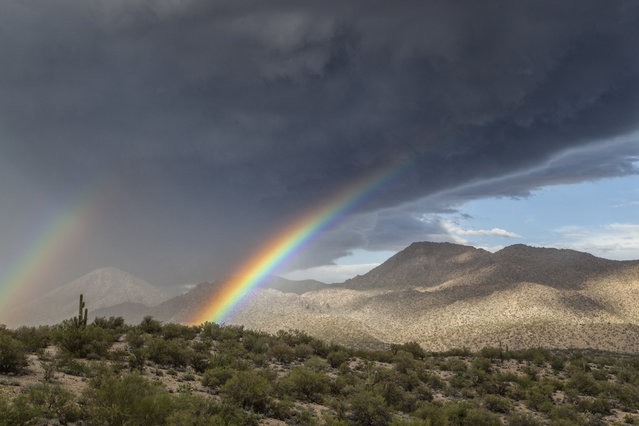
Two rainbows emerge from a black storm above the mountains, on August 19, 2014, in Kingman, Arizona.  Double tornadoes, lightning storms and rotating supercells – this is what it's like to chase storms for a year.(Photo by Roger Hill/Barcroft Media)

Two rainbows emerge from a black storm above the mountains, on August 19, 2014, in Kingman, Arizona. Double tornadoes, lightning storms and rotating supercells – this is what it's like to chase storms for a year. These dramatic images show apocalyptic weather throughout 2014 from a lightning storm to a pair of rainbows. Roger Hill, 57, has been chasing storms in the United States for thirty years and runs a tour operation with his wife Caryn. His favourite photograph of the year was also one of the most difficult to get – as two violent tornadoes tore through Pilger, Nebraska on June 16. The spiraling winds killed a five-year-old girl and injured at least 19 others, and as Roger tried to get the perfect shot debris began to rain down on his car. (Photo by Roger Hill/Barcroft Media)
Details
25 Feb 2015 09:27:00
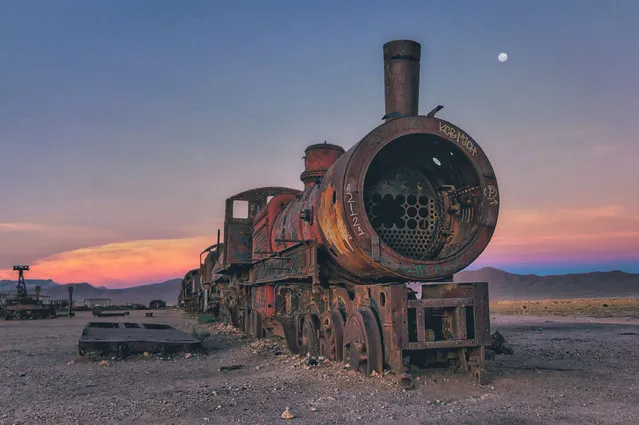
Many of the trains and locomotives are British imports and have been eroded by the harsh Bolivian climate. (Photo by Chris Staring/Rex Features/Shutterstock)

Chris Staring photographs a mysterious train graveyard in the heart of southern Bolivia, where the skeletons of British steam locomotives and rail cars rust away on the edge of the world’s largest salt flats. More than 100 rail cars and locomotives can be found in different states of decay in the train graveyard. (Photo by Chris Staring/Rex Features/Shutterstock)
Details
03 Jul 2016 10:46:00
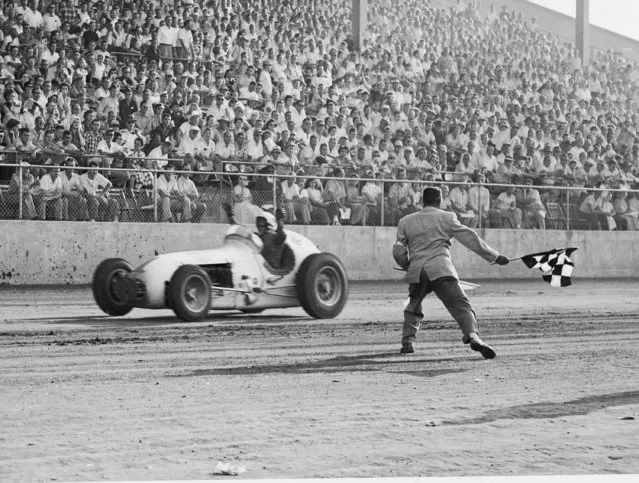
Jimmy Bryan of Phoenix, Ariz., gets the checkered victory flag at the Indiana State Fairgrounds September 17, 1955 as he wins the “Hoosier Hundred” for the second consecutive year. Bryan averaged 83.98 miles an hour for the 100-lap, 100-mile AAA big car race. (Photo by AP Photo)

Jimmy Bryan of Phoenix, Ariz., gets the checkered victory flag at the Indiana State Fairgrounds September 17, 1955 as he wins the “Hoosier Hundred” for the second consecutive year. Bryan averaged 83.98 miles an hour for the 100-lap, 100-mile AAA big car race. (Photo by AP Photo)
Details
18 Sep 2015 15:12:00