Loading...
Done
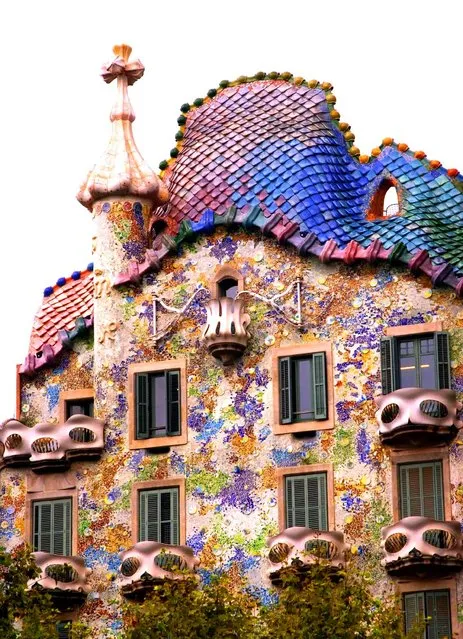
Casa Batllo By Antoni Gaudi

Casa Batllo is a renowned building located in the heart of Barcelona and is one of Antoni Gaudí’s masterpieces. Casa Batlló is a remodel of a previously built house. It was redesigned in 1904 by Gaudí and has been refurbished several times after that. Casa Batlló evokes the creativity and playfulness of Gaudí’s work through the incracite facades and creative floors. Gaudí's assistants Domènec Sugrañes i Gras, Josep Canaleta and Joan Rubió also contributed to the renovation project.
Details
01 May 2013 12:47:00
Arctic Hare

The arctic hare, or polar rabbit, is a species of hare which is adapted largely to polar and mountainous habitats. The arctic hare survives with a thick coat of fur and usually digs holes in the ground or under snow to keep warm and sleep. Arctic hares look like rabbits but have shorter ears, are taller when standing, and, unlike rabbits, can thrive in cold climates. They can travel together with many other hares, sometimes huddling with dozens or more, but are usually found alone, taking, in some cases, more than one partner. The arctic hare can run up to 60 kilometres per hour (40 mph). Its predators include the arctic wolf, arctic fox, and ermine.
Details
17 Mar 2014 13:56:00
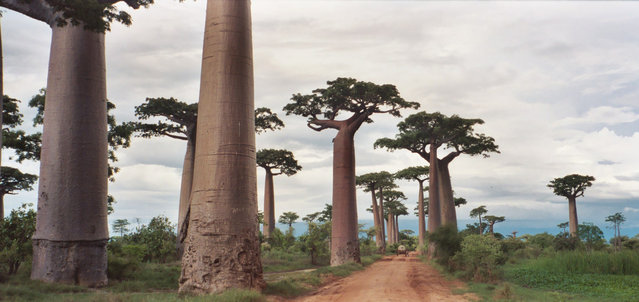
Avenue of the Baobabs

The Avenue or Alley of the Baobabs is a prominent group of baobab trees lining the dirt road between Morondava and Belon'i Tsiribihina in the Menabe region in western Madagascar. Its striking landscape draws travelers from around the world, making it one of the most visited locations in the region. It has been a center of local conservation efforts, and was granted temporary protected status in July 2007 by the Ministry of Environment, Water and Forests, the first step toward making it Madagascar's first natural monument.
Details
16 Nov 2012 10:05:00
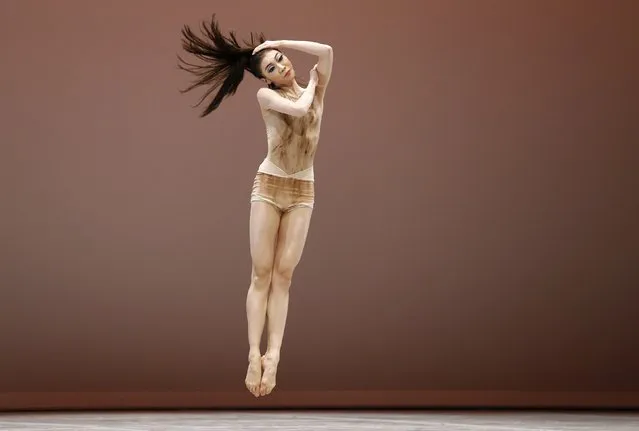
Park Ji-soo of South Korea performs her contemporary variation during the final of the 43rd Prix de Lausanne at the Beaulieu Theatre in Lausanne February 7, 2015. (Photo by Denis Balibouse/Reuters)

Park Ji-soo of South Korea performs her contemporary variation during the final of the 43rd Prix de Lausanne at the Beaulieu Theatre in Lausanne February 7, 2015. The Prix de Lausanne is an annual international dance competition for dancers aged 15 to 18. A total of 67 participants from 18 countries were selected from 300 applicants to take part in this year's week-long competition, from which the jury has shortlisted 20 finalists to compete for Saturday's finals. Six of this year's finalists will be awarded a one-year all expenses paid scholarship at one of the Prix de Lausanne's partner schools or companies, among the most prestigious in the world. (Photo by Denis Balibouse/Reuters)
Details
09 Feb 2015 12:01:00
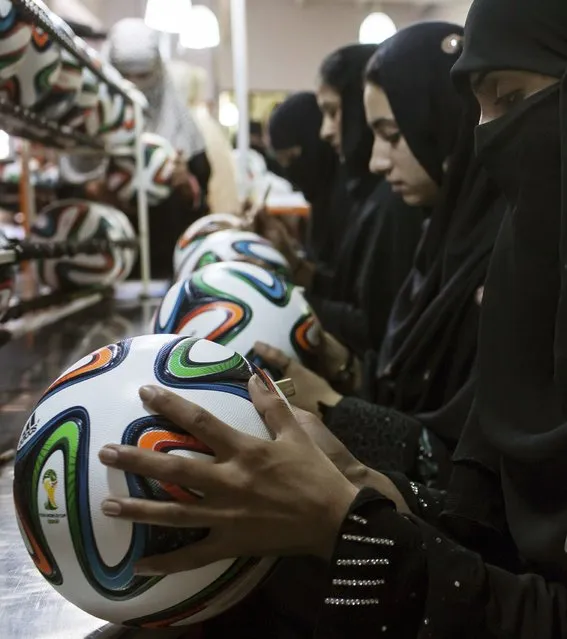
Employees conduct a final check to fix any cavities in the seams of balls inside the soccer ball factory that produces official match balls for the 2014 World Cup in Brazil, in Sialkot, Punjab province May 16, 2014. (Photo by Sara Farid/Reuters)

Employees conduct a final check to fix any cavities in the seams of balls inside the soccer ball factory that produces official match balls for the 2014 World Cup in Brazil, in Sialkot, Punjab province May 16, 2014. It was when he felt the roar of the crowd at the 2006 World Cup in Germany that Pakistani factory owner Khawaja Akhtar first dreamt up a goal of his own: to manufacture the ball for the biggest soccer tournament on the planet. Last year he finally got his chance – but only 33 days to make it happen. (Photo by Sara Farid/Reuters)
Details
26 May 2014 13:59:00
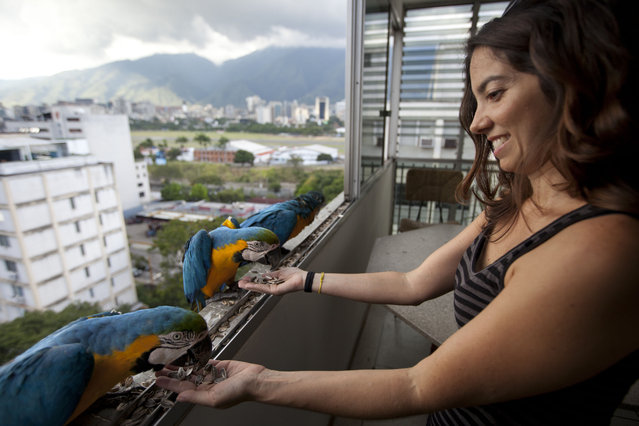
Vanessa Silva, 38, feeds macaws that fly to her apartment window every day looking for food, in Caracas, Venezuela. A group of gold-and-royal blue birds poked their heads through Silva’s window, as if saying “I’m here, is anyone home?” “I’d seen them flying when I was down on the street, and I thought ‘Oh how pretty,’” the 38-year-old said, a macaw eating out of her hand. (Photo by Ariana Cubillos/AP Photo)

Vanessa Silva, 38, feeds macaws that fly to her apartment window every day looking for food, in Caracas, Venezuela, on November 24, 2014. A group of gold-and-royal blue birds poked their heads through Silva’s window, as if saying “I’m here, is anyone home?” “I’d seen them flying when I was down on the street, and I thought ‘Oh how pretty,’” the 38-year-old said, a macaw eating out of her hand. (Photo by Ariana Cubillos/AP Photo)
Details
27 Nov 2014 15:27:00
Winner of the NSW (New South Wales) prize: Peter Solness said: “I wanted to re-imagine the lost waterways, so I got my light-painting tools to work. In this image, water is being released from the top of the historic Centennial Park No. 2 Reservoir, which was built in 1925 and holds 90 megalitres of water. After 89 years of incarceration these waters now run free!”. (Photo by Peter Solness/Head On)

Touching and dramatic portraits and landscape shots have won prizes at Australia's prestigious photography prize. Photo: Winner of the NSW (New South Wales) prize: Peter Solness said: “I wanted to re-imagine the lost waterways, so I got my light-painting tools to work. In this image, water is being released from the top of the historic Centennial Park No. 2 Reservoir, which was built in 1925 and holds 90 megalitres of water. After 89 years of incarceration these waters now run free!”. (Photo by Peter Solness/Head On)
Details
21 May 2014 11:11:00
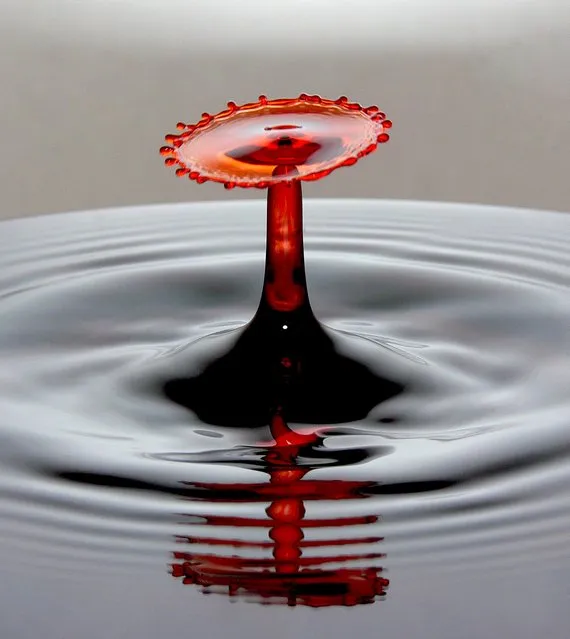
Waterdrop Sculptures by Josh Fancher

“I'm Josh Fancher, a 21 year old with an avid interest in photography, including macro, nature and wildlife, night photography, landscapes, cityscapes and architectural photography. Inspired by the beautiful and amazing water drop photography of Martin Waugh, I started doing water drop collisions in December of 2007. I use a 105mm Micro Nikkor lens for water drops, along with a pair of Nikon SB 600 flashes. I recently got a StopShot system (Nov 2009), which makes timing a lot easier. Before then, timing was manual, with an eye dropper, eye-hand coordination, and a lot of patience” – Josh Fancher. (Photo by Josh Fancher)
Details
19 Aug 2012 10:30:00