Loading...
Done
Afghanistan: Dogs of War Part 2

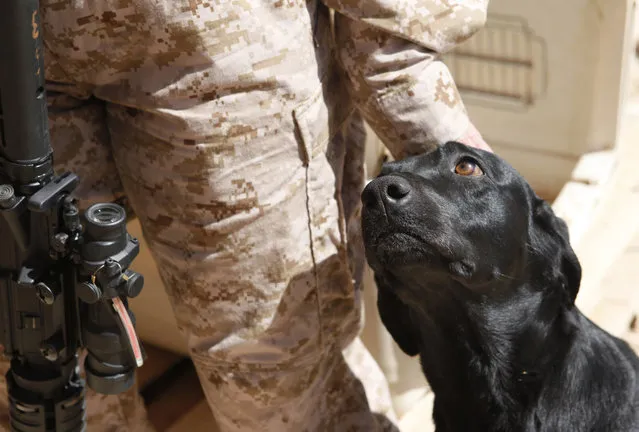
Throughout the course of the long war in Afghanistan, Coalition troops have relied on thousands of military working dogs to help keep them safe, and make their jobs easier. The dogs are trained to detect explosives, to find illegal drugs, to search for missing comrades, or target enemy combatants. Not only are they active on the front lines, but behind the lines they serve as therapy dogs, service dogs, and loyal companions. They also share the same risks as the ground troops, suffering injuries and sometimes death on the battlefields. Gathered here are images of these dogs and their handlers in Afghanistan and back home, from over the past several years, part of the ongoing series here on Afghanistan.
Details
05 Jun 2014 21:10:00
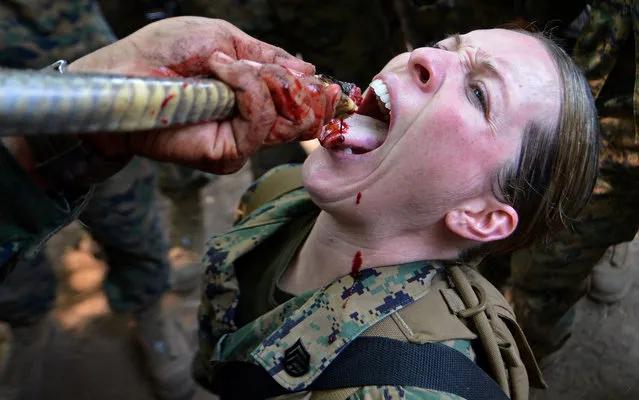
In a military base in the Thai province of Chon Buri February 20 U.S. Marines Navy with Thailand began their studies in jungle survival. The event is held in joint military exercises “Cobra Gold 2013”. During a jungle survival program February 20, 2013 taught by Royal Thai Special Forces in Sannapit, Thailand, U.S. Marines learned to catch cobras and drink their fresh blood, not to mention eat forest insects and pull the heads off of chicken. The training was part of Operation Cobra Gold 13, the 32nd edition of international military exercises hosted by the Thai. According to a U.S. Marines press release, Cobra Gold is the largest exercise of its kind in Asia and incorporates troops from five other nations in addition to the U.S. and Thailand. The Daily Mail reports that the Marines were invited to experience the local custom of drinking cobra blood after being taught to catch and kill cobras in the wild. As CNN notes, Cobra blood is believed to be a panacea and aphrodiasic in parts of Southeast Asia. In Jakarta, vendors can earn over $100 a night selling shots of cobra blood mixed with liquor. (Photo by Pornchai Kittiwongsakul/AFP Photo)

During a jungle survival program February 20, 2013 taught by Royal Thai Special Forces in Sannapit, Thailand, U.S. Marines learned to catch cobras and drink their fresh blood, not to mention eat forest insects and pull the heads off of chicken. The training was part of Operation Cobra Gold 13, the 32nd edition of international military exercises hosted by the Thai. According to a U.S. Marines press release, Cobra Gold is the largest exercise of its kind in Asia and incorporates troops from five other nations in addition to the U.S. and Thailand. The Daily Mail reports that the Marines were invited to experience the local custom of drinking cobra blood after being taught to catch and kill cobras in the wild. As CNN notes, Cobra blood is believed to be a panacea and aphrodiasic in parts of Southeast Asia. In Jakarta, vendors can earn over $100 a night selling shots of cobra blood mixed with liquor. (Photo by Pornchai Kittiwongsakul/AFP Photo)
Details
23 Feb 2013 11:52:00
Makeup artists Kamila Wysocka and Alexis Jackson from Florida, point at another costumed person as they eat dinner in their zombie makeup at ComicCon in New York, on Oktober 10, 2013. (Photo by Carlo Allegri/Reuters)

Makeup artists Kamila Wysocka and Alexis Jackson from Florida, point at another costumed person as they eat dinner in their zombie makeup at ComicCon in New York, on Oktober 10, 2013. (Photo by Carlo Allegri/Reuters)

P.S. All pictures are presented in high resolution. To see Hi-Res images – just TWICE click on any picture. In other words, click small picture – opens the BIG picture. Click BIG picture – opens VERY BIG picture (if available; this principle works anywhere on the site AvaxNews)
Details
12 Oct 2013 11:03:00


Film actress Audrey Hepburn (1929–1993) on a film set with her pet poodle, circa 1960. (Photo by Hulton Archive/Getty Images)
Details
19 Jul 2011 11:56:00
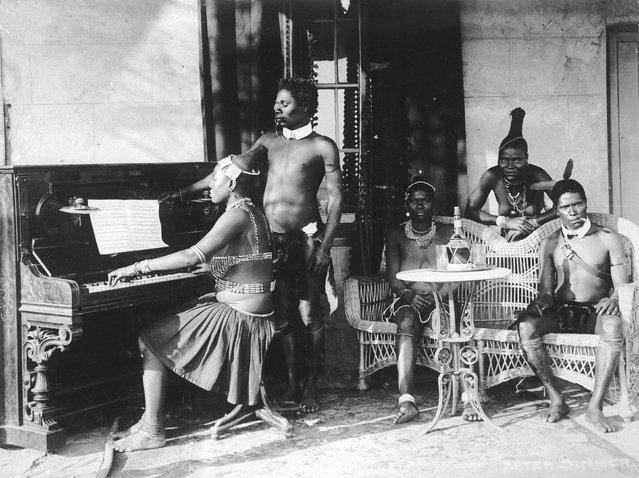
circa 1925:  A Zulu woman playing the piano while a group of others sit and listen.  (Photo by General Photographic Agency/Getty Images)

“The Zulu are the largest South African ethnic group, with an estimated 10–11 million people living mainly in the province of KwaZulu-Natal. Small numbers also live in Zimbabwe, Zambia, and Mozambique. Their language, Zulu, is a Bantu language; more specifically, part of the Nguni subgroup. The Zulu Kingdom played a major role in South African history during the 19th and 20th centuries. Under apartheid, Zulu people were classed as third-class citizens and suffered from state-sanctioned discrimination. They remain today the most numerous ethnic group in South Africa, and now have equal rights along with all other citizens”. – Wikipedia.

Photo: A Zulu woman playing the piano while a group of others sit and listen (to put it briefly, Englishmen scoff over Zulu). South Africa, circa 1925. (Photo by General Photographic Agency)

Details
03 Feb 2014 09:40:00
The shadow of a partial eclipse is cast on to the cheek of a student on the roof of the Jana Dlugosza Academy in Czestochowa, Poland March 20, 2015. (Photo by Grzegorz Skowronek/Reuters/Agencja Gazeta)

The shadow of a partial eclipse is cast on to the cheek of a student on the roof of the Jana Dlugosza Academy in Czestochowa, Poland March 20, 2015. (Photo by Grzegorz Skowronek/Reuters/Agencja Gazeta)
Details
21 Mar 2015 12:12:00
People carry drinks at 80s Bar in Damascus, Syria, March 11, 2016. (Photo by Omar Sanadiki/Reuters)

People carry drinks at 80s Bar in Damascus, Syria, March 11, 2016. In Damascus's Old City, just a mile from the battered frontline between government and rebel-held territory, young Syrians smoke, drink beer or soft drinks, and talk about anything but the war. The revival of activity in this once-vibrant quarter is part of efforts to project an air of normality in the Syrian capital, even as the five-year-old war that has killed more than 250,000 people and created 5 million refugees continues to rage nearby. (Photo by Omar Sanadiki/Reuters)
Details
28 Apr 2016 12:07:00
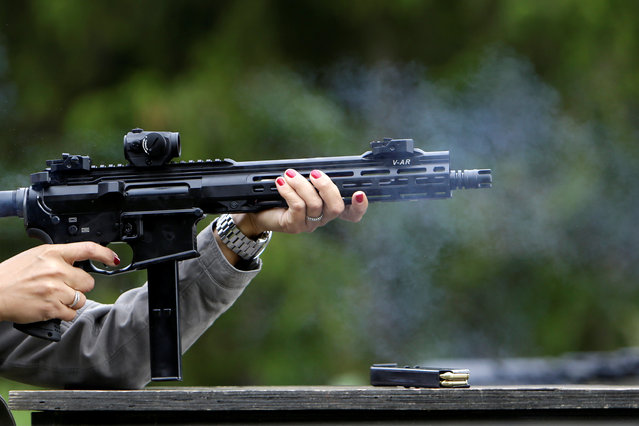
A woman shoots her rifle at a forest shooting range near the village of Visnova, Czech Republic, June 9, 2016. (Photo by David W. Cerny/Reuters)

A woman shoots her rifle at a forest shooting range near the village of Visnova, Czech Republic, June 9, 2016. (Photo by David W. Cerny/Reuters)
Details
11 Jun 2016 12:17:00