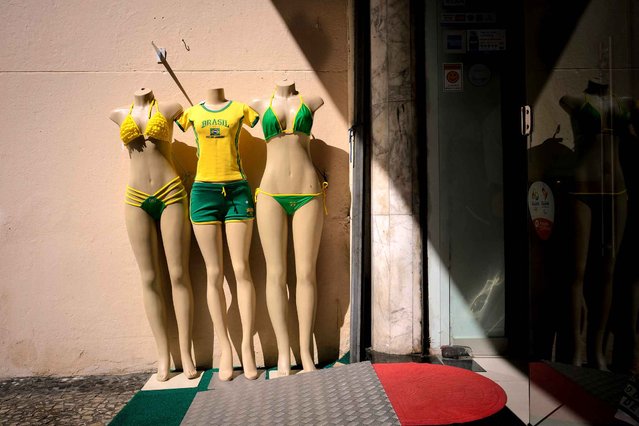
Brazilian bikinis are displayed outside a shop near Copacabana beach in Rio de Janeiro on August 4, 2016 on the eve of the opening of the Rio 2016 Olympic Games. (Photo by Leon Neal/AFP Photo)
A ladyboy sеx worker wears a belt with a dollar sign on it while holding condoms and lube handed to her by Sisters, a transgendered outreach and community services organization in Pattaya, Thailand on August 25, 2016. Many of Thailand's ladyboys live in Pattaya, a large percentage of whom work in the sеx industry there. (Photo by Aaron Joel Santos/Getty Images/Aurora Creative)
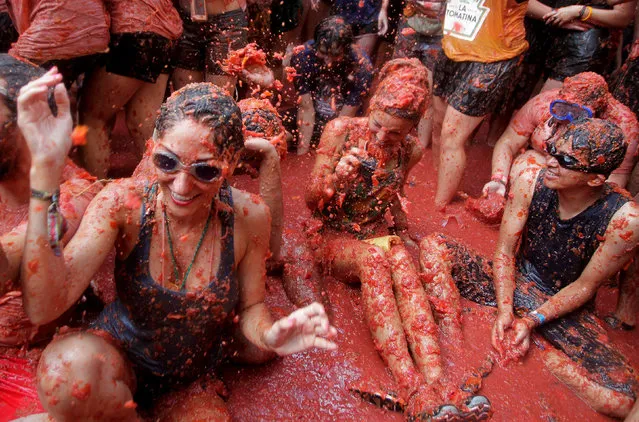
Revellers battle with tomato pulp during the annual “Tomatina” (tomato fight) festival in Bunol near Valencia, Spain, August 31, 2016. (Photo by Heino Kalis/Reuters)
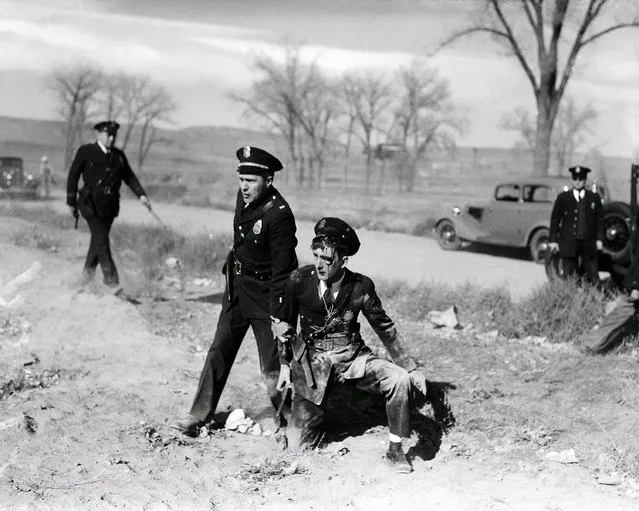
A fellow officer comes to the aid of injured patrolman C.V. Satt, who was pelted with rocks and beer bottles during a clash between police and relief demonstrators in Denver September 23, 1935. (Photo by Henry G. Eisenhand/AP Photo)
An Zi, is squashed amongst other commuters in a subway train on his way to work in Beijing, China, November 12, 2015. An, a movie producer, moved to Dongsanqi village in Changping this year. His commute to work can take about 2 hours, with transportation costs topping 200 yuan a month, or about a fifth of his monthly rent. (Photo by Jason Lee/Reuters)
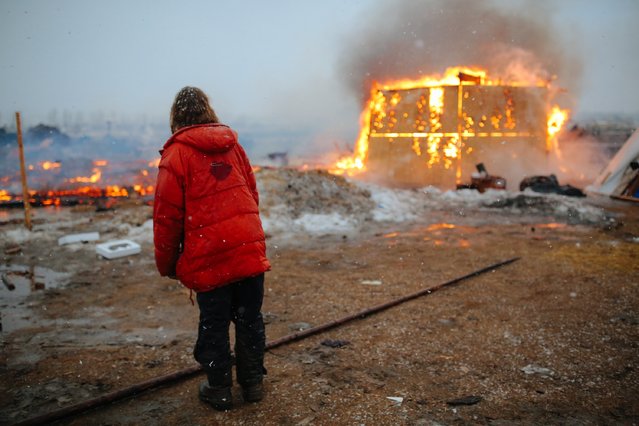
Campers set structures on fire in preparation of the Army Corp's 2pm deadline to leave the Oceti Sakowin protest camp on February 22, 2017 in Cannon Ball, North Dakota. Activists and protesters have occupied the Standing Rock Sioux reservation for months in opposotion to the completion of the Dakota Access Pipeline. (Photo by Stephen Yang/Getty Images)
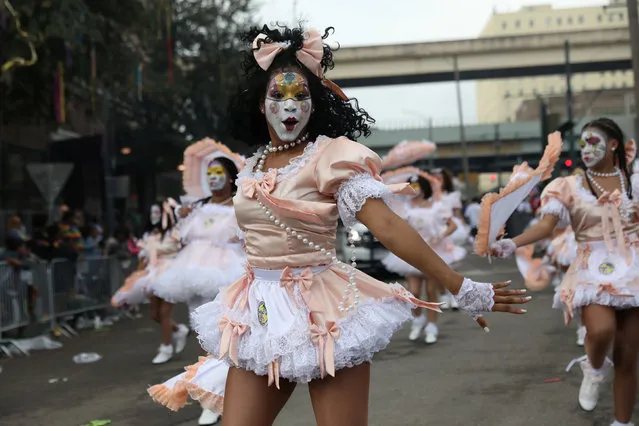
Members of the New Orleans Baby Doll Ladies march during the Krewe of Zulu parade at Mardi Gras in New Orleans, Louisiana U.S., February 28, 2017. (Photo by Shannon Stapleton/Reuters)
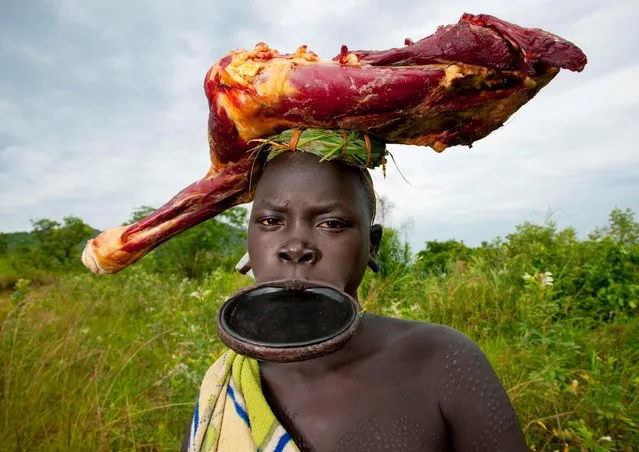
Warriors from the Suri tribe in Ethiopia still stage the savage “Donga” battles – even after many fighters have been died from their injuries. Donga stick fights take place after the harvests, the Surmas count days owing to knots on a long stem of grass or jags on the trunk of a tree dedicated to that specific use. Here: A tribeswoman sporting a huge lip plate and wearing a skinned animal carcass on her head. (Photo by Eric Lafforgue/Exclusivepix Media)