Loading...
Done
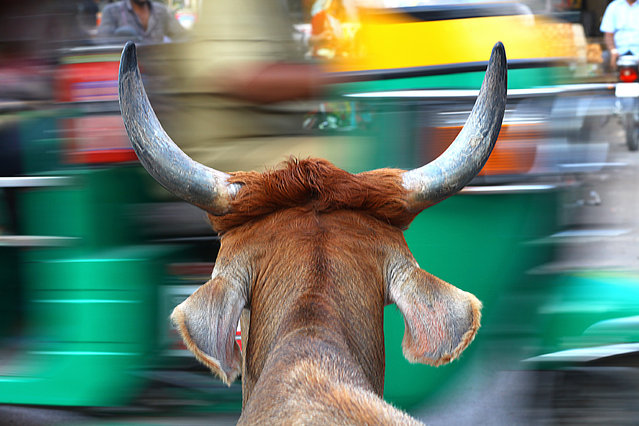
“Slow”. A calm cow in the messy streets of Jodhpur. Photo location: India. (Photo and caption by Matthias Troeger/National Geographic Photo Contest)

“Slow”. A calm cow in the messy streets of Jodhpur. Photo location: India. (Photo and caption by Matthias Troeger/National Geographic Photo Contest)
Details
20 May 2014 12:18:00
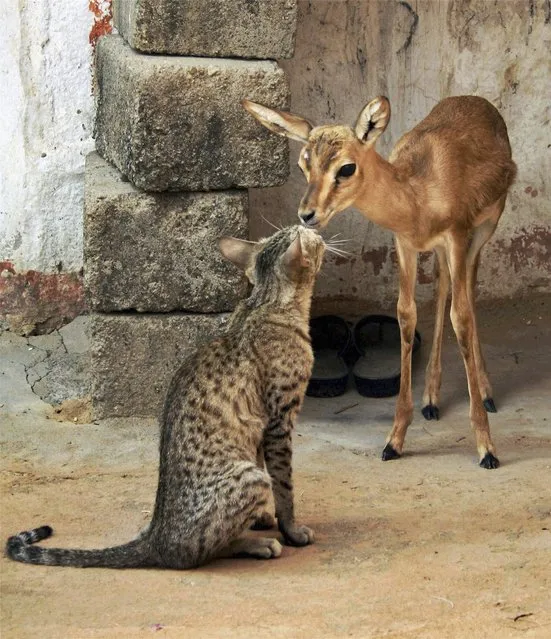
In this Wednesday, May 23, 2012 photograph, a young deer and a cat share a moment in Feench village near Jodhpur, Rajasthan state, India

In this Wednesday, May 23, 2012 photograph, a young deer and a cat share a moment in Feench village near Jodhpur, Rajasthan state, India. (Photo by AP Photo)
Details
16 Jun 2012 11:07:00
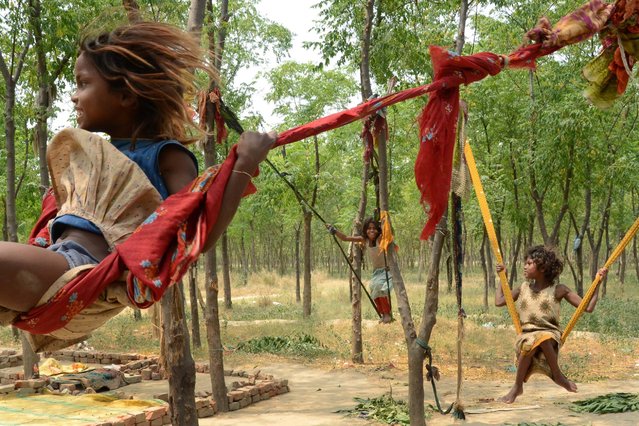
Children of Indian laborers play on make-shift swings in Amritsar, India, May 12, 2015. (Photo by Narinder Nanu/AFP Photo)

Children of Indian laborers play on make-shift swings in Amritsar, India, May 12, 2015. (Photo by Narinder Nanu/AFP Photo)
Details
16 May 2015 12:12:00
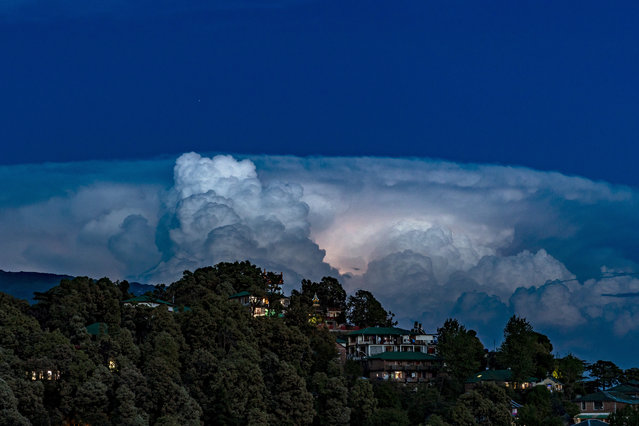
A flash of lightning lights up a raincloud hovering over a township in Dharmsala, India, Sunday, April 19, 2020. (Photo by Ashwini Bhatia/AP Photo)

A flash of lightning lights up a raincloud hovering over a township in Dharmsala, India, Sunday, April 19, 2020. (Photo by Ashwini Bhatia/AP Photo)
Details
25 Aug 2020 00:03:00
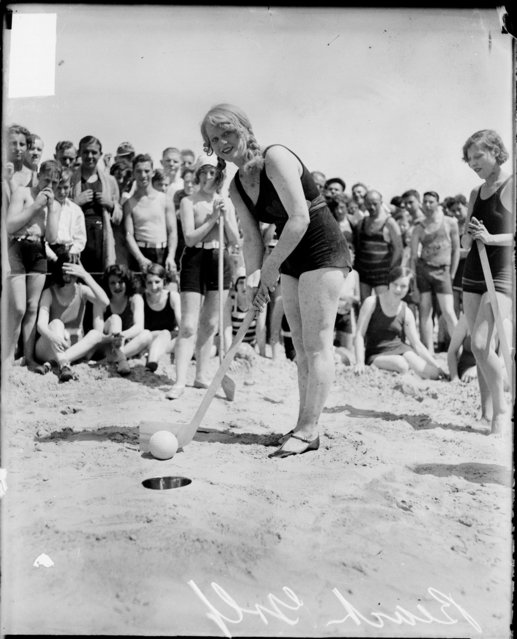
A Summer Activity time Can't Touch By William Holt_Part2

With temperatures soaring and summer well underway, countless Americans will be spending their Independence Day weekend at the beach. Here we revisit some classic images from the turn-of-the-century to the 1930's of vacations by the sea, from Coney Island to Santa Monica.
Details
23 Aug 2013 14:04:00
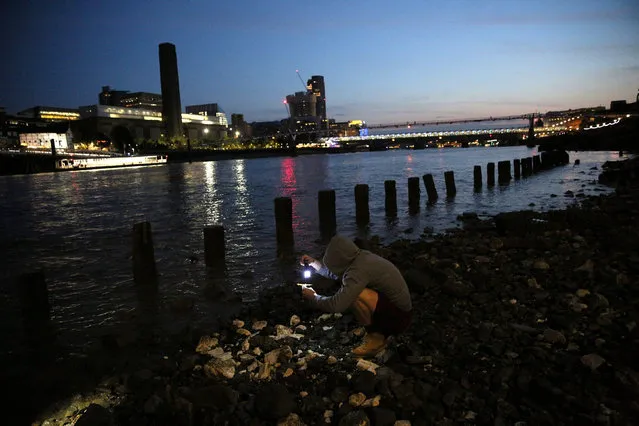
A mudlark uses a torch to look for items on the bank of the River Thames in London, Britain June 06, 2016. Mudlarking is believed to trace its origins to the 18th and 19th century, when scavengers searched the Thames' shores for items to sell. These days, history and archaeology fans are the ones hoping to find old relics such as coins, ceramics, artifacts or everyday items from across centuries. They wait for the low tide and then scour specific areas of exposed shores. "If you're in a field you could be out all day long, with the river you're restricted to about two or three hours," mudlark Nick Stevens said. While many just use the naked eye for their searches, others rely on metal detectors for which a permit from the Port of London Authority is needed. Digging also requires consent. (Photo by Neil Hall/Reuters)

A mudlark uses a torch to look for items on the bank of the River Thames in London, Britain June 06, 2016. Mudlarking is believed to trace its origins to the 18th and 19th century, when scavengers searched the Thames' shores for items to sell. These days, history and archaeology fans are the ones hoping to find old relics such as coins, ceramics, artifacts or everyday items from across centuries. their finds with the Portable Antiquities Scheme. Any item over 300 years old must be recorded. (Photo by Neil Hall/Reuters)
Details
27 Aug 2016 10:43:00
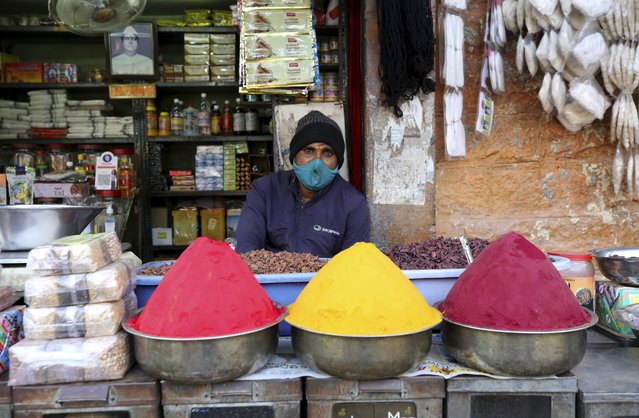
A shopkeeper wears a face mask as a precaution against the coronavirus waits for customers at a market in Bengaluru, India, Friday, November 20, 2020. India's total number of coronavirus cases since the pandemic began has crossed 9 million. Nevertheless the country's new daily cases have seen a steady decline for weeks now and the total number of cases represents 0.6% of India's 1.3 billion population. (Photo by Aijaz Rahi/AP Photo)

A shopkeeper wears a face mask as a precaution against the coronavirus waits for customers at a market in Bengaluru, India, Friday, November 20, 2020. India's total number of coronavirus cases since the pandemic began has crossed 9 million. Nevertheless the country's new daily cases have seen a steady decline for weeks now and the total number of cases represents 0.6% of India's 1.3 billion population. (Photo by Aijaz Rahi/AP Photo)
Details
09 Apr 2021 10:10:00
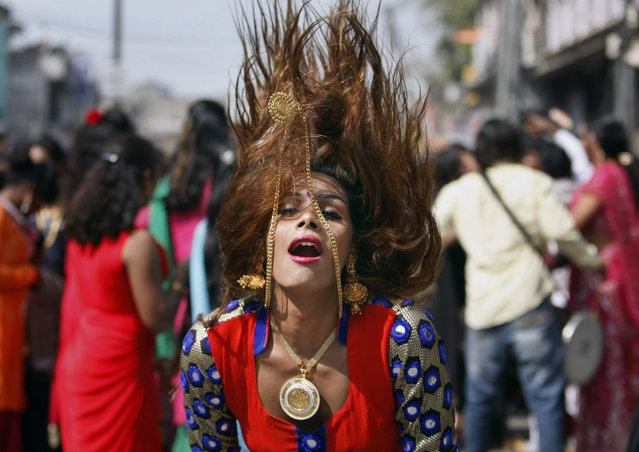
A eunuch dances during a rally to mark the congregation of thousands of eunuchs from different parts of India, in Jammu, India, Friday, March 13, 2015. The term eunuchs is used in India to describe transvestites, transsexuals and others who identify themselves as neither male nor female but as a member of a third gender. They traditionally survive by begging, dancing at weddings or blessing newborn babies and are frequently subjected to discrimination. (Photo by Channi Anand/AP Photo)

A eunuch dances during a rally to mark the congregation of thousands of eunuchs from different parts of India, in Jammu, India, Friday, March 13, 2015. The term eunuchs is used in India to describe transvestites, transsexuals and others who identify themselves as neither male nor female but as a member of a third gender. They traditionally survive by begging, dancing at weddings or blessing newborn babies and are frequently subjected to discrimination. (Photo by Channi Anand/AP Photo)
Details
21 Mar 2015 12:33:00