Loading...
Done
Mutants

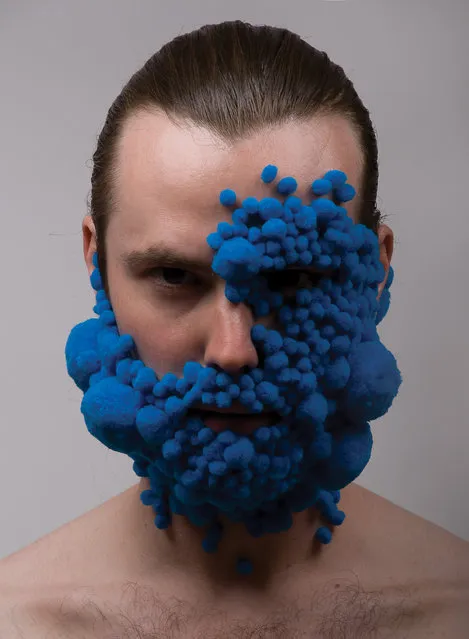
The STRP mutants were designed by Bart Hess together with Heyheyhey for the 2011 STRP Art & Technology Festival campaign. The mutants evolved around the idea of transformation. They visualize movement and the ever changing boundaries between the different disciplines: art, music and technology.
Details
08 Jun 2012 11:03:00
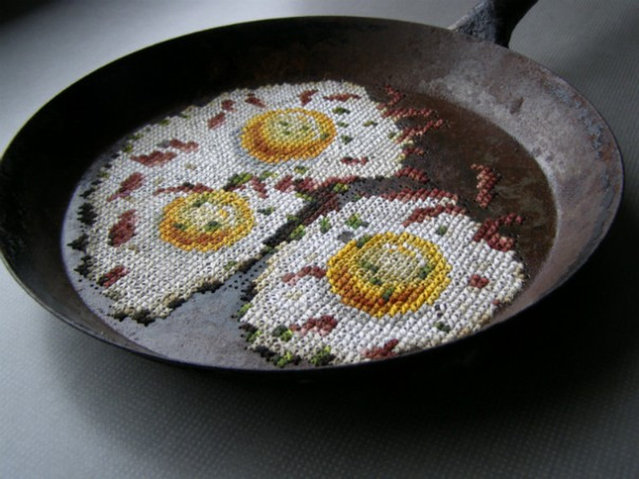
Embroidery On Metal By Severija Incirauskaite-Kriauneviciene

Just when you thought you had seen it all…Lithuanian artist, Severija Incirauskaite-Kriauneviciene drives up in this. This woman is comfortable around a drill bit and a sewing kit. Back it up and park it.
Details
08 Dec 2012 15:10:00
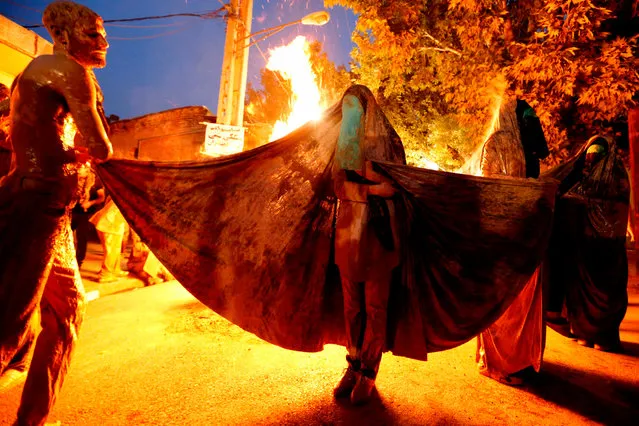
Iranian Shiite Muslim women gather around a bonfire after rubbing mud on their body during the “Kharrah Mali” (Mud Rubbing) ritual to mark the Ashura religious ceremony in the city of Khorramabad, some 470 kms southwest of Tehran, early in the morning on October 1, 2017. “Khrreh Mali” or “Mud Rubbing” is a ritual that is held in the city of Khorramabad every year to commemorate the seventh century slaying of Prophet Mohammed' s grandson Imam Hussein, in which Iranian men roll over in mud and dry themselves by gathering around the bonfires before flagellating themselves. (Photo by Atta Kenare/AFP Photo)

Iranian Shiite Muslim women gather around a bonfire after rubbing mud on their body during the “Kharrah Mali” (Mud Rubbing) ritual to mark the Ashura religious ceremony in the city of Khorramabad, some 470 kms southwest of Tehran, early in the morning on October 1, 2017. “Khrreh Mali” or “Mud Rubbing” is a ritual that is held in the city of Khorramabad every year to commemorate the seventh century slaying of Prophet Mohammed' s grandson Imam Hussein, in which Iranian men roll over in mud and dry themselves by gathering around the bonfires before flagellating themselves. (Photo by Atta Kenare/AFP Photo)
Details
02 Oct 2017 08:38:00
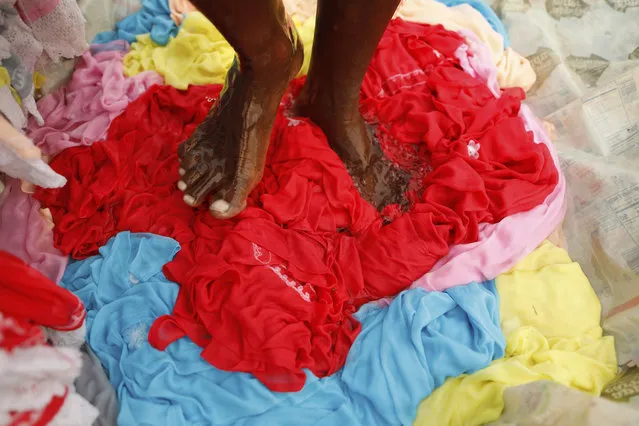
A dhobi, or a washerman washes cloths on the banks of the River Gomti in Lucknow, India, Saturday, September 12, 2020. Dhobis are traditional laundry workers who wash clothes by hand and dry them in the sun, an occupation which has been in existence for generations. Most cities in India have a Dhobi Ghat, or washermen's area, where the city's pile of clothes is laundered. This practice is still popular in India, despite of modern technology. Around 1,000 families work in Lucknow's Dhobi Ghat. However, in light of the novel coronavirus, their wages have decreased drastically. With each family earning around US$100-200 per month. (Photo by Rajesh Kumar Singh/AP Photo)

A dhobi, or a washerman washes cloths on the banks of the River Gomti in Lucknow, India, Saturday, September 12, 2020. Dhobis are traditional laundry workers who wash clothes by hand and dry them in the sun, an occupation which has been in existence for generations. Most cities in India have a Dhobi Ghat, or washermen's area, where the city's pile of clothes is laundered. This practice is still popular in India, despite of modern technology. Around 1,000 families work in Lucknow's Dhobi Ghat. However, in light of the novel coronavirus, their wages have decreased drastically. With each family earning around US$100-200 per month. (Photo by Rajesh Kumar Singh/AP Photo)
Details
25 Sep 2020 00:03:00
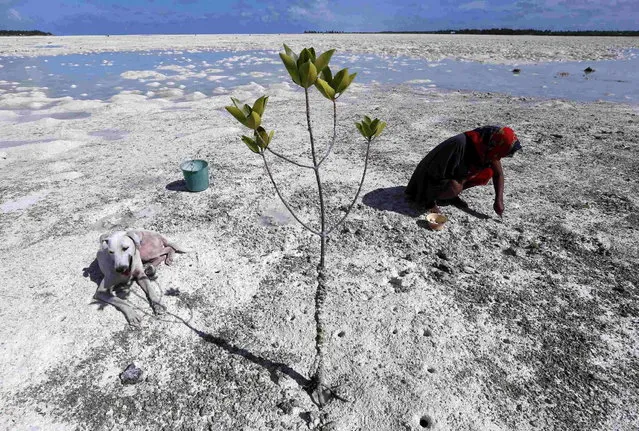
A dog sits in the shade of a mangrove tree as a woman uses a fork to dig for shellfish on the reef-mud flats of a lagoon located at South Tarawa in the central Pacific island nation of Kiribati May 23, 2013. (Photo by David Gray/Reuters)

A dog sits in the shade of a mangrove tree as a woman uses a fork to dig for shellfish on the reef-mud flats of a lagoon located at South Tarawa in the central Pacific island nation of Kiribati May 23, 2013. Kiribati consists of a chain of 33 atolls and islands that stand just metres above sea level, spread over a huge expanse of otherwise empty ocean. With surrounding sea levels rising, Kiribati President Anote Tong has predicted his country will likely become uninhabitable in 30-60 years because of inundation and contamination of its freshwater supplies. (Photo by David Gray/Reuters)
Details
13 Jun 2013 09:23:00
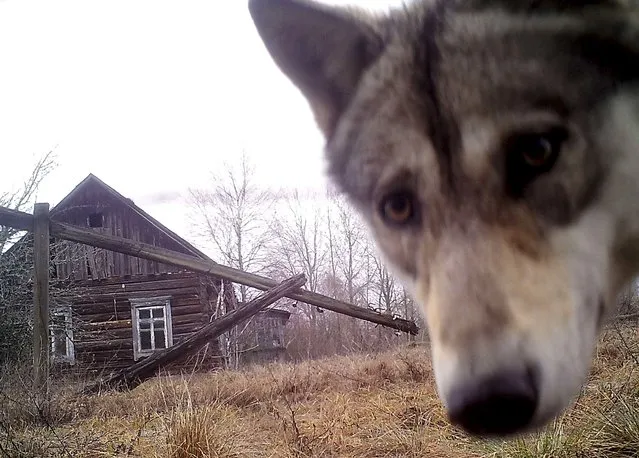
A wolf looks into the camera at the 30 km (19 miles) exclusion zone around the Chernobyl nuclear reactor in the abandoned village of Orevichi, Belarus, March 2, 2016. (Photo by Vasily Fedosenko/Reuters)

A wolf looks into the camera at the 30 km (19 miles) exclusion zone around the Chernobyl nuclear reactor in the abandoned village of Orevichi, Belarus, March 2, 2016. What happens to the environment when humans disappear? Thirty years after the Chernobyl nuclear disaster, booming populations of wolf, elk and other wildlife in the vast contaminated zone in Belarus and Ukraine provide a clue. (Photo by Vasily Fedosenko/Reuters)
Details
08 Apr 2016 15:13:00
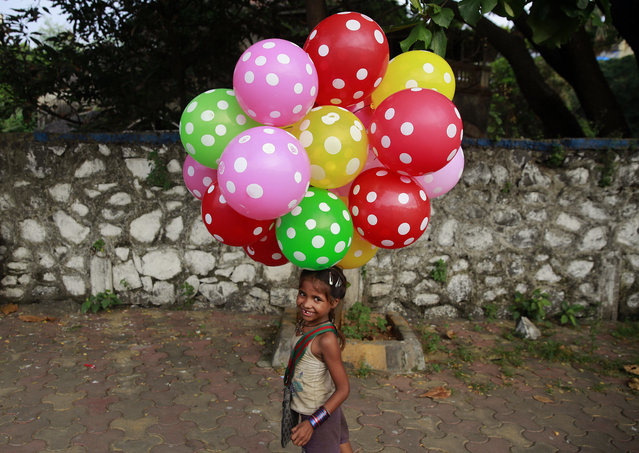
Lali carries balloons to sell on a beach in Mumbai, India, Sunday, October 11, 2015. The United Nations General Assembly marks October 11 as the International Day of the Girl Child, to recognize girls’ rights and the unique challenges girls face around the world. (Photo by Rafiq Maqbool/AP Photo)

Lali carries balloons to sell on a beach in Mumbai, India, Sunday, October 11, 2015. The United Nations General Assembly marks October 11 as the International Day of the Girl Child, to recognize girls’ rights and the unique challenges girls face around the world. (Photo by Rafiq Maqbool/AP Photo)
Details
30 Oct 2015 08:05:00
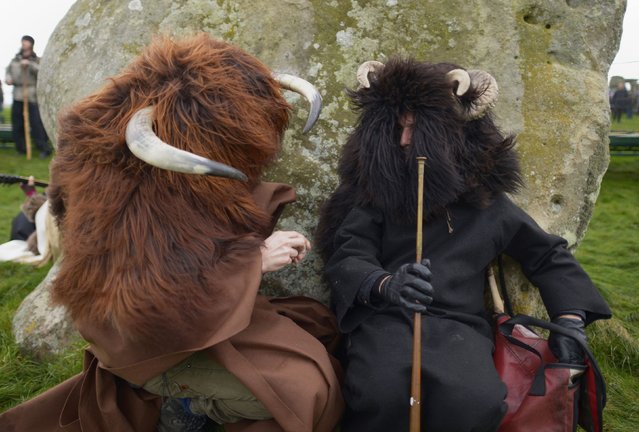
Two people wearing animal costumes  join others as people gather  to celebrate the Winter Solstice at Stonehenge in England  Tuesday December 22, 2015.  The winter solstice is celebrated by many people around the world as the beginning of the return of the sun. (Photo by Ben Birchall/PA Wire via AP Photo)

Two people wearing animal costumes join others as people gather to celebrate the Winter Solstice at Stonehenge in England Tuesday December 22, 2015. The winter solstice is celebrated by many people around the world as the beginning of the return of the sun. (Photo by Ben Birchall/PA Wire via AP Photo)
Details
24 Dec 2015 08:07:00