Loading...
Done
Avenue of the Baobabs

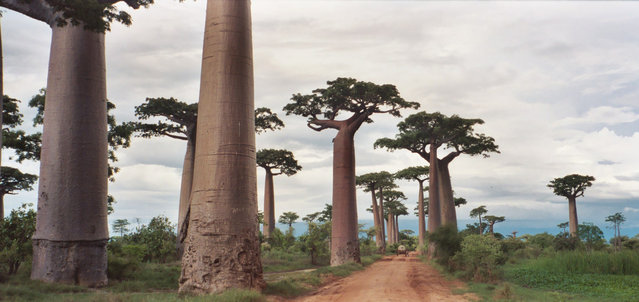
The Avenue or Alley of the Baobabs is a prominent group of baobab trees lining the dirt road between Morondava and Belon'i Tsiribihina in the Menabe region in western Madagascar. Its striking landscape draws travelers from around the world, making it one of the most visited locations in the region. It has been a center of local conservation efforts, and was granted temporary protected status in July 2007 by the Ministry of Environment, Water and Forests, the first step toward making it Madagascar's first natural monument.
Details
16 Nov 2012 10:05:00
Chernobyl

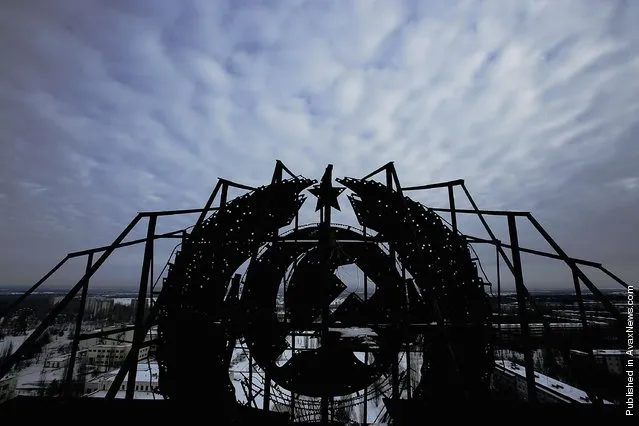
Scaffolding holding a remnant of the Soviet Union, the hammer and sickle, is seen on a rooftop of an abandoned building in the town of Pripyat on January 25, 2006 near Chernobyl, Ukraine. The town of Pripyat, deserted since the 1986 catastrophe, once housed 30,000 people, the majority of being workers from the Chernobyl Nuclear Power Plant. Days after the catastrophe the inhabitants were relocated to other locations in the Soviet Union. The town of Pripyat has remained uninhabited since. Prypyat and the surrounding area will not be safe for human habitation for several centuries. Scientists estimate that the most dangerous radioactive elements will take up to 900 years to decay sufficiently to render the area safe.
Details
14 Mar 2011 10:20:00


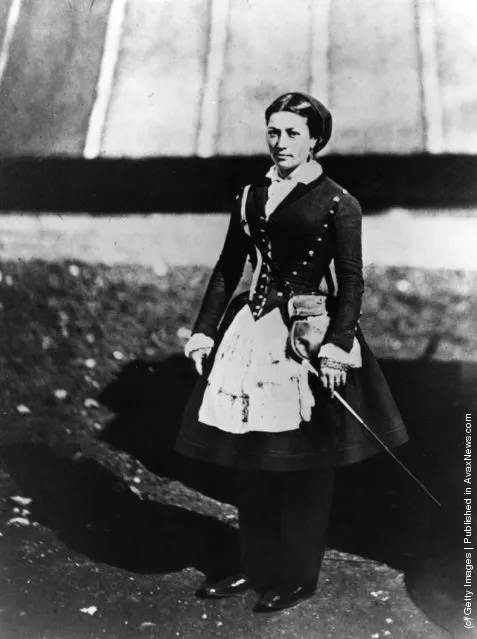
“The Crimean War (October 1853 – February 1856) was a conflict fought between the Russian Empire and an alliance of the French Empire, the British Empire, the Ottoman Empire, and the Kingdom of Sardinia. The war was part of a long-running contest between the major European powers for influence over territories of the declining Ottoman Empire. Most of the conflict took place on the Crimean Peninsula, but there were smaller campaigns in western Anatolia, Caucasus, the Baltic Sea, the Pacific Ocean and the White Sea”. – Wikipedia

Photo: A vivandiere, a female soldier selling provisions and spirits, with the Allied forces during the Crimean War. (Photo by Hulton Archive/Getty Images)
Details
18 Jul 2011 11:57:00
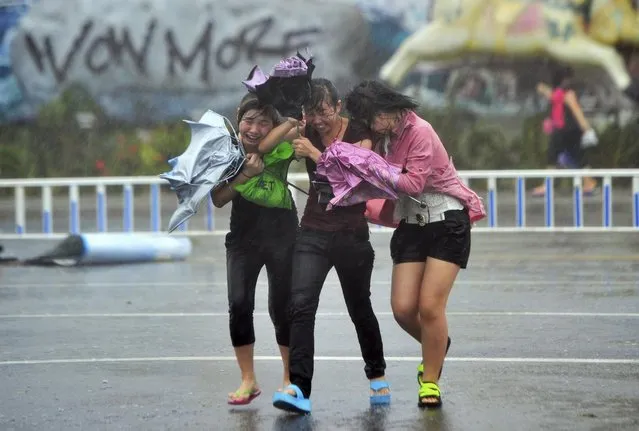
People cross a street against strong wind and heavy rainfall under the influence of Typhoon Haiyan, in Sanya, Hainan province November 10, 2013. One of the most powerful storms ever recorded killed at least 10,000 people in the central Philippines, a senior police official said on Sunday, with huge waves sweeping away entire coastal villages and devastating the region's main city. Despite weakening, the storm is likely to cause heavy rains, flooding, strong winds and mudslides as it makes its way north in the South China Sea. (Photo by Reuters/China Daily)

People cross a street against strong wind and heavy rainfall under the influence of Typhoon Haiyan, in Sanya, Hainan province November 10, 2013. One of the most powerful storms ever recorded killed at least 10,000 people in the central Philippines, a senior police official said on Sunday, with huge waves sweeping away entire coastal villages and devastating the region's main city. Despite weakening, the storm is likely to cause heavy rains, flooding, strong winds and mudslides as it makes its way north in the South China Sea. (Photo by Reuters/China Daily)
Details
16 Nov 2013 12:28:00
One of the worlds shortest models Mary Russell at 4 feet 1 inch with 6 foot model Georgia Meacham in London, UK on June 16, 2016. The 4ft1 beauty suffers with achondroplasia  a medical term for dwarfism, which means she has as average sized torso but short arms and short legs, with an oversized head. As well as stifled growth, Mary also suffers with sciatica and spinal stenosis, an abnormal narrowing of the spinal canal – which cause agonising nerve problems, leaving her in excruciating pain and unable to stand for long periods of time. The condition leaves Mary, 47, struggling with everyday tasks  things most people take for granted like going to the supermarket, getting cash from an ATM and ordering a drink at a bar become a challenge. (Photo by Simon Jacobs/Caters News Agency)

One of the worlds shortest models Mary Russell at 4 feet 1 inch with 6 foot model Georgia Meacham in London, UK on June 16, 2016. The 4ft1 beauty suffers with achondroplasia a medical term for dwarfism, which means she has as average sized torso but short arms and short legs, with an oversized head. As well as stifled growth, Mary also suffers with sciatica and spinal stenosis, an abnormal narrowing of the spinal canal – which cause agonising nerve problems, leaving her in excruciating pain and unable to stand for long periods of time. The condition leaves Mary, 47, struggling with everyday tasks things most people take for granted like going to the supermarket, getting cash from an ATM and ordering a drink at a bar become a challenge. (Photo by Simon Jacobs/Caters News Agency)
Details
28 Aug 2016 10:12:00
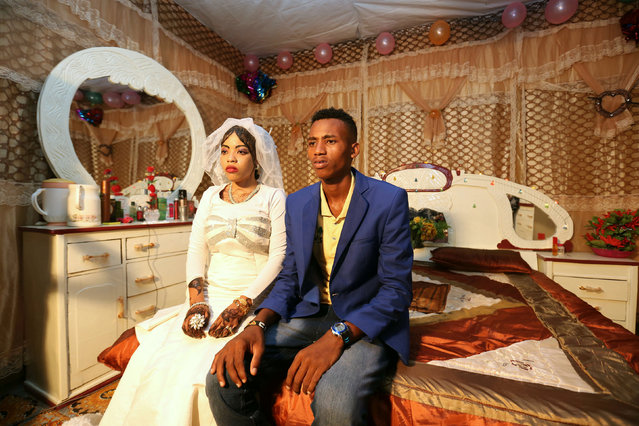
Somali couple Mohamed Noor (L) and Huda Omar pose for a photograph at their makeshift home during their wedding ceremony in Mogadishu's Rajo camp, Somalia August 17, 2016. Having met two years ago, the pair have just married at Rajo camp, where some 400 families live. Most, like Noor's parents, came here in the early 1990s to flee famine. They stayed on as years of conflict ravaged the Horn of Africa nation. As at any wedding, there is plenty of dancing and sweet treats for the young couple as they start married life in Noor's simple home, made of iron and plastic sheets. Noor works as a mason with his father. Others here are builders or sell sweets, nuts and stick toothbrushes to make money. Some beg around the seaside city, which like the rest of Somalia has been gripped by violence since the toppling of dictator Mohamed Siad Barre in 1991. (Photo by Feisal Omar/Reuters)

Somali couple Mohamed Noor (L) and Huda Omar pose for a photograph at their makeshift home during their wedding ceremony in Mogadishu's Rajo camp, Somalia August 17, 2016. Having met two years ago, the pair have just married at Rajo camp, where some 400 families live. Most, like Noor's parents, came here in the early 1990s to flee famine. (Photo by Feisal Omar/Reuters)
Details
14 Sep 2016 10:35:00
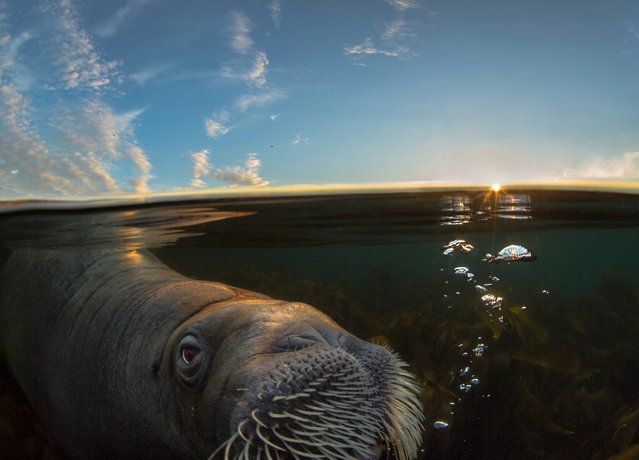
The Wildscreen festival is the world’s biggest celebration of screen-based natural history storytelling which takes place every two years in Bristol. Here: “Walrus in Midnight Sun”. Walrus feed mostly on bivalves in productive, shallow and often sandy habitats in the Arctic. This individual, though, arrived on a beach outside Tromsø, northern Norway, and found comfort on a stranded dead sperm whale. After two weeks he approached Audun, and only half a metre away he stretched his tusk forward and touched his hand gently. “This was one of the most memorable moments of my life”, Rikardsen says. He named the 500kg male Buddy. After two months, the dead whale was decomposed and Buddy suddenly disappeared. (Photo by Audun Rikardsen/Wildscreen 2016)

The Wildscreen festival is the world’s biggest celebration of screen-based natural history storytelling which takes place every two years in Bristol. Here: “Walrus in Midnight Sun”. Walrus feed mostly on bivalves in productive, shallow and often sandy habitats in the Arctic. This individual, though, arrived on a beach outside Tromsø, northern Norway, and found comfort on a stranded dead sperm whale. After two weeks he approached Audun, and only half a metre away he stretched his tusk forward and touched his hand gently. “This was one of the most memorable moments of my life”, Rikardsen says. He named the 500kg male Buddy. After two months, the dead whale was decomposed and Buddy suddenly disappeared. (Photo by Audun Rikardsen/Wildscreen 2016)
Details
07 Oct 2016 10:02:00
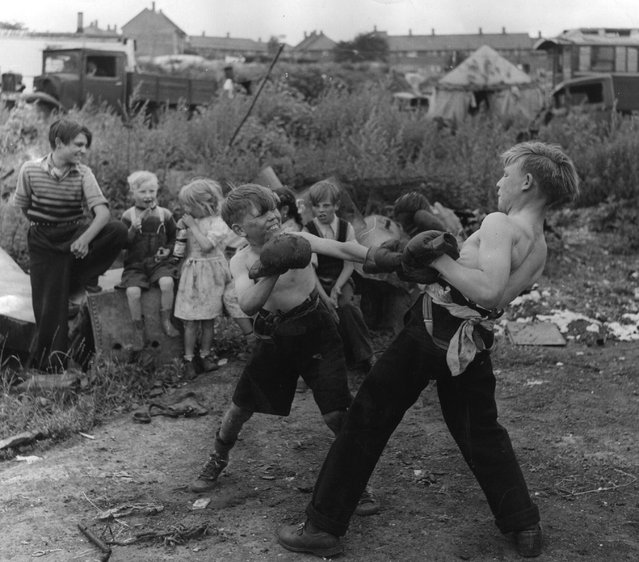
The unromantic gypsies. Children boxing in a gypsy camp in Kent, England on July 1, 1951. Like all boys these gypsy lads like to try their hand at boxing. Encouraged by their friends they fight it out on Corke's Meadow. Few Romanies now live a life of wandering romance. Most are like the three hundred squatters of Corke's Meadow, Kent, which is part of a “gypsy problem” that involves about 100,000 today. Of those about 25,000 can be rightly called gypsies, the rest are Mumpers and Posh-rats and Hobos. Corke's Meadow has both kinds. “Picture Post” cameraman Bert Hardy photographs the Corke's Meadow gypsies in their encampment. (Photo by Hulton-Deutsch Collection/Corbis via Getty Images)

The unromantic gypsies. Children boxing in a gypsy camp in Kent, England on July 1, 1951. Like all boys these gypsy lads like to try their hand at boxing. Encouraged by their friends they fight it out on Corke's Meadow. Few Romanies now live a life of wandering romance. Most are like the three hundred squatters of Corke's Meadow, Kent, which is part of a “gypsy problem” that involves about 100,000 today. Of those about 25,000 can be rightly called gypsies, the rest are Mumpers and Posh-rats and Hobos. Corke's Meadow has both kinds. “Picture Post” cameraman Bert Hardy photographs the Corke's Meadow gypsies in their encampment. (Photo by Hulton-Deutsch Collection/Corbis via Getty Images)
Details
12 Mar 2017 00:01:00