Loading...
Done
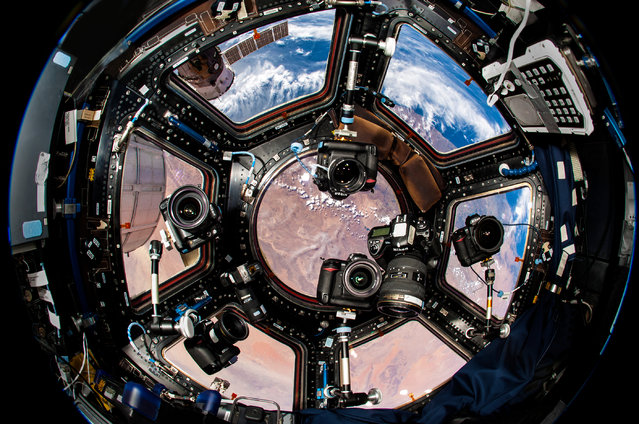
Astronaut Donald R. Pettit would often rig an array of as many as six cameras in the cupola windows and set them all to fire continuously for events such as sunsets, which only last around seven seconds on the ISS. (Photo by Donald R. Pettit)

Astronaut Donald R. Pettit would often rig an array of as many as six cameras in the cupola windows and set them all to fire continuously for events such as sunsets, which only last around seven seconds on the ISS. (Photo by Donald R. Pettit)
Details
05 Sep 2016 11:34:00
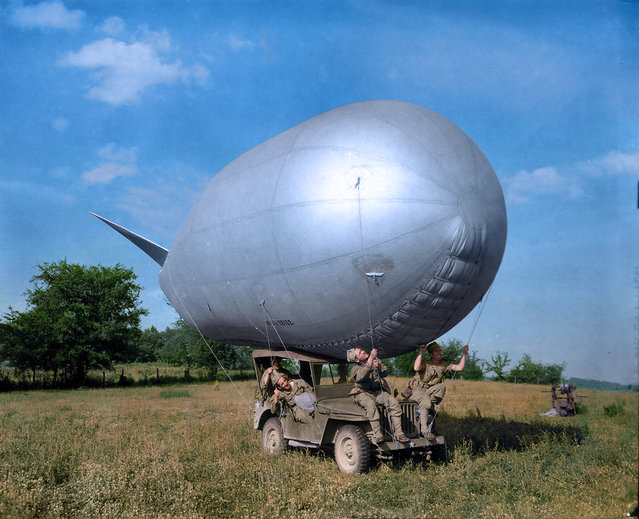
Soldiers try to attach the balloon to their car, June 1944. (Photo by Jared Enos/Mediadrumworld.com)

Soldiers try to attach the balloon to their car, June 1944. (Photo by Jared Enos/Mediadrumworld.com)
Details
10 Jun 2017 08:28:00
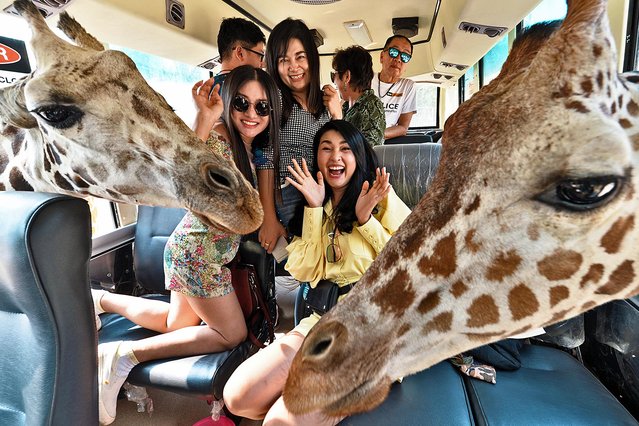
Visitors are seen with giraffes on a bus at Safari Park in Kanchanaburi Province, Thailand, January 19, 2020. Kanchanaburi in western Thailand an area known for its waterfalls and caves. (Photo by Rachen Sageamsak/Xinhua News Agency/Eyevine)

Visitors are seen with giraffes on a bus at Safari Park in Kanchanaburi Province, Thailand, January 19, 2020. Kanchanaburi in western Thailand an area known for its waterfalls and caves. (Photo by Rachen Sageamsak/Xinhua News Agency/Eyevine)
Details
23 Feb 2020 00:03:00
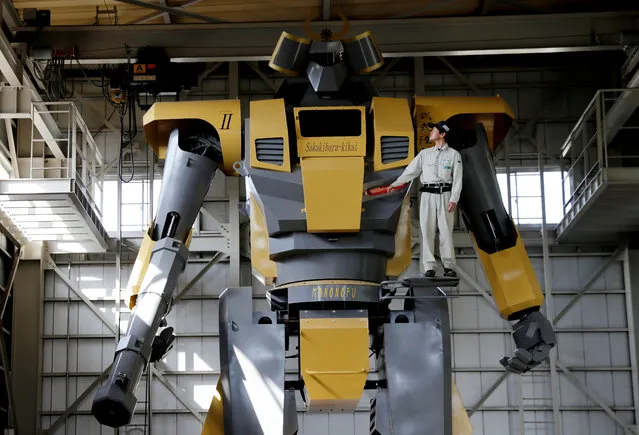
Sakakibara Kikai's engineer Go Sakakibara poses with the bipedal robot Mononofu during its demonstration at its factory in Shinto Village, Gunma Prefecture, Japan on April 12, 2018. Developed at Sakakibara Kikai, a maker of farming machinery, LW-Mononofu is a 28-feet tall, two-legged robot weighing in at more than 7 tonnes. It contains a cockpit with monitors and levers for the pilot to control the robot's arms and legs. (Photo by Kim Kyung-Hoon/Reuters)

Sakakibara Kikai's engineer Go Sakakibara poses with the bipedal robot Mononofu during its demonstration at its factory in Shinto Village, Gunma Prefecture, Japan on April 12, 2018. Developed at Sakakibara Kikai, a maker of farming machinery, LW-Mononofu is a 28-feet tall, two-legged robot weighing in at more than 7 tonnes. It contains a cockpit with monitors and levers for the pilot to control the robot's arms and legs. (Photo by Kim Kyung-Hoon/Reuters)
Details
17 Apr 2018 00:01:00
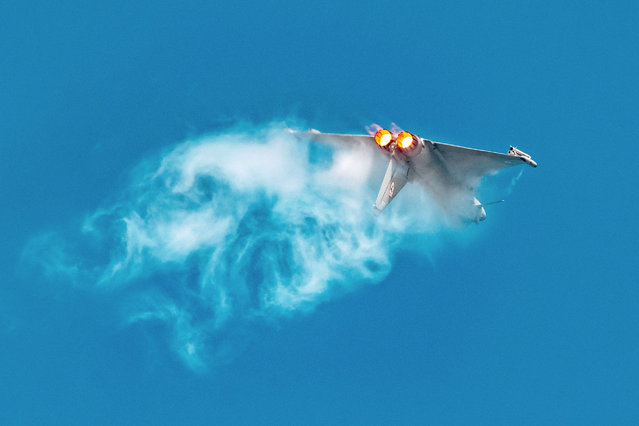
Picture dated March 28th 2022 shows a Typhoon training over Lincolnshire as it prepares for this years airshows. The Typhoon jet took part in a number of air shows across the UK last year. Out of season it is used for operational sorties. (Photo by Claire Hartley/Bav Media)

Picture dated March 28th 2022 shows a Typhoon training over Lincolnshire as it prepares for this years airshows. The Typhoon jet took part in a number of air shows across the UK last year. Out of season it is used for operational sorties. (Photo by Claire Hartley/Bav Media)
Details
13 Aug 2022 05:15:00


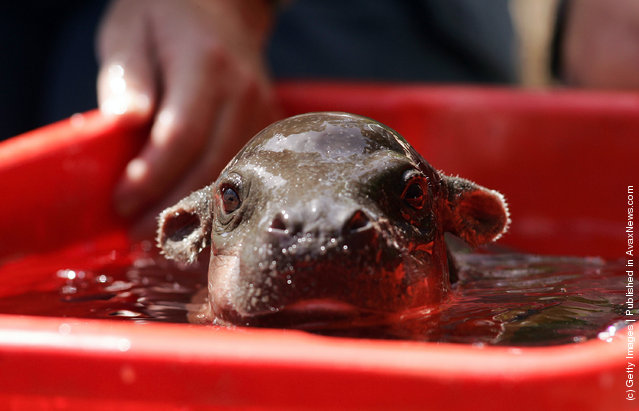
“The pygmy hippopotamus (Choeropsis liberiensis or Hexaprotodon liberiensis) is a large mammal native to the forests and swamps of western Africa (the specific name liberiensis means “of Liberia”, as this is where the vast majority live). The pygmy hippo is reclusive and nocturnal. It is one of only two extant species in the Hippopotamidae family, the other being its much larger cousin the common hippopotamus”. – Wikipedia

Photo: Monifa, a one month old baby Pygmy Hippopotamus takes a morning bath at Taronga Zoo on November 7, 2008 in Sydney, Australia. Monifa is the first Pygmy Hippopotamus to be born at Taronga Zoo in the past twenty three years. (Photo by Sergio Dionisio/Getty Images)
Details
11 Apr 2011 08:11:00


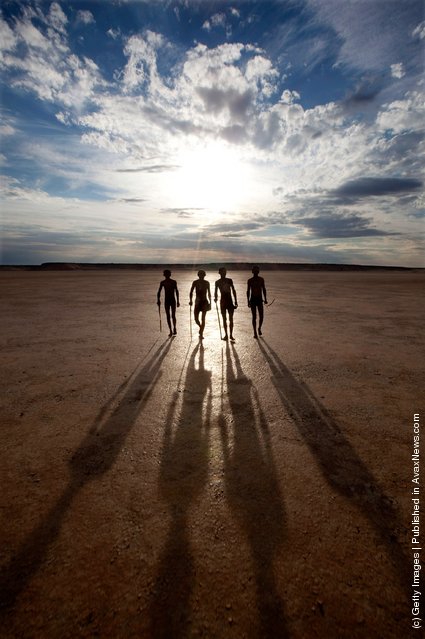
A group of San Bushmen from the Khomani San community practice their hunter-gatherer craft in the Southern Kalahari desert on October 15, 2009 in the Kalahari, South Africa. One of the largest studies of African genetics by an international team from the University of Pennsylvania, published in April 2009, revealed that the San of Southern Africa are the most genetically diverse on earth, and that the San homeland could be the spot where modern humanity began. (Photo by Dan Kitwood/Getty Images)
Details
07 May 2011 09:35:00
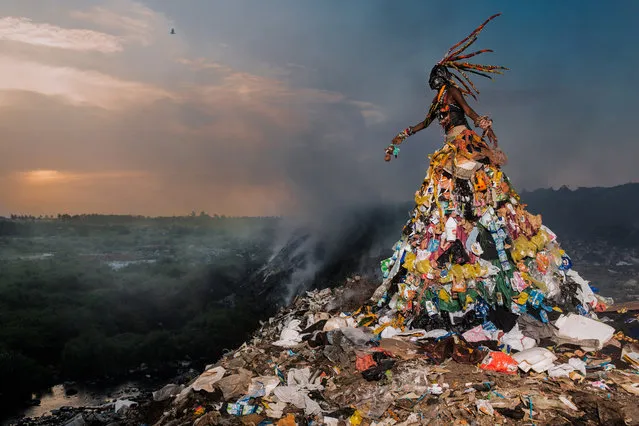
Fabrice Monteiro travelled to the most polluted places in Africa and created terrifying characters who roamed their midst dressed in eerie debris. They are spirits, he says, on a mission to make humans change their ways. Informed by Africa’s environmental problems, Fabrice Monteiro’s photographs aim to highlight urgent ecological issues all over the world. His series “The Prophecy” is on show at Photo Basel 2017 until 18 June. (Photo by Fabrice Monteiro/Photo Basel 2017/Mariane Ibrahim Gallery/The Guardian)

Fabrice Monteiro travelled to the most polluted places in Africa and created terrifying characters who roamed their midst dressed in eerie debris. They are spirits, he says, on a mission to make humans change their ways. Informed by Africa’s environmental problems, Fabrice Monteiro’s photographs aim to highlight urgent ecological issues all over the world. His series “The Prophecy” is on show at Photo Basel 2017 until 18 June. (Photo by Fabrice Monteiro/Photo Basel 2017/Mariane Ibrahim Gallery/The Guardian)
Details
17 Jun 2017 08:38:00