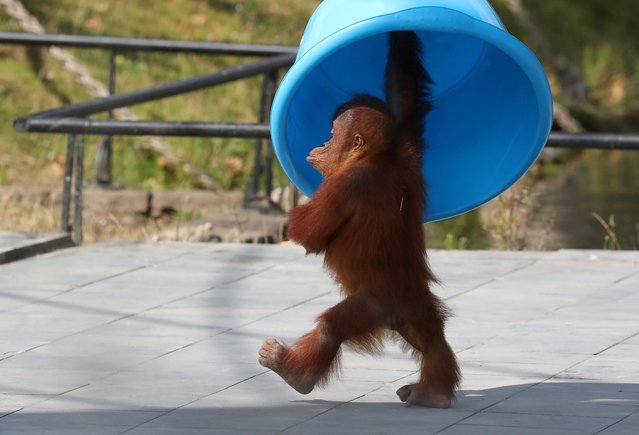
Three-year-old orangutan from Sumatra, Berani, is pictured at the Pairi Daiza wildlife park, zoo and botanical garden in Brugelette, Belgium on August 2, 2019. (Photo by Yves Herman/Reuters)
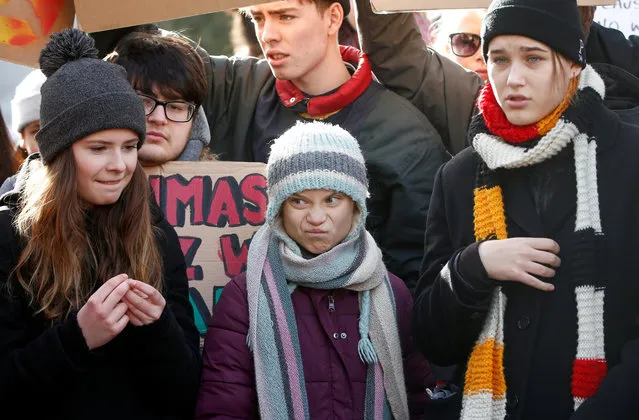
Swedish climate change activist Greta Thunberg, Isabelle Axelsson and German Luisa Neubauer take part in a climate strike protest during the 50th World Economic Forum (WEF) annual meeting in Davos, Switzerland on January 24, 2020. (Photo by Denis Balibouse/Reuters)
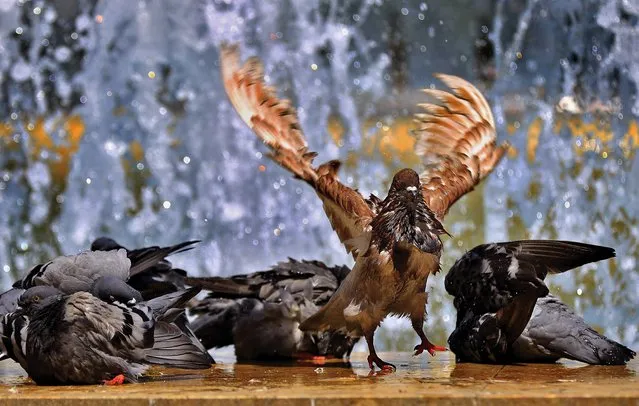
Pigeons cool down at a public fountain on a hot summer day at University Plaza in downtown Bucharest, Romania, 10 June 2020. Temperatures in Bucharest reached 30 degrees Celsius. (Photo by Robert Ghement/EPA/EFE)
Camila Hormazabal, a 24-year-old sеx worker, uses a laptop to connect to the web and keep an online erotic meeting with a virtual customer in Concepcion, Chile on April 7, 2020. Hormazabal reinvented herself offering sexual services online after the nightclub where she had worked was closed due to the outbreak of the coronavirus disease (COVID-19). (Photo by Juan Gonzalez/Reuters)
Visitors take photos of a child dressed in a traditional costume before a folk performance in Panyu, Guangdong province, China on April 20, 2018. (Photo by Reuters/China Daily)
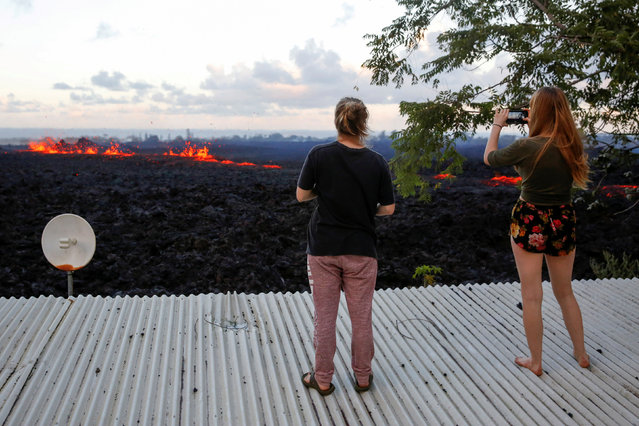
Jolon Clinton, 15, (L), and her sister, Halcy, 17, take photos of a fissure near their home on the outskirts of Pahoa during ongoing eruptions of the Kilauea Volcano in Hawaii, U.S., May 14, 2018. (Photo by Terray Sylvester/Reuters)
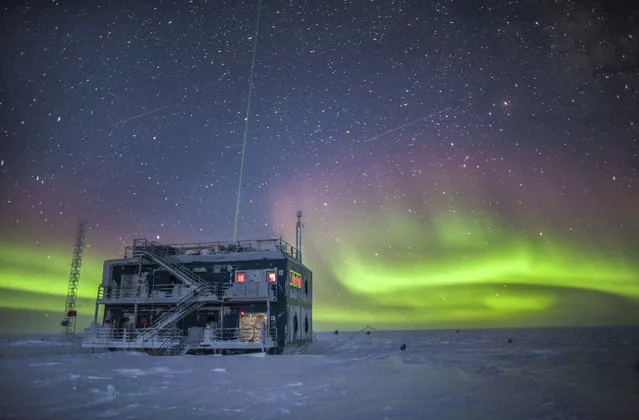
This undated photo provided by NOAA in May 2018 shows aurora australis near the South Pole Atmospheric Research Observatory in Antarctica. When a hole in the ozone formed over Antarctica, countries around the world in 1987 agreed to phase out several types of ozone-depleting chemicals called chlorofluorocarbons (CFCs). Production was banned, emissions fell and the hole shriveled. But according to a study released on Wednesday, May 16, 2018, scientists say since 2013, there’s more of a banned CFC going into the atmosphere. (Photo by Patrick Cullis/NOAA via AP Photo)