Loading...
Done
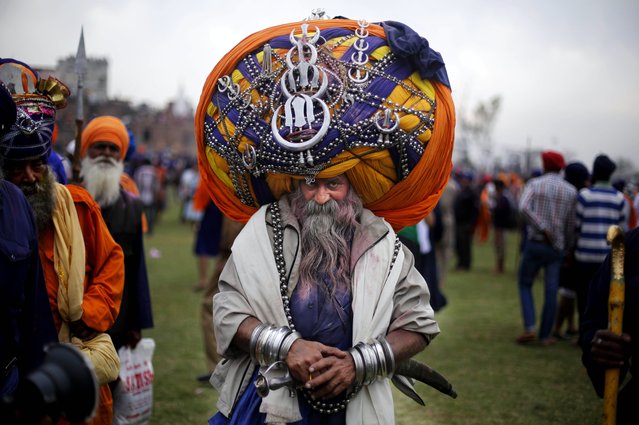
A Sikh warrior, wearing a huge turban attends the annual fair of “Hola Mohalla” in Anandpur Sahib, in the northern Indian state of Punjab, Monday, March 17, 2014. Believers from various parts of northern India collect at the religious fair to celebrate the festival of Holi in a tradition set by the tenth Sikh guru Guru Gobind Singh in the seventeenth century. Nihangs, or Sikh warriors, display their martial skills and attire during the fair, believed to be maintained in the exact tradition as set by the Guru. (Photo by Altaf Qadri/AP Photo)

A Sikh warrior, wearing a huge turban attends the annual fair of “Hola Mohalla” in Anandpur Sahib, in the northern Indian state of Punjab, Monday, March 17, 2014. Believers from various parts of northern India collect at the religious fair to celebrate the festival of Holi in a tradition set by the tenth Sikh guru Guru Gobind Singh in the seventeenth century. Nihangs, or Sikh warriors, display their martial skills and attire during the fair, believed to be maintained in the exact tradition as set by the Guru. (Photo by Altaf Qadri/AP Photo)
Details
22 Mar 2014 13:31:00
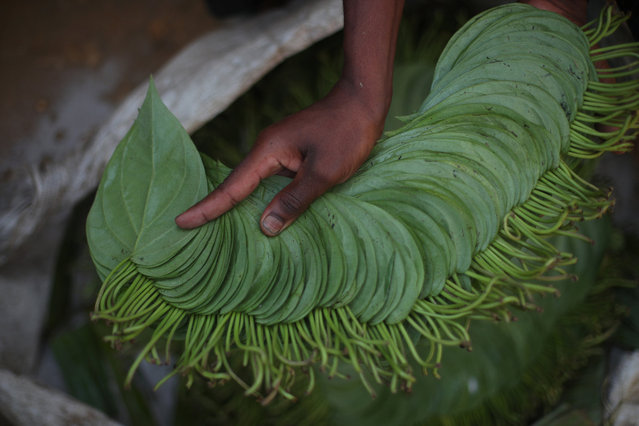
Faruk, 17, a Rohingya refugee trader holds betel leaves which are on sale at a stall in Palong Khali refugee camp near Cox's Bazar, Bangladesh, November 3, 2017. He left his village in Myanmar when the military opened fire towards the Rohingya. “I buy this betel leaf from Palong Khali market, in one bundle there are 160 pieces, I buy it for 80 taka and I sell it for 100 taka. Bangladeshi's and I sell for the same rate in the camp. Outside in the local market it is 80 taka per bundle. My problem is that I don't have money so I can't buy anything to eat, I can't buy fish to eat”, he said. (Photo by Hannah McKay/Reuters)

Faruk, 17, a Rohingya refugee trader holds betel leaves which are on sale at a stall in Palong Khali refugee camp near Cox's Bazar, Bangladesh, November 3, 2017. He left his village in Myanmar when the military opened fire towards the Rohingya. “I buy this betel leaf from Palong Khali market, in one bundle there are 160 pieces, I buy it for 80 taka and I sell it for 100 taka (1 Bangladeshi Taka = 0.012 US Dollar). Bangladeshi's and I sell for the same rate in the camp. Outside in the local market it is 80 taka per bundle. My problem is that I don't have money so I can't buy anything to eat, I can't buy fish to eat”, he said. (Photo by Hannah McKay/Reuters)
Details
27 Nov 2017 08:54:00
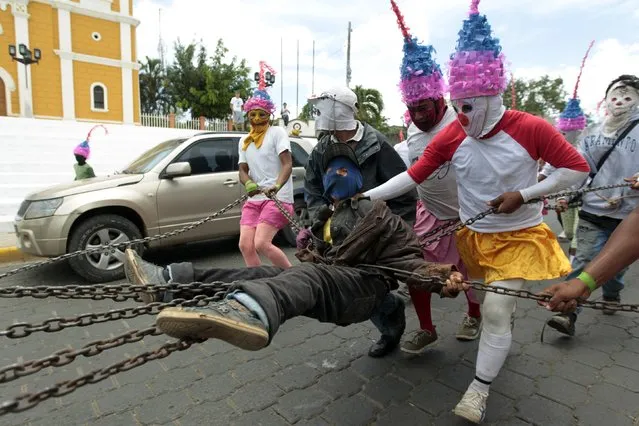
A Judas is carried through the streets. The crowd pretends to kick and beat the Judases to show scorn. (Photo by Oswaldo Rivas/Reuters)

For 130 years, the people of Masatepe have observed Good Friday by dressing up in colorful masks and costumes and dragging chained “Judases” through the streets of their town in western Nicaragua. Photo: A Judas is carried through the streets. The crowd pretends to kick and beat the Judases to show scorn. (Photo by Oswaldo Rivas/Reuters)
Details
22 Apr 2014 07:51:00
The new EVR system which allows the recording of television programmes which can then be watched at the owner's discretion. The new Teleplayer has been produced in partnership with Rank Bush Murphy Ltd and EVR and has enormous potential. 21st September 1970. (Photo by Central Press/Getty Images)

The new EVR system which allows the recording of television programmes which can then be watched at the owner's discretion. The new Teleplayer has been produced in partnership with Rank Bush Murphy Ltd and EVR and has enormous potential. 21st September 1970. (Photo by Central Press/Getty Images)
Details
27 Apr 2014 09:34:00
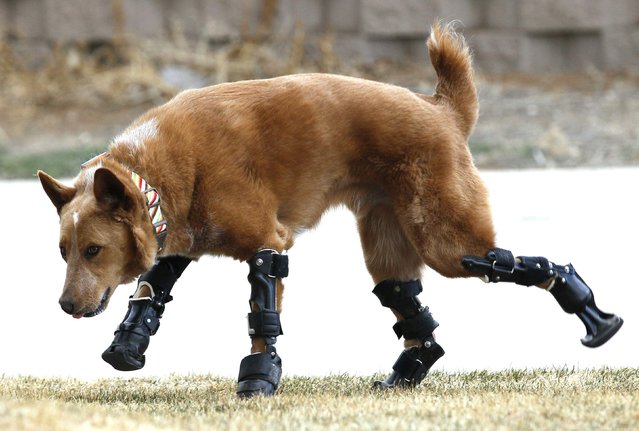
Naki'o, a mixed-breed dog with four prosthetic devices, goes for a run in Colorado Springs April 12, 2013. Naki'o lost all four feet to frostbite when he was abandoned as a puppy in a foreclosed home. (Photo by Rick Wilking/Reuters)

Naki'o, a mixed-breed dog with four prosthetic devices, goes for a run in Colorado Springs April 12, 2013. Naki'o lost all four feet to frostbite when he was abandoned as a puppy in a foreclosed home. (Photo by Rick Wilking/Reuters)
Details
28 Apr 2013 09:16:00


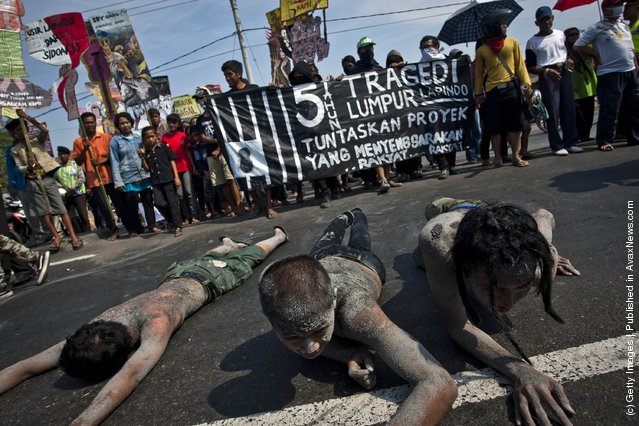
Indonesian activists covered with sludge from the mud volcano hold a protest during five year anniversary of the Sidoarjo mud eruption on May 29, 2011 in the subdistrict of Porong in Sidoarjo, East Java, Indonesia. (Photo by Ulet Ifansasti/Getty Images)
Details
30 May 2011 07:18:00
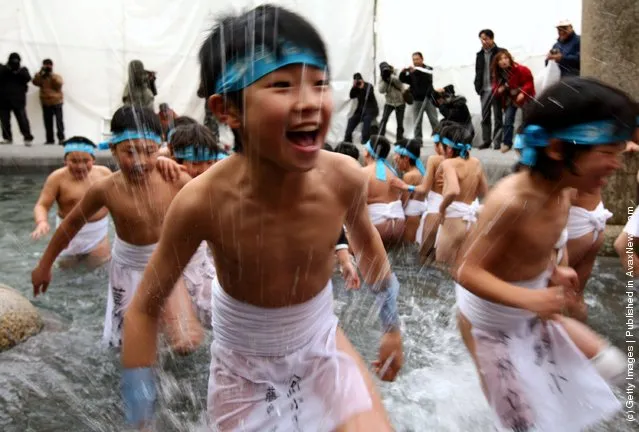
Japanese children wear loincloths as they splash about in freezing cold water during Saidaiji Naked Festival, at Saidaiji Temple

“A Hadaka Matsuri (“Naked Festival”) is a type of Japanese festival, or matsuri, in which participants wear a minimum amount of clothing; usually just a Japanese loincloth (called fundoshi), sometimes with a short happi coat, and rarely completely naked. Whatever the clothing, it is considered to be above vulgar, or everyday, undergarments, and on the level of holy Japanese shrine attire. Naked festivals are held in dozens of places throughout Japan every year, usually in the summer or winter. The most famous festival is held in Okayama, where the festival originated. Every year, over 9,000 men participate in this festival”. – Wikipedia

Photo: Japanese men wear loincloths as they splash about in freezing cold water during Saidaiji Naked Festival, at Saidaiji Temple on February 18, 2012 in Okayama, Japan. (Photo by Buddhika Weerasinghe/Getty Images)
Details
19 Feb 2012 12:18:00
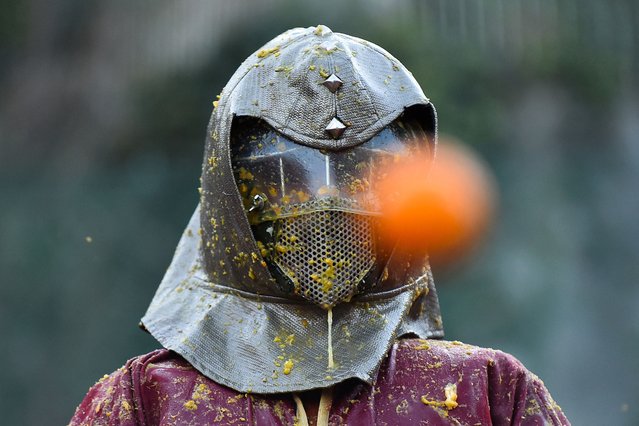
A person participates in the annual “Battle of the Oranges” in the northern city of Ivrea, Italy on February 19, 2023. (Photo by Massimo Pinca/Reuters)

A person participates in the annual “Battle of the Oranges” in the northern city of Ivrea, Italy on February 19, 2023. (Photo by Massimo Pinca/Reuters)
Details
04 Jun 2024 03:58:00