Loading...
Done
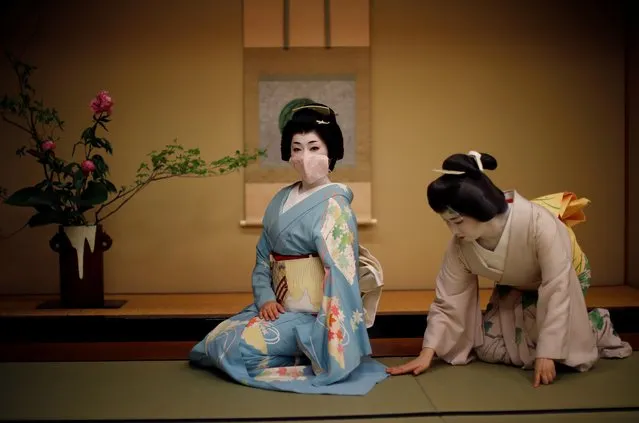
Mayu adjusts Koiku’s kimono, as Koiku wears a protective face mask while posing for a photograph, before they work at a party where they will entertain with other geisha at Japanese luxury restaurant Asada in Tokyo, Japan, June 23, 2020. The coronavirus pandemic has made Tokyo's geisha fear for their centuries-old profession as never before. Though the number of geisha - famed for their witty conversation, beauty and skill at traditional arts - has been falling for years, they were without work for months due to Japan's state of emergency and now operate under awkward social distancing rules. Engagements are down 95 percent, and come with new rules: no pouring drinks for customers or touching them even to shake hands, and sitting 2 meters apart. Masks are hard to wear with their elaborate wigs, so they mostly don't. “I was just full of anxiety”, said Mayu, 47. “I went through my photos, sorted my kimonos ... The thought of a second wave is terrifying”. (Photo by Kim Kyung-Hoon/Reuters)

Mayu adjusts Koiku’s kimono, as Koiku wears a protective face mask while posing for a photograph, before they work at a party where they will entertain with other geisha at Japanese luxury restaurant Asada in Tokyo, Japan, June 23, 2020. (Photo by Kim Kyung-Hoon/Reuters)
Details
23 Jul 2020 00:03:00
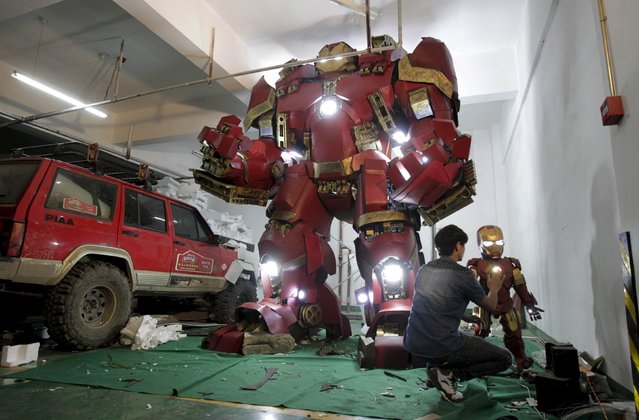
A man works on a small replica of the Iron Man armor next to a homemade replica of the “Hulkbuster” Iron Man armour from the movie “Avengers: Age of Ultron”, at an underground parking lot in Zhengzhou, Henan province, China, May 12, 2015. (Photo by Reuters/Stringer)

A man works on a small replica of the Iron Man armor next to a homemade replica of the “Hulkbuster” Iron Man armour from the movie “Avengers: Age of Ultron”, at an underground parking lot in Zhengzhou, Henan province, China, May 12, 2015. The 3.4-metre-tall replica is made of over 100 fiber-reinforced plastic components. It took Xing and his friends two months to put them together after watching the trailer of the movie in March, local media reported. (Photo by Reuters/Stringer)
Details
16 May 2015 12:41:00
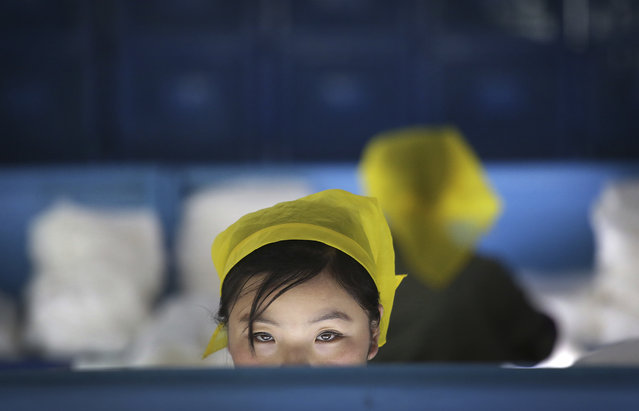
In this Friday, January 6, 2017, photo, a North Korean woman working at the Kim Jong Suk Silk Mill looks up from her workstation in Pyongyang, North Korea. The silk mill, named after North Korean leader Kim Jong Un's grandmother, is where 1,600 workers – mostly women – sort and process silkworms to produce silk thread that officials at the Pyongyang factory say is made into roughly 200 tons of silk a year. (Photo by Wong Maye-E/AP Photo)

In this Friday, January 6, 2017, photo, a North Korean woman working at the Kim Jong Suk Silk Mill looks up from her workstation in Pyongyang, North Korea. The silk mill, named after North Korean leader Kim Jong Un's grandmother, is where 1,600 workers – mostly women – sort and process silkworms to produce silk thread that officials at the Pyongyang factory say is made into roughly 200 tons of silk a year. (Photo by Wong Maye-E/AP Photo)
Details
17 Jan 2017 12:01:00
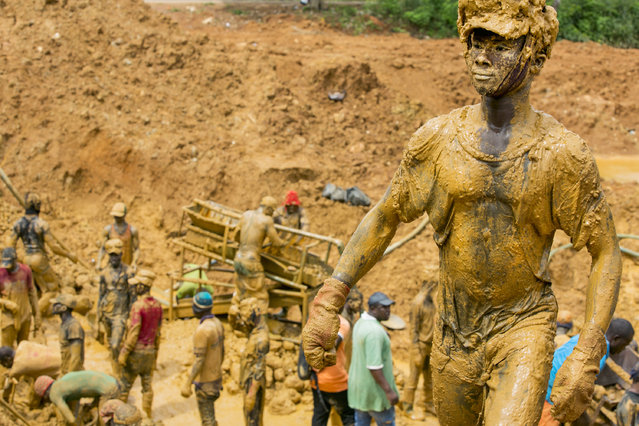
Miners work extremely long days under the hot sun and the hours are often longer in illegal mines in Ghana, West Africa, 2014. An Australian photographer has captured the harsh reality of illegal mining under the unforgiving sun with these Ghanaian miners. Heidi Woodman travelled to Ghana, West Africa to explore the regionís booming mining business, including the growing number of illegal mines. Using Accra as her base, Heidi visited the areas of Tarkwa, Kyebi, East Akim, Kumasi, Obuasi and Takoradi to find areas with a high concentration of galamsey – illegal mining activity. (Photo by Heidi Woodman/Barcroft Images)

Miners work extremely long days under the hot sun and the hours are often longer in illegal mines in Ghana, West Africa, 2014. An Australian photographer has captured the harsh reality of illegal mining under the unforgiving sun with these Ghanaian miners. (Photo by Heidi Woodman/Barcroft Images)
Details
24 Feb 2017 00:02:00
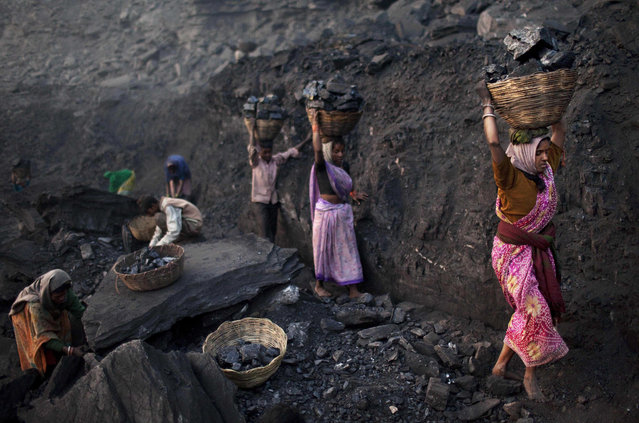
In this Friday, January 7, 2011 photo, people carry baskets of coal scavenged illegally at an open-cast mine in the village of Bokapahari in the eastern Indian state of Jharkhand where a community of coal scavengers live and work. The world's biggest coal users – China, the United States and India – have boosted coal mining in 2017, in an abrupt departure from last year's record global decline for the heavily polluting fuel and a setback to efforts to rein in climate change emissions. (Photo by Kevin Frayer/AP Photo)

In this Friday, January 7, 2011 photo, people carry baskets of coal scavenged illegally at an open-cast mine in the village of Bokapahari in the eastern Indian state of Jharkhand where a community of coal scavengers live and work. The world's biggest coal users – China, the United States and India – have boosted coal mining in 2017, in an abrupt departure from last year's record global decline for the heavily polluting fuel and a setback to efforts to rein in climate change emissions. (Photo by Kevin Frayer/AP Photo)
Details
28 Jun 2017 08:08:00
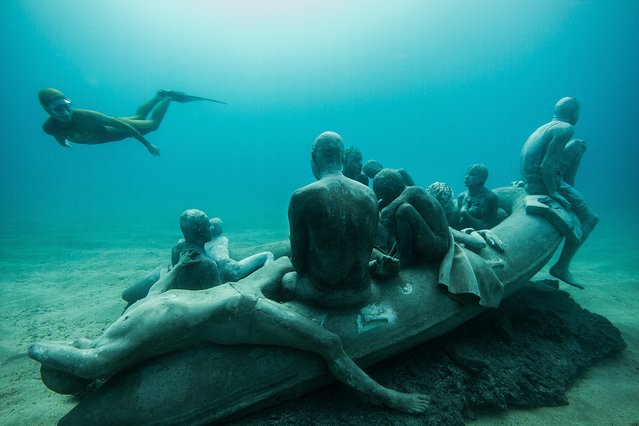
Artist Jason deCaires Taylor’s Museo Atlantico, off Lanzarote, is peopled with concrete casts of refugees and people taking selfies. Drowned world: welcome to Europe’s first undersea sculpture museum. Here: The Raft of Lampedusa, Taylor’s modern-day concrete echo of Géricault’s The Raft of the Medusa. The work has particular significance given the huge movement of refugees across the sea to Europe – and the frequent fatalities that result. (Photo by Jason deCaires Taylor)

Artist Jason deCaires Taylor’s Museo Atlantico, off Lanzarote, is peopled with concrete casts of refugees and people taking selfies. Drowned world: welcome to Europe’s first undersea sculpture museum. Here: The Raft of Lampedusa, Taylor’s modern-day concrete echo of Géricault’s The Raft of the Medusa. The work has particular significance given the huge movement of refugees across the sea to Europe – and the frequent fatalities that result. (Photo by Jason deCaires Taylor)
Details
03 Feb 2016 13:11:00
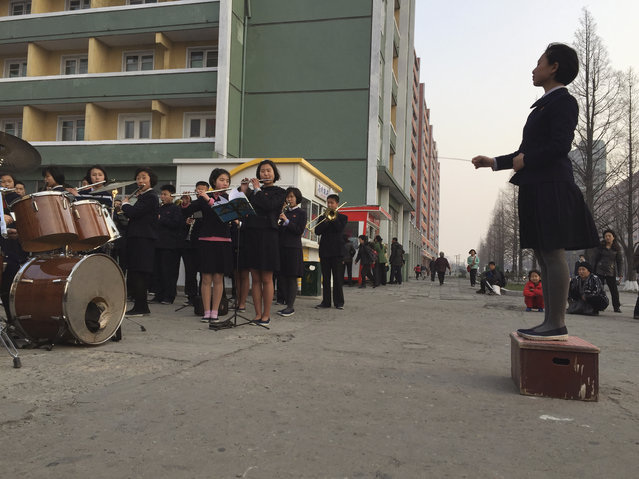
Schoolchildren play music to entertain and inspire people on their way home from work Tuesday, March 29, 2016 in Pyongyang, North Korea. North Korea has called a 70-day loyalty drive areas of a major congress of the ruling party scheduled for early May and everyone from students to coal miners have been mobilized nationwide to demonstrate their devotion to the leadership. (Photo by Eric Talmadge/AP Photo)

Schoolchildren play music to entertain and inspire people on their way home from work Tuesday, March 29, 2016 in Pyongyang, North Korea. North Korea has called a 70-day loyalty drive areas of a major congress of the ruling party scheduled for early May and everyone from students to coal miners have been mobilized nationwide to demonstrate their devotion to the leadership. (Photo by Eric Talmadge/AP Photo)
Details
12 Apr 2016 11:03:00
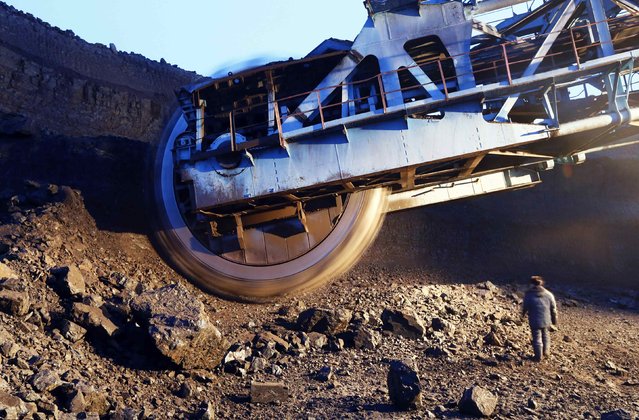
An employee walks near a rotary dredge which works on the coal face of the Borodinsky opencast colliery, near the Siberian town of Borodino, east of Krasnoyarsk, December 9, 2014. The Borodinsky colliery, 9 km (5.6 miles) long and more than 100 meters (328 feet) deep, annually produces more than 20 million tons of coal and is considered to be the biggest opencast coal mine in Russia, according to official representatives. (Photo by Ilya Naymushin/Reuters)

An employee walks near a rotary dredge which works on the coal face of the Borodinsky opencast colliery, near the Siberian town of Borodino, east of Krasnoyarsk, December 9, 2014. The Borodinsky colliery, 9 km (5.6 miles) long and more than 100 meters (328 feet) deep, annually produces more than 20 million tons of coal and is considered to be the biggest opencast coal mine in Russia, according to official representatives. (Photo by Ilya Naymushin/Reuters)
Details
11 Dec 2014 13:29:00