Loading...
Done
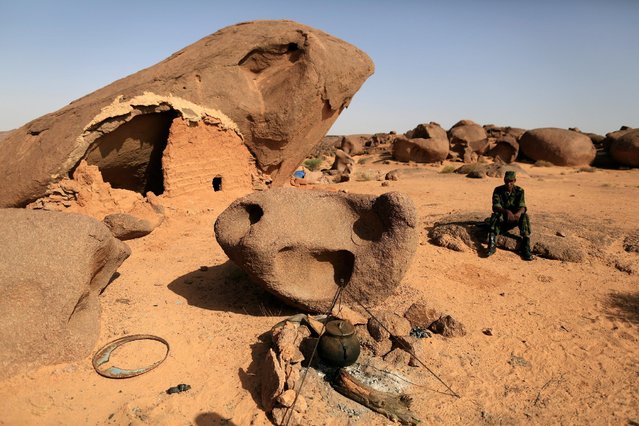
A Polisario fighter sits on a rock at a forward base on the outskirts of Tifariti, Western Sahara, September 9, 2016. At a rocky outpost in Western Sahara, a new generation of soldiers who have never known war are mobilising as tensions resurface in one of Africa's oldest disputes after a quarter century of uneasy peace. Young Sahrawi troops man new desert posts for the Polisario Front, which for more than 40 years has sought independence for the vast desert region - first in a guerrilla war against Morocco and then politically since a ceasefire deal in 1991. Now a standoff with Morocco, which controls the majority of Western Sahara, is renewing pressure for a diplomatic solution to ensure foot soldiers don't return to fighting as the last generation of commanders once did. The standoff since August has brought Moroccan and Polisario forces within 200 metres of each other in a narrow strip of land near the Mauritanian border. Rich in phosphate, Western Sahara has been contested since 1975 when Spanish colonial powers left. Morocco claimed the territory and fought the 16-year war with Polisario. (Photo by Zohra Bensemra/Reuters)

A Polisario fighter sits on a rock at a forward base on the outskirts of Tifariti, Western Sahara, September 9, 2016. At a rocky outpost in Western Sahara, a new generation of soldiers who have never known war are mobilising as tensions resurface in one of Africa's oldest disputes after a quarter century of uneasy peace. (Photo by Zohra Bensemra/Reuters)
Details
04 Nov 2016 12:09:00
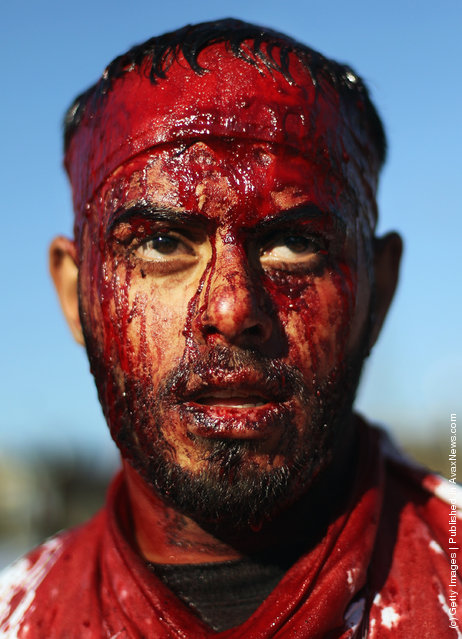
A Shi'ite worshiper bleeds after cutting his scalp in a ritual display of mourning during an Ashura commemoration ceremony outside Kadhimiya shrine in Baghdad, Iraq

A Shi'ite worshiper bleeds after cutting his scalp in a ritual display of mourning during an Ashura commemoration ceremony outside Kadhimiya shrine on December 6, 2011 in Baghdad, Iraq. Ashura marks the death of Prophet Muhammad's grandson the revered Imam Hussein in Karbala, Iraq in 680 AD. Shi'ite festivals were prohibited during the time of Sunni dictator Saddam Hussein's rule. (Photo by Mario Tama/Getty Images)
Details
12 Dec 2011 11:52:00


“Sektor gaza” (Russian: Сектор газа) was a Russian rock band formed on 5 December 1987 in the city of Voronezh, Russia. Despite only semi-officially existing (due to obscene lyrics), the group remains popular in Russia today. The group name was taken from an eponymous industrial district of Voronezh (itself named for high levels of environmental contamination). Their music style could be defined as Russian punk, integrated with elements of different musical genres such as rock, rap, and Russian folk. On 4 July 2000, group leader Yuri “Hoy” Klinskih complained of strong pains in his stomach and the left side of his chest. He suffered heart failure shortly thereafter. Klinskikh died in Voronezh (Russia)at the age of 35. He is buried in the Levoberezhniy Cemetery. The group ceased to exist.

About the music video: The First Chechen War, also known as the War in Chechnya, was a conflict between the Russian Federation and the Chechen Republic of Ichkeria, fought from December 1994 to August 1996. After the initial campaign of 1994 – 1995, culminating in the devastating Battle of Grozny, Russian federal forces attempted to seize control of the mountainous area of Chechnya but were set back by Chechen guerrilla warfare and raids on the flatlands in spite of Russia's overwhelming manpower, weaponry, and air support...

Details
24 May 2012 14:38:00
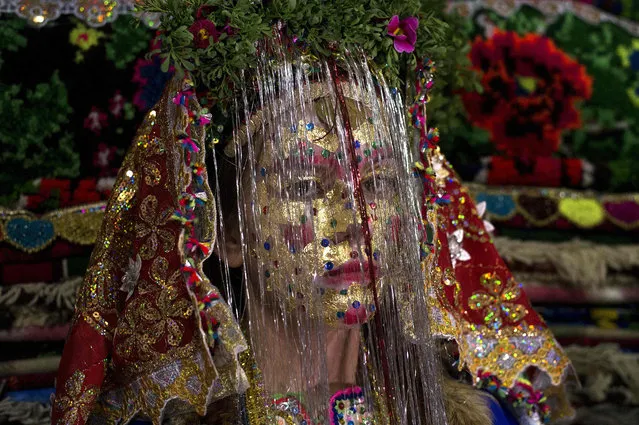
Emilia Pechinkova, a 24-years-old Bulgarian Pomak (Bulgarian speaking Muslims) bride poses for a photograph following the “gelina” or face painting ceremony carried out by female guests and relatives in preparation for her three-day wedding ceremony in the village of Draginovo, 100 kms southeast of Sofia on April 22, 2016. Bulgaria's Muslim population is one of the highest in the European Union. (Photo by Nikolay Doychinov/AFP Photo)

Emilia Pechinkova, a 24-years-old Bulgarian Pomak (Bulgarian speaking Muslims) bride poses for a photograph following the “gelina” or face painting ceremony carried out by female guests and relatives in preparation for her three-day wedding ceremony in the village of Draginovo, 100 kms southeast of Sofia on April 22, 2016. Bulgaria's Muslim population is one of the highest in the European Union. During the Communist regime religious rituals were not tolerated, and Muslims were forced to abandon wearing their traditional wedding outfits. Recently, more young Pomak women want to include traditional wedding customs that were forbidden during the regime, regardless of their secular lifestyles and the high cost of such a wedding. (Photo by Nikolay Doychinov/AFP Photo)
Details
25 Apr 2016 09:55:00
An aerial view shows a sinkhole 3.5 km (2 miles) to the east of Solikamsk-2 mine in Perm region, November 20, 2014. Shares in Russia's Uralkali, the world's top potash producer, fell sharply for a second day on Wednesday after a mine accident that could reduce global supplies and push up prices of the crop nutrient worldwide. (Photo by Reuters/Press service of Uralkali company)

An aerial view shows a sinkhole 3.5 km (2 miles) to the east of Solikamsk-2 mine in Perm region, November 20, 2014. Shares in Russia's Uralkali, the world's top potash producer, fell sharply for a second day on Wednesday after a mine accident that could reduce global supplies and push up prices of the crop nutrient worldwide. Uralkali shares have fallen 28 percent since Tuesday when it suspended work at its Solikamsk-2 mine, which accounts for a fifth of the company's output and 3.5 percent of global capacity, following an inflow of water. A sinkhole, stretching 30 by 40 metres (yards), found at an abandoned mine 3.5 km (2 miles) to the east, increased concern about the future of the mine because an inflow of water and the resulting sinkhole in 2006 forced another Uralkali operation to shut permanently. (Photo by Reuters/Press service of Uralkali company)
Details
22 Nov 2014 13:51:00
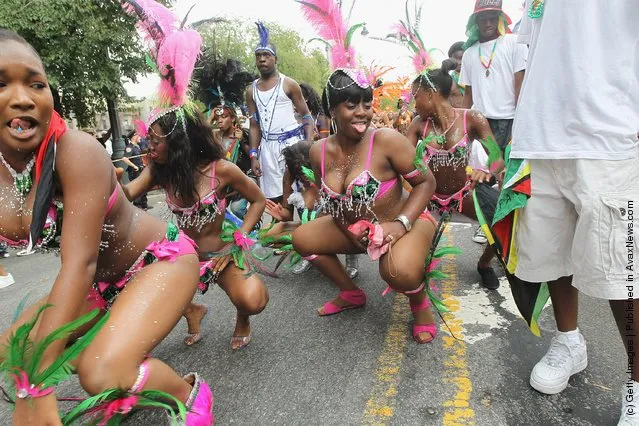
New Yorkers Celebrate At West Indian Day Parade

“The Labor Day Parade (or West Indian Carnival), is an annual celebration held on American Labor Day (the first Monday in September), in Crown Heights, Brooklyn, New York. Ms. Jessie Waddell and some of her West Indian friends started the Carnival in Harlem in the 1920s by staging costume parties in large enclosed places like the Savoy, Renaissance and Audubon Ballrooms due to the cold wintry weather of February. This is the usual time for the pre-Lenten celebrations held in most countries around the world. However, because of the very nature of Carnival, and the need to parade in costume to music, indoor confinement did not work well. The earliest known Carnival street parade was held on September 1, 1947. The Trinidad Carnival Pageant Committee was the founding force behind the parade, which was held in Harlem. The parade route was along Seventh Avenue, starting at 110th St.” – Wikipedia

Photo: A reveler looks on during the West Indian-American Day Parade September 5, 2011 in the Brooklyn borough of New York City. More than 2 million spectators were expected to attend the celebration of Caribbean culture. (Photo by Mario Tama/Getty Images)
Details
06 Sep 2011 11:18:00
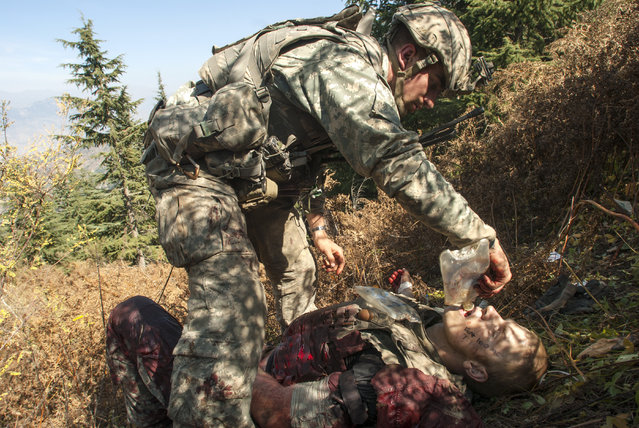
American soldiers with the 173rd Airborne Brigade Battle Company, on a battalion-wide mission in the Korengal Valley, looking for caves, weapons caches and known Taliban leaders, 2007. Tanner Stichter tends to Spc. Carl Vandeberge in the bushes moments after Vandeberge was shot in the stomach during a Taliban ambush, which killed one soldier and wounded two others. (Photo by Lynsey Addario)

American soldiers with the 173rd Airborne Brigade Battle Company, on a battalion-wide mission in the Korengal Valley, looking for caves, weapons caches and known Taliban leaders, 2007. Tanner Stichter tends to Spc. Carl Vandeberge in the bushes moments after Vandeberge was shot in the stomach during a Taliban ambush, which killed one soldier and wounded two others. (Photo by Lynsey Addario)
Details
06 Feb 2015 12:36:00
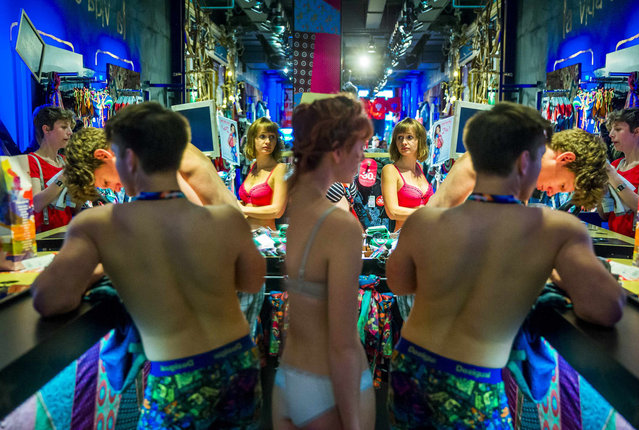
People dressed in underwear run into a store to pick free clothes during a promotional event starting the summer sale at an outlet of the Desigual clothing retailer in Berlin, June 20, 2014. Desigual treated the first 100 customers with a free outfit if they stripped down to their underwear for the first day of the outlet's summer sale. (Photo by Thomas Peter/Reuters)

People dressed in underwear run into a store to pick free clothes during a promotional event starting the summer sale at an outlet of the Desigual clothing retailer in Berlin, June 20, 2014. Desigual treated the first 100 customers with a free outfit if they stripped down to their underwear for the first day of the outlet's summer sale. (Photo by Thomas Peter/Reuters)
Details
21 Jun 2014 12:52:00