Loading...
Done
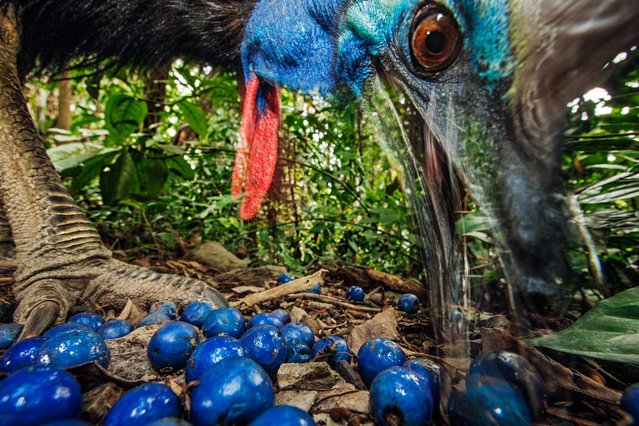
“Cassowaries are large, flightless birds related to emus and (more distantly) to ostriches, rheas, and kiwis”, writes Olivia Judson in the September issue of National Geographic magazine. (Photo by Christian Ziegler/National Geographic)

“Cassowaries are large, flightless birds related to emus and (more distantly) to ostriches, rheas, and kiwis”, writes Olivia Judson in the September issue of National Geographic magazine. How large? People-size: Adult males stand well over five foot five and top 110 pounds. Females are even taller, and can weigh more than 160 pounds. Dangerous when roused, they’re shy and peaceable when left alone. But even birds this big and tough are prey to habitat loss. The dense New Guinea and Australia rain forests where they live have dwindled. Today cassowaries might number 1,500 to 2,000. And because they help shape those same forests – by moving seeds from one place to another – “if they vanish”, Judson writes, “the structure of the forest would gradually change” too. (Photo by Christian Ziegler/National Geographic)
Details
06 Jan 2014 12:21:00
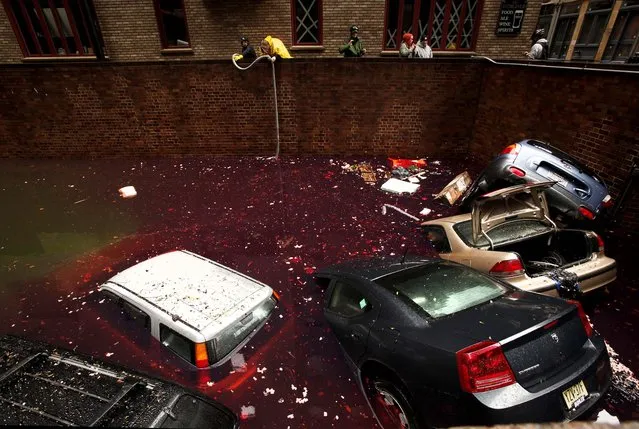
Cars float up from a car garage in a mixture of storm water and gasoline in lower Manhattan as workers begin the process of pumping out the mess. (Photo by Carolyn Cole/Los Angeles Times/MCT)

Cars float up from a car garage in a mixture of storm water and gasoline in lower Manhattan as workers begin the process of pumping out the mess. (Photo by Carolyn Cole/Los Angeles Times/MCT)
Details
31 Oct 2012 13:36:00
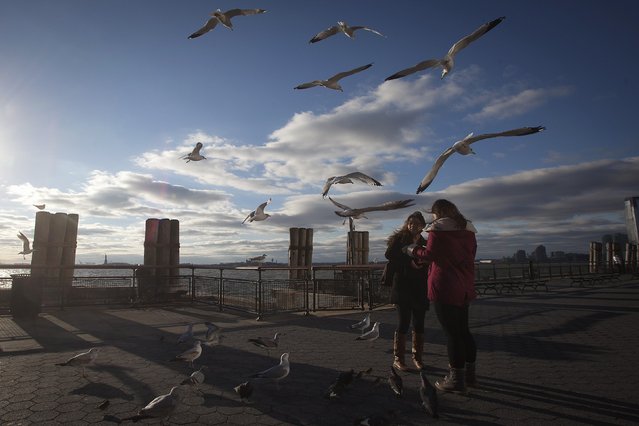
People feed the birds in Battery Park in the Manhattan borough of New York, December 18, 2014. (Photo by Carlo Allegri/Reuters)

People feed the birds in Battery Park in the Manhattan borough of New York, December 18, 2014. Hart has been feeding the birds three times a week for the last three years. (Photo by Carlo Allegri/Reuters)
Details
20 Dec 2014 11:50:00
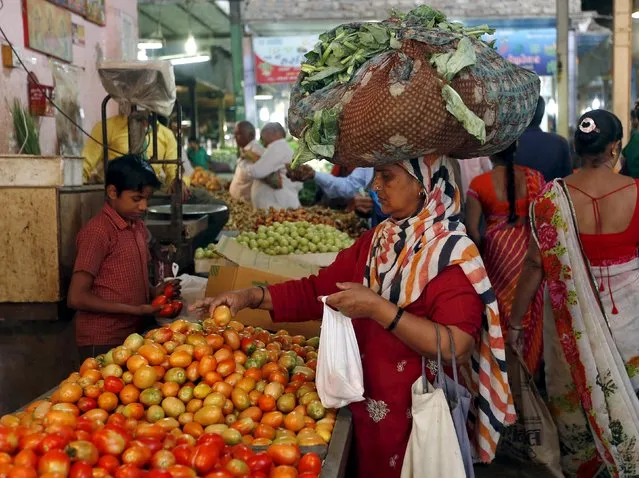
A woman carrying cabbage leaves on her head buys tomato at a market in Ahmedabad, India, November 9, 2015. (Photo by Amit Dave/Reuters)

A woman carrying cabbage leaves on her head buys tomato at a market in Ahmedabad, India, November 9, 2015. India's villages face a sharp spike in food prices in 2016, as a second year of drought drives up the cost of ingredients such as sugar and milk, and poor transport infrastructure stops falling global prices from reaching rural areas. (Photo by Amit Dave/Reuters)
Details
19 Nov 2015 08:02:00
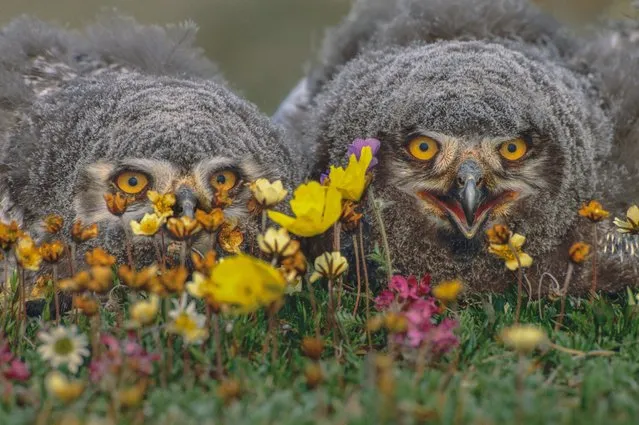
Snowy owlets (Bubo scandiacus), Arctic National Wildlife Refuge, Alaska, USA. “A pair of gray-feathered snowy owlets hunker down in the abundant flowers that flourish in the dropping-enriched soil of their nest mound”. (Photo by Art Wolfe/Art Wolfe Stock)

The photography of Art Wolfe covers the globe, capturing landscapes, wildlife, and cultures from every continent; here he talks through a selection of his favourite images. Art Wolfe is an American photographer and conservationist. His photographs have been noted by environmental advocacy groups for their “stunning” visual impact. Here: Snowy owlets (Bubo scandiacus), Arctic National Wildlife Refuge, Alaska, USA. (Photo by Art Wolfe/Art Wolfe Stock)
Details
19 Mar 2018 00:05:00
“The most difficult aspect of this shoot was to get each African pygmy dormouse – also known as micro squirrels – on to a separate camera. Once in place, they needed to remain still long enough to get them both in the frame and looking at me. Often solitary, they naturally wanted to move away”. (Photo by David Yeo/Leica Studio Mayfair/The Guardian)

David Yeo’s photography places naturally small species alongside animals that have been selectively bred to be tiny and cute. Here: “The most difficult aspect of this shoot was to get each African pygmy dormouse – also known as micro squirrels – on to a separate camera. Once in place, they needed to remain still long enough to get them both in the frame and looking at me. Often solitary, they naturally wanted to move away”. (Photo by David Yeo/Leica Studio Mayfair/The Guardian)
Details
24 Oct 2017 08:20:00
A Palestinian fisherman cleans up his fishing net after the Israeli decision to close Gaza's fishing zone, on the beach in Gaza City, Tuesday, August 18, 2020. (Photo by Khalil Hamra/AP Photo)

A Palestinian fisherman cleans up his fishing net after the Israeli decision to close Gaza's fishing zone, on the beach in Gaza City, Tuesday, August 18, 2020. (Photo by Khalil Hamra/AP Photo)
Details
30 Sep 2020 00:05:00
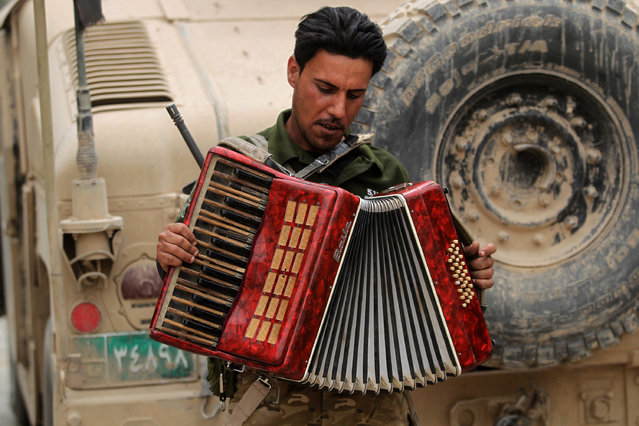
An Iraqi soldier plays with an accordion found on the street while on patrol in the western neighborhood of Tamuz in Mosul on May 23, 2017, after the area was retaken during the ongoing offensive against Islamic State (IS) group fighters. (Photo by Ahmad Al-Rubaye/AFP Photo)

An Iraqi soldier plays with an accordion found on the street while on patrol in the western neighborhood of Tamuz in Mosul on May 23, 2017, after the area was retaken during the ongoing offensive against Islamic State (IS) group fighters. (Photo by Ahmad Al-Rubaye/AFP Photo)
Details
21 Jan 2020 00:01:00