Loading...
Done
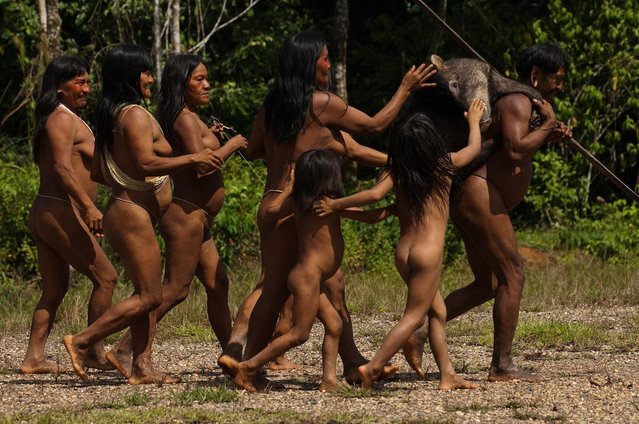
Spectacular images offering insight into the lives of the Huaorani people in the Ecuadorian Amazon have been revealed showing how they use traditional methods to hunt monkeys for food. The stunning pictures were taken by conservation photographer Pete Oxford from Torquay, Devon in the Ecuadorian Amazon. “The Huaorani Indians are a forest people highly in tune with their environment. Many are now totally acculturated since the 1950s by missionaries”, said Pete. “Today they face radical change to their culture to the proximity of oil exploration within their territory and the Yasuni National Park and Biosphere Reserve, they are vastly changed. Some still live very traditionally and for this shoot, through my Huaorani friend, a direct relative of those photographed he wanted to depict them as close to their original culture as possible. They still largely hunt with blow pipes and spears eating a lot of monkeys and peccaries”. The Huaorani are also known as the Waorani, Waodani or the Waos and are native Amerindians. Their lands are located between the Curaray and Napo rivers and speak the Huaorani language. Pete says that during his visit he was welcomed into the group and hopes that ancient cultures can be saved. Here: The tribe were seen celebrating after a hunter returned to camp with a wild pig. (Photo by Pete Oxford/Mediadrumworld.com)

Spectacular images offering insight into the lives of the Huaorani people in the Ecuadorian Amazon have been revealed showing how they use traditional methods to hunt monkeys for food. The stunning pictures were taken by conservation photographer Pete Oxford from Torquay, Devon in the Ecuadorian Amazon. Here: The tribe were seen celebrating after a hunter returned to camp with a wild pig. (Photo by Pete Oxford/Mediadrumworld.com)
Details
20 Jan 2017 07:58:00
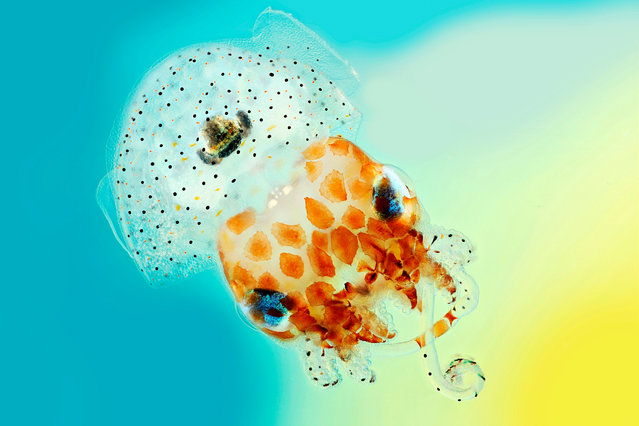
With its huge eyes, comical name and diminutive size, Mark R. Smith’s image of a baby Hawaiian bobtail squid can’t help but raise a smile. A curiously endearing creature, the cephalopod is just 1.5cm across, its mantle cavity bearing more than a passing resemblance to a rather natty shower cap. But it is also a beautiful example of symbiosis – nature’s version of “I’ll scratch your back if you scratch mine” – for on the underside of the squid is a light organ which houses bioluminescent bacteria. The squid offers the bacteria protection and food, while the bacteria emit a glow – a handy trait that the squid uses to offset its silhouette, helping it to evade predators in the depths below. Mark R. Smith’s entry combines several images of a Hawaiian bobtail squid with different focus lengths to create a final picture with greater depth of field than normal. (Photo by Mark R. Smith/Wellcome Images/Macroscopic Solutions)

With its huge eyes, comical name and diminutive size, Mark R. Smith’s image of a baby Hawaiian bobtail squid can’t help but raise a smile. A curiously endearing creature, the cephalopod is just 1.5cm across, its mantle cavity bearing more than a passing resemblance to a rather natty shower cap. But it is also a beautiful example of symbiosis – nature’s version of “I’ll scratch your back if you scratch mine” – for on the underside of the squid is a light organ which houses bioluminescent bacteria. The squid offers the bacteria protection and food, while the bacteria emit a glow – a handy trait that the squid uses to offset its silhouette, helping it to evade predators in the depths below. Mark R. Smith’s entry combines several images of a Hawaiian bobtail squid with different focus lengths to create a final picture with greater depth of field than normal. (Photo by Mark R. Smith/Wellcome Images/Macroscopic Solutions)
Details
08 Mar 2017 00:05:00
Pakistani truck drivers from different cities sit on the roof top of the buildings at Truck station offering Dua before breaking the fast during Holy month of Ramadan in Lahore on April 15, 2021. Ramadan is marked by daily fasting from dawn to sunset Islami's holy month of Ramadan-ul-Mubarak is celebrated by Muslims worldwide marked by fasting, abstaining from foods, sеx and smoking from dawn to dusk for soul cleansing and strengthening the spiritual bond between them and the Almighty. During the month of Ramadan Muslims enter into a period of discipline and worship: fasting during the day, and praying throughout the day and night. (Photo by Rana Sajid Hussain/Pacific Press/Rex Features/Shutterstock)

Pakistani truck drivers from different cities sit on the roof top of the buildings at Truck station offering Dua before breaking the fast during Holy month of Ramadan in Lahore on April 15, 2021. Ramadan is marked by daily fasting from dawn to sunset Islami's holy month of Ramadan-ul-Mubarak is celebrated by Muslims worldwide marked by fasting, abstaining from foods, sеx and smoking from dawn to dusk for soul cleansing and strengthening the spiritual bond between them and the Almighty. (Photo by Rana Sajid Hussain/Pacific Press/Rex Features/Shutterstock)
Details
23 Apr 2021 09:17:00
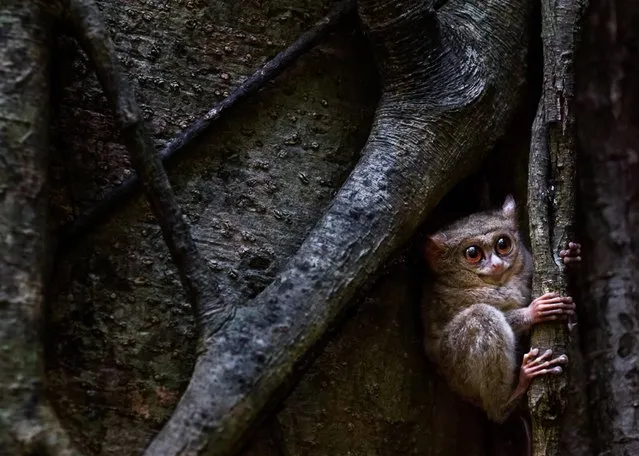
“Spectral Tarsier”. Tangkoko, Northern Sulawesi, Indonesia: Spectral tarsier by Wolfgang Weinhardt. (Photo and caption by Wolfgang Weinhardt/UK Society of Biology Photography Award 2014)

From rural life in India to a chick growing inside its embryo and a sea turtle eating a purple jellyfish, the Society of Biology has released their stunning photography competition shortlist. Here: “Spectral Tarsier”. Tangkoko, Northern Sulawesi, Indonesia: Spectral tarsier by Wolfgang Weinhardt. (Photo and caption by Wolfgang Weinhardt/UK Society of Biology Photography Award 2014)
Details
06 Oct 2014 09:20:00
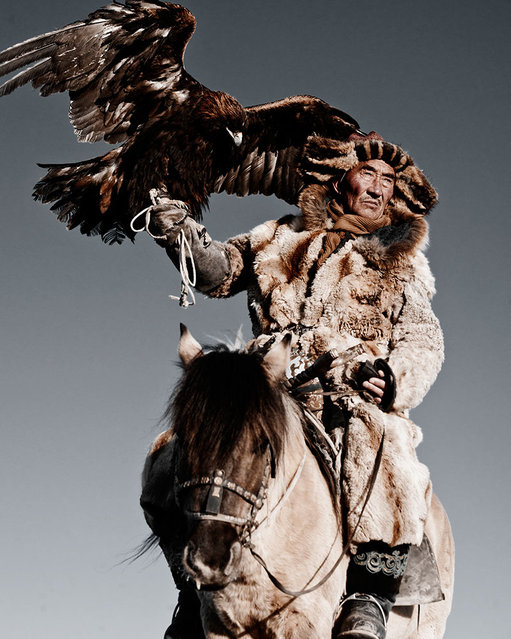
Fine Horses And Fierce Eagles Are The wings Of The Kazakh

The Kazakhs are the descendants of Turkic, Mongolic and Indo-Iranian tribes and Huns that populated the territory between Siberia and the Black Sea. They are a semi-nomadic people and have roamed the mountains and valleys of western Mongolia with their herds since the 19th century. The ancient art of eagle hunting is one of many traditions and skills that the Kazakhs have, in recent decades, been able to hold on to. They rely on their clan and herds, believing in pre-Islamic cults of the sky, the ancestors, fire and the supernatural forces of good and evil spirits.
Details
20 Feb 2014 12:12:00
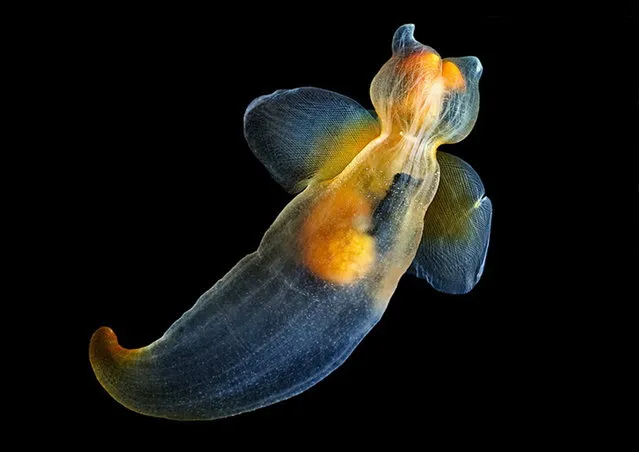
Underwater Photography By Alexander Semenov

In 2007, I graduated from Lomonosov’s Moscow State University in the department of Zoology. I specialized in the study of invertebrate animals, with an emphasis on squid brains. Soon after, I began working at the White Sea Biological Station (WSBS) as a senior laborer. WSBS has a dive station, which is great for all sorts of underwater scientific needs, and after 4 years working there, I became chief of our diving team. I now organize all WSBS underwater projects and dive by myself with a great pleasure and always with a camera.
Details
05 Feb 2013 15:28:00
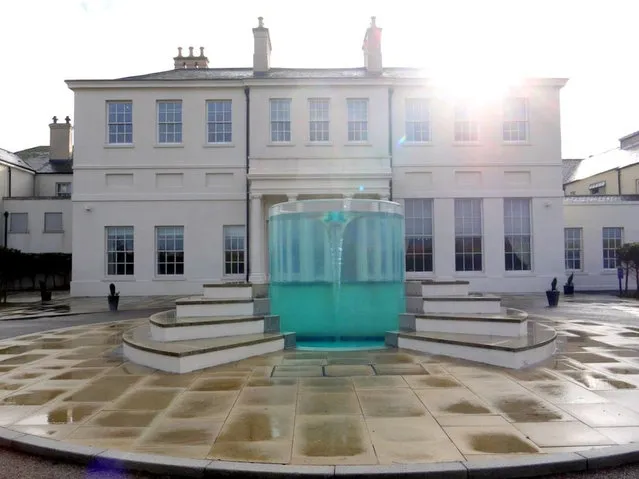
Charybdis Vortex Water Fountains

The sirens Charybdis and Scylla resided in the Sicilian Sea. Homer tells us that because Charybdis had stolen the oxen of Hercules, Zeus struck her with a thunderbolt and changed her into a whirlpool whose vortex swallowed up ships. In Charybdis the circular movement of water inside a transparent acrylic cylinder forms an air-core vortex in the centre. Steps wrap around the cylinder and allow spectators to view the vortex from above. The cylinder was manufactured in Grand Junction, Colorado.
Details
14 Aug 2012 09:26:00
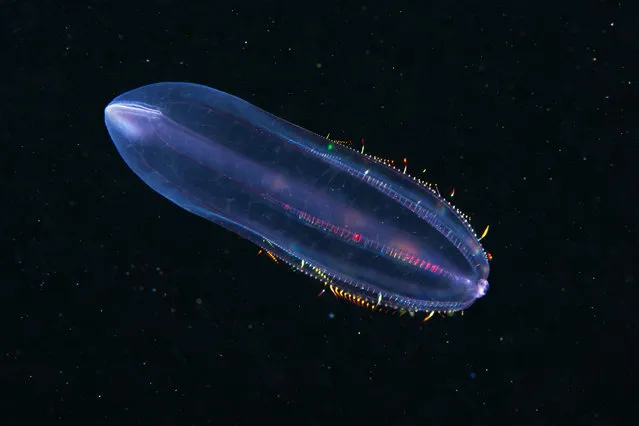
A Comb jelly – Beroe cucumis. (Photo by Alexander Semenovs/Caters News)

Underwater photographer Alexander Semenovs has snapped some of the most stunning, fragile life forms anywhere on planet Earth. Shot in deep, dark conditions, the images continue to provide an insight into what lies beneath, with glowing creatures appearing a lot like aliens in the pitch-black water. Semenovs has shot the likes of bioluminescent jellyfish, aggressive-looking worms and many species that leave a lot to the imagination. The 30-year-old from Moscow does the majority of his work in the White Sea, near the Arctic Circle. Here: A Comb jelly – Beroe cucumis. (Photo by Alexander Semenovs/Caters News)
Details
23 Nov 2015 08:06:00