Loading...
Done
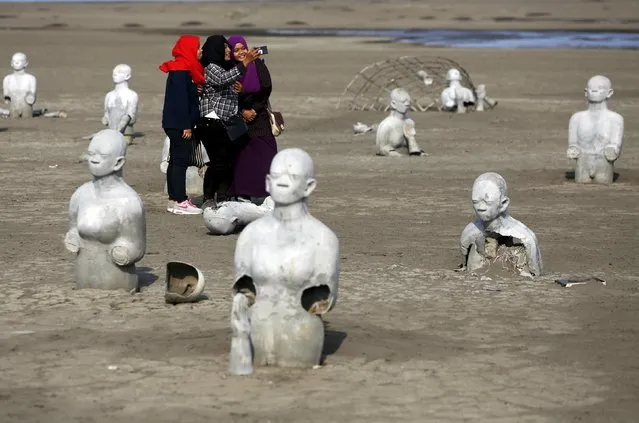
Women take pictures between stone sculptures of half-buried people at the Lapindo mud field in Sidoarjo, October 11, 2015. Disaster tourism has become more common in Indonesia, where visitors are drawn to sites of earthquakes, floods and volcanic eruptions to witness the aftermath of catastrophes or simply do some soul-searching. (Photo by Reuters/Beawiharta)

Women take pictures between stone sculptures of half-buried people at the Lapindo mud field in Sidoarjo, October 11, 2015. Disaster tourism has become more common in Indonesia, where visitors are drawn to sites of earthquakes, floods and volcanic eruptions to witness the aftermath of catastrophes or simply do some soul-searching. (Photo by Reuters/Beawiharta)
Details
30 Oct 2015 08:01:00
A man dressed up as a "Catrin", a Mexican character also known as "The Elegant Death", is pictured during a Catrinas parade in Mexico City October 31, 2015. (Photo by Carlos Jasso/Reuters)

A man dressed up as a "Catrin", a Mexican character also known as "The Elegant Death", is pictured during a Catrinas parade in Mexico City October 31, 2015. (Photo by Carlos Jasso/Reuters)
Details
04 Nov 2015 08:04:00
Winner of the NSW (New South Wales) prize: Peter Solness said: “I wanted to re-imagine the lost waterways, so I got my light-painting tools to work. In this image, water is being released from the top of the historic Centennial Park No. 2 Reservoir, which was built in 1925 and holds 90 megalitres of water. After 89 years of incarceration these waters now run free!”. (Photo by Peter Solness/Head On)

Touching and dramatic portraits and landscape shots have won prizes at Australia's prestigious photography prize. Photo: Winner of the NSW (New South Wales) prize: Peter Solness said: “I wanted to re-imagine the lost waterways, so I got my light-painting tools to work. In this image, water is being released from the top of the historic Centennial Park No. 2 Reservoir, which was built in 1925 and holds 90 megalitres of water. After 89 years of incarceration these waters now run free!”. (Photo by Peter Solness/Head On)
Details
21 May 2014 11:11:00
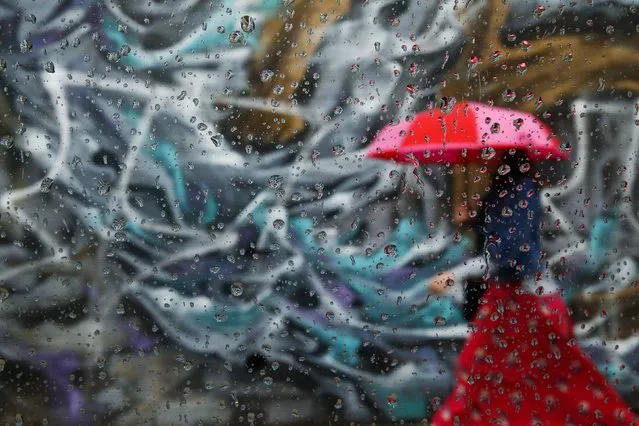
A woman walks past graffiti on a wall in the Williamsburg neighborhood of the borough of Brooklyn, in New York, September 16, 2014. The picture was taken through car window with raindrops. (Photo by Shannon Stapleton/Reuters)

A woman walks past graffiti on a wall in the Williamsburg neighborhood of the borough of Brooklyn, in New York, September 16, 2014. The picture was taken through car window with raindrops. (Photo by Shannon Stapleton/Reuters)
Details
20 Oct 2014 09:04:00
Contestant Emilce Lezcano, center, prepares for the evening gown portion of the “Miss Gordita” beauty contest in Asuncion, Paraguay, Saturday, April 25, 2015. In their elegant evening gowns and elaborate hair styles, the contestants defy the conventional idea that only skinny women can be beautiful. (Photo by Jorge Saenz/AP Photo)

Contestant Emilce Lezcano, center, prepares for the evening gown portion of the “Miss Gordita” beauty contest in Asuncion, Paraguay, Saturday, April 25, 2015. In their elegant evening gowns and elaborate hair styles, the contestants defy the conventional idea that only skinny women can be beautiful. (Photo by Jorge Saenz/AP Photo)
Details
28 Apr 2015 13:17:00
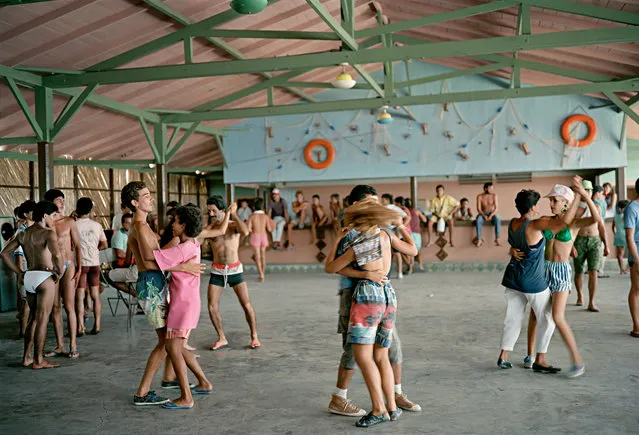
Giovan set out to capture the people’s resilience, during what Fidel Castro, with typical hyperbole, called the “special period”. (Photo by Tria Giovan/The Guardian)

As an American in 1990s Cuba, Tria Giovan risked being branded a traitor. But the photographer continued to visit and, from the dance hall to the hair salon, she captured the resilient spirit of the Cuban people. The 120 images in Tria Giovan’s “The Cuba Archive” are from the period in the 90s when, as an American, travel to Cuba could have seen her branded a traitor, as the country was subject to a US trade embargo. Her trip required lots of planning – and patience. (Photo by Tria Giovan/The Guardian)
Details
21 Sep 2017 09:04:00
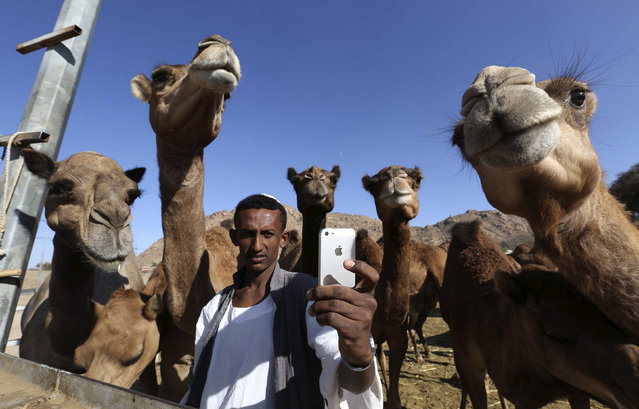
A man takes a “selfie” with camels at a farm in Taif November 1, 2014. Saudi Arabia said late on Wednesday it had detected six new cases of the deadly Middle East Respiratory Syndrome (MERS) in 24 hours, the biggest daily jump for months with officials blaming lax hospital procedures. (Photo by Mohamed Alhwaity/Reuters)

A man takes a “selfie” with camels at a farm in Taif November 1, 2014. Saudi Arabia said late on Wednesday it had detected six new cases of the deadly Middle East Respiratory Syndrome (MERS) in 24 hours, the biggest daily jump for months with officials blaming lax hospital procedures. Scientists are not sure of the origin of the virus, but several studies have linked it to camels and some experts think it is being passed to humans through close physical contact or through the consumption of camel meat or camel milk. (Photo by Mohamed Alhwaity/Reuters)
Details
08 Nov 2014 12:33:00
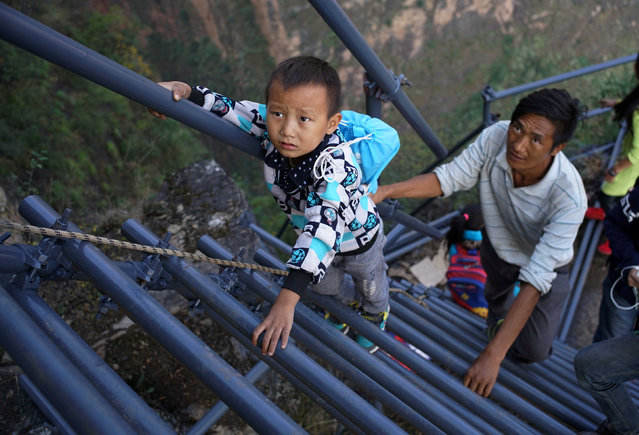
A student from “the cliff village” in Atule'er climbs newly-constructed steel ladders after school to go home for holidays, in Liangshan Sichuan province, China, November 19, 2016. The steel ladders which replaced the unsafe vine ladders shortened the time taken for the children to go home, from three hours to two. (Photo by Reuters/Stringer)

A student from “the cliff village” in Atule'er climbs newly-constructed steel ladders after school to go home for holidays, in Liangshan Sichuan province, China, November 19, 2016. The steel ladders which replaced the unsafe vine ladders shortened the time taken for the children to go home, from three hours to two. (Photo by Reuters/Stringer)
Details
07 Dec 2016 11:57:00