Loading...
Done
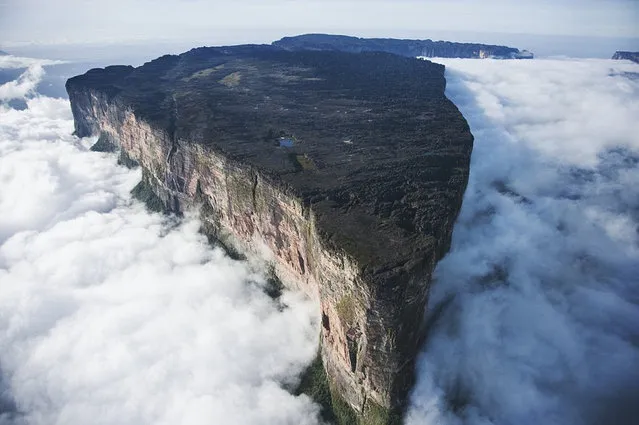
Mount Roraima

Mount Roraima (Spanish: Monte Roraima, also known as Tepuy Roraima and Cerro Roraima; Portuguese: Monte Roraima [ˈmõtʃi ʁoˈɾajmɐ]) is the highest of the Pakaraima chain of tepui plateau in South America. First described by the English explorer Sir Walter Raleigh in 1596, its 31 km2 summit area is defended by 400-metre-tall cliffs on all sides. The mountain includes the triple border point of Venezuela, Brazil and Guyana.
Details
11 Sep 2012 08:04:00
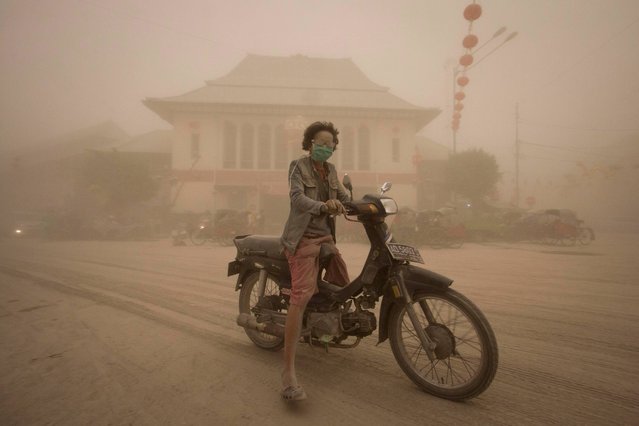
A women rides a motor bike on a street covered with volcanic ash from an eruption of Mount Kelud, in Solo, Indonesia, Friday, February 14, 2014. A major volcanic eruption in Indonesia blasted clouds of ash and debris 18 kilometers (12 miles) into the air on Friday, forcing authorities to close six airports, cancel flights elsewhere in Southeast Asia and evacuate more than 100,000 people from the mountain. (Photo by Hafidz Novalsyah/AP Photo)

A women rides a motor bike on a street covered with volcanic ash from an eruption of Mount Kelud, in Solo, Indonesia, Friday, February 14, 2014. A major volcanic eruption in Indonesia blasted clouds of ash and debris 18 kilometers (12 miles) into the air on Friday, forcing authorities to close six airports, cancel flights elsewhere in Southeast Asia and evacuate more than 100,000 people from the mountain. (Photo by Hafidz Novalsyah/AP Photo)
Details
15 Feb 2014 07:38:00
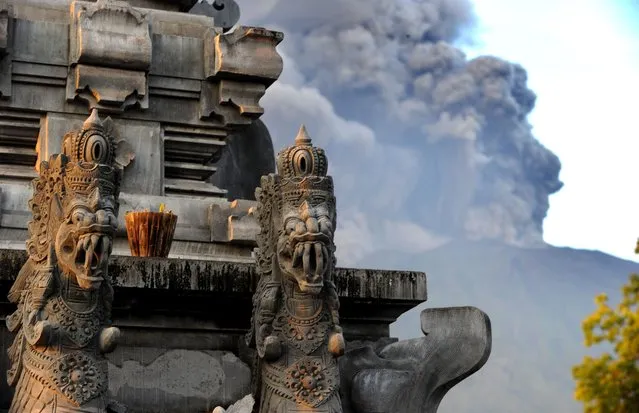
Mount Agung's eruption is seen next to a Balinese temple at Kubu sub-district in Karangasem Regency on Indonesia's resort island of Bali on November 26, 2017. (Photo by Sonny Tumbelaka/AFP Photo)

Mount Agung's eruption is seen next to a Balinese temple at Kubu sub-district in Karangasem Regency on Indonesia's resort island of Bali on November 26, 2017. Indonesia authorities raised the alert for the rumbling volcano to highest level on Monday and closed the international airport on tourist island of Bali stranding thousands of travelers. (Photo by Sonny Tumbelaka/AFP Photo)
Details
28 Nov 2017 08:37:00
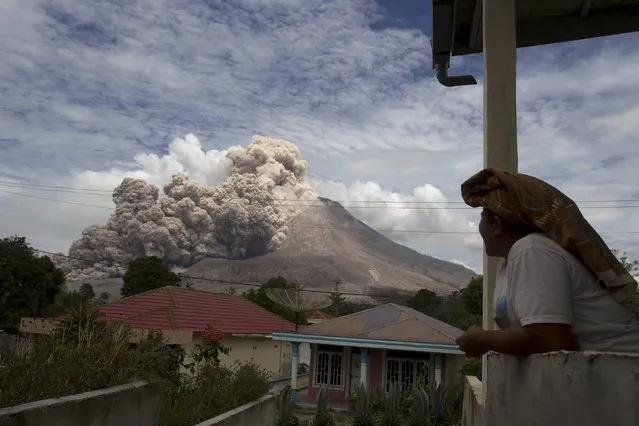
A villager watches as Mount Sinabung volcano erupts, in Kuta Tengah village, Karo Regency in Indonesia's North Sumatra April 1, 2015. The Indonesian volcano was dormant for 400 years before erupting in 2010. (Photo by Y. T. Haryono/Reuters)

A villager watches as Mount Sinabung volcano erupts, in Kuta Tengah village, Karo Regency in Indonesia's North Sumatra April 1, 2015. The Indonesian volcano was dormant for 400 years before erupting in 2010. (Photo by Y. T. Haryono/Reuters)
Details
02 Apr 2015 13:00:00


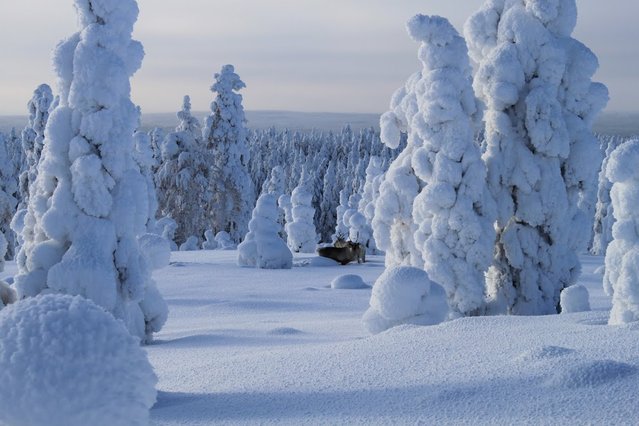
Capturing the true essence of Christmas, Lapland is the perfect place to take your family for the holiday period. Situated in the arctic regions of northern Sweden, Finland and Norway, there are a villages in each country around where you can enjoy the full festive experience.
Details
23 Dec 2014 14:30:00
Top Tables By Olze & Wilkens

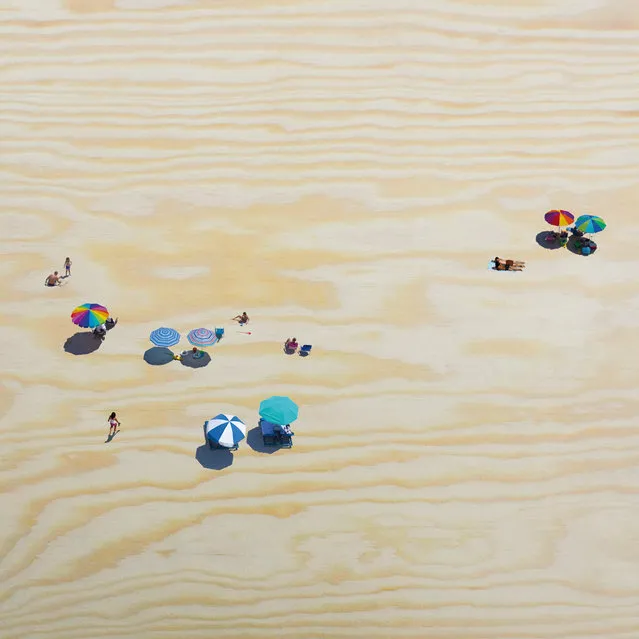
The Berlin & Freiburg-based duo deftly translates the scale of the lightly stained woodgrain to create the winsome scenes. From swimsuit-clad sunbathers on a sparsely populated beach to cabins against a backdrop of fresh snow, it takes just a couple well-placed elements, digitally printed on plywood, to suggest an aerial image on the otherwise unassuming tabletop.
Details
09 Mar 2014 10:33:00
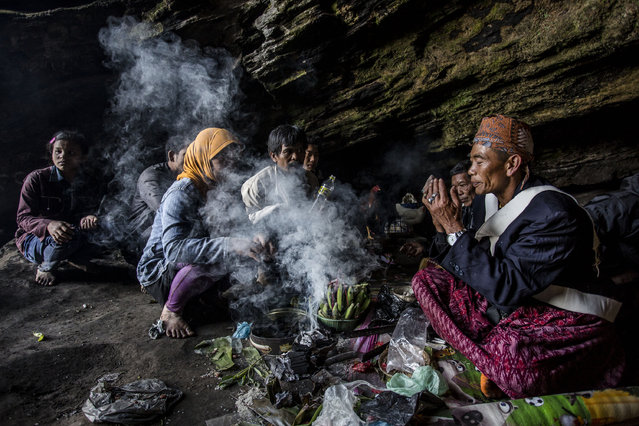
A Tenggerese shaman praying for worshippers at Widodaren cave during the Tenggerese Hindu Yadnya Kasada festival on July 31, 2015 in Probolinggo, East Java, Indonesia. The festival is the main festival of the Tenggerese people and lasts about a month. On the fourteenth day, the Tenggerese make the journey to Mount Bromo to make offerings of rice, fruits, vegetables, flowers and livestock to the mountain gods by throwing them into the volcano's caldera. (Photo by Ulet Ifansasti/Getty Images)

A Tenggerese shaman praying for worshippers at Widodaren cave during the Tenggerese Hindu Yadnya Kasada festival on July 31, 2015 in Probolinggo, East Java, Indonesia. The festival is the main festival of the Tenggerese people and lasts about a month. On the fourteenth day, the Tenggerese make the journey to Mount Bromo to make offerings of rice, fruits, vegetables, flowers and livestock to the mountain gods by throwing them into the volcano's caldera. The origin of the festival lies in the 15th century when a princess named Roro Anteng started the principality of Tengger with her husband Joko Seger, and the childless couple asked the mountain Gods for help in bearing children. The legend says the Gods granted them 24 children but on the provision that the 25th must be tossed into the volcano in sacrifice. The 25th child, Kesuma, was finally sacrificed in this way after initial refusal, and the tradition of throwing sacrifices into the caldera to appease the mountain Gods continues today. (Photo by Ulet Ifansasti/Getty Images)

Details
01 Aug 2015 12:07:00


For a long time the laws of Canada have explicitly banned gambling in any form. This may be the reason why the country does not have so many gambling establishments as the USA - but their quality surely makes up for the quantity. The first Canadian casino was opened in Dawson City, Yukon, in 1972 - it was the first one after gambling has been banned in the country in 1892. The Diamond Tooth Gertie's Gambling Casino did not operate for long, though. The first permanent commercial casino was opened in 1989, and it was the first of many - there are currently 75 casinos operating on Canadian soil.
Details
16 Sep 2014 12:19:00