Loading...
Done
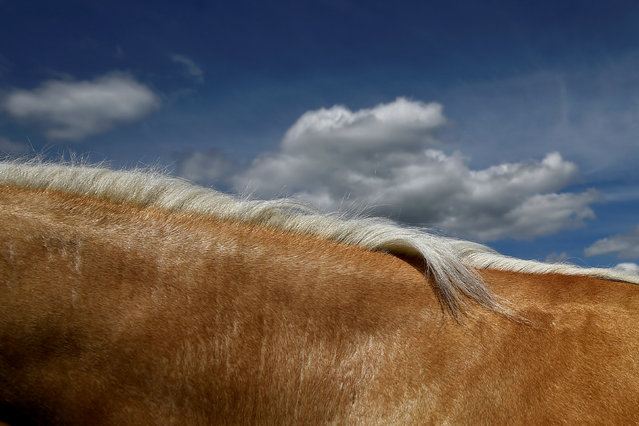
A palomino horse's mane is seen against the sky at Spancil Hill horse fair in Spancil Hill, Ireland June 23, 2018. (Photo by Clodagh Kilcoyne/Reuters)

A palomino horse's mane is seen against the sky at Spancil Hill horse fair in Spancil Hill, Ireland June 23, 2018. (Photo by Clodagh Kilcoyne/Reuters)
Details
01 Jul 2018 00:03:00
Mane flowing, a young competitor clears a jump at the hobby horse racing, eventing and dressage event at Parklands Equestrian Centre near Sheffield, UK on December 30, 2024. (Photo by James Glossop/Times Media Ltd)

Mane flowing, a young competitor clears a jump at the hobby horse racing, eventing and dressage event at Parklands Equestrian Centre near Sheffield, UK on December 30, 2024. (Photo by James Glossop/Times Media Ltd)
Details
16 Jan 2025 02:53:00
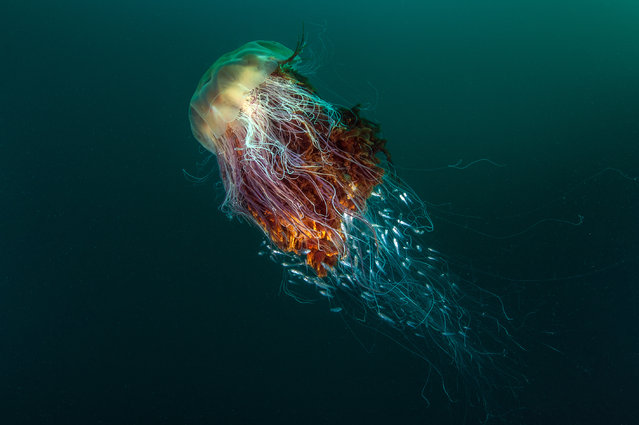
This year’s overall winner and winner of the coast and marine category is George Stoyle with his image “Hitchhikers” of a Lion’s mane jellyfish, photographed at St Kilda, off the Island of Hirta, Scotland. (Photo by George Stoyle/British Wildlife Photography Awards 2016)

This year’s overall winner and winner of the coast and marine category is George Stoyle with his image “Hitchhikers” of a Lion’s mane jellyfish, photographed at St Kilda, off the Island of Hirta, Scotland. (Photo by George Stoyle/British Wildlife Photography Awards 2016)
Details
06 Sep 2016 10:08:00
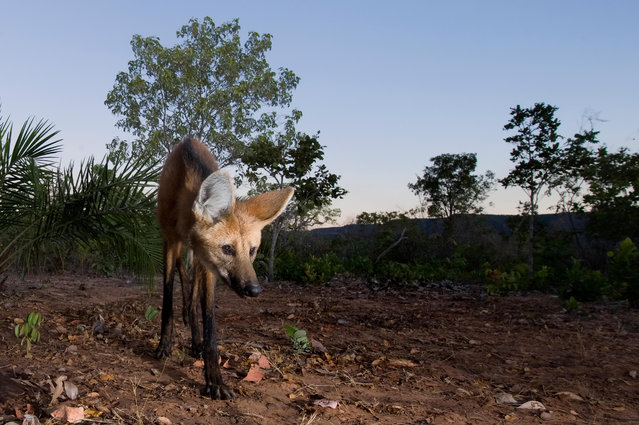
The maned wolf is among the large mammals in the Brazilian Cerrado that are threatened by the increasing conversion of grasslands into farmland for grazing and growing crops. (Photo by Ben Cranke/Nature Picture Library/Alamy Stock Photo)

Global wildlife populations will decline by 67% by 2020 unless urgent action is taken to reduce human impact on species and ecosystems, warns the biennial Living Planet Index report from WWF (World Wide Fund for Nature) and ZSL (Zoological Society of London). From elephants to eels, here are some of the wildlife populations most affected by human activity. Here: The maned wolf is among the large mammals in the Brazilian Cerrado that are threatened by the increasing conversion of grasslands into farmland for grazing and growing crops. (Photo by Ben Cranke/Nature Picture Library/Alamy Stock Photo)
Details
28 Oct 2016 10:47:00
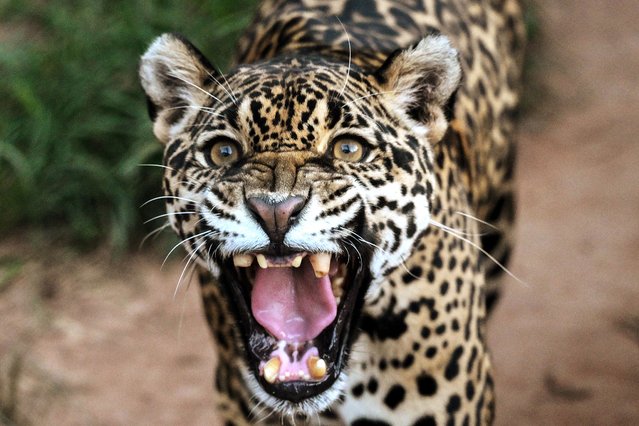
A jaguar (Panthera onca) growls at the Mata Ciliar association, an organization for the conservation of biodiversity, in Jundiai, Sao Paulo state, Brazil on May 29, 2025. Twenty-five pumas and ten jaguars are currently recovering at the Brazilian Center for the Conservation of Neotropical Felines at Mata Ciliar, a site as large as 40 football fields where monkeys, wild dogs, maned wolves, ocelots, and other regional animals are also rehabilitated. (Photo by Nelson Almeida/AFP Photo)

A jaguar (Panthera onca) growls at the Mata Ciliar association, an organization for the conservation of biodiversity, in Jundiai, Sao Paulo state, Brazil on May 29, 2025. Twenty-five pumas and ten jaguars are currently recovering at the Brazilian Center for the Conservation of Neotropical Felines at Mata Ciliar, a site as large as 40 football fields where monkeys, wild dogs, maned wolves, ocelots, and other regional animals are also rehabilitated. (Photo by Nelson Almeida/AFP Photo)

Details
22 Jun 2025 02:21:00
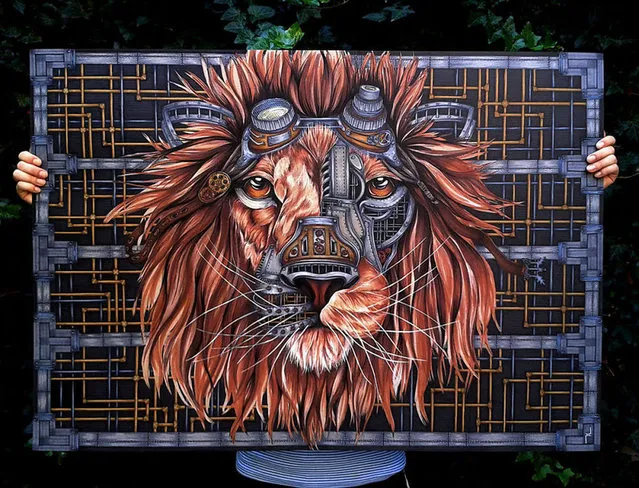
Steampunk Lion By Paula Duta

Paula Duta is a Romanian illustrator who loves creating her artworks using pens, markers, and watercolors. This set of pictures shows the process through which she went to draw her most beloved creation – The Steampunk Lion. The picture came alive piece by piece, starting with the eyes, goggles, nose, and then the mane. All the little details of the lion were drawn with outmost precision, which clearly shows that Paula has poured all her soul into this piece of art. (Photo by Paula Duta)
Details
14 Dec 2014 11:20:00
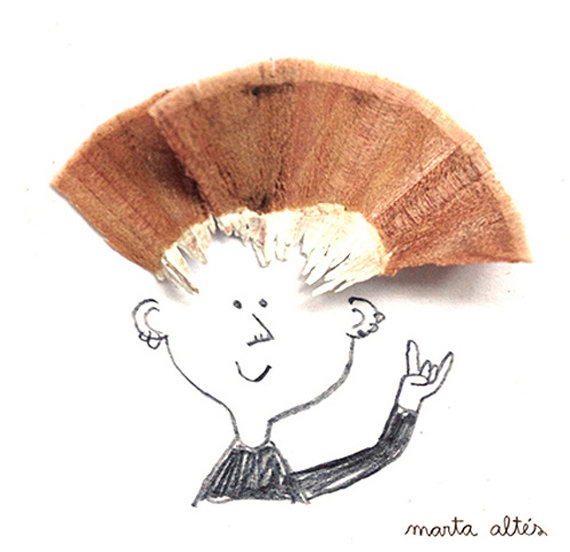
Pencil Shaving Art by Marta Altes

When Marta Altes sharpens her pencil, she doesn’t see waste in the shavings – she sees possibilities. The graphic designer was originally trained in Barcelona before moving to England to pursue her MA in Children’s Book Illustration from the Cambridge School of Art. Her playful, simple pieces burst with child-like creativity, turning pencil shavings into a lion’s mane or a cape for a bullfighter. Stay tuned to the artist’s website for more additions to the series!
Details
18 Nov 2012 11:01:00
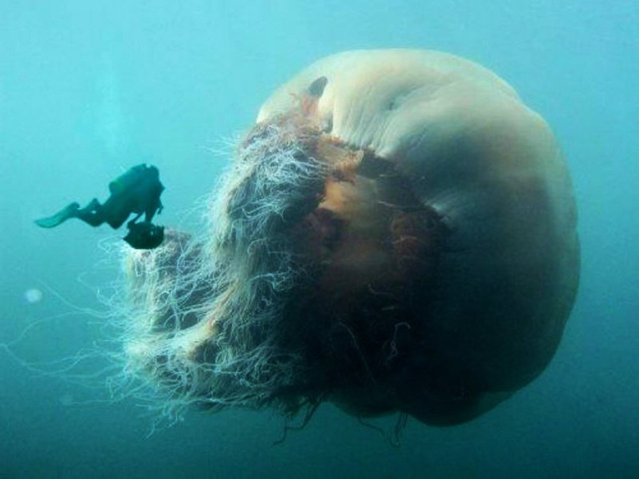
Giant Jellyfish Cyanea capillata

Cyanea capillata is the largest known species of jellyfish. Its range is confined to cold, boreal waters of the Arctic, northern Atlantic, and northern Pacific Oceans, seldom found farther south than 42°N latitude. Similar jellyfish, which may be the same species, are known to inhabit seas near Australia and New Zealand. The largest recorded specimen found, washed up on the shore of Massachusetts Bay in 1870, had a bell (body) with a diameter of 7 feet 6 inches (2.29 m) and tentacles 120 feet (37 m) long.Lion's mane jellyfish have been observed below 42°N latitude for some time—specifically in the larger bays of the east coast of the United States.
Details
24 Jul 2012 12:00:00