Loading...
Done
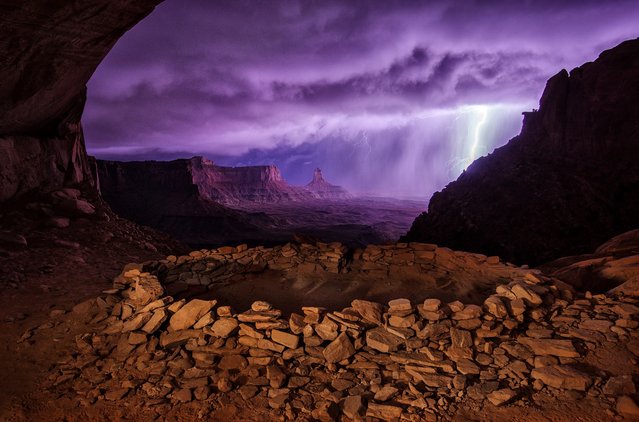
Second Place Winner: “Thunderstorm at False Kiva”. I hiked out to these ruins at night hoping to photograph them with the Milky Way, but instead a thunderstorm rolled through, creating this dramatic image. – Max Seigal. (Photo and caption by Max Seigal/National Geographic Traveler Photo Contest)

Second Place Winner: “Thunderstorm at False Kiva”. I hiked out to these ruins at night hoping to photograph them with the Milky Way, but instead a thunderstorm rolled through, creating this dramatic image. – Max Seigal. National Geographic Traveler Director of Photography Dan Westergren, one of this year's judges, shares his thoughts on the second place winner: “This photo combines two different scenes into one: the small kiva in a cliff dwelling and the grand vista of Canyonlands National Park across the valley. I really like the two different color palettes – warm inside and purple outside. This two-for-one scene was caused by the lightning storm outside the dwelling, which lit up the landscape like it was a huge electronic flash. Looking at this picture I can imagine what a wonderful sight it must have been for the ancient people who lived here. It doesn't seem too amazing now in our modern world, but might have been mind-blowing for the prehistoric residents”. Location: Utah. (Photo and caption by Max Seigal/National Geographic Traveler Photo Contest)
Details
02 Aug 2013 06:16:00
Andrey Karr from Western Riders Slacklines at sunset above big waves in Nazare, Portugal on December 27, 2017. (Photo by Aidan Williams/National Geographic Travel Photographer of the Year Contest)

Andrey Karr from Western Riders Slacklines at sunset above big waves in Nazare, Portugal on December 27, 2017. (Photo by Aidan Williams/National Geographic Travel Photographer of the Year Contest)
Details
14 May 2018 00:03:00
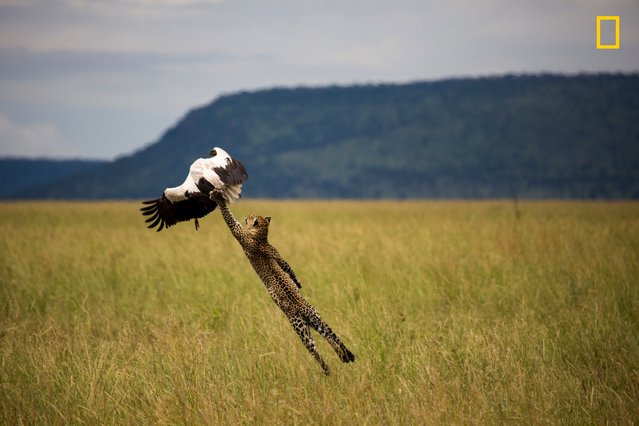
“Leopard Hunting a Stork”. “One-shot capture. I watched the leopard stalking the stork, I only had time to focus at 400mm, no time to change to high speed, I watched the stork, and as soon as it flapped its wings, I shot one shot”. (Photo by Paul Rifkin/National Geographic Travel Photographer of the Year Contest)

“Leopard Hunting a Stork”. “One-shot capture. I watched the leopard stalking the stork, I only had time to focus at 400mm, no time to change to high speed, I watched the stork, and as soon as it flapped its wings, I shot one shot”. (Photo by Paul Rifkin/National Geographic Travel Photographer of the Year Contest)
Details
04 Jun 2018 00:03:00
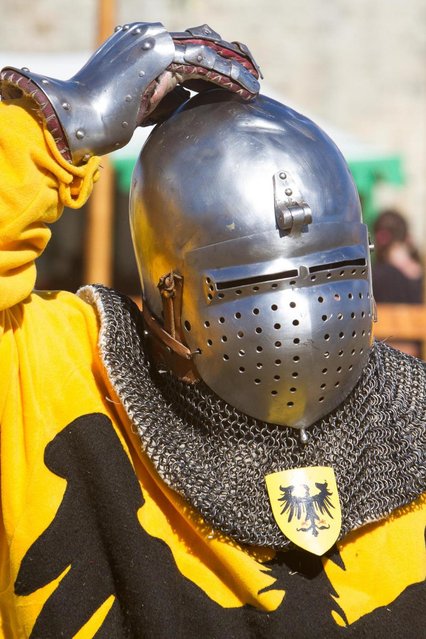
A German contestant adjusts his helmet during the “Battle of Nations” in Aigues-Mortes, southern France, Friday, May 10, 2013 where Middle Ages fans attend the historical medieval battle  competition. The championship will be attended by 22 national teams, which is twice the number it was last year. The battle lasts until May 12. (Photo by Philippe Farjon/AP Photo)

A German contestant adjusts his helmet during the “Battle of Nations” in Aigues-Mortes, southern France, Friday, May 10, 2013 where Middle Ages fans attend the historical medieval battle competition. The championship will be attended by 22 national teams, which is twice the number it was last year. The battle lasts until May 12. (Photo by Philippe Farjon/AP Photo)
Details
11 May 2013 12:24:00
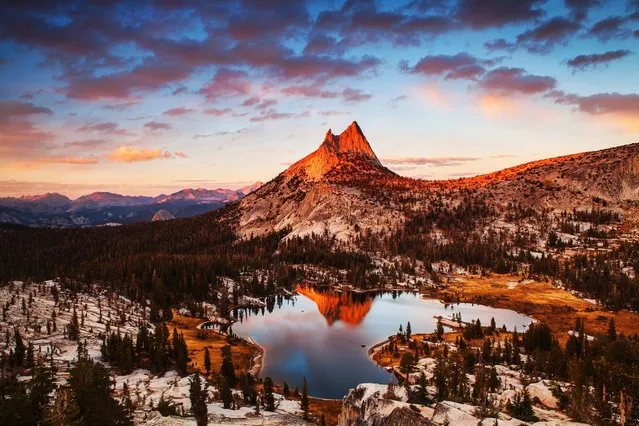
Of the epic landscape, the California-based photographer said: “It was an incredible moment and I'm just glad I decided that day to pick up my camera and give it a go because I don't know if I will ever get the chance again”. (Photo by Nolan Nitschke/Caters News)

Of the epic landscape, the California-based photographer said: “It was an incredible moment and I'm just glad I decided that day to pick up my camera and give it a go because I don't know if I will ever get the chance again”. (Photo by Nolan Nitschke/Caters News)
Details
29 Apr 2013 11:07:00
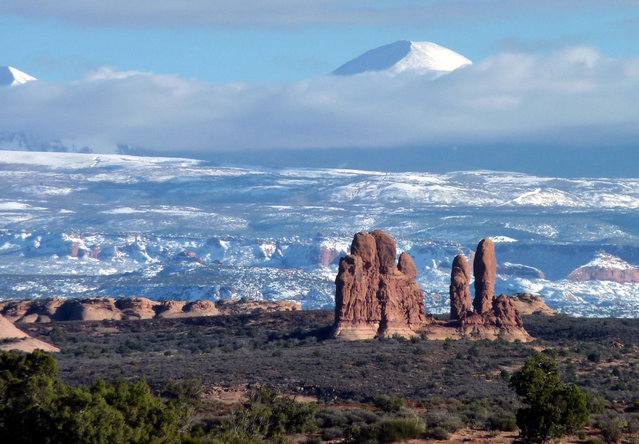
These stunning images look to highlight the amazing natural beauty that can be found across the United States. The U.S. Department of the Interior (DOI) recently released their Best of 2015 list, featuring a variety of animals, weather conditions and landmarks. Included in the list are gleaming auroras, adorable groups of otters and owls, and breath-taking shots across the likes of the Grand Canyon and national parks. (Photo by Caters News)

These stunning images look to highlight the amazing natural beauty that can be found across the United States. The U.S. Department of the Interior (DOI) recently released their Best of 2015 list, featuring a variety of animals, weather conditions and landmarks. Included in the list are gleaming auroras, adorable groups of otters and owls, and breath-taking shots across the likes of the Grand Canyon and national parks. Each of the spectacular shots, all of which were taken during 2015, featured on the Department of the Interiors Instagram account throughout the year, taken by both members of staff and members of the public. Here: Arches, National Park. (Photo by Caters News)
Details
21 Dec 2015 08:06:00
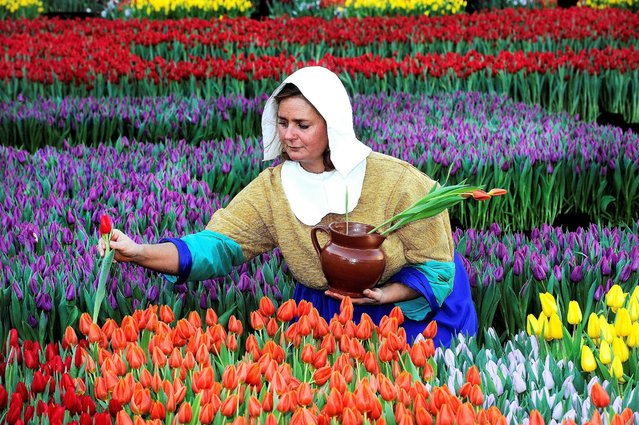
A woman dressed as The Milkmaid (Het Melkmeisje), after a painting by Dutch painter Johannes Vermeer, picks up tulips at the National Tulip Day on the Dam, Amsterdam, the Netherlands, 16 January 2016. The event is the official start of the international tulip season which runs until the end of April. (Photo by Evert Elzinga/EPA)

A woman dressed as “The Milkmaid” (Het Melkmeisje), after a painting by Dutch painter Johannes Vermeer, picks up tulips at the National Tulip Day on the Dam, Amsterdam, the Netherlands, 16 January 2016. The event is the official start of the international tulip season which runs until the end of April. (Photo by Evert Elzinga/EPA)
Details
18 Jan 2016 08:06:00
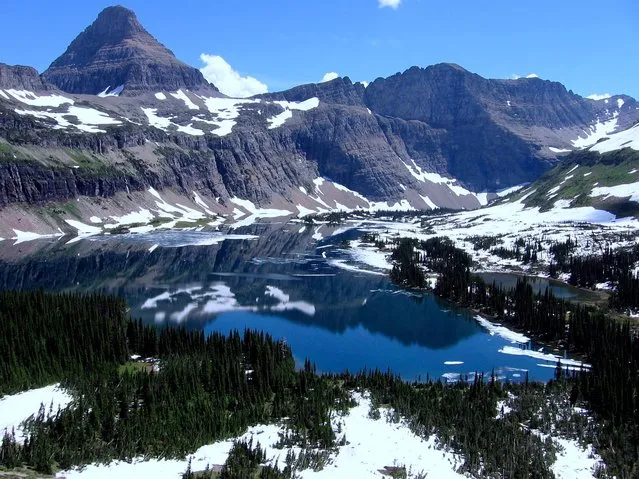
Glacier National Park Montana

Glacier National Park is a national park located in the U.S. state of Montana, on the Canada–United States border with the Canadian provinces of Alberta and British Columbia. The park encompasses over 1,000,000 acres (4,000 km2) and includes parts of two mountain ranges (sub-ranges of the Rocky Mountains), over 130 named lakes, more than 1,000 different species of plants and hundreds of species of animals. This vast pristine ecosystem is the centerpiece of what has been referred to as the "Crown of the Continent Ecosystem", a region of protected land encompassing 16,000 square miles (41,000 km2).
Details
29 Oct 2013 11:13:00