Loading...
Done
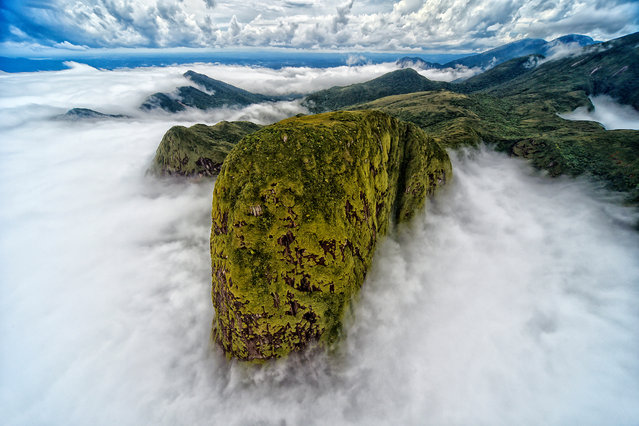
Landscape second place: Denis Ferreira Netto, Brazil. “In a helicopter flight through the sea mountain range, I came across this white cloud cover, which resulted in this magnificent image that resembles the head of a dinosaur”, the photographer said. (Photo by Denis Ferreira Netto/TNC Photo Contest 2021)

Landscape second place: Denis Ferreira Netto, Brazil. “In a helicopter flight through the sea mountain range, I came across this white cloud cover, which resulted in this magnificent image that resembles the head of a dinosaur”, the photographer said. (Photo by Denis Ferreira Netto/TNC Photo Contest 2021)
Details
06 Oct 2021 07:52:00
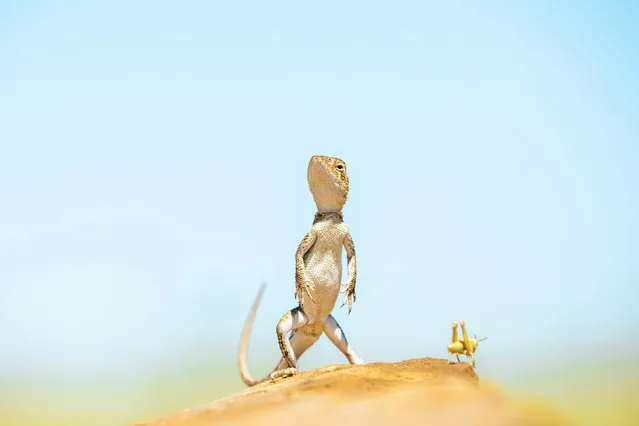
“The Dragon and The Hopper”. Eyrean earless dragon (Tympanocryptis tetraporophora) standing tall on a very hot rock in western Queensland. For a short time it was joined by a hopper, who jumped off before becoming lunch. (Photo by Harrison Warne/Nature Conservancy Australia 2021 Photo Contest)

“The Dragon and The Hopper”. Eyrean earless dragon (Tympanocryptis tetraporophora) standing tall on a very hot rock in western Queensland. For a short time it was joined by a hopper, who jumped off before becoming lunch. (Photo by Harrison Warne/Nature Conservancy Australia 2021 Photo Contest)
Details
01 Oct 2021 08:33:00
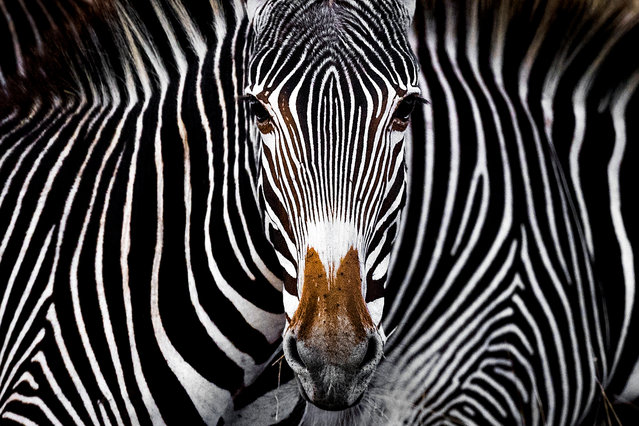
The Grevy’s Illusion by Yaron Schmid, USA: a Grevy’s zebra staring at the camera in Lewa, Kenya. Third place – wildlife. (Photo by Yaron Schmid/The Nature Conservancy Global Photo Contest 2019)

The Grevy’s Illusion by Yaron Schmid, USA: a Grevy’s zebra staring at the camera in Lewa, Kenya. Third place – wildlife. (Photo by Yaron Schmid/The Nature Conservancy Global Photo Contest 2019)
Details
24 Sep 2019 00:05:00
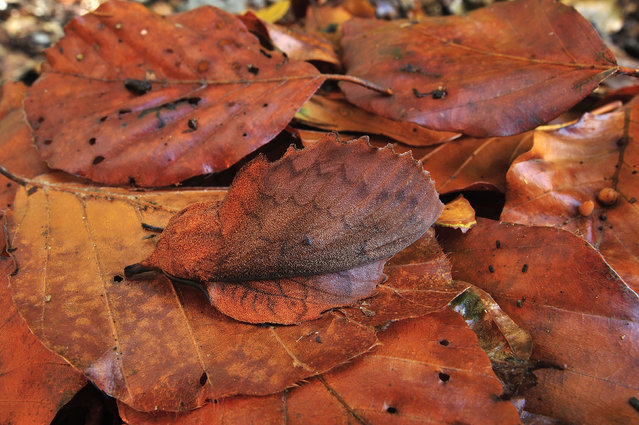
The camouflage mappet moth looks like a fall lead in Switzerland. (Photo by Thomas Marent/Caters News/Ardea)

Whether they are the hunter or the hunted, these camouflage animals show natures incredible ability to blend in with its surroundings. Pictured perfectly concealed against their natural environment, the stunning pictures show the amazing lengths some animals will go to to stay out of sight. Here: The camouflage mappet moth looks like a fall lead in Switzerland. (Photo by Thomas Marent/Caters News/Ardea)
Details
09 Oct 2014 12:58:00
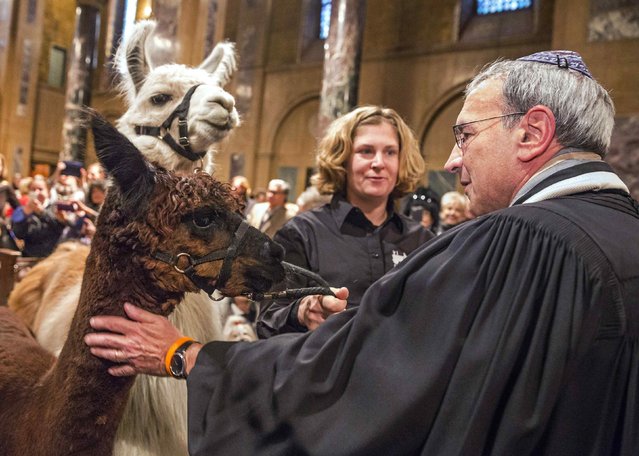
Farm animals are walked down the aisle and blessed by church officials during the “Blessing of the Animals” at the Christ Church United Methodist in Manhattan, New York December 7, 2014. (Photo by Elizabeth Shafiroff/Reuters)

Farm animals are walked down the aisle and blessed by church officials during the “Blessing of the Animals” at the Christ Church United Methodist in Manhattan, New York December 7, 2014. (Photo by Elizabeth Shafiroff/Reuters)
Details
08 Dec 2014 11:39:00
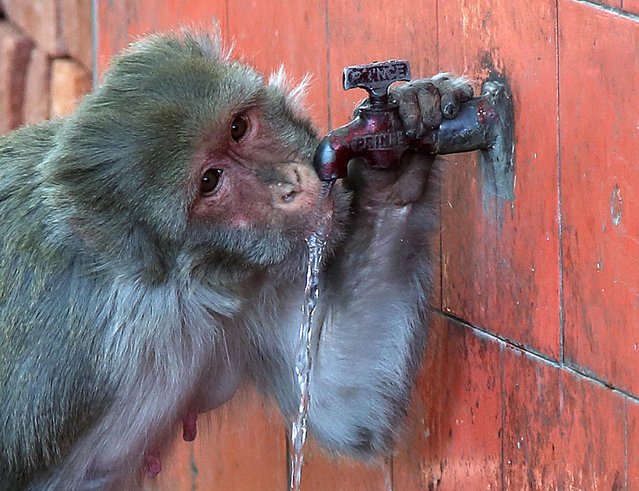
A monkey drinks water from a tap on a hot afternoon in Jammu, the winter capital Kashmir, India, 17 May 2016. Temperatures of around 42 degrees Celsius were forecast in the region. According to the news reports the Indian government decided to divert water by its river interlinking plans from rivers like Brahmaputra and the Ganges towards those rivers facing the drought likesituation . Many Indian states have been affected by drought and have been hit hard by water scarcity. (Photo by Jaipal Singh/EPA)

A monkey drinks water from a tap on a hot afternoon in Jammu, the winter capital Kashmir, India, 17 May 2016. Temperatures of around 42 degrees Celsius were forecast in the region. According to the news reports the Indian government decided to divert water by its river interlinking plans from rivers like Brahmaputra and the Ganges towards those rivers facing the drought likesituation . Many Indian states have been affected by drought and have been hit hard by water scarcity. (Photo by Jaipal Singh/EPA)
Details
22 May 2016 07:00:00
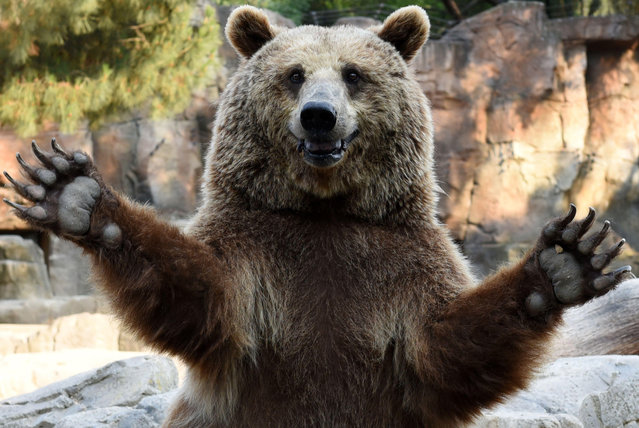
A brown bear waits for food at the zoo in Madrid, Spain on July 30, 2016. (Photo by Jorge Sanz/Pacific Press/SIPA Press/Rex Features/Shutterstock)

A brown bear waits for food at the zoo in Madrid, Spain on July 30, 2016. (Photo by Jorge Sanz/Pacific Press/SIPA Press/Rex Features/Shutterstock)
Details
31 Jul 2016 10:57:00
“The most difficult aspect of this shoot was to get each African pygmy dormouse – also known as micro squirrels – on to a separate camera. Once in place, they needed to remain still long enough to get them both in the frame and looking at me. Often solitary, they naturally wanted to move away”. (Photo by David Yeo/Leica Studio Mayfair/The Guardian)

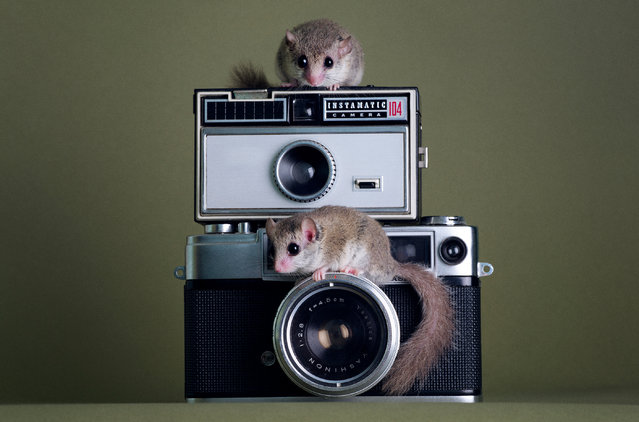
David Yeo’s photography places naturally small species alongside animals that have been selectively bred to be tiny and cute. Here: “The most difficult aspect of this shoot was to get each African pygmy dormouse – also known as micro squirrels – on to a separate camera. Once in place, they needed to remain still long enough to get them both in the frame and looking at me. Often solitary, they naturally wanted to move away”. (Photo by David Yeo/Leica Studio Mayfair/The Guardian)
Details
24 Oct 2017 08:20:00