Loading...
Done
A member of the Edo Firemanship Preservation Association displays his balancing skills atop bamboo ladder during a New Year presentation by the fire brigade in Tokyo January 6, 2015. (Photo by Thomas Peter/Reuters)

A member of the Edo Firemanship Preservation Association displays his balancing skills atop bamboo ladder during a New Year presentation by the fire brigade in Tokyo January 6, 2015. (Photo by Thomas Peter/Reuters)
Details
07 Jan 2015 14:16:00
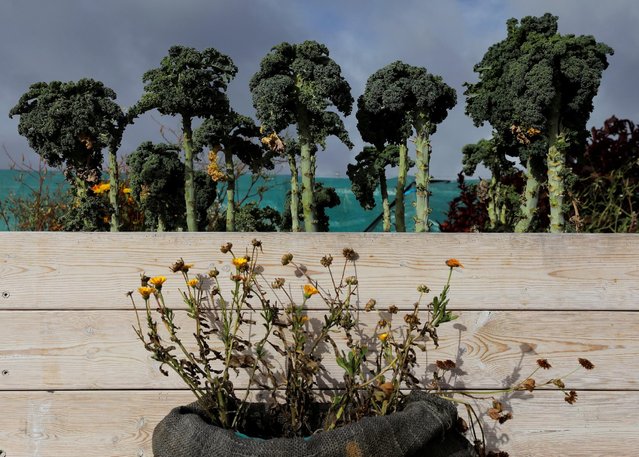
Kale grows at Kajodlingen farm in Gothenburg, Sweden, September 28, 2016. (Photo by Maxim Shemetov/Reuters)

Kale grows at Kajodlingen farm in Gothenburg, Sweden, September 28, 2016. They are doing it on the rooftops, on tower block balconies and even on a disused railway: Swedes have discovered a passion for urban gardening as a way of growing fresh food and getting back in touch with nature. Part of a global movement, an increasing number of Swedish city-dwellers are growing their own in window boxes and allotments or are visiting public gardens built in or on industrial or office spaces. (Photo by Maxim Shemetov/Reuters)
Details
11 Nov 2016 07:58:00
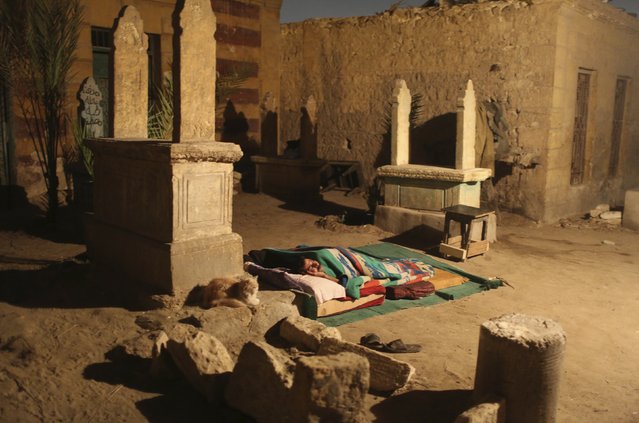
A man sleeps between tombstones in front of his single-room home on a hot night in the Cairo Necropolis, Egypt, October 13, 2015. (Photo by Asmaa Waguih/Reuters)

A man sleeps between tombstones in front of his single-room home on a hot night in the Cairo Necropolis, Egypt, October 13, 2015. In the sprawling Cairo Necropolis, known as the City of the Dead, life and death are side by side. Amid a housing crisis in Egypt, and with the population of greater Cairo estimated at about 20 million, people count themselves lucky to have a place to call home in the graveyards that date back hundreds of years. (Photo by Asmaa Waguih/Reuters)
Details
01 Jan 2016 08:04:00
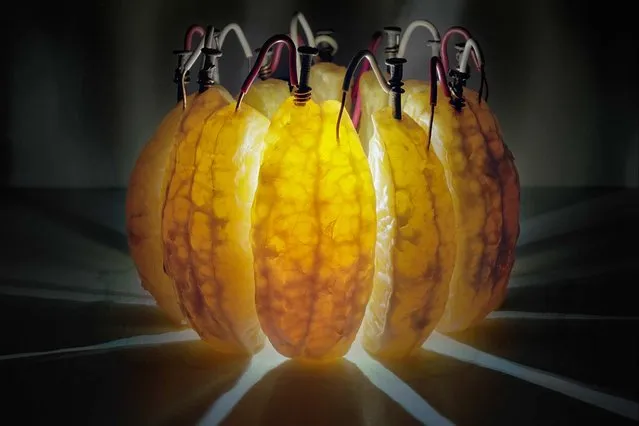
Wedges of an orange generate enough current and electrical juice – 3.5 volts – to power an LED. The fruit’s citric acid helps electrons flow from galvanized nails to copper wire in this 14-hour exposure. This image was published in September’s Visions of Earth, a trio of photos that appear in each issue of National Geographic. (Photo by Caleb Charland/National Geographic)

Wedges of an orange generate enough current and electrical juice – 3.5 volts – to power an LED. The fruit’s citric acid helps electrons flow from galvanized nails to copper wire in this 14-hour exposure. This image was published in September’s Visions of Earth, a trio of photos that appear in each issue of National Geographic. (Photo by Caleb Charland/National Geographic)
Details
06 Jan 2014 12:09:00
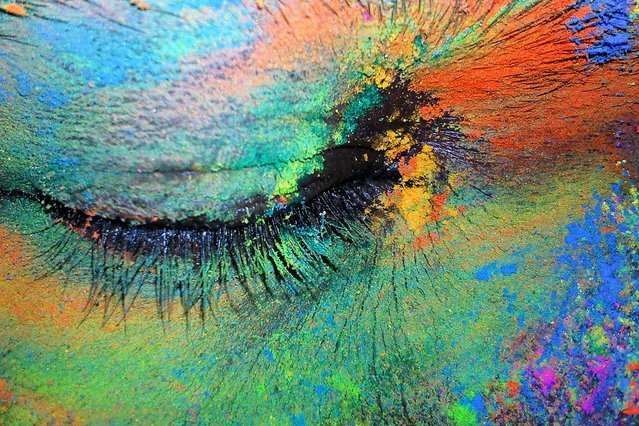
This close-up image – of a Holi Festival celebrant in Vrindivan, India, coated in neon-colored powder – was submitted to National Geographic’s Your Shot in the last week of March. On April 1 we published it on our Daily News site, along with seven other bright scenes captured during the Hindu spring Festival of Colors. (Photo by Tinto Alencherry/National Geographic)

This close-up image – of a Holi Festival celebrant in Vrindivan, India, coated in neon-colored powder – was submitted to National Geographic’s Your Shot in the last week of March. On April 1 we published it on our Daily News site, along with seven other bright scenes captured during the Hindu spring Festival of Colors. (Photo by Tinto Alencherry/National Geographic)
Details
06 Jan 2014 12:30:00
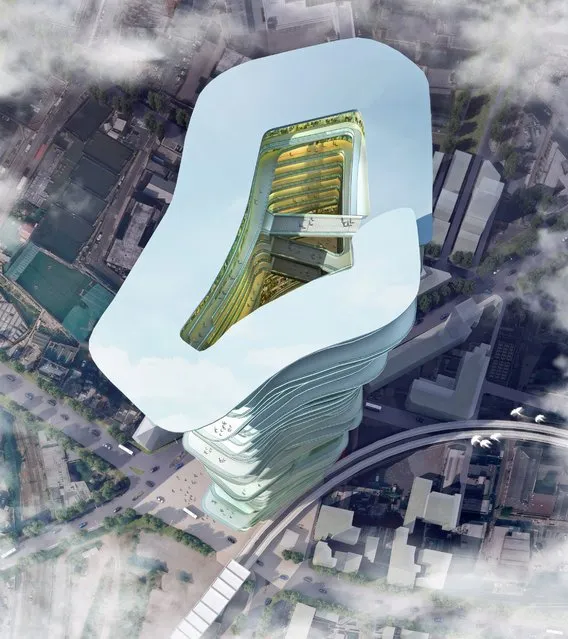
These are the ambitious plans which suggest skyscrapers of the future may house an entire city. The Endless City project is an award-winning proposal by sure Architecture, who propose turning skyscrapers into complete ecosystems. London is the proposed city for the mixed-use tower – which would feature huge ramps linking different sections of the structure. The company, whose design won the SkyScrapers and SuperSkyScrapers Competition, insist the structure would be a great space-saver in dense cities which have previously spread outwards rather than upwards. (Photo by Caters News)

These are the ambitious plans which suggest skyscrapers of the future may house an entire city. The Endless City project is an award-winning proposal by sure Architecture, who propose turning skyscrapers into complete ecosystems. London is the proposed city for the mixed-use tower – which would feature huge ramps linking different sections of the structure. The company, whose design won the SkyScrapers and SuperSkyScrapers Competition, insist the structure would be a great space-saver in dense cities which have previously spread outwards rather than upwards. (Photo by Caters News)
Details
08 Sep 2014 10:38:00
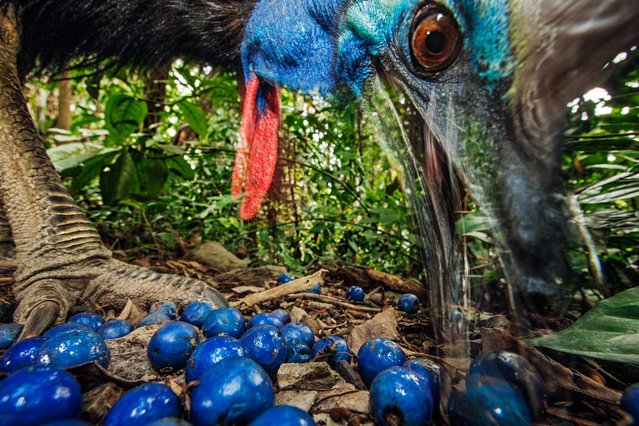
“Cassowaries are large, flightless birds related to emus and (more distantly) to ostriches, rheas, and kiwis”, writes Olivia Judson in the September issue of National Geographic magazine. (Photo by Christian Ziegler/National Geographic)

“Cassowaries are large, flightless birds related to emus and (more distantly) to ostriches, rheas, and kiwis”, writes Olivia Judson in the September issue of National Geographic magazine. How large? People-size: Adult males stand well over five foot five and top 110 pounds. Females are even taller, and can weigh more than 160 pounds. Dangerous when roused, they’re shy and peaceable when left alone. But even birds this big and tough are prey to habitat loss. The dense New Guinea and Australia rain forests where they live have dwindled. Today cassowaries might number 1,500 to 2,000. And because they help shape those same forests – by moving seeds from one place to another – “if they vanish”, Judson writes, “the structure of the forest would gradually change” too. (Photo by Christian Ziegler/National Geographic)

Details
06 Jan 2014 12:21:00
This photo taken on March 29, 2017 shows a young woman offering shots of liquer at a dance bar in Walking Street in Pattaya. (Photo by Roberto Schmidt/AFP Photo)

This photo taken on March 29, 2017 shows a young woman offering shots of liquer at a dance bar in Walking Street in Pattaya. Two hours east of Bangkok, Pattaya' s bawdy reputation hails from the Vietnam War era when US GIs partied in their downtime. (Photo by Roberto Schmidt/AFP Photo)
Details
19 Apr 2017 09:01:00