Loading...
Done
People in Need

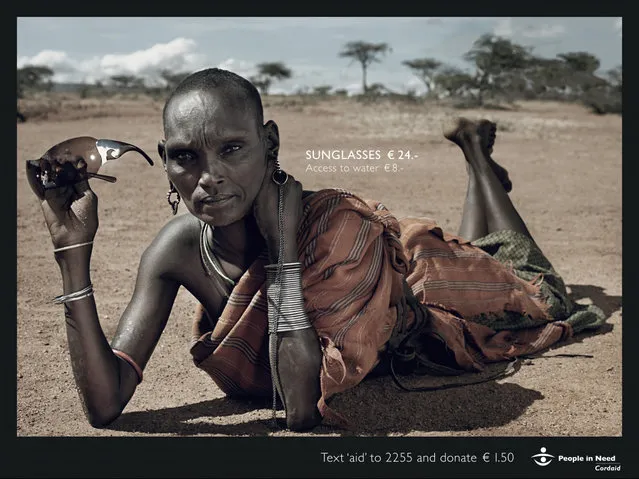
'The Dutch charity organization Mensen in Nood (people in need) hits the streets with a remarkable campaign. People in need are posing with the typical attributes of consumer culture. The price of a designer handbag (€32) is compared with the price of a whole week of food (€4), The price a pint of beer (€4.50) with the price of 50 liter clean water (€1.50). The pictures were taken by Swedish fashion photographer Carl Stolz.' - Occupy Design UK
Details
29 Jun 2013 11:21:00
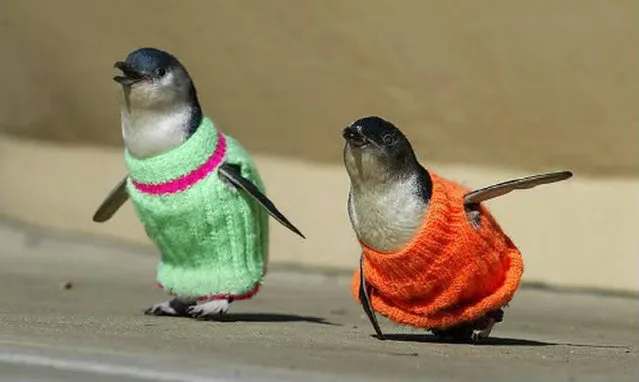
New Zealand Penguins in Need of Sweaters

Penguin sweaters, also known as penguin jumpers, are sweaters which are knitted for penguins that have been caught in oil slicks. When an oil spill affects penguins, they are dressed in knitted sweaters to stop them preening their feathers and to keep them warm, since the spilled oil destroys their natural oils. This also prevents them from poisoning themselves by ingesting the oil. The sweaters are removed and discarded as soon as the penguins can be washed. The original project has been completed, but the knitting pattern is still available on-line, as subsequent oil spills make it necessary. The extra sweaters are kept on behalf of the Wildlife Rescue Team.
Details
31 Oct 2012 13:06:00
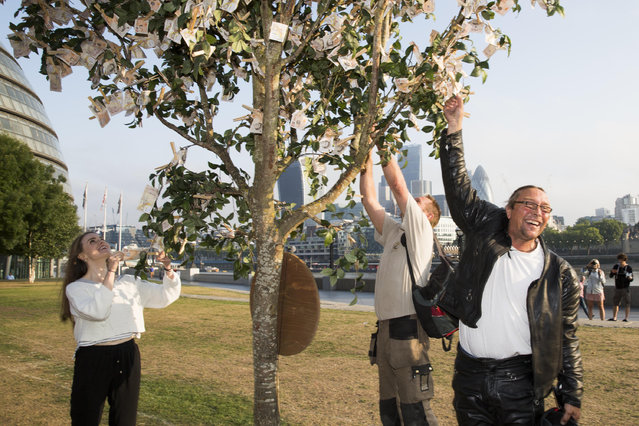
Londoners walking through Potters Field Park were surprised to see a “money tree” blooming with £9820 in £10 notes, the average amount a working British family has in savings, on July 24, 2014 in London, England. The tree was planted by Sunlife to encourage the nation to start saving at least £10 a month for a brighter future. (Photo by Tristan Fewings/Getty Images for SunLife)

Londoners walking through Potters Field Park were surprised to see a “money tree” blooming with £9820 in £10 notes, the average amount a working British family has in savings, on July 24, 2014 in London, England. The tree was planted by Sunlife to encourage the nation to start saving at least £10 a month for a brighter future. (Photo by Tristan Fewings/Getty Images for SunLife)
Details
25 Jul 2014 11:50:00
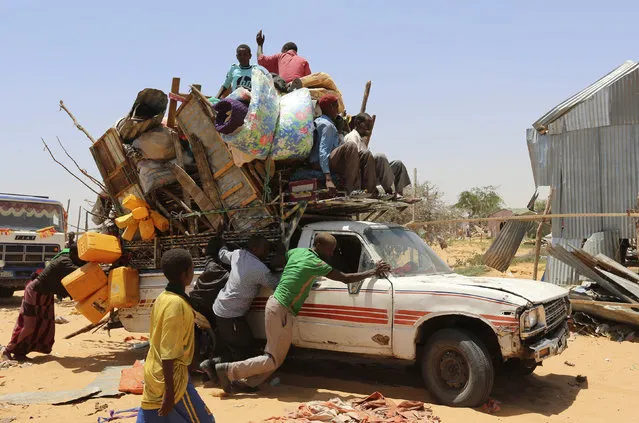
More than 6 billion people live in countries where serious levels of public sector corruption are fueling inequality and exploitation, according to Transparency International's 2015 index of perceived public sector corruption. The group's annual report measures perceptions of corruption due to the secrecy surrounding most corrupt dealings. Two thirds of the 168 countries assessed were identified as having a serious corruption problem. Somalia, which has been mired in conflict since civil war broke out in 1991, ranks bottom of the list. (Photo by Feisal Omar/Reuters)

More than 6 billion people live in countries where serious levels of public sector corruption are fueling inequality and exploitation, according to Transparency International's 2015 index of perceived public sector corruption. The group's annual report measures perceptions of corruption due to the secrecy surrounding most corrupt dealings. Two thirds of the 168 countries assessed were identified as having a serious corruption problem. Somalia, which has been mired in conflict since civil war broke out in 1991, ranks bottom of the list. (Photo by Feisal Omar/Reuters)
Details
13 May 2016 12:10:00
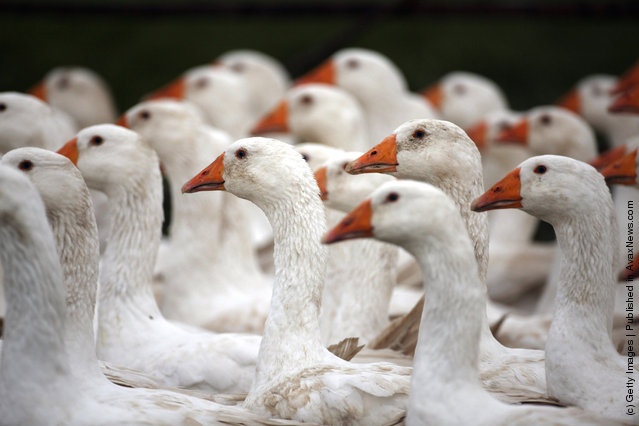
Geese Seen In Fields As They Are Outdoor Reared For Christmas

A gaggle of geese graze in a field at Holly Tree Farm in the Cheshire countryside as they are fattened up for Christmas on November 10, 2011 in Knutsford, England. Roasted goose is gaining in popularity as an alternative to turkey during the Christmas meal of the festive period. (Photo by Christopher Furlong/Getty Images)
Details
12 Nov 2011 13:56:00
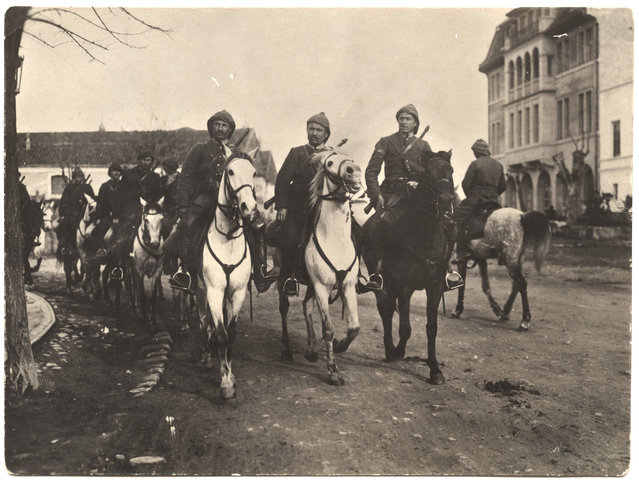
Turkish army, including cavalry, infantry and artillery. (Photo by Dr. P.A. Smithe/National World War I Museum, Kansas City, Mo.)

Dr. P.A. Smithe was sent by the American Red Cross as a doctor and surgeon to work at a hospital in Vienna. He sailed to Europe in December 1915 and returned home in August 1916, according to his daughter, who donated his images to the National World War I Museum. Photo: Turkish army, including cavalry, infantry and artillery. (Photo by Dr. P.A. Smithe/National World War I Museum, Kansas City, Mo.)
Details
29 Jul 2014 11:53:00
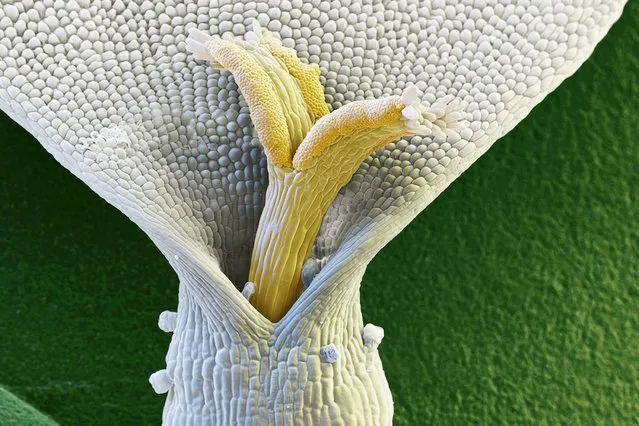
The floret of a Chamomile flower up close and personal. (Photo by Oliver Meckes/Barcroft Media)

These images have been created using a colour scanning electron microscope (SEM) by the award-winning Eye of Science, comprised of snapper Oliver Meckes and biologist Nicole Ottawa. For a decade the pair, based in Reutlingen in the south of Germany, worked with an old SEM they saved from the scrapheap, but for the last five years they have used a £250,000 FEI Quanta Series Field Emission SEM. Oliver said: “Flowers are beautiful in 'normal' view, but when you look closer, some parts get very bizarre and unexpected structures appear – flowers within flowers, worlds within worlds”. Photo: The floret of a Chamomile flower up close and personal. (Photo by Oliver Meckes/Barcroft Media)
Details
26 May 2014 13:51:00
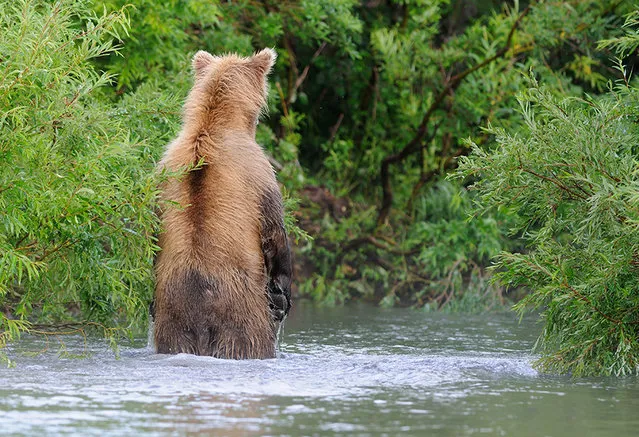
Where's the fish?/n. South Kamchatka Sanctuary<><>South Kamchatka Sanctuary; Kuril Lake; Kamchatka; bear; salmon; spawning

Igor Shpilenok works in the reserve at Kamchatka, Russia. Igor is a fellow of the International League of Conservation Photographers and a winner of the 2006 BBC Wildlife Photographer Competition. Igor’s work has been published in numerous international and Russian magazines, including Smithsonian, National Wildlife, Geo, and BBC Wildlife.

“How does a bear behave when encounter a human? In most cases he runs away. But before running he almost always would rise to stand on his rear feet. And this behavior does not indicate the attack, as many people think...” – Igor Shpilenok. (Photo by Igor Shpilenok via Wildlife Photo Russia)
Details
16 Sep 2012 12:54:00