Loading...
Done
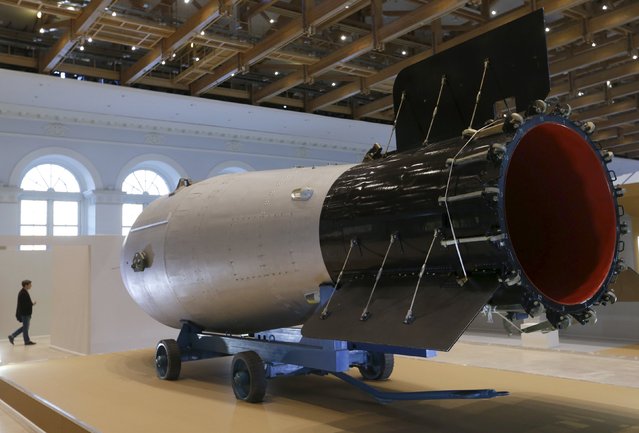
Shell, which is the replica of the biggest detonated Soviet nuclear bomb AN-602 (Tsar-Bomb), is on display in Moscow, Russia, August 31, 2015. (Photo by Maxim Zmeyev/Reuters)

Shell, which is the replica of the biggest detonated Soviet nuclear bomb AN-602 (Tsar-Bomb), is on display in Moscow, Russia, August 31, 2015. The shell is part of an exhibition organized by the state nuclear corporation Rosatom. (Photo by Maxim Zmeyev/Reuters)
Details
01 Sep 2015 13:24:00
Ocean voyage

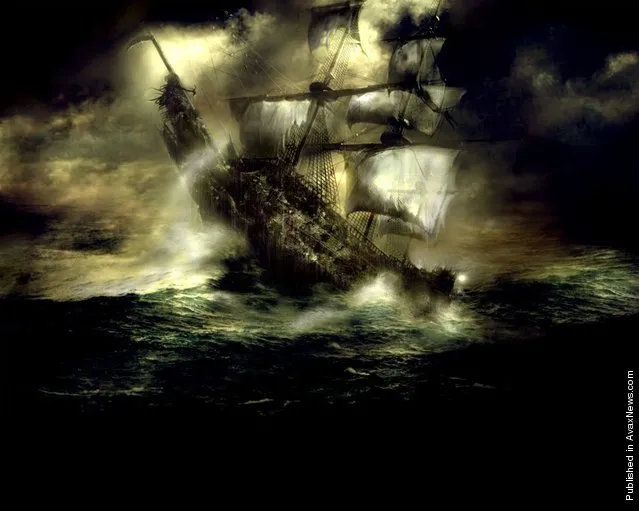
Do you think that history is a science? Well, not exactly. First, and foremost, history is the state's “legend of wars”, it’s official regalia. Of course, public historians are not interested in scientific truth – quite the opposite. In this respect, any attempt to present a state’s history as altruistic and benevolent as possible is welcomed and encouraged – as opposed to any revisionism attempts that may be more accurate. In this matter, Chinese have surpassed us all – they revised in highly creative manner (but rather shamelessly) the technology already invented by Europeans, a process that resulted in oldest state on the planet. Here is an interesting paradox: ask any sinologist about the Middle Kingdom during second century B.C., and he will describe it to you in such a vivid manner as if he has been living there all his life – but as soon as you will ask him to describe Chinese history in the 19-20th centuries… let's say, his eagerness will be greatly diminished. However, we will discuss China in a different article, and in the meantime we will try to understand how exactly historic “legend of wars” is formed and functions – based on a specific and well-known example. A great example is Ferdinand Magellan's first voyage around the world.

Details
14 Nov 2011 09:11:00
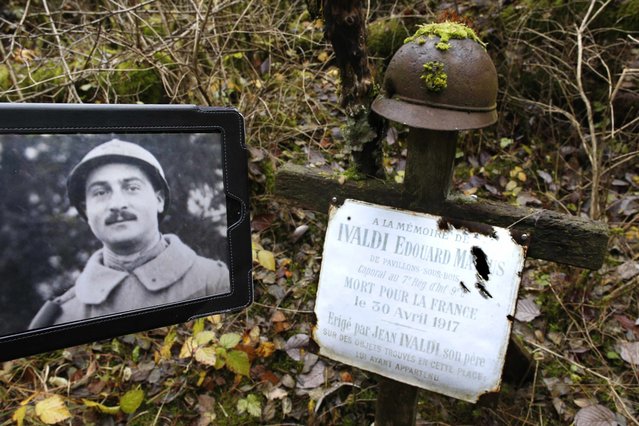
A portrait of French WWI soldier Edouard Marius Ivaldi is displayed on a tablet, in this illustration picture, alongside his battlefield grave memorial, a wooden cross with a battlefield helmet in Champagne, eastern France, November 3, 2015. (Photo by Charles Platiau/Reuters)

A portrait of French WWI soldier Edouard Marius Ivaldi is displayed on a tablet, in this illustration picture, alongside his battlefield grave memorial, a wooden cross with a battlefield helmet in Champagne, eastern France, November 3, 2015. (Photo by Charles Platiau/Reuters)
Details
09 Nov 2015 08:02:00
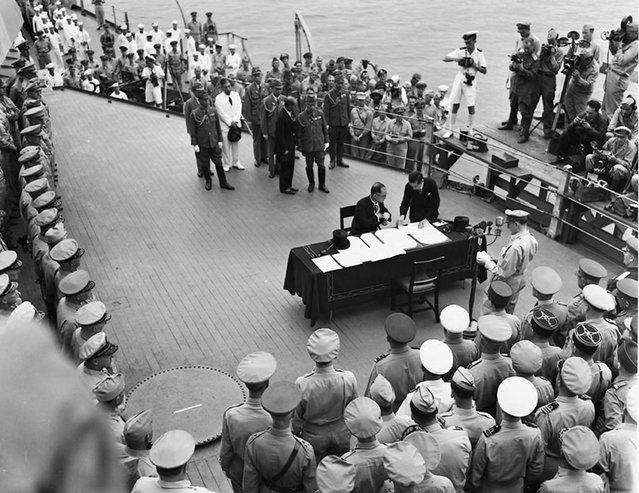
Japan's delegation gather to sign the formal surrender document on the U.S. Navy battleship USS Missouri in Tokyo Bay in a September 2, 1945 file photo. (Photo by Reuters/US Navy)

Japan's delegation gather to sign the formal surrender document on the U.S. Navy battleship USS Missouri in Tokyo Bay in a September 2, 1945 file photo. (Photo by Reuters/US Navy)
Details
03 Sep 2015 12:43:00
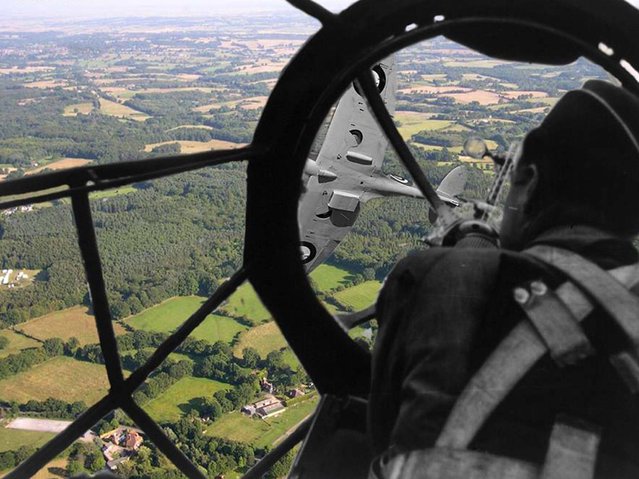
View of a Spitfire from the cockpit of an He111,somewhere over Southern England 1941 – 2014. (Photo by Adam Surrey)

View of a Spitfire from the cockpit of an He111,somewhere over Southern England 1941 – 2014. (Photo by Adam Surrey)
Details
23 May 2014 08:55:00
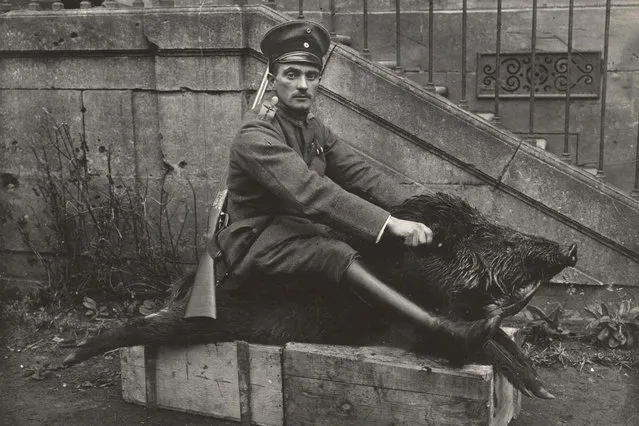
A German Air Force Officer sits astride a dead boar outside a house where he is stationed near the Western Front, in this 1918 handout picture. This picture is part of a previously unpublished set of World War One (WWI) images from a private collection. The pictures offer an unusual view of varied and contrasting aspects of the conflict, from high tech artillery to mobile pigeon lofts, and from officers partying in their headquarters to the grim reality of life and death in the trenches. The year 2014 marks the centenary of the start of the war. (Photo by Reuters/Archive of Modern Conflict London)

A German Air Force Officer sits astride a dead boar outside a house where he is stationed near the Western Front, in this 1918 handout picture. This picture is part of a previously unpublished set of World War One (WWI) images from a private collection. The pictures offer an unusual view of varied and contrasting aspects of the conflict, from high tech artillery to mobile pigeon lofts, and from officers partying in their headquarters to the grim reality of life and death in the trenches. The year 2014 marks the centenary of the start of the war. (Photo by Reuters/Archive of Modern Conflict London)
Details
26 Jun 2014 12:13:00
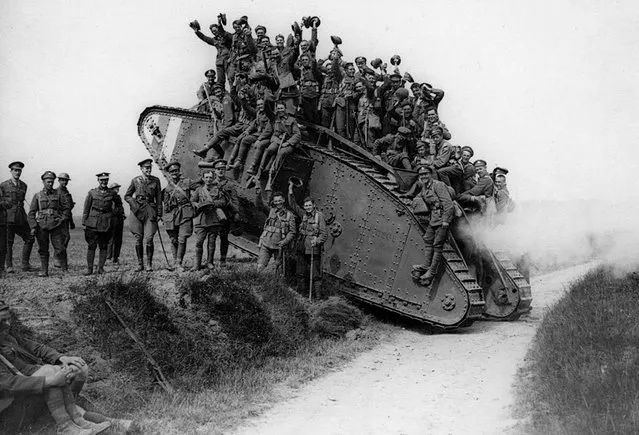
These black-and-white photos are taken from the new book “Armoured Warfare in the First World War 1916 – 1918” by Anthony Tucker-Jones and published by Pen & Sword Military. “Interestingly the British, French and Germans took completely different approaches with varying results”. The British military produced “Little Willie” in Autumn 1915 weighing 18 tonnes, which had a crew of two plus four gunners. “Inspired by a tracked artillery tractor “Little Willie” was referred to as a water tank – hence the name tank – to ensure secrecy”, said Anthony. “This led to the strange looking Mark I with its peculiar rhomboid shape, designed to cross trenches with guns in sponsons on either side. The Germans saw the tank as unchivalrous and were slow to grasp its utility. They favoured the Stormtrooper (specialist soldiers used to infiltrate enemy trenches) and artillery, not the tank”, said Anthony. “However, they didn’t hesitate to make use of captured British tanks. Although the tank helped secure victory and German soldiers dubbed it “Germany’s Downfall” the country was ultimately brought to its knees by the Allies blockade”. Here: British troops hitch a ride on a Mark IV after the massed tank fleet spearheading attack at Cambrai on November 20, 1917. (Photo by Anthony Tucker-Jones/Mediadrumworld.com)

These black-and-white photos are taken from the new book “Armoured Warfare in the First World War 1916 – 1918” by Anthony Tucker-Jones and published by Pen & Sword Military. Here: British troops hitch a ride on a Mark IV after the massed tank fleet spearheading attack at Cambrai on November 20, 1917. (Photo by Anthony Tucker-Jones/Mediadrumworld.com)
Details
23 Feb 2017 00:02:00
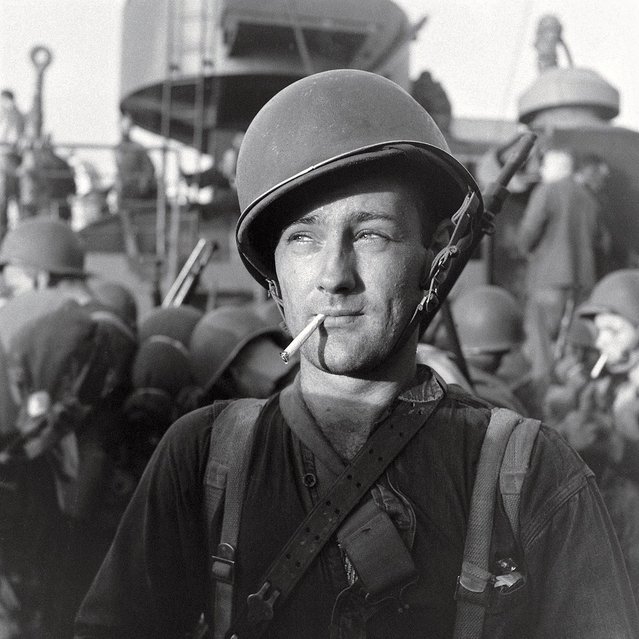
An American Marine readies to land on Guadalcanal during the five-month struggle for the island between late 1942 and early 1943. Three thousand miles south of Tokyo, Guadalcanal was a major shipping point for military supplies. The Allied victory there in February, 1943, marked a major turning point in the war after a string of Japanese victories in the Pacific. (Photo by Joe Scherschel/Time & Life Pictures)

An American Marine readies to land on Guadalcanal during the five-month struggle for the island between late 1942 and early 1943. Three thousand miles south of Tokyo, Guadalcanal was a major shipping point for military supplies. The Allied victory there in February, 1943, marked a major turning point in the war after a string of Japanese victories in the Pacific. (Photo by Joe Scherschel/Time & Life Pictures)
Details
10 Mar 2013 12:50:00