Ethnic Wa performer dressed as United Wa State Army (UWSA) soldiers perform a traditional dance in Mongmao, Wa territory in northeast Myanmar October 1, 2016. (Photo by Soe Zeya Tun/Reuters)
Monster girl Crazy Sa-ya, an iconic Harajuku girl and a staff member of the cafe, wearing a face mask poses for a photograph at Kawaii Monster Cafe, amid the coronavirus disease (COVID-19) outbreak, in Tokyo, Japan on January 31, 2021. (Photo by Issei Kato/Reuters)
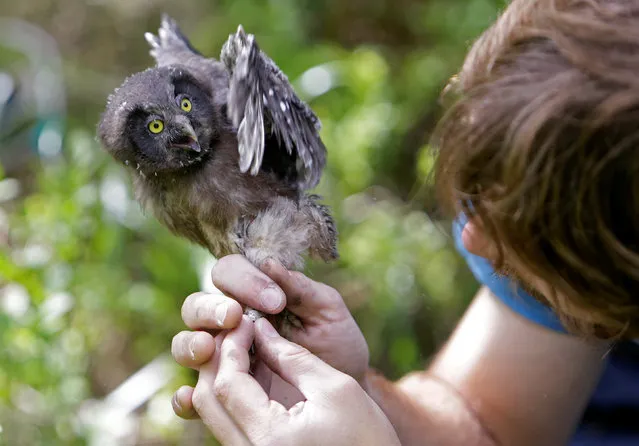
Scientist Jiri Sindelar checks a ring of a Boreal owl chick outside the “Smart Nest Box”, which allows the study of birds by using mounted cameras, in a forest near the village of Mikulov, Czech Republic, June 18, 2016. (Photo by David W. Cerny/Reuters)
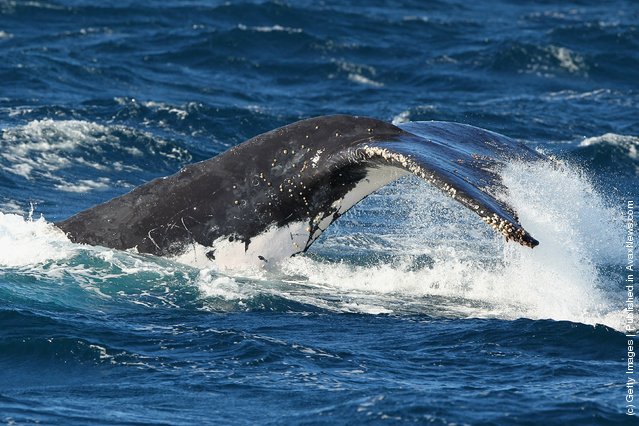
A humpback whale is seen at the beginning of whale watching season during a Manly Whale Watching tour on June 8, 2011 in Sydney, Australia. The first day of winter in New South Wales, June 1st, marks the start of the Humback and southern right whales migration from southern regions to the north to warmer waters. Whale watchers should expect tohave plenty to see with the whale population increasing each year. The migration north continues through July and with the whales returning between September and November. (Photo by Cameron Spencer/Getty Images)
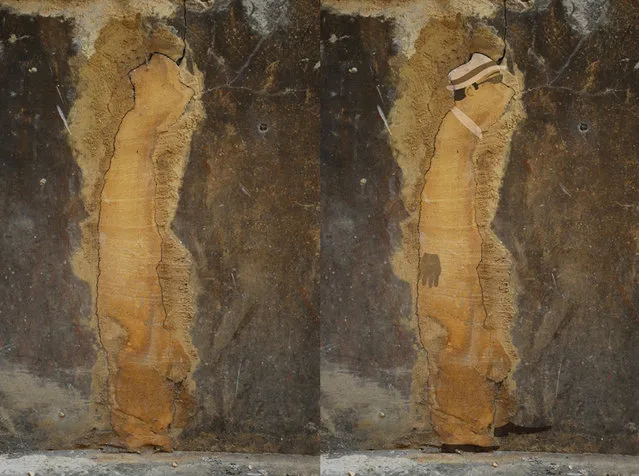
In her blog “Stop Watch” Dutch artist Tineke Meirink takes photos of everyday objects found on the streets, then she gives life to by adding a minimal digital illustratior.
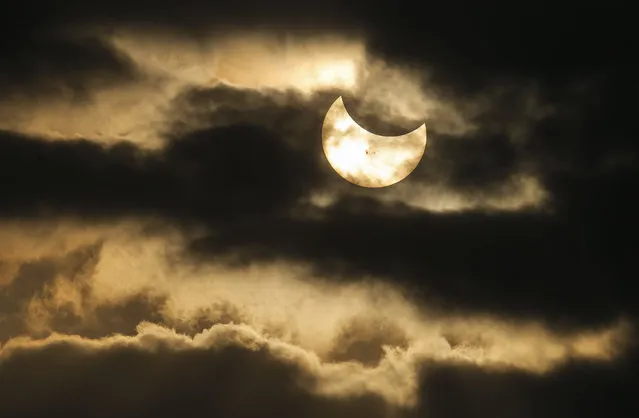
A partial solar eclipse is seen in a break in the clouds during rush hour in downtown Wichita Kan., Thursday, October 23, 2014. A partial eclipse occurs when the moon covers a portion of the sun as seen from the Earth. (AP Photo/The Wichita Eagle, Travis Heying)
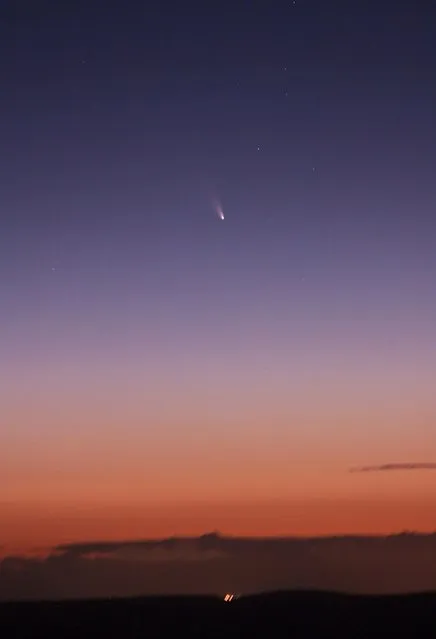
It’s time to start watching for Comet PANSTARRS, one of two comets to get excited about in 2013. Photo: This image provided by NASA shoaws the comet PANSTARRS as seen from Mount Dale, Western Australia on March 5, 2013. According to NASA on March 10, it will make its closest approach to the sun about 28 million miles (45 million kilometers) away. As it continues its nightly trek across the sky, the comet may get lost in the sun's glare but should return and be visible to the naked eye by March 12. (Photo by AP Photo/NASA)