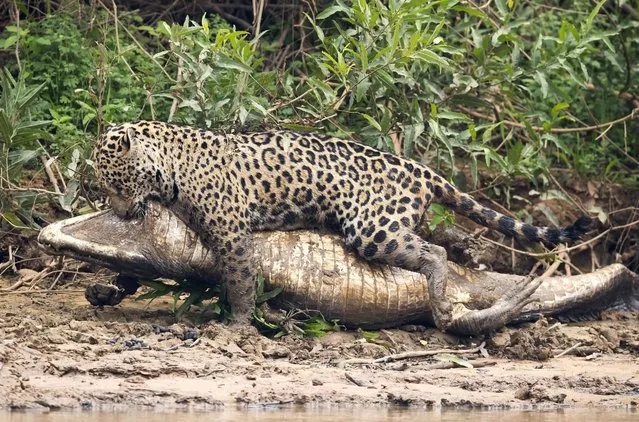
A jaguar ambushes a giant jacare caiman high up on the Three Brothers River in the Pantanal in Mato Grosso, Brazil. The cat wrestled with the reptile for over twenty minutes in a death struggle witnessed by photographer Chris Brunskill just after ten o'clock in the morning on the 26th of September, 2017. Caimans form a large part of the jaguar's diet in the Pantanal but battles such as this are very rarely observed and seldom photographed. (Photo by Chris Brunskill Ltd/Getty Images)
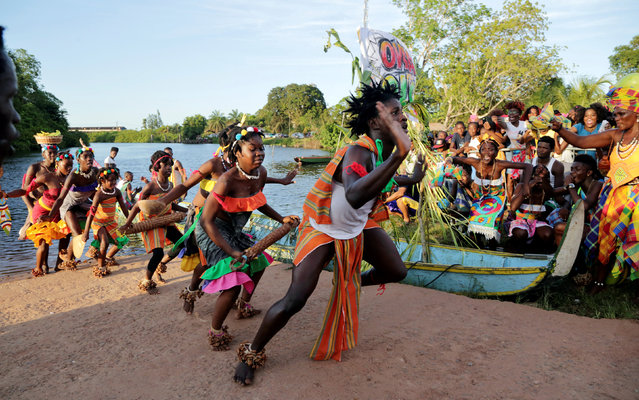
Members of different tribes of the Maroon community, descendants of runaway slaves, compete in the 3rd Poolo Boto (beautiful boat) competition as part of the Moengo Festival of Music in Marowijne district, northern Suriname, September 23, 2016. (Photo by Ranu Abhelakh/Reuters)
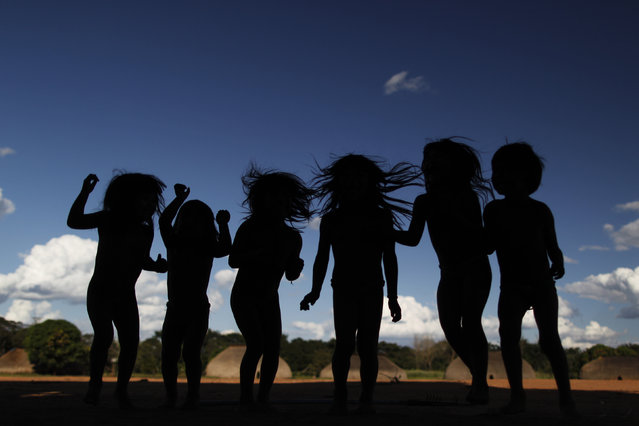
Yawalapiti children play during the preparations for the celebration of “quarup”, a ritual held to honor in death a person of great importance to them, in the Xingu National Park, Mato Grosso State, May 7, 2012. (Photo by Ueslei Marcelino/Reuters)
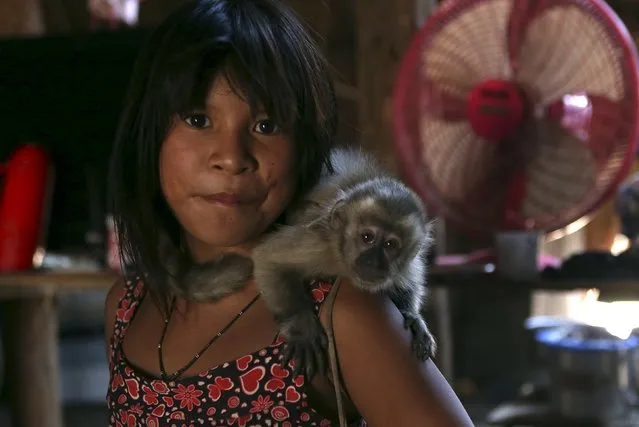
An indigenous girl carries a monkey inside her house in their village at Xingu national park in Mato Grosso, Brazil, October 2, 2015. The Kamayura tribe consists of around 300 people, and is one of the 16 ethnic groups living in the indigenous Xingu national park. (Photo by Paulo Whitaker/Reuters)
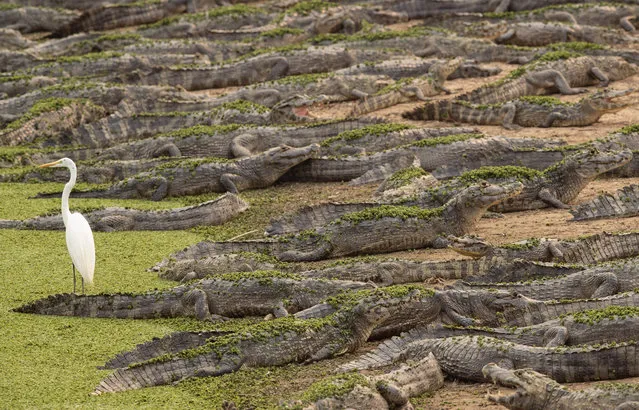
Alligators and an egret stand on the banks of the Bento Gomes river next to the Transpantaneira road at the Pantanal wetlands near Pocone, Mato Grosso state, Brazil, Monday, September 14, 2020. A vast swath of the vital wetlands is burning in Brazil, sweeping across several national parks and obscuring the sun behind dense smoke. (Photo by Andre Penner/AP Photo)
A cosplayer dressed as a “remote worker” with “corporate slave” written on his glasses poses for a photo on New Year's Eve at Comiket, the largest comic market that had been postponed for two years because of the coronavirus disease (COVID-19) pandemic, in Tokyo, Japan December 31, 2021. (Photo by Androniki Christodoulou/Reuters)
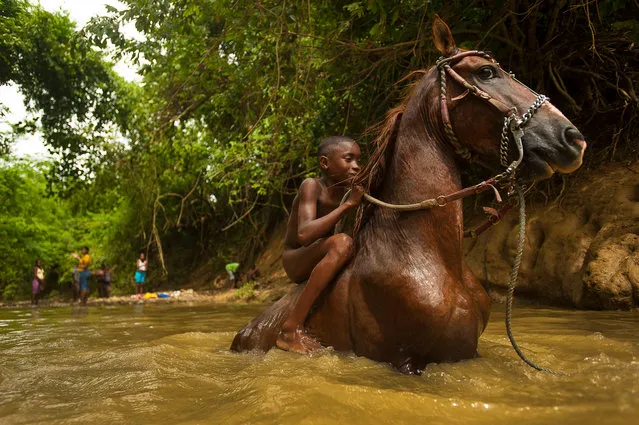
This image of a young bareback rider was taken in the village of Palenque de San Basilio, in Colombia’s Bolívar department. Founded by freed slaves in the 17th century, it became the first free town in the Americas, following a decree by the Spanish crown. Most of today’s inhabitants are direct descendants of those slaves and have preserved many of their customs, including their own language, Palenquero. (Photo by Sebastián Suki Beláustegui/The Guardian)