Loading...
Done


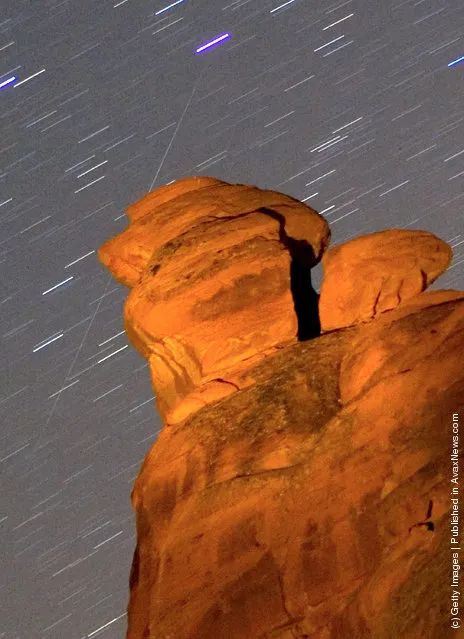
A Geminid meteor streaks diagonally across the sky against a field of star trails behind one of the peaks of the Seven Sisters rock formation in this long exposure early December 14, 2007 in the Valley of Fire State Park in Nevada. The meteor display, known as the Geminid meteor shower because it appears to radiate from near the star Castor in the constellation Gemini, is thought to be the result of debris cast off from an asteroid-like object called 3200 Phaethon. The shower is visible every December. (Photo by Ethan Miller/Getty Images)
Details
07 Jul 2011 10:34:00
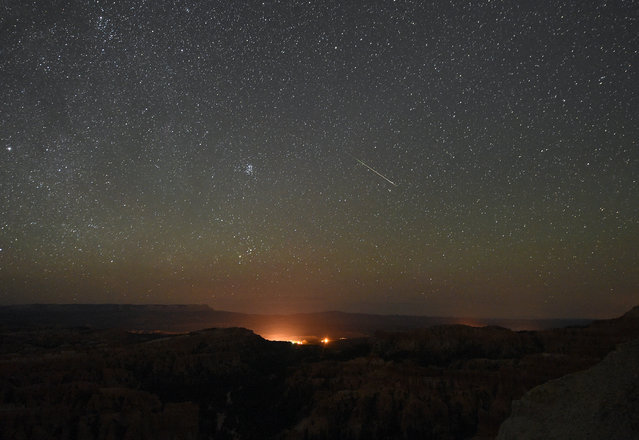
A Perseid meteor streaks across the sky above Inspiration Point early on August 12, 2016 in Bryce Canyon National Park, Utah. The annual display, known as the Perseid shower because the meteors appear to radiate from the constellation Perseus in the northeastern sky, is a result of Earth's orbit passing through debris from the comet Swift-Tuttle. (Photo by Ethan Miller/Getty Images)

A Perseid meteor streaks across the sky above Inspiration Point early on August 12, 2016 in Bryce Canyon National Park, Utah. The annual display, known as the Perseid shower because the meteors appear to radiate from the constellation Perseus in the northeastern sky, is a result of Earth's orbit passing through debris from the comet Swift-Tuttle. (Photo by Ethan Miller/Getty Images)
Details
13 Aug 2016 11:19:00
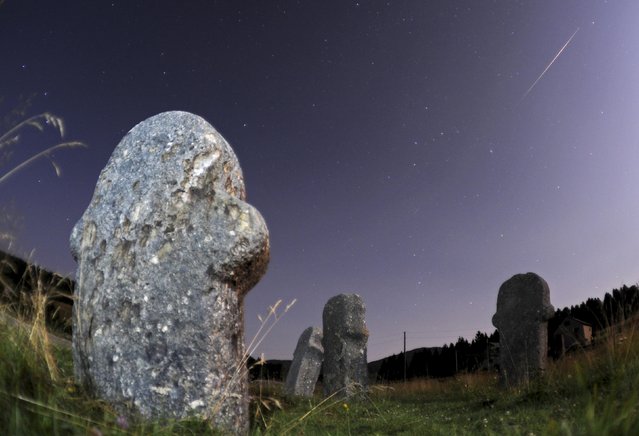
A meteor streaks over the sky during the Perseid meteor shower at the Maculje archaeological site near Novi Travnik August 12, 2014. According to NASA, the annual Perseid meteor shower reaches its peak on August 12 and 13 in Europe. The fireballs from the meteorites are fast and plentiful, although a nearly full moon (Supermoon) makes it difficult to view them this year, the agency adds. (Photo by Dado Ruvic/Reuters)

A meteor streaks over the sky during the Perseid meteor shower at the Maculje archaeological site near Novi Travnik August 12, 2014. According to NASA, the annual Perseid meteor shower reaches its peak on August 12 and 13 in Europe. The fireballs from the meteorites are fast and plentiful, although a nearly full moon (Supermoon) makes it difficult to view them this year, the agency adds. (Photo by Dado Ruvic/Reuters)
Details
14 Aug 2014 10:45:00
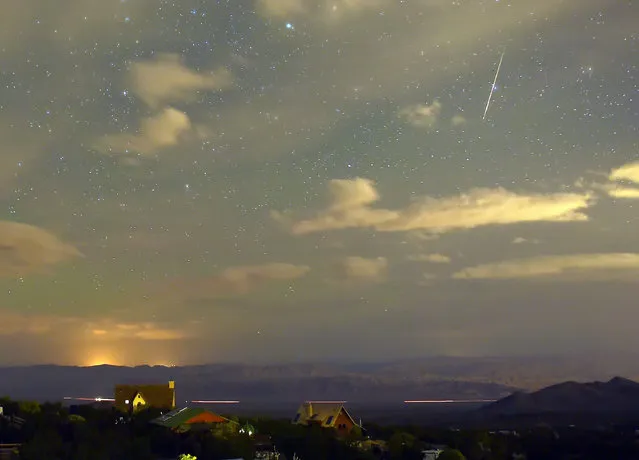
A Perseid meteor streaks across the sky over the community of Cold Creek on August 12, 2015 in the Spring Mountains National Recreation Area, Nevada. The annual display, known as the Perseid shower because the meteors appear to radiate from the constellation Perseus in the northeastern sky, is a result of Earth's orbit passing through debris from the comet Swift-Tuttle. (Photo by Ethan Miller/Getty Images)

A Perseid meteor streaks across the sky over the community of Cold Creek on August 12, 2015 in the Spring Mountains National Recreation Area, Nevada. The annual display, known as the Perseid shower because the meteors appear to radiate from the constellation Perseus in the northeastern sky, is a result of Earth's orbit passing through debris from the comet Swift-Tuttle. (Photo by Ethan Miller/Getty Images)
Details
13 Aug 2015 11:33:00
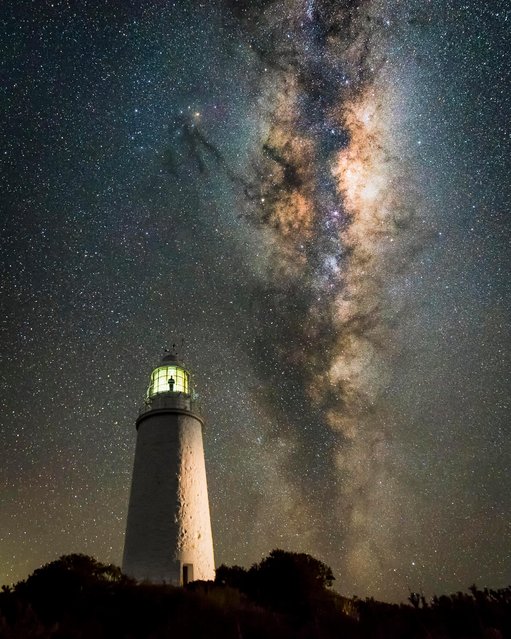
The Milky Way rises above an isolated lighthouse in Tasmania. Shot by James Stone of Australia. (Photo by James Stone/Astronomy Photographer of the Year 2018)

The competition is run by Royal Observatory Greenwich sponsored by Insight Investment and in association with BBC Sky at Night Magazine. This year astrophotographers from 91 countries sent in more than 4,200 spectacular entries. Here: The Milky Way rises above an isolated lighthouse in Tasmania. Shot by James Stone of Australia. (Photo by James Stone/Astronomy Photographer of the Year 2018)
Details
20 Jul 2018 00:05:00
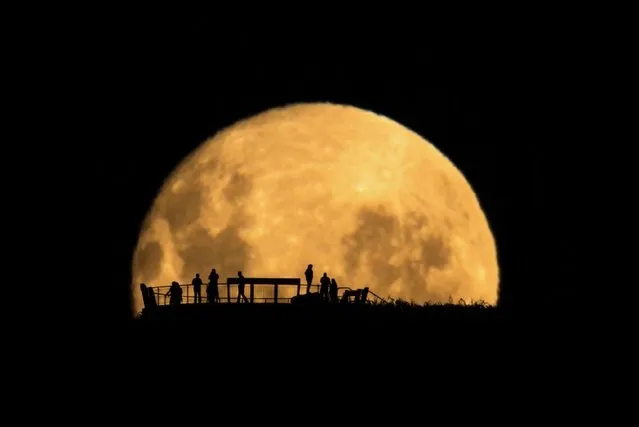
Astronomy Photographer Of The Year 2013 Part1

The Royal Observatory just announced its Astronomy Photographer Of The Year 2013 winners. Australian photographer Mark Gee was chosen among a thousand amateur and professional photographers around the globe to win the top title. His work is part of an exhibition of the winning photographers, which opened on Sept. 19 at the Royal Observatory Greenwich. The Royal Observatory shared with us the winners and notable mentions of the competition. Their descriptions of the prizewinners can be found below the images.
Details
04 Oct 2013 11:45:00
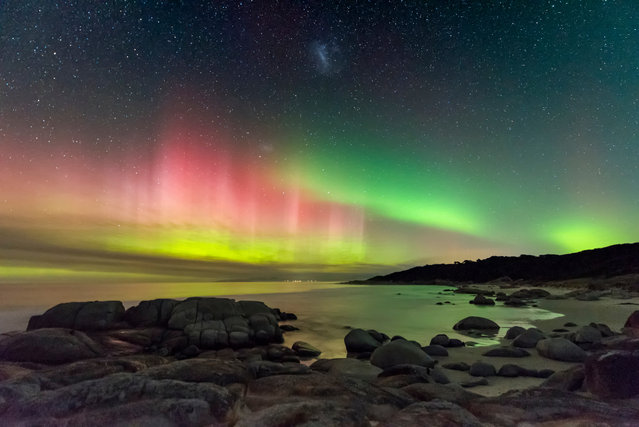
Aurora Australis from Beerbarrel Beach, by James Stone. Runner Up: Aurorae. (Photo by James Stone/Astronomy Photographer of the Year)

Aurora Australis from Beerbarrel Beach, by James Stone. Runner Up: Aurorae. (Photo by James Stone/Astronomy Photographer of the Year)
Details
14 Sep 2019 00:05:00
“Aurora over a glacier lagoon”. A vivid green overheaded aurrora pictured in Iceland's Vatnajokull National Park reflected almost symetrically in Jokulsrlon Glacier lagoon. A complete lack of wind and currrent combin in this sheltred lagoon scene to crete an arresting mirror effect giving the image a sensation of utter stillness. Despite theis there is motion on a suprising scale, as the loops and arcs of the aurora are shaped by the shifting forces of the Earth's magnetic field. (Photo by  James Woodend/The Astronomy Photographer of the Year 2014 Contest)

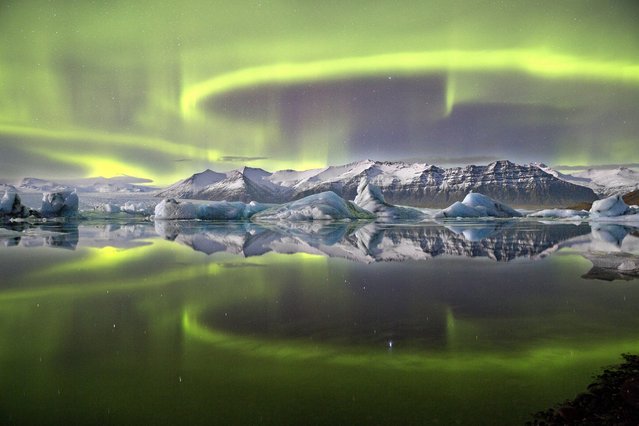
“Aurora over a glacier lagoon”. A vivid green overheaded aurrora pictured in Iceland's Vatnajokull National Park reflected almost symetrically in Jokulsrlon Glacier lagoon. A complete lack of wind and currrent combin in this sheltred lagoon scene to crete an arresting mirror effect giving the image a sensation of utter stillness. Despite theis there is motion on a suprising scale, as the loops and arcs of the aurora are shaped by the shifting forces of the Earth's magnetic field. James Woodend of Great Britain won the grand prize with the image, beating out more than 2,500 other entries. The Astronomy Photographer of the Year 2014 contest is judged by the Royal Observatory Greenwich and BBC Sky at Night magazine. (Photo by James Woodend/The Astronomy Photographer of the Year 2014 Contest)
Details
26 Sep 2014 13:39:00