Loading...
Done
A relative (L) of Champa Devi, 88, sits next to her body, minutes after her death at Mukti Bhavan (Salvation House) at Varanasi, in the northern Indian state of Uttar Pradesh, June 21, 2014. (Photo by Danish Siddiqui/Reuters)

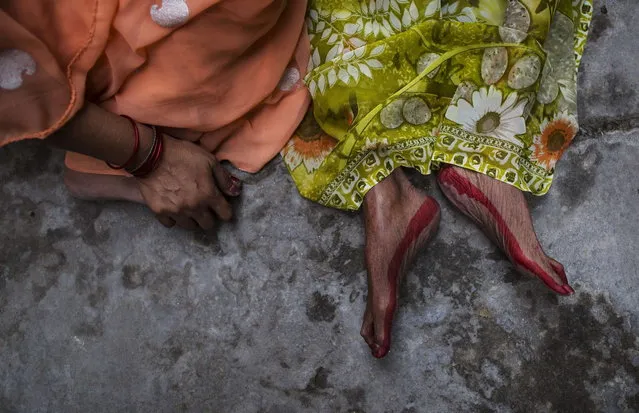
A relative (L) of Champa Devi, 88, sits next to her body, minutes after her death at Mukti Bhavan (Salvation House) at Varanasi, in the northern Indian state of Uttar Pradesh, June 21, 2014. The city of Varanasi, on the banks of the River Ganges, is widely considered Hinduism's holiest city and many Hindus believe that dying there and having their remains scattered in the Ganges allows their soul to escape a cycle of death and rebirth, attaining “moksha” or salvation. “Mukti Bhavan” or “Salvation House”, is a charity-run hostel that caters for people who wish to come to Varanasi to die. Guests can normally stay up to two weeks after which, if they haven't yet passed away, they are gently asked to leave. (Photo by Danish Siddiqui/Reuters)
Details
24 Jul 2014 12:32:00
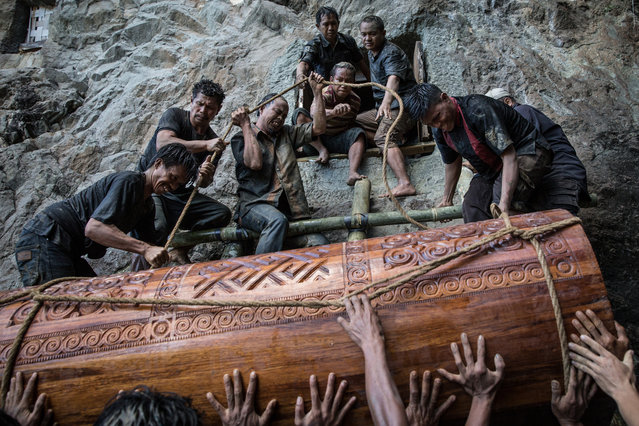
It is said that Torajans are people who “live to die”. For this Indonesian ethnic group, funerals are such extravagant events that they sometimes attract tourists. Families can postpone burials years (and the deceased are considered sick and hosted at home until the funeral) until the family can raise enough money and gather as many relatives as possible. And then it’s a jubilant multiday social event with a parade, dances and animal sacrifices. Agung Parameswara photographed these funerary practices when he traveled to South Sulawesi province, where the Torajans live. But often, their funeral isn’t the last time the dead are seen. In August, crypts are opened, coffins are slid back out and bodies delicately unsheathed. This tender ritual is known as Ma’Nene, which is customarily performed every few years. (Photo by Agung Parameswara/The Washington Post)

It is said that Torajans are people who “live to die”. For this Indonesian ethnic group, funerals are such extravagant events that they sometimes attract tourists. Families can postpone burials years (and the deceased are considered sick and hosted at home until the funeral) until the family can raise enough money and gather as many relatives as possible. And then it’s a jubilant multiday social event with a parade, dances and animal sacrifices. Agung Parameswara photographed these funerary practices when he traveled to South Sulawesi province, where the Torajans live. (Photo by Agung Parameswara/The Washington Post)
Details
06 Oct 2016 09:15:00
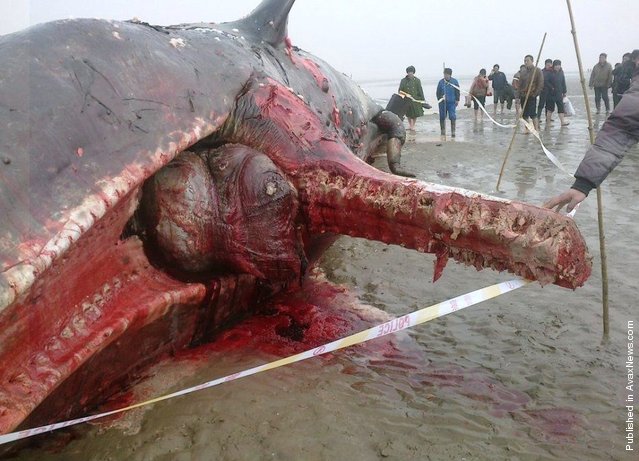
A dead sperm whale is seen on the beach on March 18, 2012 in Yancheng, Jiangsu Province of China

A dead sperm whale is seen on the beach on March 18, 2012 in Yancheng, Jiangsu Province of China. Four giant sperm whales, which were found beached on the beach of Xintan Salt Field on Friday, died on Saturday despite rescue efforts. (Photo by ChinaFotoPress)
Details
19 Mar 2012 12:30:00
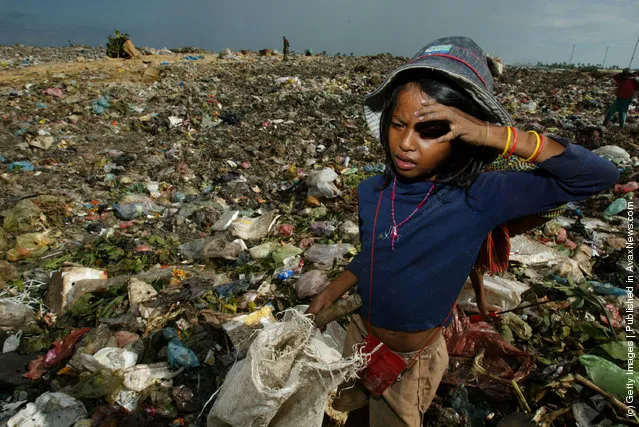
A Cambodian girl goes through the garbage dump looking for things to recycle in order to survive

A Cambodian girl goes through the garbage dump looking for things to recycle in order to survive July 26, 2003 in Phnom Penh, Cambodia. Rampant corruption in this impoverished country has lead to extreme poverty with many Cambodians living below the poverty line. (Photo by Paula Bronstein/Getty Images)
Details
08 Aug 2011 11:50:00
People in Need

'The Dutch charity organization Mensen in Nood (people in need) hits the streets with a remarkable campaign. People in need are posing with the typical attributes of consumer culture. The price of a designer handbag (€32) is compared with the price of a whole week of food (€4), The price a pint of beer (€4.50) with the price of 50 liter clean water (€1.50). The pictures were taken by Swedish fashion photographer Carl Stolz.' - Occupy Design UK
Details
29 Jun 2013 11:21:00
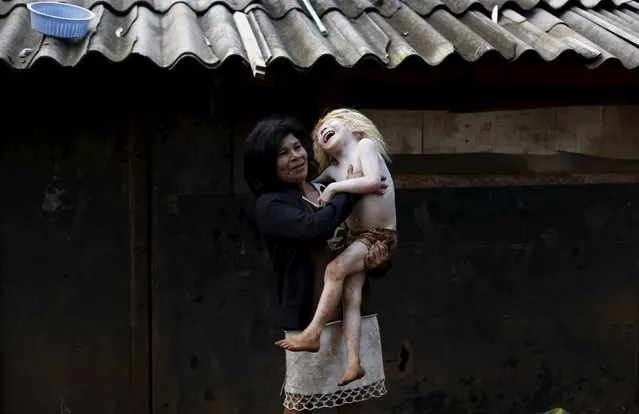
A Guarani Indian woman jokes with her son in the village of Pyau at Jaragua district, in Sao Paulo April 27, 2015. The National Indian Foundation (FUNAI) has recognised 521 hectares of this area as indigenous territory, making it the smallest indigenous reserve in Brazil. Members of the Guarani community have now established a new village outside the demarcation and are being threatened with an eviction through a court order. (Photo by Nacho Doce/Reuters)

A Guarani Indian woman jokes with her son in the village of Pyau at Jaragua district, in Sao Paulo April 27, 2015. The National Indian Foundation (FUNAI) has recognised 521 hectares of this area as indigenous territory, making it the smallest indigenous reserve in Brazil. Members of the Guarani community have now established a new village outside the demarcation and are being threatened with an eviction through a court order. (Photo by Nacho Doce/Reuters)
Details
01 May 2015 12:42:00
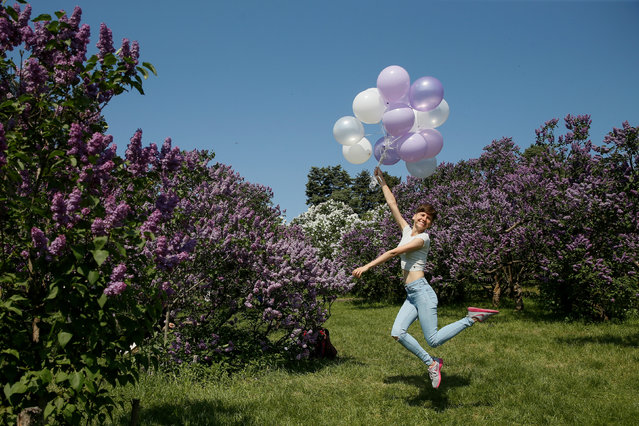
A woman jumps with balloons while she poses for a picture at a park in Kiev, Ukraine May 6, 2018. (Photo by Valentyn Ogirenko/Reuters)

A woman jumps with balloons while she poses for a picture at a park in Kiev, Ukraine May 6, 2018. (Photo by Valentyn Ogirenko/Reuters)
Details
09 May 2018 00:03:00
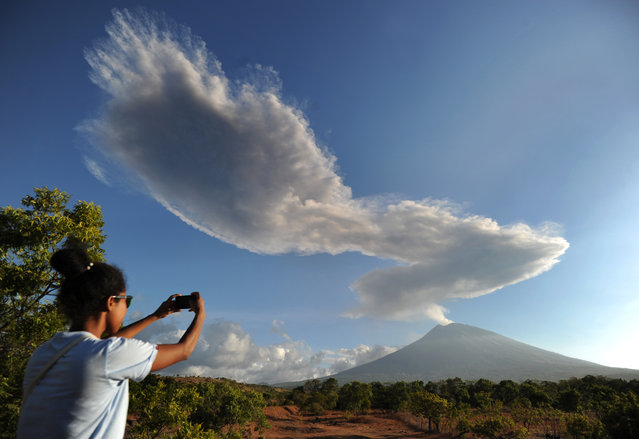
A woman takes photos as Mount Agung volcano sends up another plume of smoke, seen from the Kubu subdistrict in Karangasem Regency on Indonesia's resort island of Bali on July 5, 2018. Mount Agung roared to life again on July 2, belching a plume of ash 2,000 metres (6,500 feet) high, as well as temporarily shuttering the airport and grounding hundreds of flights after erupting the week before. (Photo by Sonny Tumbelaka/AFP Photo)

A woman takes photos as Mount Agung volcano sends up another plume of smoke, seen from the Kubu subdistrict in Karangasem Regency on Indonesia's resort island of Bali on July 5, 2018. Mount Agung roared to life again on July 2, belching a plume of ash 2,000 metres (6,500 feet) high, as well as temporarily shuttering the airport and grounding hundreds of flights after erupting the week before. (Photo by Sonny Tumbelaka/AFP Photo)
Details
07 Jul 2018 00:01:00