Loading...
Done
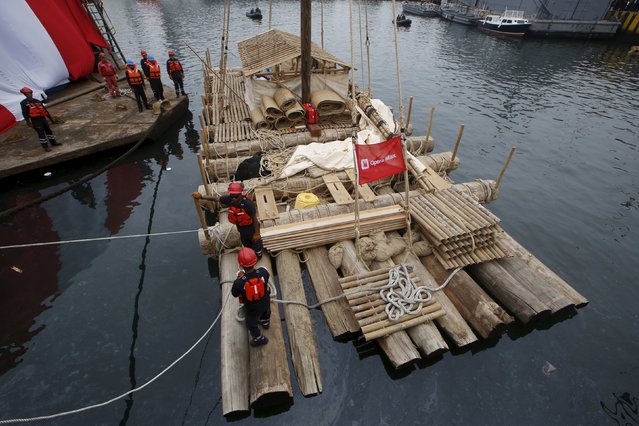
One of the two wooden rafts of the Kon-Tiki II expedition is prepared  at the port of Callao prior to the departure to Pascua island in Chile, in Callao, Peru, October 30, 2015. Fourteen men from various parts of the world set out on rafts to commemorate the  Norwegian navigator Thor Heyerdahl expedition 68 years ago. (Photo by Mariana Bazo/Reuters)

One of the two wooden rafts of the Kon-Tiki II expedition is prepared at the port of Callao prior to the departure to Pascua island in Chile, in Callao, Peru, October 30, 2015. Fourteen men from various parts of the world set out on rafts to commemorate the Norwegian navigator Thor Heyerdahl expedition 68 years ago. The original raft crossed the Pacific Ocean from South America to the Polynesian Islands. This rafts are a replica of ships used 6,000 years ago, but will be equipped with solar panel. (Photo by Mariana Bazo/Reuters)
Details
02 Nov 2015 08:00:00
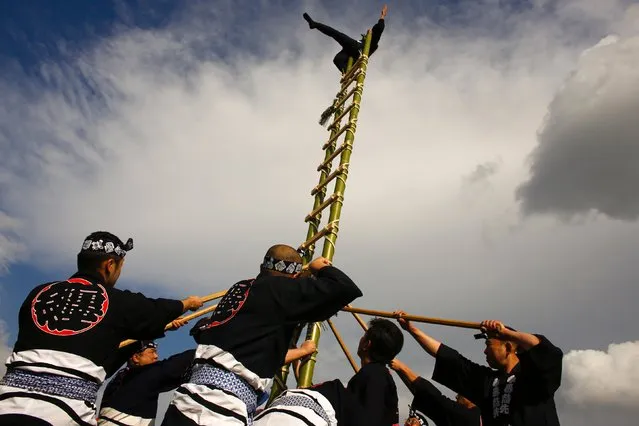
A member of the Edo Firemanship Preservation Association displays his balancing skills atop bamboo ladder during a New Year presentation by the fire brigade in Tokyo January 6, 2015. (Photo by Thomas Peter/Reuters)

A member of the Edo Firemanship Preservation Association displays his balancing skills atop bamboo ladder during a New Year presentation by the fire brigade in Tokyo January 6, 2015. (Photo by Thomas Peter/Reuters)
Details
07 Jan 2015 14:16:00
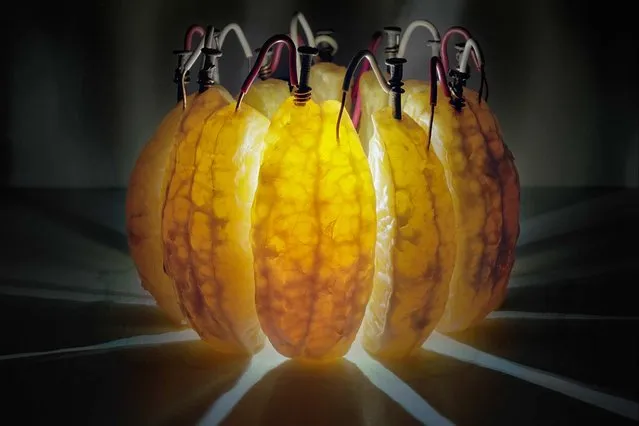
Wedges of an orange generate enough current and electrical juice – 3.5 volts – to power an LED. The fruit’s citric acid helps electrons flow from galvanized nails to copper wire in this 14-hour exposure. This image was published in September’s Visions of Earth, a trio of photos that appear in each issue of National Geographic. (Photo by Caleb Charland/National Geographic)

Wedges of an orange generate enough current and electrical juice – 3.5 volts – to power an LED. The fruit’s citric acid helps electrons flow from galvanized nails to copper wire in this 14-hour exposure. This image was published in September’s Visions of Earth, a trio of photos that appear in each issue of National Geographic. (Photo by Caleb Charland/National Geographic)
Details
06 Jan 2014 12:09:00
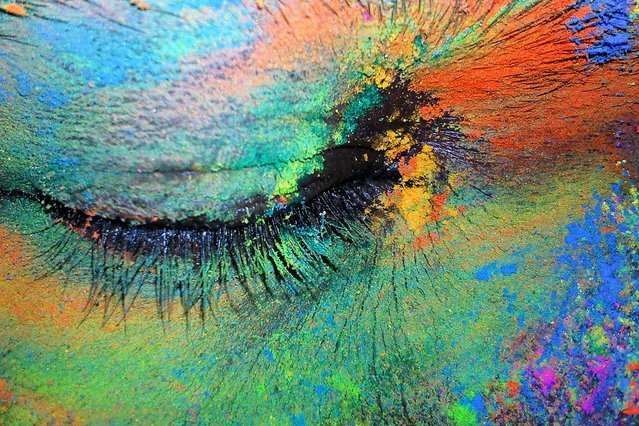
This close-up image – of a Holi Festival celebrant in Vrindivan, India, coated in neon-colored powder – was submitted to National Geographic’s Your Shot in the last week of March. On April 1 we published it on our Daily News site, along with seven other bright scenes captured during the Hindu spring Festival of Colors. (Photo by Tinto Alencherry/National Geographic)

This close-up image – of a Holi Festival celebrant in Vrindivan, India, coated in neon-colored powder – was submitted to National Geographic’s Your Shot in the last week of March. On April 1 we published it on our Daily News site, along with seven other bright scenes captured during the Hindu spring Festival of Colors. (Photo by Tinto Alencherry/National Geographic)
Details
06 Jan 2014 12:30:00
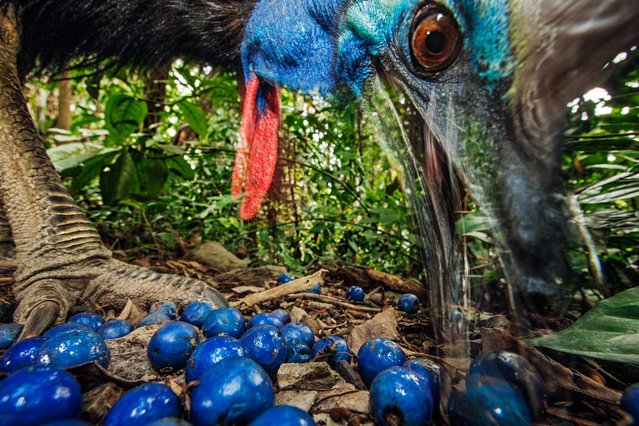
“Cassowaries are large, flightless birds related to emus and (more distantly) to ostriches, rheas, and kiwis”, writes Olivia Judson in the September issue of National Geographic magazine. (Photo by Christian Ziegler/National Geographic)

“Cassowaries are large, flightless birds related to emus and (more distantly) to ostriches, rheas, and kiwis”, writes Olivia Judson in the September issue of National Geographic magazine. How large? People-size: Adult males stand well over five foot five and top 110 pounds. Females are even taller, and can weigh more than 160 pounds. Dangerous when roused, they’re shy and peaceable when left alone. But even birds this big and tough are prey to habitat loss. The dense New Guinea and Australia rain forests where they live have dwindled. Today cassowaries might number 1,500 to 2,000. And because they help shape those same forests – by moving seeds from one place to another – “if they vanish”, Judson writes, “the structure of the forest would gradually change” too. (Photo by Christian Ziegler/National Geographic)
Details
06 Jan 2014 12:21:00
Models pose backstage ahead of the Review of Australian Fashion Week

Models pose backstage ahead of the Review of Australian Fashion Week show as part of Mercedes Benz Fashion Festival Sydney 2011 at Sydney Town Hall on August 24, 2011 in Sydney, Australia. (Photo by Lisa Maree Williams/Getty Images)
Details
26 Aug 2011 09:31:00
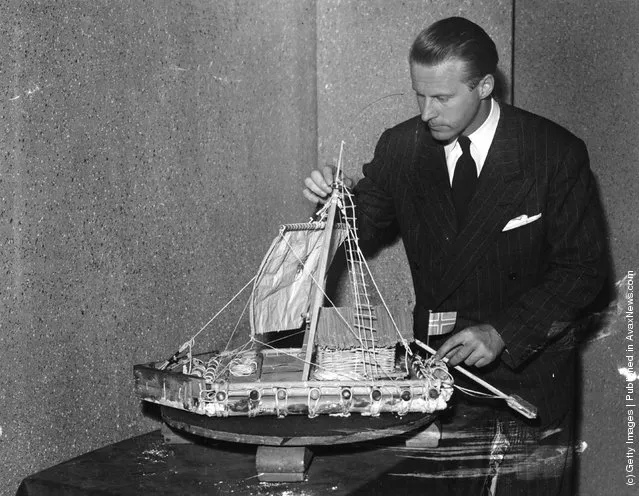
Thor Heyerdahl with a model of the balsa raft Kon Tiki

“Thor Heyerdahl (October 6, 1914, Larvik, Norway – April 18, 2002, Colla Micheri, Italy) was a Norwegian ethnographer and adventurer with a background in zoology and geography. He became notable for his Kon-Tiki expedition, in which he sailed 8,000 km (4,300 miles) by raft from South America to the Tuamotu Islands. All his expeditions are shown in the Kon-Tiki Museum, Oslo”. – Wikipedia

Photo: Norwegian anthropologist Thor Heyerdahl with a model of the balsa raft “Kon-Tiki” on which he drifted 4,300 miles from Peru to the Tuamotu Islands, proving his theory that Polynesia could originally have been populated by South Americans. (Photo by Express/Express/Getty Images). 1950
Details
09 Aug 2011 11:05:00
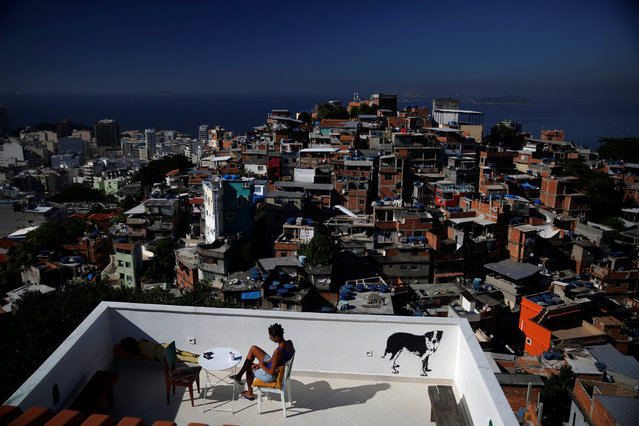
A woman sits on a terrace at Tiki hostel in Cantagalo favela, in Rio de Janeiro, Brazil, April 16, 2016. (Photo by Pilar Olivares/Reuters)

A woman sits on a terrace at Tiki hostel in Cantagalo favela, in Rio de Janeiro, Brazil, April 16, 2016. Hostels in a few of Rio's more than 1,000 slums serve not only as a cheap housing alternative for the more adventurous among the estimated 500,000 foreign tourists expected to arrive for the Olympics in August. The establishments also open up the rich culture of the city's shantytowns for travellers, giving them a glimpse into once “no-go” areas where about one-fifth of Rio's population lives. (Photo by Pilar Olivares/Reuters)
Details
04 May 2016 12:18:00