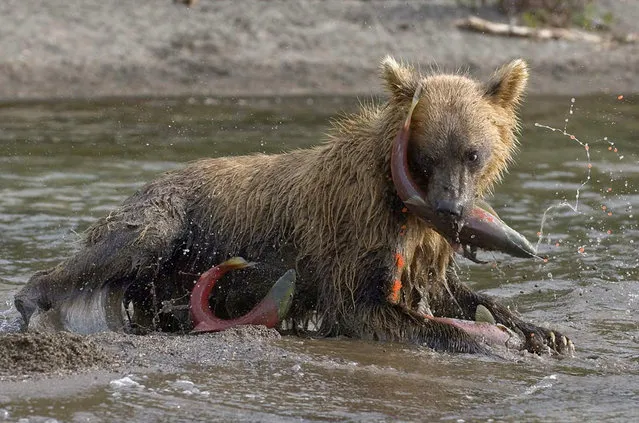
Hunting for a Salmon (more precisely – Oncorhynchus nerka). Scene of action: Kuril lake, Kamchatka, Russia. Action time: October – end of November, 2012. (Photo by Sergey Gorshkov)
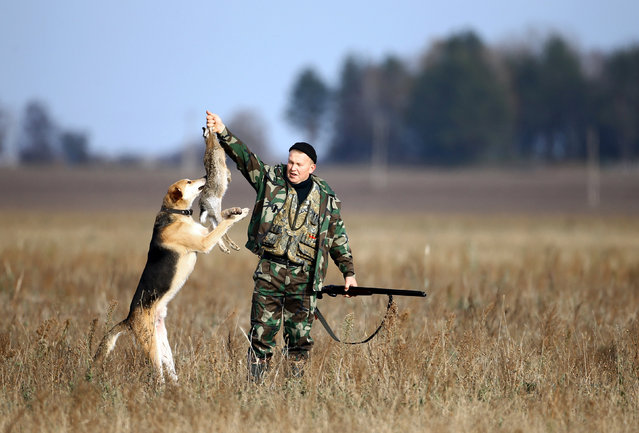
A hunter holds a hare he just killed during a hunt in a field near the village of Novosyolki, Belarus November 5, 2016. (Photo by Vasily Fedosenko/Reuters)
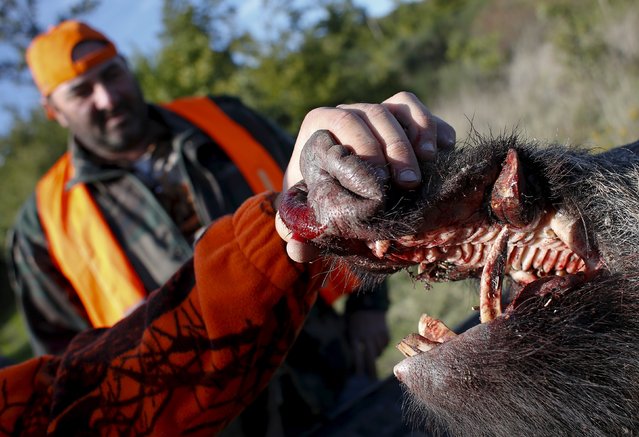
A dead wild boar is seen during a hunt in Castell'Azzara, Tuscany, central Italy, October 23, 2015. Extinct across much of the country by the end of the 1800s, the number of wild boar in Italy has almost doubled over the past decade and there are now about a million roaming the country, environmental and agricultural associations say. (Photo by Max Rossi/Reuters)
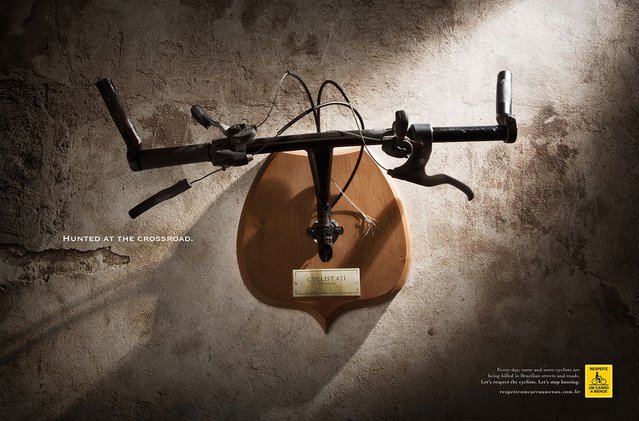
Created by Brazilian agency Heads Propaganda, these thought-provoking poster ads draw attention to the fact that many cyclists are knocked down at night due to the lack of respect by the motorists who share their roads.
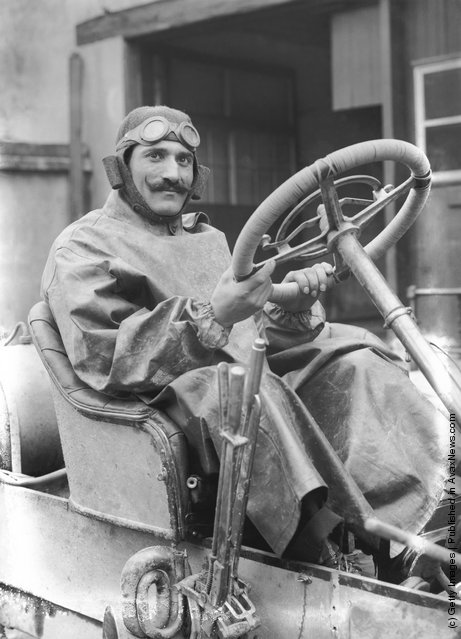
Racing driver J. Gaal at the wheel of car number 26 at the RAC Tourist Trophy, run, for the first time, over the Four Inch Course on the Isle of Man, 17th September 1908. Gaal is racing in waterproofs. (Photo by Topical Press Agency/Hulton Archive/Getty Images)
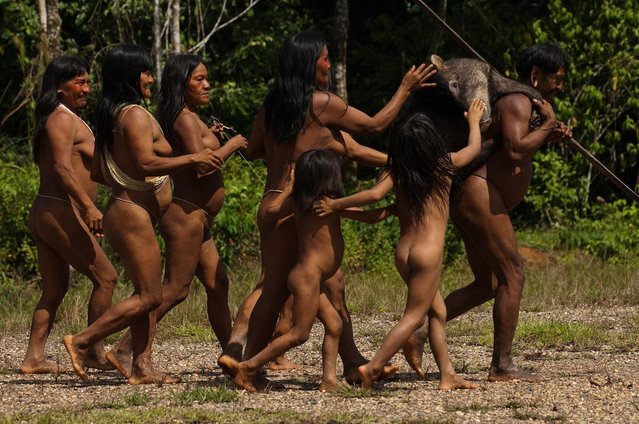
Spectacular images offering insight into the lives of the Huaorani people in the Ecuadorian Amazon have been revealed showing how they use traditional methods to hunt monkeys for food. The stunning pictures were taken by conservation photographer Pete Oxford from Torquay, Devon in the Ecuadorian Amazon. Here: The tribe were seen celebrating after a hunter returned to camp with a wild pig. (Photo by Pete Oxford/Mediadrumworld.com)
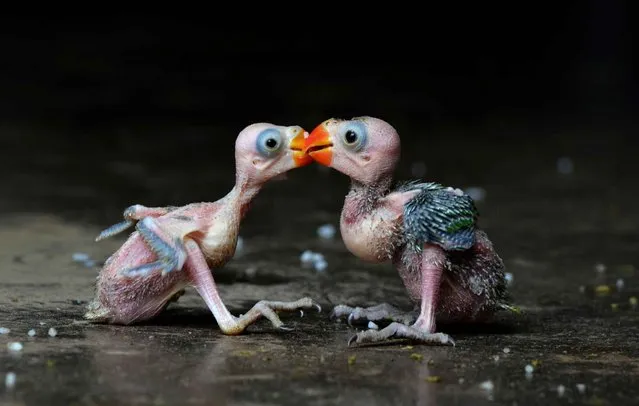
Wildlife are hunted down for consumption or for sale in the India eastern state of Nagaland. Hunters can make a good living, with some bred for food or to be sold as pets. These baby parrots, photographed by Caisii Mao via Sipa USA, are seen after they were caught and preserved by a local hunter and for sale at a private residence in Dimapur, India north eastern state of Nagaland on Wednesday, July 24, 2013. (Photo by Caisii Mao/NurPhoto/Sipa USA)
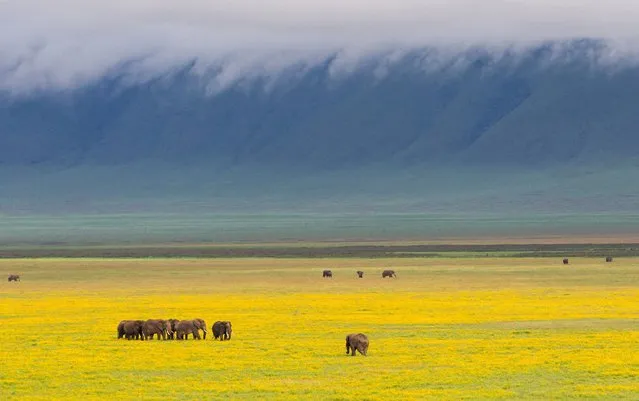
Ngorongoro Crater (Tanzania). At 610m deep and 260 sq km, this is the largest unflooded caldera in the world. A blue-green vision from above it's a haven for engangered wildlife and Maasai livestock. The crater was formed three million years ago when a giant volcano, which could have been as high as Kilimanjaro, exploded and collapsed. The caldera formed the concentric fractures in the crust cracked down to a magma reservoir deep underground. (Photo by John Bryant/Getty Images)