Loading...
Done
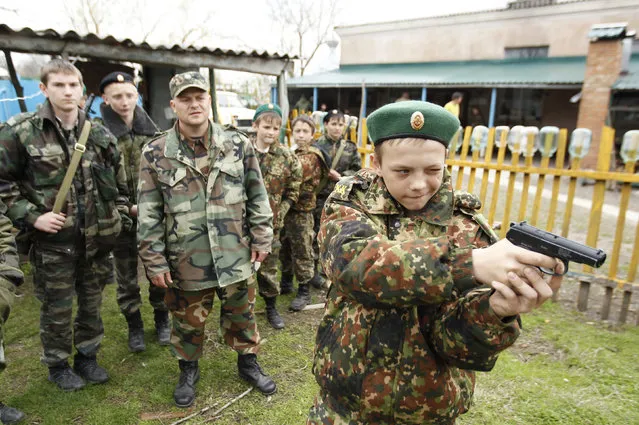
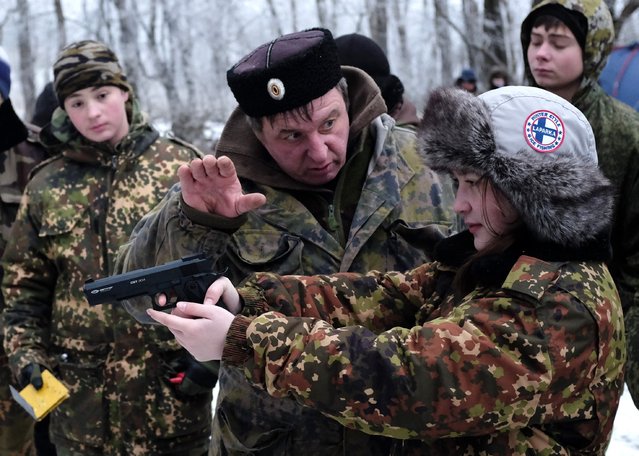
An instructor guides a student from the General Yermolov Cadet School as she aims with a gun during a field exercise outside the south Russian city of Stavropol January 24, 2015. The General Yermolov Cadet School in Stavropol is a state-run institution that teaches military and patriotic classes in addition to a normal syllabus. (Photo by Eduard Korniyenko/Reuters)

An instructor guides a student from the General Yermolov Cadet School as she aims with a gun during a field exercise outside the south Russian city of Stavropol January 24, 2015. The General Yermolov Cadet School in Stavropol is a state-run institution that teaches military and patriotic classes in addition to a normal syllabus. (Photo by Eduard Korniyenko/Reuters)
Details
26 Jan 2015 12:07:00
A student from the General Yermolov Cadet School takes part in weapons training during a two-day field exercise near the village of Sengileyevskoye, just outside the south Russian city of Stavropol April 13, 2014. (Photo by Eduard Korniyenko/Reuters)

A student from the General Yermolov Cadet School takes part in weapons training during a two-day field exercise near the village of Sengileyevskoye, just outside the south Russian city of Stavropol April 13, 2014. The General Yermolov Cadet School in the southern Russian city of Stavropol is a state-run institution that teaches military and patriotic classes in addition to a normal syllabus. (Photo by Eduard Korniyenko/Reuters)
Details
24 Apr 2014 09:08:00
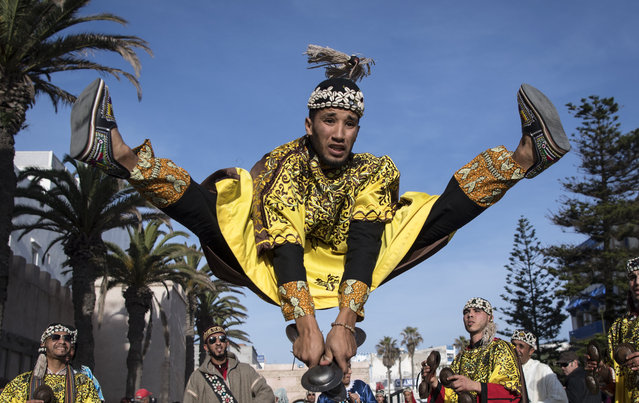
A Gnawa traditional group performs in the city of Essaouira on December 14, 2019, to celebrate the decision of adding the Gnawa culture to UNESCO's list of Intangible Cultural Heritage of Humanity. Gnawa culture, a centuries-old Moroccan practice rooted in music, African rituals and Sufi traditions, was added to UNESCO's list of Intangible Cultural Heritage of Humanity earlier in the week. Gnawa refers to a “set of musical productions, fraternal practices and therapeutic rituals where the secular mixes with the sacred”, according to the nomination submitted by Morocco. Often dressed in colourful outfits, Gnawa musicians play the guenbri, a type of lute with three strings, accompanied by steel castanets called krakebs. (Photo by Fadel Senna/AFP Photo)

A Gnawa traditional group performs in the city of Essaouira on December 14, 2019, to celebrate the decision of adding the Gnawa culture to UNESCO's list of Intangible Cultural Heritage of Humanity. Gnawa culture, a centuries-old Moroccan practice rooted in music, African rituals and Sufi traditions, was added to UNESCO's list of Intangible Cultural Heritage of Humanity earlier in the week. Gnawa refers to a “set of musical productions, fraternal practices and therapeutic rituals where the secular mixes with the sacred”, according to the nomination submitted by Morocco. Often dressed in colourful outfits, Gnawa musicians play the guenbri, a type of lute with three strings, accompanied by steel castanets called krakebs. (Photo by Fadel Senna/AFP Photo)
Details
18 Dec 2019 00:05:00


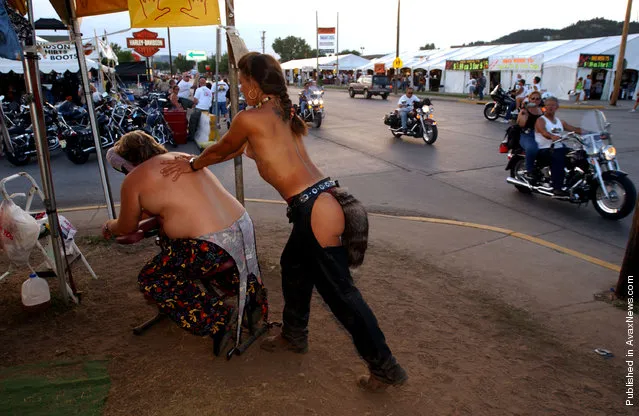
A man recieves a massage from a topless woman wearing a foxtail during the 61st annual Sturgis Motorcycle Rally August 7, 2001 in Sturgis, SD. Nudity is not permitted by the police, but airbrushing a woman''s nipples is sufficient to remain legal in the small town of 6,000. (Photo by David McNew/Getty Images)
Details
18 Mar 2011 12:36:00
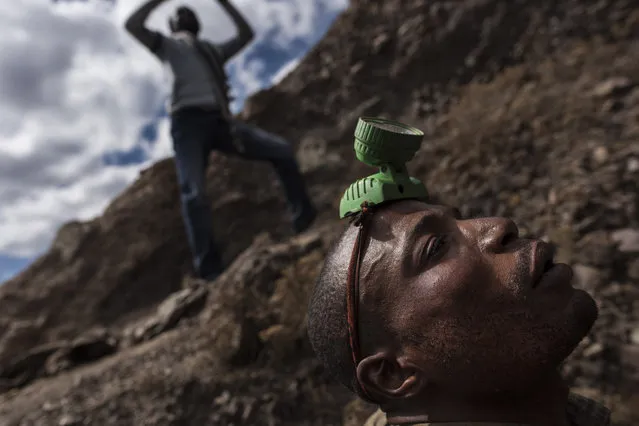
A “creuseur”, or digger, a plastic lantern on his head, readies to enter a copper and cobalt mine in Kawama, Democratic Republic of Congo on June 8, 2016. Cobalt is used in the batteries for electric cars and mobile phones. Working conditions are dangerous, often with no safety equipment or structural support for the tunnels. The diggers say they are paid on average US$2-3/day. (Photo by Michael Robinson Chavez/The Washington Post)

A “creuseur”, or digger, a plastic lantern on his head, readies to enter a copper and cobalt mine in Kawama, Democratic Republic of Congo on June 8, 2016. Cobalt is used in the batteries for electric cars and mobile phones. Working conditions are dangerous, often with no safety equipment or structural support for the tunnels. The diggers say they are paid on average US$2-3/day. (Photo by Michael Robinson Chavez/The Washington Post)
Details
30 Dec 2016 10:29:00
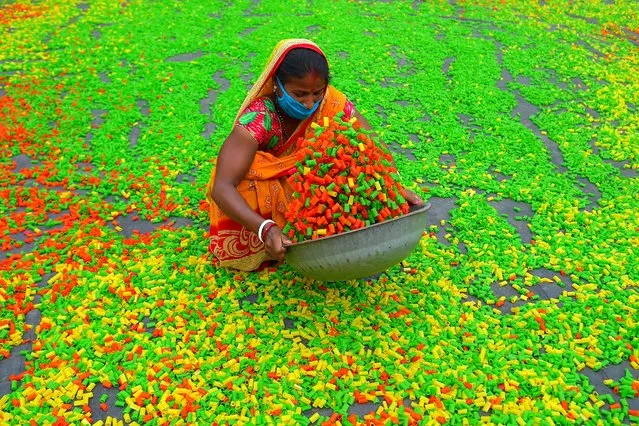
The workers dry the pipe papade made from seasoned and colored dough, during the containment imposed by the government as a preventive measure against COVID-19, in Agartala, the capital of the state of north-east India on May 5, 2020. (Photo by Abhisek Saha/Le Pictorium Agency via ZUMA Press/Rex Features/Shutterstock)

The workers dry the pipe papade made from seasoned and colored dough, during the containment imposed by the government as a preventive measure against COVID-19, in Agartala, the capital of the state of north-east India on May 5, 2020. (Photo by Abhisek Saha/Le Pictorium Agency via ZUMA Press/Rex Features/Shutterstock)
Details
16 May 2020 00:05:00
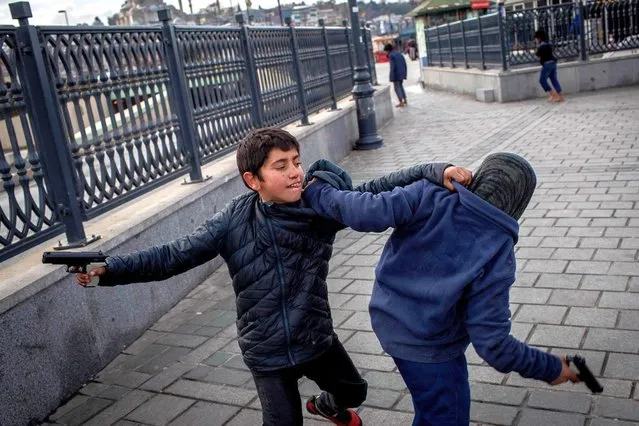
Syrian refugee boys play with toy guns at Eminonu district in Istanbul, Turkey, 08 January 2019. (Photo by Sedat Suna/EPA/EFE)

Syrian refugee boys play with toy guns at Eminonu district in Istanbul, Turkey, 08 January 2019. (Photo by Sedat Suna/EPA/EFE)
Details
22 Feb 2019 00:03:00
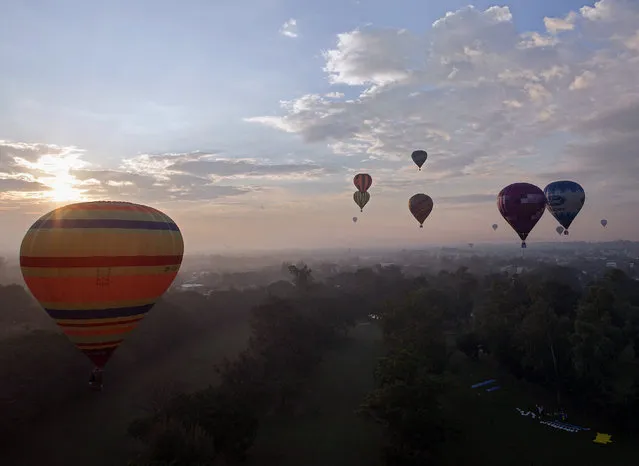
Hot air balloons fly over the sky in Chiang Mai province, northern Thailand, December 6, 2014. The two-day International Balloon festival 2014 featuring balloon pilots from Germany, Spain, Netherlands, Britain, and Czech Republic is held on December 06-07 2014 to celebrate Thai King Bhumibol Adulyadej's 87th birthday and also aimed to promote the tourism industry in Chiang Mai northern city. (Photo by Pongmanat Tasiri/EPA)

Hot air balloons fly over the sky in Chiang Mai province, northern Thailand, December 6, 2014. The two-day International Balloon festival 2014 featuring balloon pilots from Germany, Spain, Netherlands, Britain, and Czech Republic is held on December 06-07 2014 to celebrate Thai King Bhumibol Adulyadej's 87th birthday and also aimed to promote the tourism industry in Chiang Mai northern city. (Photo by Pongmanat Tasiri/EPA)
Details
13 Dec 2014 11:55:00