Loading...
Done
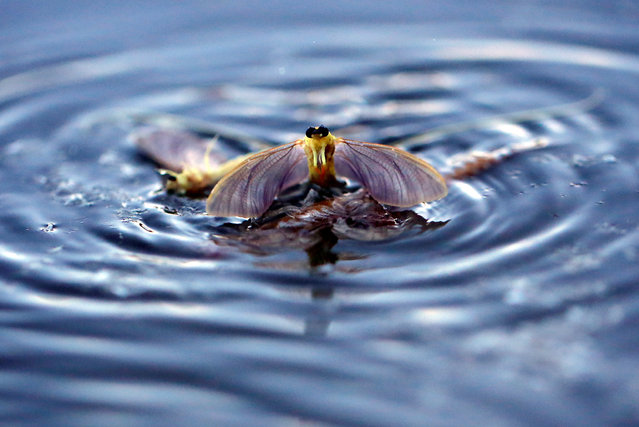
Long-tailed mayflies (Palingenia longicauda) mate on the surface of the Tisza river near Tiszakurt, Hungary, June 14, 2016. Millions of these short-lived mayflies engage in a frantic rush to mate and reproduce before they perish in just a few hours during “Tiszaviragzas” or Tisza blooming season from late spring to early summer every year. (Photo by Laszlo Balogh/Reuters)

Long-tailed mayflies (Palingenia longicauda) mate on the surface of the Tisza river near Tiszakurt, Hungary, June 14, 2016. Millions of these short-lived mayflies engage in a frantic rush to mate and reproduce before they perish in just a few hours during “Tiszaviragzas” or Tisza blooming season from late spring to early summer every year. (Photo by Laszlo Balogh/Reuters)
Details
15 Jun 2016 15:12:00
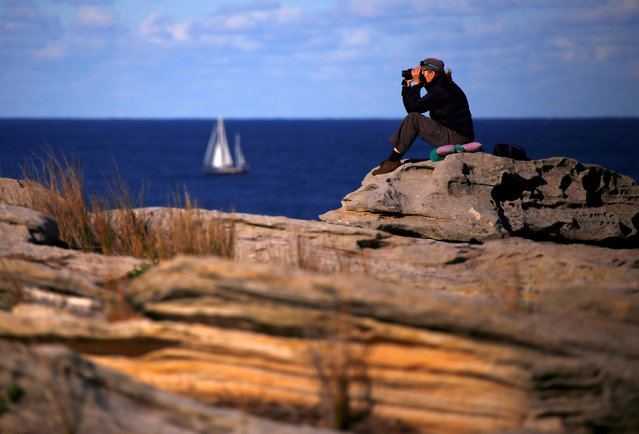
A boat sails behind a woman looking through binoculars as she sits on a cliff on a sunny day in Sydney, Australia, May 29, 2016. (Photo by David Gray/Reuters)

A boat sails behind a woman looking through binoculars as she sits on a cliff on a sunny day in Sydney, Australia, May 29, 2016. (Photo by David Gray/Reuters)
Details
05 Jun 2016 13:33:00
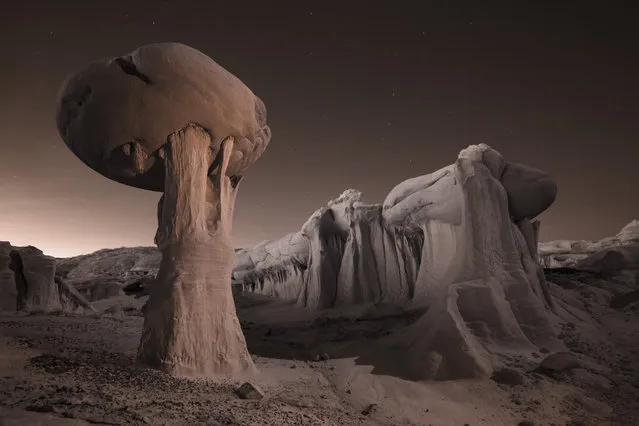
An infrared image at dusk of strange clay rock formations in Ah-Shi-Sle-Pah Wilderness in Farmington, New Mexico. (Photo by David Clapp/Barcroft Images)

The barren landscapes of the south-western US provided inspiration for photographer David Clapp. He visited Nevada, New Mexico, Utah and Arizona as part of his project on other-worldy locations, with surreal results. Here: An infrared image at dusk of strange clay rock formations in Ah-Shi-Sle-Pah Wilderness in Farmington, New Mexico. (Photo by David Clapp/Barcroft Images)
Details
31 May 2016 11:54:00
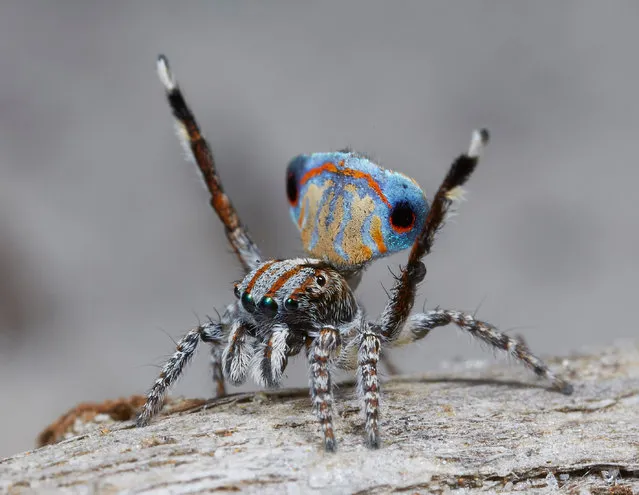
Several new species of peacock spider – just a few millimetres long and featuring extraordinary colours – have been discovered in Western Australia and South Australia. Jürgen Otto, a biologist from Sydney, has been researching the arachnids since 2005, and has gained a significant following online with his footage. He believes there are now 48 confirmed species of peacock spider within the Maratus genus, found across Australia but particularly in Western Australia – and many more awaiting confirmation. Here: Maratus Tasmanicus, one of seven new species of peacock spiders studied by the Sydney biologist Jürgen Otto. (Photo by Jürgen Otto)

Several new species of peacock spider – just a few millimetres long and featuring extraordinary colours – have been discovered in Western Australia and South Australia. Jürgen Otto, a biologist from Sydney, has been researching the arachnids since 2005, and has gained a significant following online with his footage. He believes there are now 48 confirmed species of peacock spider within the Maratus genus, found across Australia but particularly in Western Australia – and many more awaiting confirmation. Here: Maratus Tasmanicus, one of seven new species of peacock spiders studied by the Sydney biologist Jürgen Otto. (Photo by Jürgen Otto)
Details
30 May 2016 08:40:00
People visit the artwork titled Seven Magic Mountains by artist Ugo Rondinone, Wednesday, May 11, 2016, near Jean, Nev. The artwork was recently completed in the desert south of Las Vegas. (Photo by John Locher/AP Photo)

People visit the artwork titled Seven Magic Mountains by artist Ugo Rondinone, Wednesday, May 11, 2016, near Jean, Nev. The artwork was recently completed in the desert south of Las Vegas. (Photo by John Locher/AP Photo)
Details
21 May 2016 11:18:00
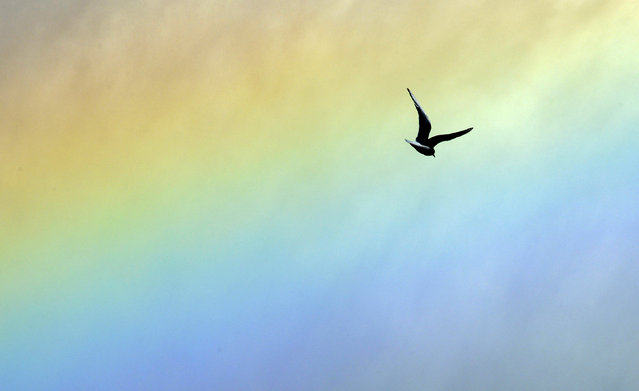
A seagull flies through a rainbow near the Savannah River and the open spillway at Thurmond Dam in Clarks Hill, SC, Monday, January 4, 2016. (Photo by Michael Holahan/Augusta Chronicle via AP Photo)

A seagull flies through a rainbow near the Savannah River and the open spillway at Thurmond Dam in Clarks Hill, SC, Monday, January 4, 2016. (Photo by Michael Holahan/Augusta Chronicle via AP Photo)
Details
28 Apr 2016 12:25:00
A volcanic eruption at Mount Etna’s Vorgaine crater in Sicily, Italy on December 3, 2015. (Photo by Marco Restivo/Barcroft Media)

A volcanic eruption at Mount Etna’s Vorgaine crater in Sicily, Italy on December 3, 2015. (Photo by Marco Restivo/Barcroft Media)
Details
11 Apr 2016 11:16:00
A wolf looks into the camera at the 30 km (19 miles) exclusion zone around the Chernobyl nuclear reactor in the abandoned village of Orevichi, Belarus, March 2, 2016. (Photo by Vasily Fedosenko/Reuters)

A wolf looks into the camera at the 30 km (19 miles) exclusion zone around the Chernobyl nuclear reactor in the abandoned village of Orevichi, Belarus, March 2, 2016. What happens to the environment when humans disappear? Thirty years after the Chernobyl nuclear disaster, booming populations of wolf, elk and other wildlife in the vast contaminated zone in Belarus and Ukraine provide a clue. (Photo by Vasily Fedosenko/Reuters)
Details
08 Apr 2016 15:13:00