Loading...
Done
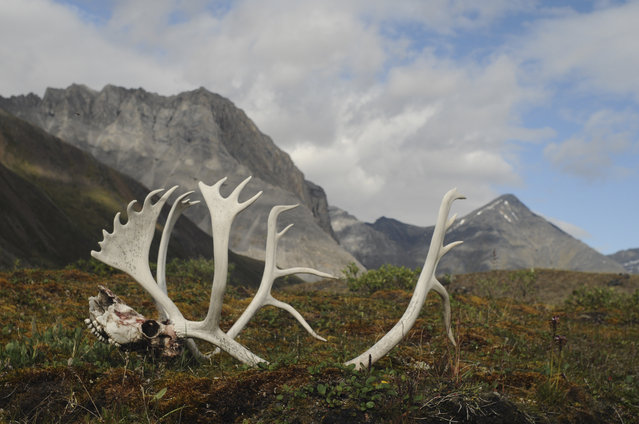
In this August 1, 2014 photo provided by the National Park Service are male caribou antlers in the Oolah Valley, likely the result of a grizzly kill as he migrated south for the winter at the Arctic National Park and Preserve in Alaska. The nation's northernmost national park says its new management plan will have to consider the effects of a new industrial road to the mining district of Ambler, the first road that would be constructed within its Maryland-sized boundaries. (Photo by Cadence Cook/AP Photo/National Park Service)

In this August 1, 2014 photo provided by the National Park Service are male caribou antlers in the Oolah Valley, likely the result of a grizzly kill as he migrated south for the winter at the Arctic National Park and Preserve in Alaska. The nation's northernmost national park says its new management plan will have to consider the effects of a new industrial road to the mining district of Ambler, the first road that would be constructed within its Maryland-sized boundaries. (Photo by Cadence Cook/AP Photo/National Park Service)
Details
03 Sep 2016 09:54:00
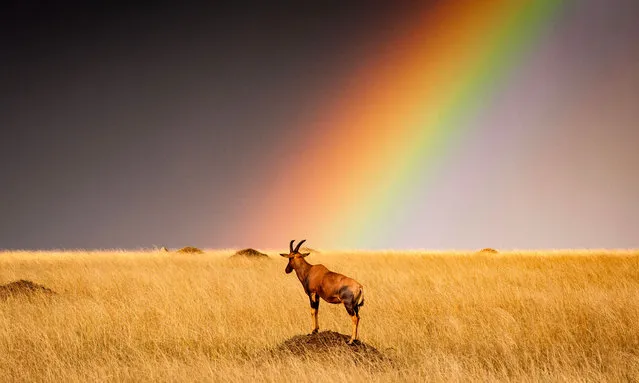
Early morning storms over the Masai Mara National Reserve, Kenya on August 26, 2016. (Photo by Action Press/Rex Features/Shutterstock)

Early morning storms over the Masai Mara National Reserve, Kenya on August 26, 2016. (Photo by Action Press/Rex Features/Shutterstock)
Details
03 Sep 2016 09:34:00
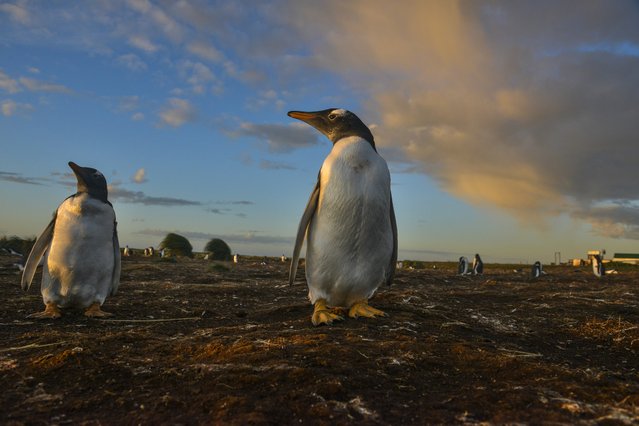
As the sun rises, Gentoo penguins start their day on Wednesday, February 17, 2016, on Sea Lion Island, Falkland Islands. Sea Lion Island, which lies about 10 miles to the south of mainland East Falkland, is the southern most human-inhabited island of the more than 750 islands and islets of the Falkland Islands. (Photo by Jahi Chikwendiu/The Washington Post)

As the sun rises, Gentoo penguins start their day on Wednesday, February 17, 2016, on Sea Lion Island, Falkland Islands. Sea Lion Island, which lies about 10 miles to the south of mainland East Falkland, is the southern most human-inhabited island of the more than 750 islands and islets of the Falkland Islands. (Photo by Jahi Chikwendiu/The Washington Post)
Details
02 Sep 2016 13:05:00
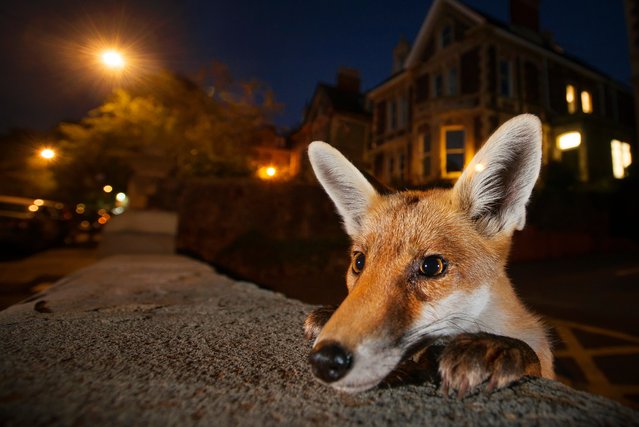
Nosy neighbour by Sam Hobson, UK. Sam knew exactly who to expect when he set his camera on the wall one summer’s evening in a suburban street in Bristol, the UK’s famous fox city. He wanted to capture the inquisitive nature of the urban red fox in a way that would pique the curiosity of its human neighbours about the wildlife around them. (Photo by Sam Hobson/2016 Wildlife Photographer of the Year)

Nosy neighbour by Sam Hobson, UK. Sam knew exactly who to expect when he set his camera on the wall one summer’s evening in a suburban street in Bristol, the UK’s famous fox city. He wanted to capture the inquisitive nature of the urban red fox in a way that would pique the curiosity of its human neighbours about the wildlife around them. (Photo by Sam Hobson/2016 Wildlife Photographer of the Year)
Details
31 Aug 2016 12:05:00
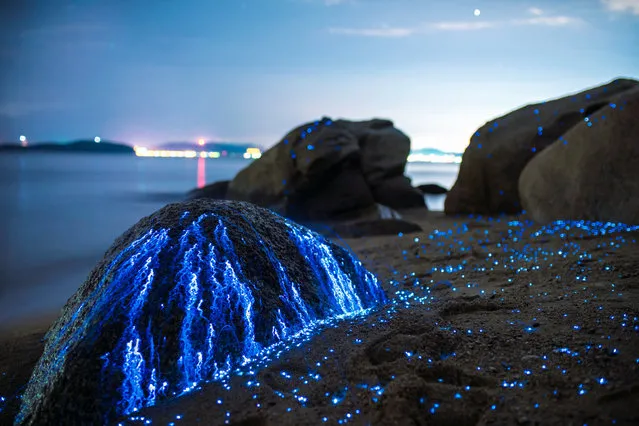
Bioluminescent sea fireflies glittering like diamonds on the rocks and sand. Okayama, Japan. July 2016. (Photo by Trevor Williams/Jonathan Galione/Getty Images)

Those lights are actually bioluminescent shrimp, better known as sea fireflies, or, in Japan, as “umibotaru”. Visible every year from May until the end of October, they live in the sand around very shallow sea water and are often seen floating between the extremes of high and low tides. Here: Bioluminescent sea fireflies glittering like diamonds on the rocks and sand. Okayama, Japan. July 2016. (Photo by Trevor Williams/Jonathan Galione/Getty Images)
Details
23 Aug 2016 10:13:00
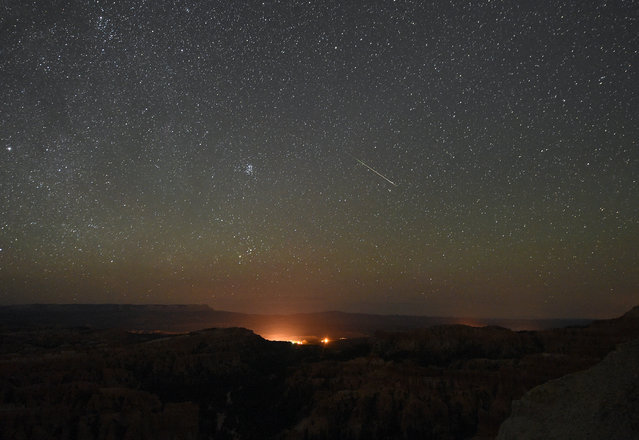
A Perseid meteor streaks across the sky above Inspiration Point early on August 12, 2016 in Bryce Canyon National Park, Utah. The annual display, known as the Perseid shower because the meteors appear to radiate from the constellation Perseus in the northeastern sky, is a result of Earth's orbit passing through debris from the comet Swift-Tuttle. (Photo by Ethan Miller/Getty Images)

A Perseid meteor streaks across the sky above Inspiration Point early on August 12, 2016 in Bryce Canyon National Park, Utah. The annual display, known as the Perseid shower because the meteors appear to radiate from the constellation Perseus in the northeastern sky, is a result of Earth's orbit passing through debris from the comet Swift-Tuttle. (Photo by Ethan Miller/Getty Images)
Details
13 Aug 2016 11:19:00
A shooting star (L, top) is seen on the night sky during the perseid meteor shower in Jankowo, near Poznan, 11 August 2016. The first half of August is traditionally the best time to look out for meteors called “shooting stars”, or perseids which are the leftover dust particles of a comet tail associated with comet Swift-Tuttle. (Photo by Lukasz Ogrodowczyk/EPA)

A shooting star (L, top) is seen on the night sky during the perseid meteor shower in Jankowo, near Poznan, 11 August 2016. The first half of August is traditionally the best time to look out for meteors called “shooting stars”, or perseids which are the leftover dust particles of a comet tail associated with comet Swift-Tuttle. (Photo by Lukasz Ogrodowczyk/EPA)
Details
12 Aug 2016 11:59:00
“Seven Magic Points”. The rusty red swirls of the circular, iron sculpture Seven Magic Points in Brattebergan, Norway mirror the rippling aurora above. (Photo by Rune Engebø/Royal Observatory Greenwich’s Astronomy Photographer of the Year 2016/National Maritime Museum)

Gorgeous galaxies and stunning stars make up this selection of pictures from the shortlisted entries for this year’s Insight Astronomy Photographer of the Year award. The winners will be announced on 15 September, and an exhibition of the winning images will be will be displayed in a free exhibition at the Royal Observatory Greenwich’s Astronomy Centre from 17 September. Here: “Seven Magic Points”. The rusty red swirls of the circular, iron sculpture Seven Magic Points in Brattebergan, Norway mirror the rippling aurora above. (Photo by Rune Engebø/Royal Observatory Greenwich’s Astronomy Photographer of the Year 2016/National Maritime Museum)
Details
28 Jul 2016 13:51:00