Loading...
Done
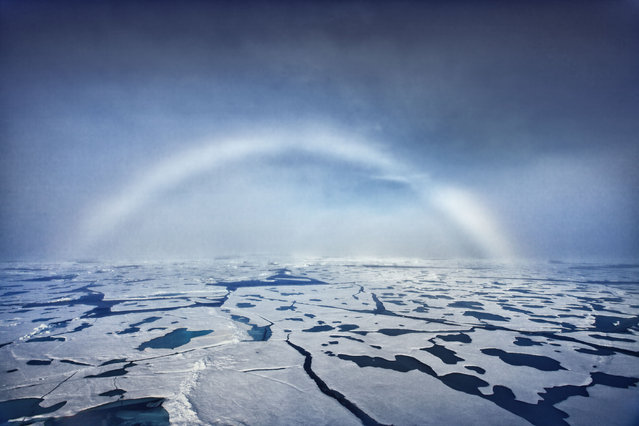
White Rainbow Or Fog Bow

A fog bow is a similar phenomenon to a rainbow; however, as its name suggests, it appears as a bow in fog rather than rain. Because of the very small size of water droplets that cause fog—smaller than 0.05 millimeters (0.0020 in)—the fog bow has only very weak colors, with a red outer edge and bluish inner edge.
Details
05 Oct 2013 11:09:00
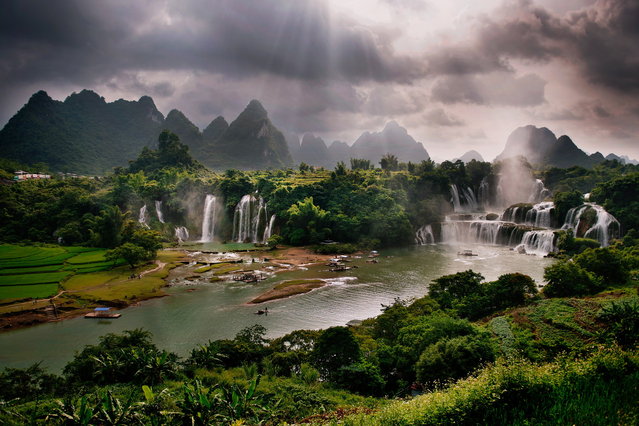
Detian Waterfall - China

Ban Gioc – Detian Falls are two waterfalls on the Quây Sơn River, in Chinese Guichun River, straddling the Sino-Vietnamese border, located in the Karst hills of Daxin County, Guangxi (Chinese side), and in Trùng Khánh District, Cao Bằng province on the Vietnamese side, 272 km (169 mi) north of Hanoi. In Vietnamese, the two falls are considered as two parts of one waterfall with the sole name Bản Giốc. The two parts are called as: thác chính (Main waterfall) and thác phụ (Subordinate waterfall). Chinese texts sometimes name both falls from the Détiān falls on the Chinese side. During the summer rains the two waterfalls may join together.
Details
21 Nov 2013 12:37:00
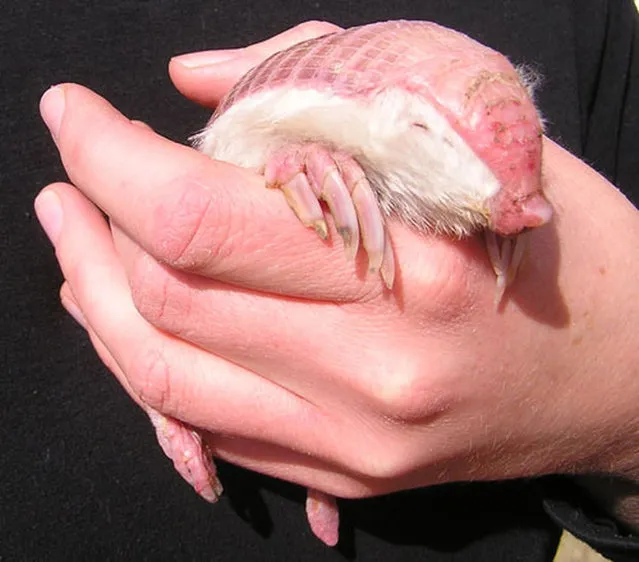
Pink Fairy Armadillo

The pink fairy armadillo (Chlamyphorus truncatus) or pichiciego is the smallest species of armadillo (mammals of the family Dasypodidae, mostly known for having a bony armor shell). It is found in central Argentina, where it inhabits dry grasslands and sandy plains with thorn bushes and cacti.The pink fairy armadillo is approximately 90–115 mm (3.5-4.5 inches) long, excluding the tail, and is pale rose or pink in color. It has the ability to bury itself completely in a matter of seconds if frightened.
Details
16 Jan 2014 10:35:00
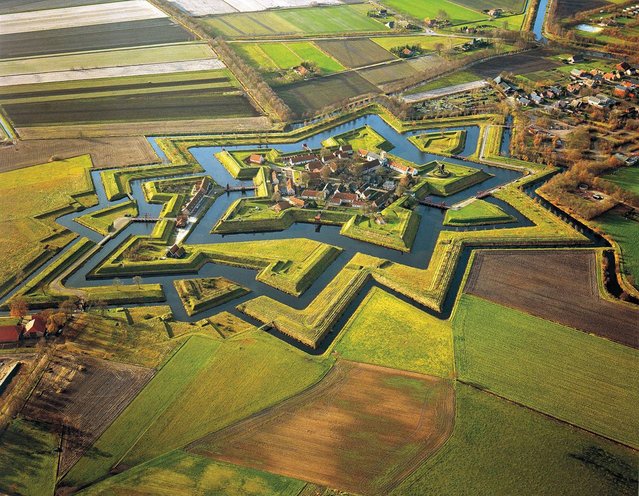
Fort Bourtange In Netherlands

Fort Bourtange is a star fort located in the village of Bourtange, Groningen, Netherlands. It was built in 1593 under the orders of William the Silent. Its original purpose was to control the only road between Germany and the city of Groningen, which was controlled by the Spaniards during the time of the Eighty Years' War.
Details
18 Jun 2014 10:41:00
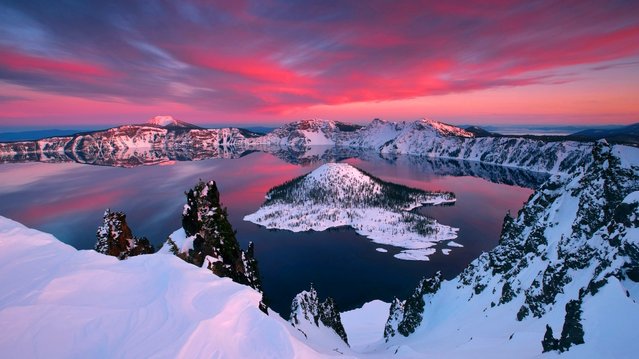
Crater Lake In Oregon

As you look at the majestic Crater Lake, located in south-central Oregon, United States, it is hard to imagine that thousands of years ago this place was one giant crater with scorching hot lava spilling over the sides. Those were the times of turmoil. Now, however, this place is the essence of tranquility. The lake that was formed, after the volcano died down, is amazingly clear due to the fact that the water isn’t moving at all. No rivers go in or out of the Crater Lake, and the water lost through evaporation is compensated by the rain and snowfall. This lake is also frighteningly deep – 1,943 feet (592 m) at its deepest point – making it the deepest lake in the United States. If you love nature and if you ever come to Oregon, this is truly a sight to behold.

Details
19 Nov 2014 14:14:00
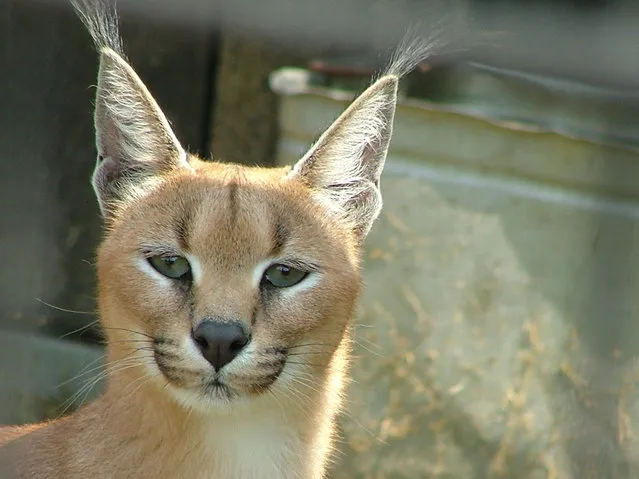
Сaracal - Desert Lynx

The caracal also known as the desert lynx, is a wild cat that is widely distributed across Africa, central Asia and southwest Asia into India. In 2002 the IUCN listed the caracal as Least Concern as it is widespread and relatively common. The felid is considered threatened in north Africa, and rare in the central Asian republics and India.
Details
20 Aug 2013 11:28:00
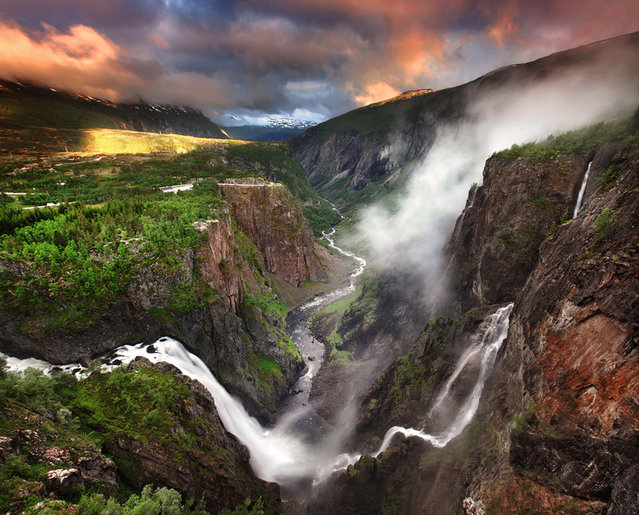
Voringfossen Waterfall In Norway

Vøringfossen is the 83rd highest waterfall in Norway on the basis of total fall. It lies at the top of Måbødalen in the municipality of Eidfjord, in Hordaland, not far from Highway 7, which connects Oslo with Bergen. It has a total drop of 182 meters, and a major drop of 163 meters. It is perhaps the most famous in the country and a major tourist attraction on the way down from Hardangervidda to Hardangerfjord. The name Vøringfossen (Old Norse Vyrðingr) is derived from the verb vyrða (English: esteem, revere). The last element fossen, the finite form of foss (waterfall), is a later addition.
Details
02 Dec 2013 10:58:00
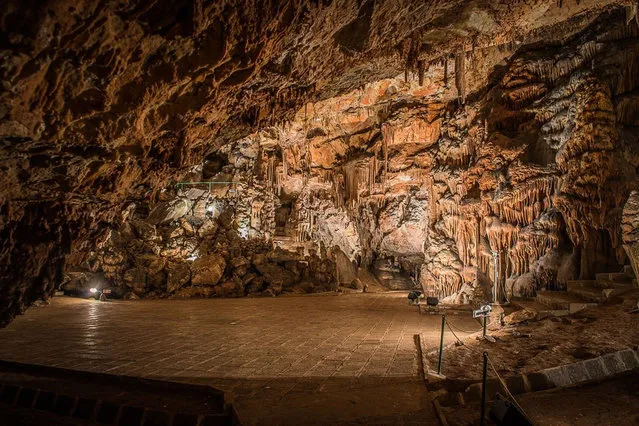
Saeva Dupka Cave

Saeva dupka (Bulgarian: Съева дупка) is a cave in Northern Bulgaria near the village of Brestnitsa, Lovech Province (43°2′N 24°11′E). Its five halls and 400 metres of corridors offer some of the most beautiful cave formations in the country. Besides that the cave has hosted many Choral music performances, thanks to the excellent acoustic conditions. Saeva dupka was named after two brothers Seyu and Sae who used it as a hiding place during the Ottoman occupation of Bulgaria. Recent excavations have showed the cave was inhabited since Roman times. Currently Saeva dupka is one of the 100 Tourist Sites of Bulgaria.
Details
20 Feb 2013 11:30:00