Loading...
Done
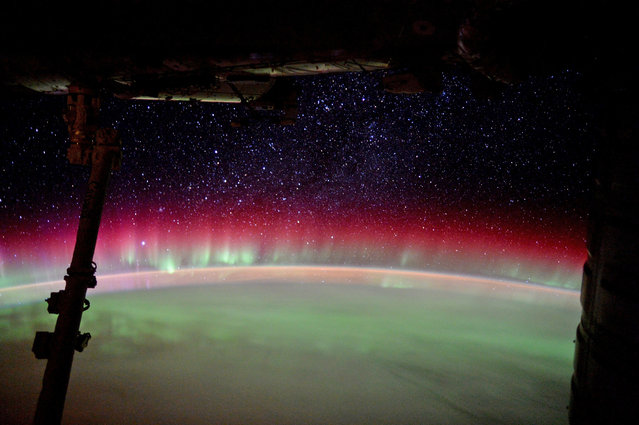
ESA astronaut Tim Peake posted this stunning image on his social media channels, commenting: “Station passed through magnificent aurora Australis last night”. Tim is set to return to Earth on 18 June 2016, bringing his six-month Principia mission to the ISS to an end. During his stay he performed more than 30 scientific experiments for ESA and taking part in numerous others from ESA's international partners. ESA and the UK Space Agency have partnered to develop many exciting educational activities around the Principia mission, aimed at sparking the interest of young children in science and space. (Photo by Tim Peake/ESA/NASA)

ESA astronaut Tim Peake posted this stunning image on his social media channels, commenting: “Station passed through magnificent aurora Australis last night”. Tim is set to return to Earth on 18 June 2016, bringing his six-month Principia mission to the ISS to an end. During his stay he performed more than 30 scientific experiments for ESA and taking part in numerous others from ESA's international partners. ESA and the UK Space Agency have partnered to develop many exciting educational activities around the Principia mission, aimed at sparking the interest of young children in science and space. (Photo by Tim Peake/ESA/NASA)
Details
31 Dec 2016 10:21:00
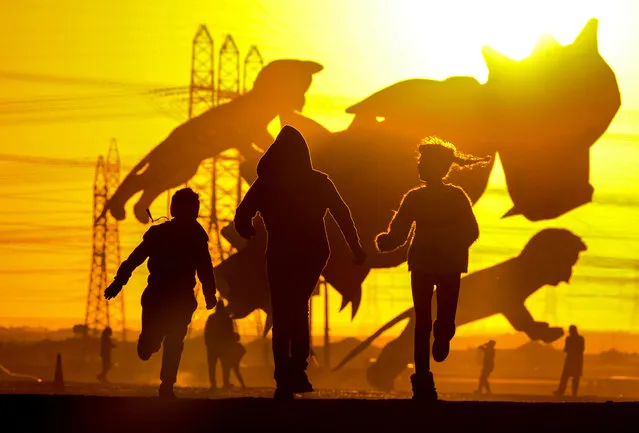
Kuwaitis play in front of kites at for Kuwaiti al-Farsi Kites team, Kuwaiti desert, 50 kilometers south of Kuwait City, 06 January 2017 (Issued 07 January 2017). (Photo by Raed Qutena/EPA)

Kuwaitis play in front of kites at for Kuwaiti al-Farsi Kites team, Kuwaiti desert, 50 kilometers south of Kuwait City, 06 January 2017 (Issued 07 January 2017). (Photo by Raed Qutena/EPA)
Details
08 Jan 2017 15:01:00
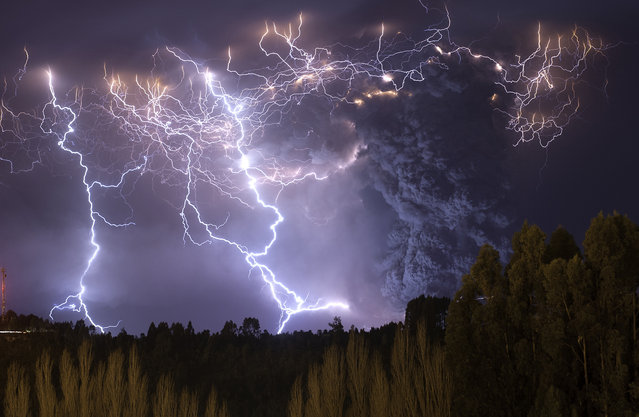
The eruption of Cordon Caulle began on June 4, 2011, located in the Region of Los Rios in Chile. For about 12 months, people and animals became accustomed to living with the daily fall of ash, which also caused problems in the air traffic in South America. The explosions and lightning during first days of the eruption could be seen from hundreds of miles around. This photograph was taken on the second night of eruption from the town of Lago Ranco. (Photo and caption by Francisco Negroni/National Geographic Traveler Photo Contest)

The eruption of Cordon Caulle began on June 4, 2011, located in the Region of Los Rios in Chile. For about 12 months, people and animals became accustomed to living with the daily fall of ash, which also caused problems in the air traffic in South America. The explosions and lightning during first days of the eruption could be seen from hundreds of miles around. This photograph was taken on the second night of eruption from the town of Lago Ranco. (Photo and caption by Francisco Negroni/National Geographic Traveler Photo Contest)

ATTENTION! All pictures are presented in high resolution. To see Hi-Res images – just TWICE click on any picture. In other words, click small picture – opens the BIG picture. Click BIG picture – opens VERY BIG picture.
Details
23 Jun 2013 11:24:00
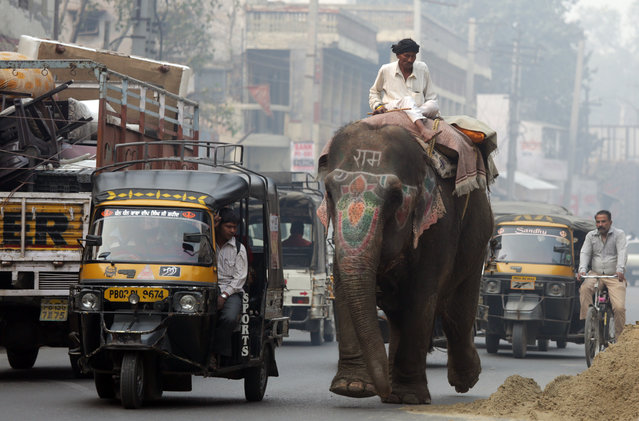
A mahout rides on an elephant in the city of Amritsar, India, 08 November 2015. Such elephants are often accompanied by their caretakers who ask for alms from people in the streets. (Photo by Raminder Pal Singh/EPA)

A mahout rides on an elephant in the city of Amritsar, India, 08 November 2015. Such elephants are often accompanied by their caretakers who ask for alms from people in the streets. (Photo by Raminder Pal Singh/EPA)
Details
10 Nov 2015 08:05:00
People ride a motorcycle near Koudoukou Mosque where Pope Francis meets Imam Tidiani Moussa Naibi in Bangui, Central African Republic, November 30, 2015. (Photo by Stefano Rellandini/Reuters)

People ride a motorcycle near Koudoukou Mosque where Pope Francis meets Imam Tidiani Moussa Naibi in Bangui, Central African Republic, November 30, 2015. (Photo by Stefano Rellandini/Reuters)
Details
01 Dec 2015 09:30:00


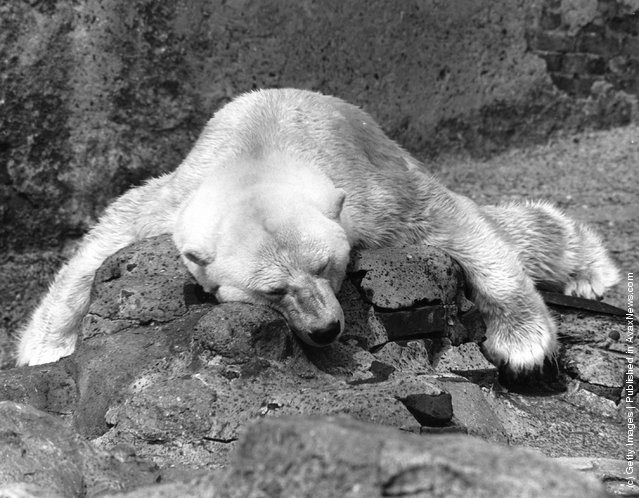
A polar bear fast asleep at London Zoo. (Photo by Fox Photos/Getty Images). 1961
Details
23 Jul 2011 12:00:00
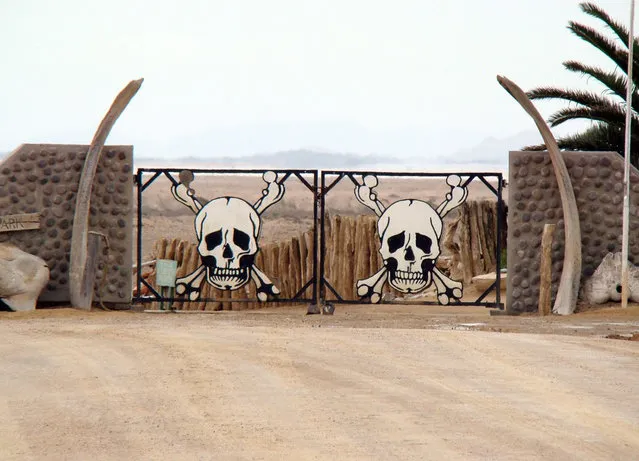
The Skeleton Coast, Namibia

The Skeleton Coast is the northern part of the Atlantic Ocean coast of Namibia and south of Angola from the Kunene River south to the Swakop River, although the name is sometimes used to describe the entire Namib Desert coast. The Bushmen of the Namibian interior called the region "The Land God Made in Anger", while Portuguese sailors once referred to it as "The Gates of Hell".
Details
23 Feb 2014 09:27:00
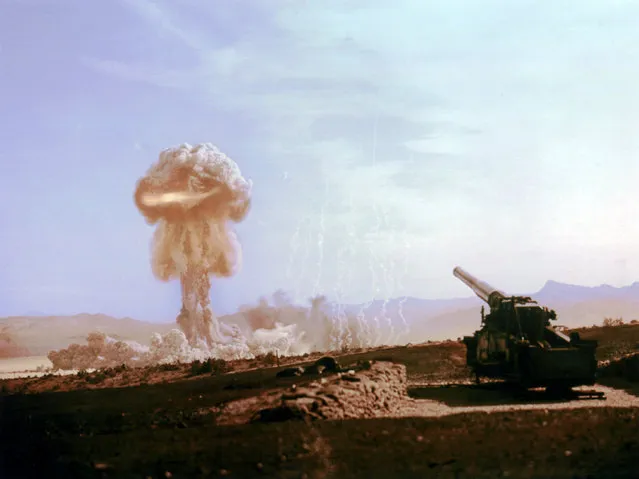
Atomic Annie at work during the Upshot-Knothole test series, 1953. (Photo by Los Alamos National Laboratory/US Army)

“A fter the former Soviet Union conducted its first nuclear test in August 1949, the US reevaluated its postwar defense policies. With the US monopoly on atomic weapons broken, military and political leaders chose to diversify the American stockpile by developing thermonuclear and tactical nuclear weapons. One of the more interesting concepts to come out of this period was atomic artillery, which was successfully tested at the Nevada Proving Grounds (now the Nevada Test Site) in May 1953”. – Alan Carr. Photo: Atomic Annie at work during the Upshot-Knothole test series, 1953. (Photo by Los Alamos National Laboratory/US Army)
Details
11 Mar 2013 11:43:00