Loading...
Done
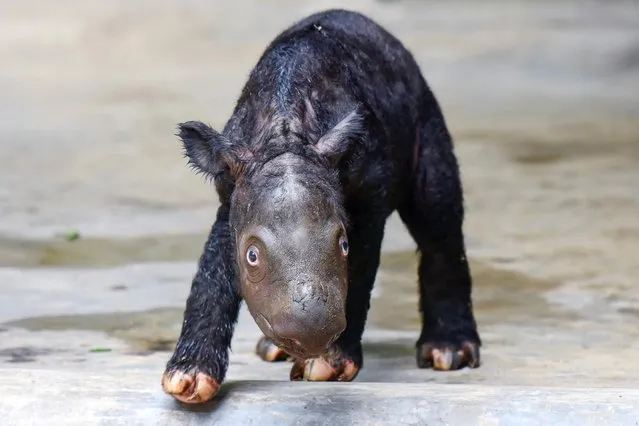
In this undated photo released by Indonesian Ministry of Environment and Forestry, a newly born Sumatran rhino calf walks in its enclosure at Sumatran Rhino Sanctuary at Way Kambas National Park, Indonesia. The critically endangered Sumatran rhino was born on Sumatra Island Saturday, November 25, 2023, the second Sumatran rhino born in the country this year and a welcome addition to a species that currently numbers fewer than 50 animals. (Photo by Indonesian Ministry of Environment and Forestry via AP Photo)

In this undated photo released by Indonesian Ministry of Environment and Forestry, a newly born Sumatran rhino calf walks in its enclosure at Sumatran Rhino Sanctuary at Way Kambas National Park, Indonesia. The critically endangered Sumatran rhino was born on Sumatra Island Saturday, November 25, 2023, the second Sumatran rhino born in the country this year and a welcome addition to a species that currently numbers fewer than 50 animals. (Photo by Indonesian Ministry of Environment and Forestry via AP Photo)
Details
17 Dec 2023 05:52:00
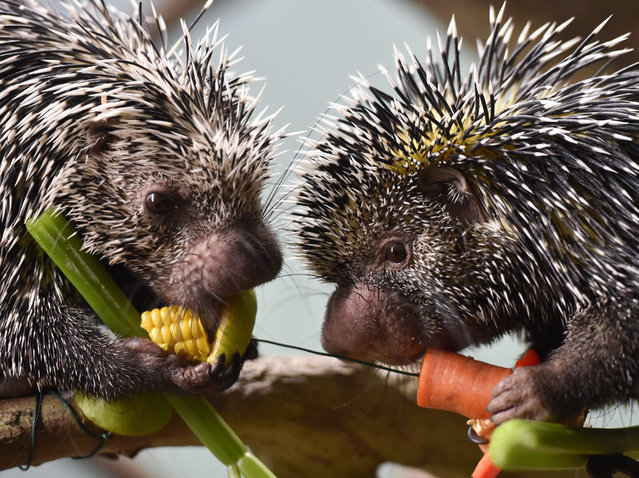
The coendou porcupine couple 'Joppi' (L) and 'Fletcher' nibble at a vegetables in their enclosure at the zoo in Frankfurt am Main, Germany, 03 December 2015. Coendou porcupines are nocturnal rodents related to porcupines and guinea pigs and native to the rain forests of Central and South America as well as Trinidad. (Photo by Arne Dedert/EPA)

The coendou porcupine couple 'Joppi' (L) and 'Fletcher' nibble at a vegetables in their enclosure at the zoo in Frankfurt am Main, Germany, 03 December 2015. Coendou porcupines are nocturnal rodents related to porcupines and guinea pigs and native to the rain forests of Central and South America as well as Trinidad. (Photo by Arne Dedert/EPA)
Details
05 Dec 2015 08:03:00
Sunrise over Haleakala Crater, Haleakala National Park, Maui, Hawaii on April 26th, 2011. (Photo by Robert Bush/Alamy Stock Photo)

Sunrise over Haleakala Crater, Haleakala National Park, Maui, Hawaii on April 26th, 2011. (Photo by Robert Bush/Alamy Stock Photo)
Details
20 Apr 2017 09:06:00
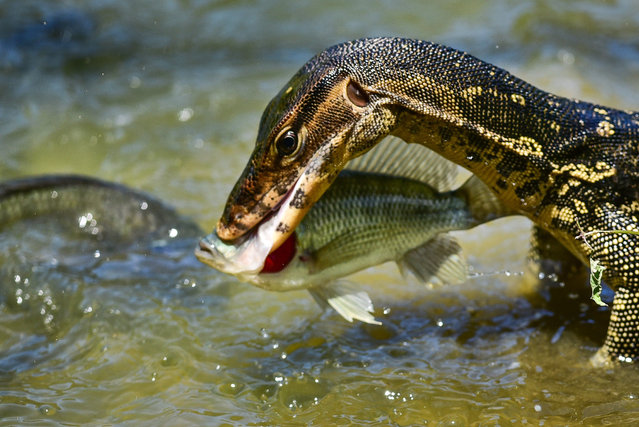
A lizard is seen hunting for fish during the daytime on May 04, 2017 in West Sumatra, Indonesia. (Photo by Riau Images/Barcroft Images)

A lizard is seen hunting for fish during the daytime on May 04, 2017 in West Sumatra, Indonesia. (Photo by Riau Images/Barcroft Images)
Details
07 May 2017 09:48:00
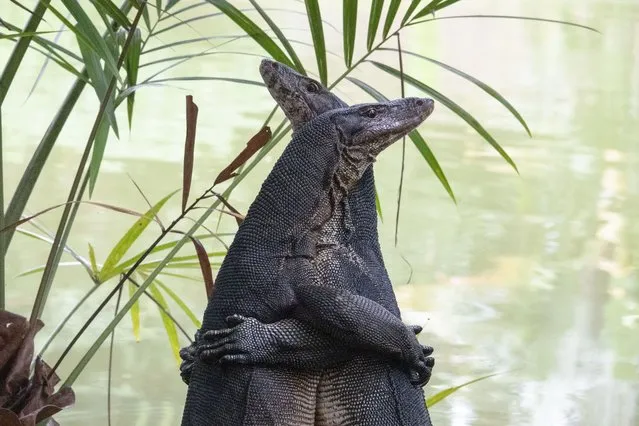
Two monitor lizards wrestle at Singapore Botanic Gardens on February 7, 2022. (Photo by Xinhua News Agency/Rex Features/Shutterstock)

Two monitor lizards wrestle at Singapore Botanic Gardens on February 7, 2022. (Photo by Xinhua News Agency/Rex Features/Shutterstock)
Details
20 Feb 2022 22:02:00
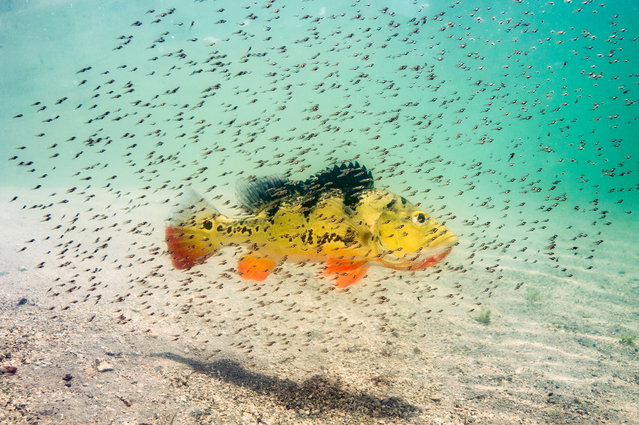
Michael O’Neill won a prize in animal portraits with fry of a peacock bass hovering around their mother for protection against predators in South Florida. (Photo by Michael Patrick O'Neill/2016 National Geographic Nature Photographer of the Year)

Michael O’Neill won a prize in animal portraits with fry of a peacock bass hovering around their mother for protection against predators in South Florida. (Photo by Michael Patrick O'Neill/2016 National Geographic Nature Photographer of the Year)
Details
10 Dec 2016 08:57:00
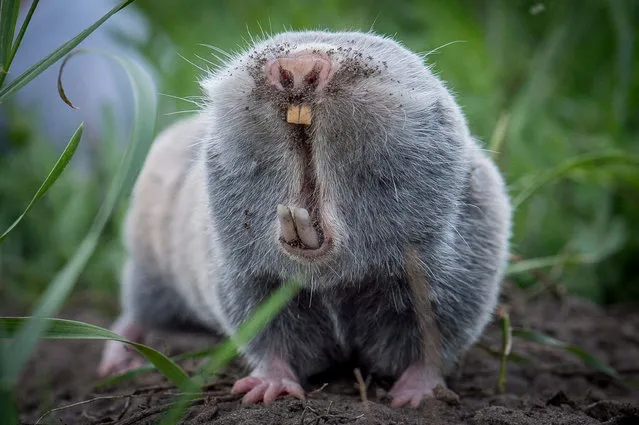
An adult specimen of Nannospalax (leucodon) montanosyrmiensis, a variant of the lesser mole-rat (Spalax leucodon) is pictured near Albertirsa, some 60 kilometers southeast of Budapest, Hungary, 12 May 2018. The critically endangered rodent lives in several isolated populations in the Carpathian Basin. (Photo by Sandor Ujvari/EPA/EFE)

An adult specimen of Nannospalax (leucodon) montanosyrmiensis, a variant of the lesser mole-rat (Spalax leucodon) is pictured near Albertirsa, some 60 kilometers southeast of Budapest, Hungary, 12 May 2018. The critically endangered rodent lives in several isolated populations in the Carpathian Basin. (Photo by Sandor Ujvari/EPA/EFE)
Details
20 May 2018 00:03:00
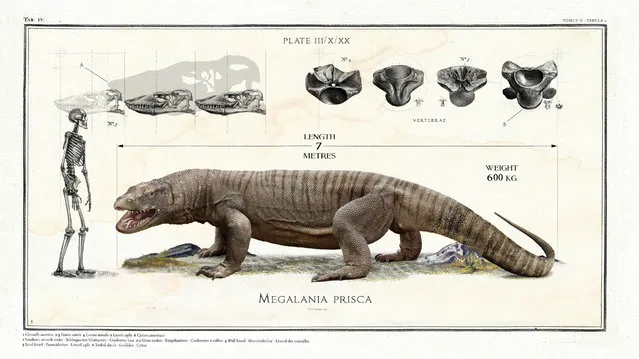
Fossil records indicate that this early lizard, Megalina prisca, was a whopping seven metres in length. (Photo by Sky TV/The Guardian)

Fossil records indicate that this early lizard, Megalania (Megalania prisca or Varanus priscus), was a whopping seven metres in length. They were part of a megafaunal assemblage that inhabited southern Australia during the Pleistocene. The youngest fossil remains date to around 50,000 years ago. The first aboriginal settlers of Australia might have encountered them and been a factor in their extinction. (Photo by Sky TV/The Guardian)
Details
12 Jun 2018 00:05:00