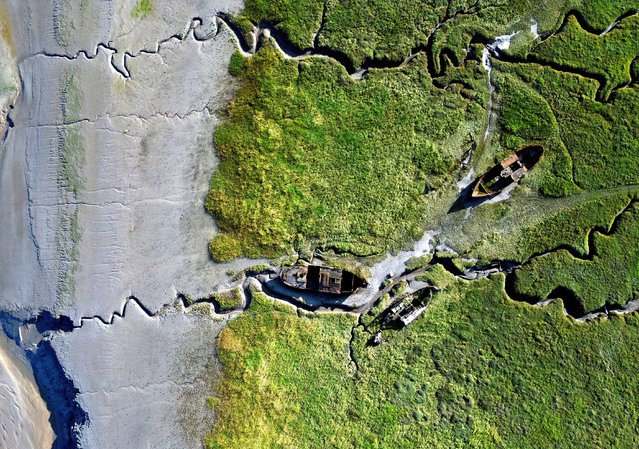
Decaying fishing trawlers known collectively as The Fleetwood Wrecks, are seen at low tide on the banks of the River Wyre in Fleetwood, Britain on September 26, 2023. (Photo by Lee Smith/Reuters)
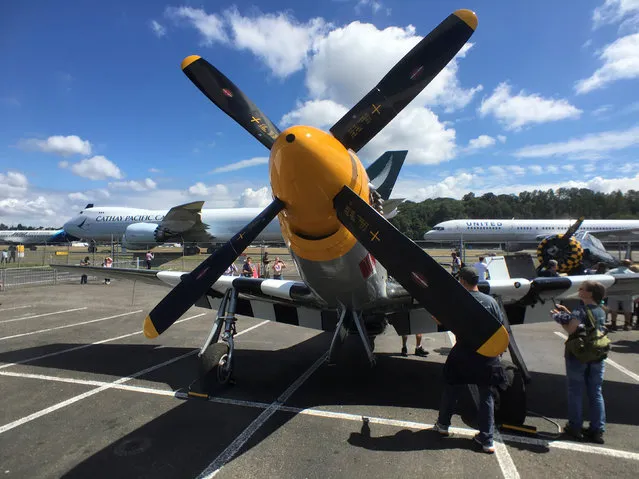
A World War II era P-51 Mustang fighter plane stands in front of a modern 747-8 freighter and a 757 passenger jet at The Boeing Company's centennial celebration in Renton, Washington, U.S. July 15, 2016. (Photo by Alwyn Scott/Reuters)
Zhang Shifan's sixth-generation facekinis in Shandong Province, Qingdao, East China. A woman credited with inventing the bizarre swimwear known as the “facekini” has now proudly presented the sixth generation of the iconic beach clothing. The new facekini models are not only more comfortable, they also come in a wider variety of colours and patterns, bringing both style and practicality to beach-goers in Qingdao City, in East China's Shandong Province, who fear tan lines. (Photo by CEN)
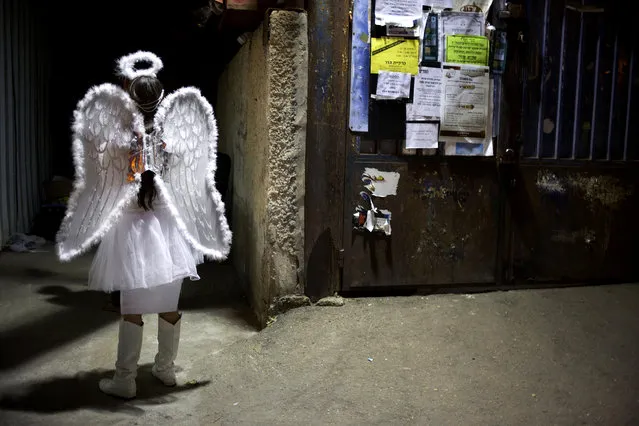
A girl walks to a synagogue of the Tzanz Hasidic dynasty community to read the Book of Esther, which tells the story of the Jewish festival of Purim, in Netanya, Israel, Wednesday, March 23, 2016. The Jewish holiday of Purim commemorates the Jews' salvation from genocide in ancient Persia, as recounted in the Book of Esther. (Photo by Ariel Schalit/AP Photo)
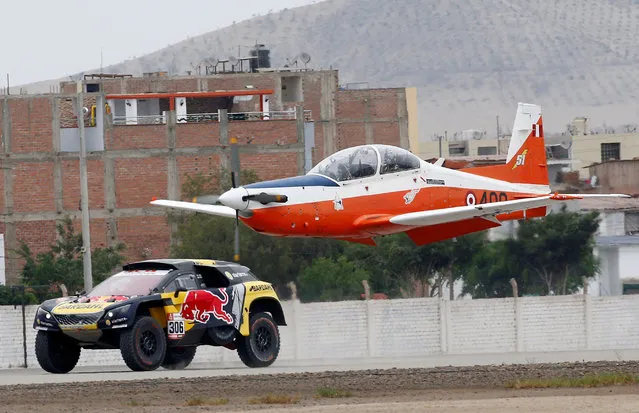
PH Sport's driver Sebastian Loeb races against an airplane during a performance act at the Peru Dakar Rally in Lima, Peru on January 5, 2019. (Photo by Carlos Jasso/Reuters)
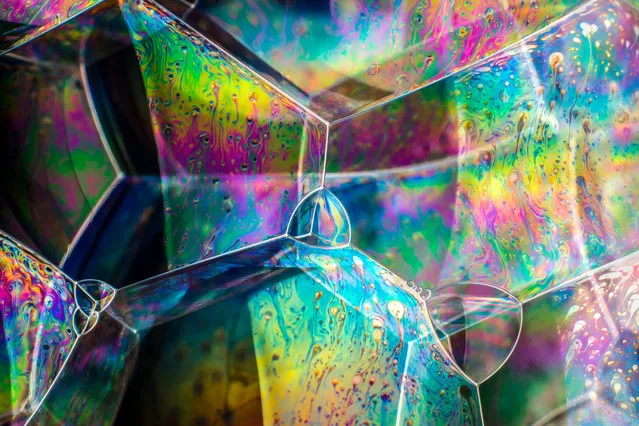
Soap Bubble Structures by Kym Cox. Bubbles optimise space and minimise their surface area for a given volume of air. This phenomenon makes them a useful tool in many areas of research, in particular, materials science and “packing” – how things fit together. Bubble walls drain under gravity, thin at the top, thick at the bottom, which interferes with travelling lightwaves to create bands of colour. Black spots show the wall is too thin for interference colours, indicating the bubble is about to burst. (Photo by Kym Cox/2019 Science Photographer of the Year/RPS)
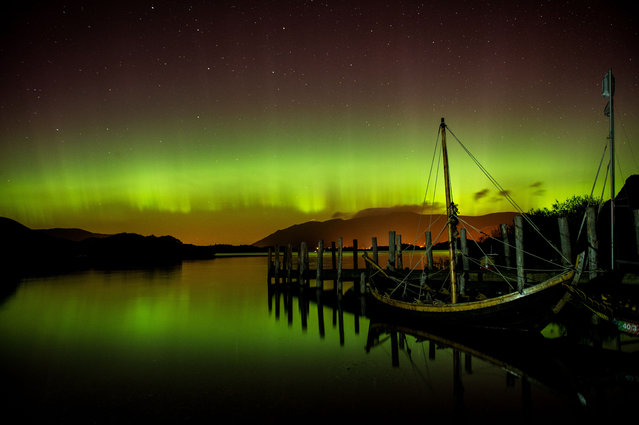
The aurora borealis, or the northern lights occur over Derwentwater, near Keswick, England, Thursday October 8, 2015. The northern lights are the result of collisions between gaseous particles in the Earth's atmosphere with charged particles released from the sun. (Photo by Owen Humphreys/PA Wire via AP Photo)