Loading...
Done
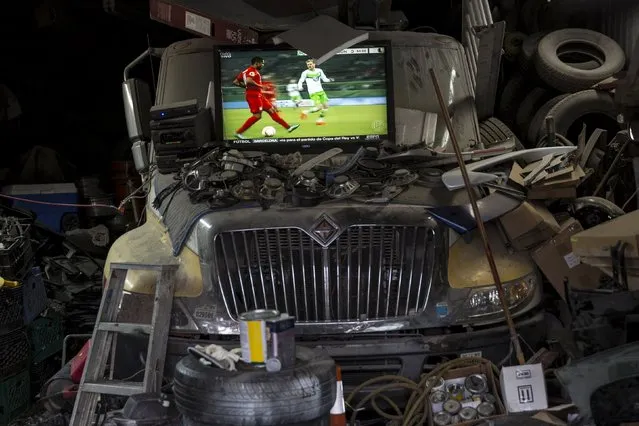
Soccer is played on a television mounted in a workshop in the Willets Point area of Queens in New York October 27, 2015. (Photo by Andrew Kelly/Reuters)

Soccer is played on a television mounted in a workshop in the Willets Point area of Queens in New York October 27, 2015. Willets Point, also known as the Iron Triangle, is an industrial precinct that sits in the shadow of Citi Field, home of the New York Mets baseball team. Many businesses within Willets Point employ a largely immigrant workforce. (Photo by Andrew Kelly/Reuters)
Details
04 Nov 2015 08:00:00
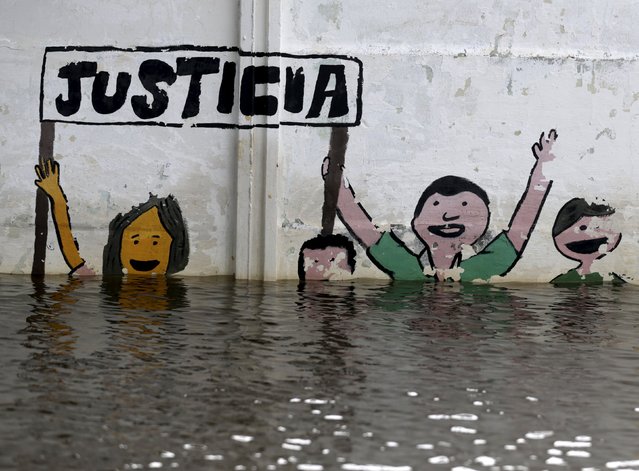
Graffiti saying “justice” partially seen above flood waters in Asuncion, December 27, 2015. (Photo by Jorge Adorno/Reuters)

Graffiti saying “justice” partially seen above flood waters in Asuncion, December 27, 2015. More than 100,000 people have had to evacuate from their homes in the bordering areas of Paraguay, Uruguay, Brazil and Argentina due to severe flooding in the wake of heavy summer rains brought on by El Nino, authorities said on Saturday. (Photo by Jorge Adorno/Reuters)
Details
29 Dec 2015 08:02:00
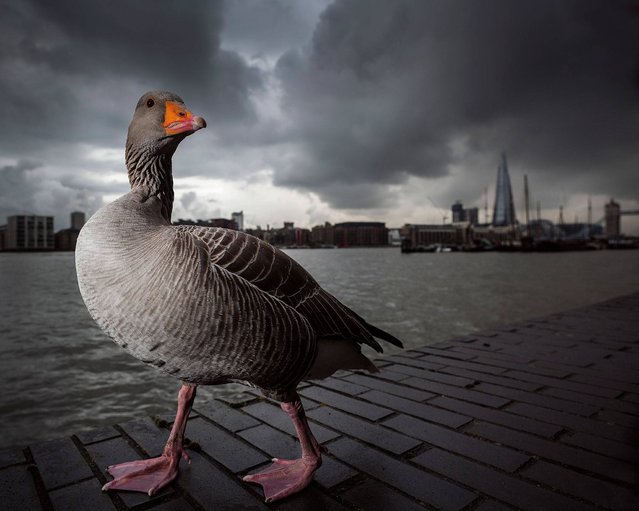
“Urban Tourist (Graylag Goose)”. Urban category and overall winner. (Photo by Lee Acaster/British Wildlife Photography Awards 2014)

The British Wildlife Photography Awards winners have been revealed, with Lee Acaster from Suffolk taking home the top prize for his shot of a Graylag Goose in London. Acaster, who received £5,000, photographed the animal against an ominous London skyline, with The Shard clearly visible in the background. Here: “Urban Tourist (Graylag Goose)”. Urban category and overall winner. (Photo by Lee Acaster/British Wildlife Photography Awards 2014)
Details
02 Sep 2014 12:24:00
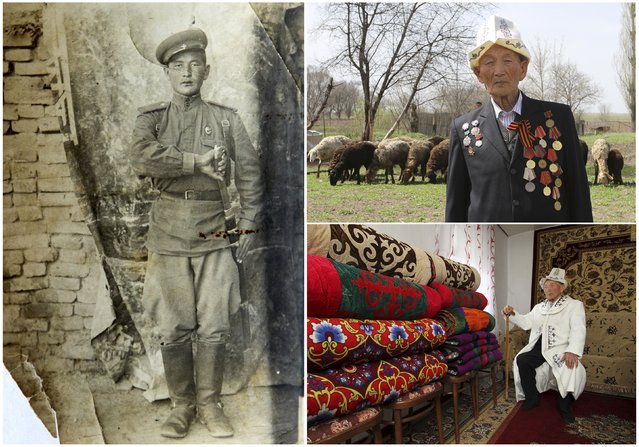
World War Two veteran Abla Begaliyev, 91, is seen in an undated handout picture (L), poses for a picture in Arashan (Top R) and at home in Kyrgyzstan April 14, 2015. Begaliyev served in the border guard cavalry from February 1942 until April 1947. Originally from Kyrgyzstan, he fought on the Ukrainian front and relocated to the border with Afghanistan at the end of World War Two. (Photo by Vladimir Pirogov/Reuters/Family handout (L))

World War Two veteran Abla Begaliyev, 91, is seen in an undated handout picture (L), poses for a picture in Arashan (Top R) and at home in Kyrgyzstan April 14, 2015. Begaliyev served in the border guard cavalry from February 1942 until April 1947. Originally from Kyrgyzstan, he fought on the Ukrainian front and relocated to the border with Afghanistan at the end of World War Two. As the world marks the 70th anniversary of the end of World War Two, Reuters photographers the length and breadth of the former Soviet republics (CCCP) captured portraits of Red Army veterans, mostly now in their 80s and 90s, today and through archive pictures at the time. More than 20 million Soviet citizens were killed in the war. (Photo by Vladimir Pirogov/Reuters/Family handout (L))
Details
08 May 2015 14:22:00
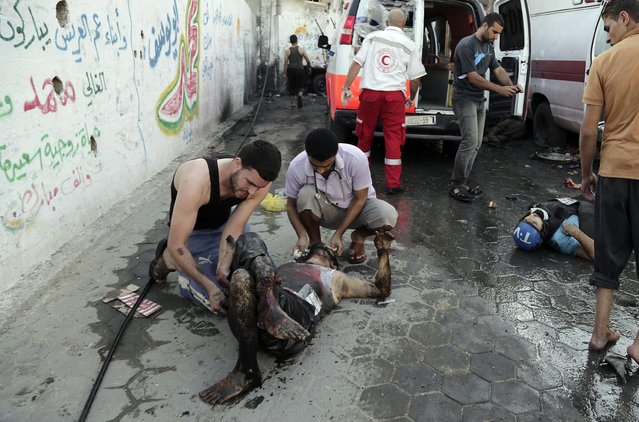
In this July 30, 2014 photo, neighbors help gravely injured Mohammed al-Selek, 39, wounded by an Israeli mortar strike as he lays next to the body of Palestinian journalist Rami Reyan who was killed, in the Shijaiyah neighborhood of the northern Gaza Strip. Al-Selek's life changed forever last July 30, when the shells slammed into his home killing all his three children, his father and six other relatives. (Photo by Adel Hana/AP Photo)

In this July 30, 2014 photo, neighbors help gravely injured Mohammed al-Selek, 39, wounded by an Israeli mortar strike as he lays next to the body of Palestinian journalist Rami Reyan who was killed, in the Shijaiyah neighborhood of the northern Gaza Strip. Al-Selek's life changed forever last July 30, when the shells slammed into his home killing all his three children, his father and six other relatives. A year later, al-Selek, who lost his leg during the airstrike, still struggles to recover and come to terms with his family's loss in the 50-day Israel-Hamas war. (Photo by Adel Hana/AP Photo)
Details
07 Jul 2015 11:28:00
These girls are scantily dressed as they head out for a night out in Portsmouth, Hampshire on September 21, 2016 in matching outfits. Thousands of Portsmouth University students enjoy freshers week. Teenagers enjoy their first taste of freedom in bars and clubs near Portsmouth Guildhall which on a midweek alcohol fuelled night of fun in the early hours of Wednesday morning much to the despair of local residents who get disturbed up to 4am when they eventually wander home. Girls dressed in “Dirty Disco” outfits with “Don't tell daddy” on their bums. (Photo by Paul Jacobs/PictureExclusive.com)

These girls are scantily dressed as they head out for a night out in Portsmouth, Hampshire on September 21, 2016 in matching outfits. Thousands of Portsmouth University students enjoy freshers week. Teenagers enjoy their first taste of freedom in bars and clubs near Portsmouth Guildhall which on a midweek alcohol fuelled night of fun in the early hours of Wednesday morning much to the despair of local residents who get disturbed up to 4am when they eventually wander home. Girls dressed in “Dirty Disco” outfits with “Don't tell daddy” on their bums. (Photo by Paul Jacobs/PictureExclusive.com)
Details
22 Sep 2016 10:11:00
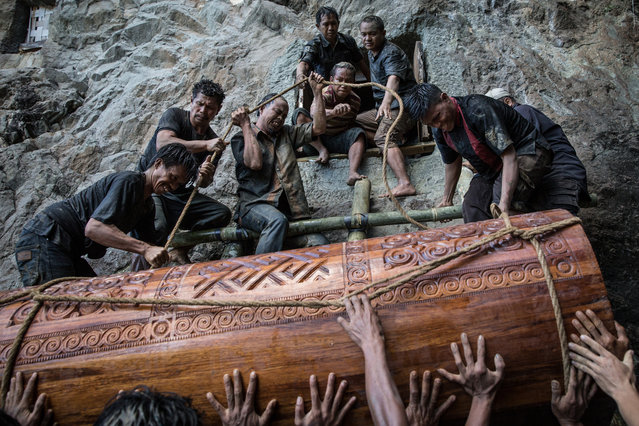
It is said that Torajans are people who “live to die”. For this Indonesian ethnic group, funerals are such extravagant events that they sometimes attract tourists. Families can postpone burials years (and the deceased are considered sick and hosted at home until the funeral) until the family can raise enough money and gather as many relatives as possible. And then it’s a jubilant multiday social event with a parade, dances and animal sacrifices. Agung Parameswara photographed these funerary practices when he traveled to South Sulawesi province, where the Torajans live. But often, their funeral isn’t the last time the dead are seen. In August, crypts are opened, coffins are slid back out and bodies delicately unsheathed. This tender ritual is known as Ma’Nene, which is customarily performed every few years. (Photo by Agung Parameswara/The Washington Post)

It is said that Torajans are people who “live to die”. For this Indonesian ethnic group, funerals are such extravagant events that they sometimes attract tourists. Families can postpone burials years (and the deceased are considered sick and hosted at home until the funeral) until the family can raise enough money and gather as many relatives as possible. And then it’s a jubilant multiday social event with a parade, dances and animal sacrifices. Agung Parameswara photographed these funerary practices when he traveled to South Sulawesi province, where the Torajans live. (Photo by Agung Parameswara/The Washington Post)
Details
06 Oct 2016 09:15:00
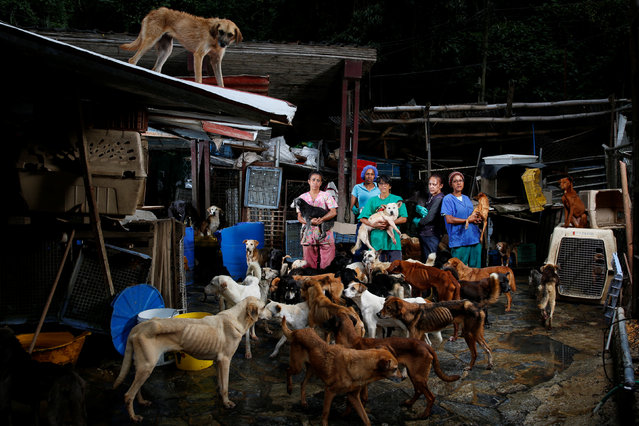
(L-R) Maria Silva, Milena Cortes, Maria Arteaga, Jackeline Bastidas and Gissy Abello pose for a picture at the Famproa dogs shelter where they work, in Los Teques, Venezuela, August 25, 2016. Venezuelans struggling to feed their families let alone their pets are dumping animals on the streets, in parks and at makeshift homes overrun with scrawny animals amid an economic crisis. An hour from Caracas in Los Teques, hundreds of dogs bark and run around the streets scavenging for food outside a makeshift shelter. People come by every few hours to hand over scrawny dogs which are fed by volunteers every day. Venezuela is undergoing a major economic and social crisis, with shortages of basic foods and medicines. Triple digit inflation is hitting everybody hard, including those who own pets. (Photo by Carlos Garcia Rawlins/Reuters)

(L-R) Maria Silva, Milena Cortes, Maria Arteaga, Jackeline Bastidas and Gissy Abello pose for a picture at the Famproa dogs shelter where they work, in Los Teques, Venezuela, August 25, 2016. Venezuelans struggling to feed their families let alone their pets are dumping animals on the streets, in parks and at makeshift homes overrun with scrawny animals amid an economic crisis. An hour from Caracas in Los Teques, hundreds of dogs bark and run around the streets scavenging for food outside a makeshift shelter. (Photo by Carlos Garcia Rawlins/Reuters)
Details
08 Sep 2016 10:01:00