Loading...
Done
The stunning Milkyway in Midwestern U.S.A.  captured by photographer Randy Halverson in 2013. The stunning skies in Midwestern U.S.A. captured by photographer Randy Halverson. The videographer captured rare footage of the Milky Way, the elusive Northern Lights and raging night storms in some of the most isolated regions of the U.S.A. (Photo by Randy Halverson/Barcroft Media)

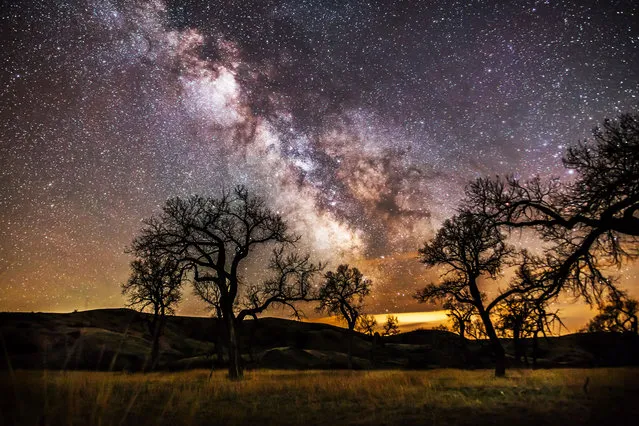
The stunning Milkyway in Midwestern U.S.A. captured by photographer Randy Halverson in 2013. The stunning skies in Midwestern U.S.A. captured by photographer Randy Halverson. The videographer captured rare footage of the Milky Way, the elusive Northern Lights and raging night storms in some of the most isolated regions of the U.S.A. The footage, which spans the skies of South Dakota, Wyoming and Utah, was taken between spring and autumn 2013. The 47-year-old spent 40 nights scattered across the eight-month period sat near his camera to capture the clear footage. Randy from Kennebec, South Dakota has been shooting timelapse for over 4 years. (Photo by Randy Halverson/Barcroft Media)
Details
20 Aug 2014 10:32:00
An erotic danser picks up fake 2-dollar bills during a private dance with a Yakuza customer in a strip tease bar in Kabukicho, a bar which is controlled by the ODO family – 2010. (Photo and caption by Anton Kusters)

The Belgian photographer Anton Kusters spent two years photographing the Yakuza, Japan’s most notorious gang. He returned with some amazing images that he made into a book called “Odo Yakuza Tokyo”. (Odo means “the way of the cherry blossom” and is the credo of the Yakuza family he followed. Photo: An erotic danser picks up fake 2-dollar bills during a private dance with a Yakuza customer in a strip tease bar in Kabukicho, a bar which is controlled by the ODO family – 2010. (Photo and caption by Anton Kusters)
Details
31 Aug 2014 08:42:00
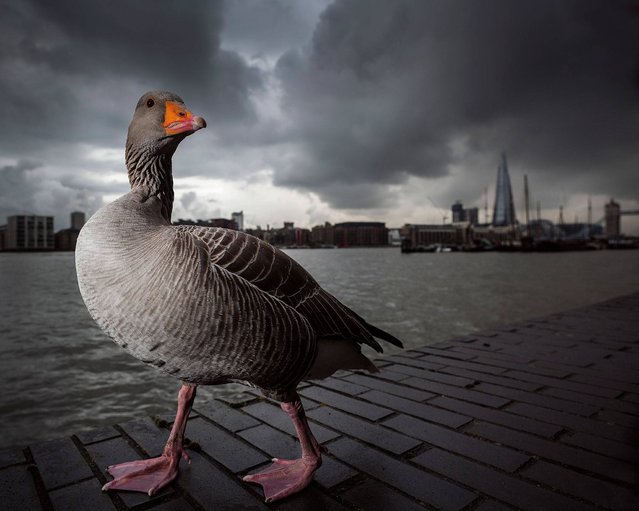
“Urban Tourist (Graylag Goose)”. Urban category and overall winner. (Photo by Lee Acaster/British Wildlife Photography Awards 2014)

The British Wildlife Photography Awards winners have been revealed, with Lee Acaster from Suffolk taking home the top prize for his shot of a Graylag Goose in London. Acaster, who received £5,000, photographed the animal against an ominous London skyline, with The Shard clearly visible in the background. Here: “Urban Tourist (Graylag Goose)”. Urban category and overall winner. (Photo by Lee Acaster/British Wildlife Photography Awards 2014)
Details
02 Sep 2014 12:24:00
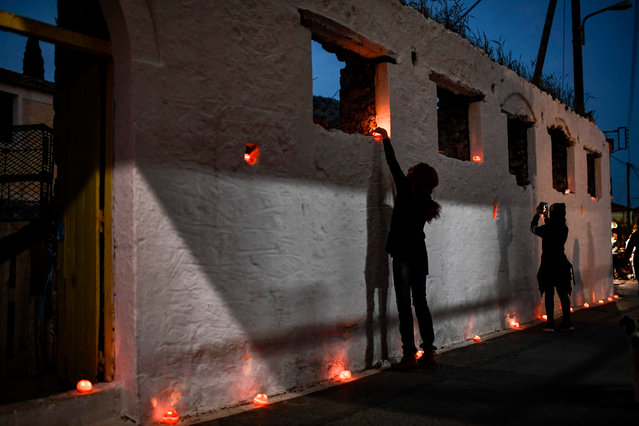
People decorate a street with candles inside oranges during the Epitaph ceremony during Good Friday's “Apokathelosis”, the Descent of Christ's dead body from the Cross, which forms a key part of Orthodox Easter, in the southern city of Leonidio, at the Peloponnese peninsula on April 26, 2019. Millions of Greeks flock to churches around the country this week to celebrate Easter, the country's foremost religious celebration. (Photo by Aris Messinis/AFP Photo)

People decorate a street with candles inside oranges during the Epitaph ceremony during Good Friday's “Apokathelosis”, the Descent of Christ's dead body from the Cross, which forms a key part of Orthodox Easter, in the southern city of Leonidio, at the Peloponnese peninsula on April 26, 2019. Millions of Greeks flock to churches around the country this week to celebrate Easter, the country's foremost religious celebration. (Photo by Aris Messinis/AFP Photo)
Details
15 May 2019 00:05:00
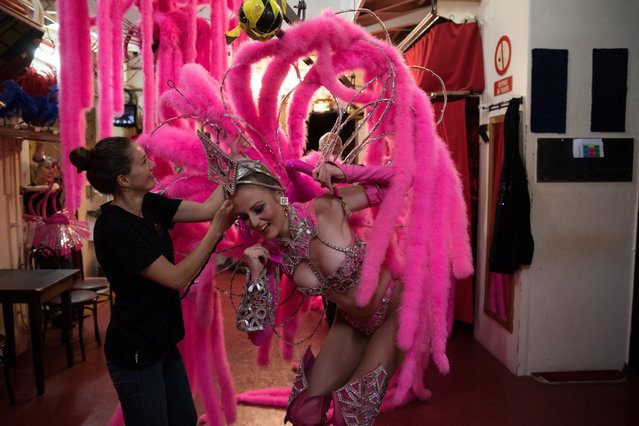
Dancer Megan changes costume as she performs in the review “Feerie” at the Moulin Rouge in Paris, France, July 3, 2018. Each show requires 1,000 outfits, all crafted in the workshops that have been supplying the Moulin Rouge for decades. Each dancer has to make between 10 and 15 costume changes per show, with about 90 seconds to complete each one before they have to be back out on stage. (Photo by Philippe Wojazer/Reuters)

Dancer Megan changes costume as she performs in the review “Feerie” at the Moulin Rouge in Paris, France, July 3, 2018. Each show requires 1,000 outfits, all crafted in the workshops that have been supplying the Moulin Rouge for decades. Each dancer has to make between 10 and 15 costume changes per show, with about 90 seconds to complete each one before they have to be back out on stage. (Photo by Philippe Wojazer/Reuters)
Details
05 Oct 2019 00:03:00
A racegoers cheers on her horse in Race 4 ahead of the race of the Melbourne Cup at Flemington Racecourse in Melbourne, Australia, Tuesday, November 7, 2017. (Photo by Andy Brownbill/AP Photo)

A racegoers cheers on her horse in Race 4 ahead of the race of the Melbourne Cup at Flemington Racecourse in Melbourne, Australia, Tuesday, November 7, 2017. (Photo by Andy Brownbill/AP Photo)
Details
07 Nov 2017 08:17:00
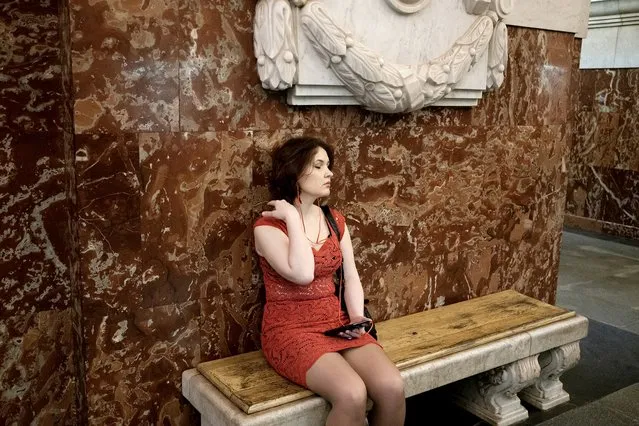
At the Krasnopresnenskaya station, the benches come from the Cathedral of Christ-Sauveur, which was built from 1839 to 1883 in memory of the victory of Russia against the army of Napoleon I. The cathedral was destroyed under Stalin in 1931, but the benches remained intact. Metro architects decided to install them in some stations. (Photo by Didier Bizet/The Washington Post)

At the Krasnopresnenskaya station, the benches come from the Cathedral of Christ-Sauveur, which was built from 1839 to 1883 in memory of the victory of Russia against the army of Napoleon I. The cathedral was destroyed under Stalin in 1931, but the benches remained intact. Metro architects decided to install them in some stations. (Photo by Didier Bizet/The Washington Post)
Details
24 Jan 2018 06:23:00
The little new born wombat baby APARI sitting in its mothers pouch at the zoo in Duisburg, Germany, Thursday, March 29, 2018. Wombat mother TINSEL once was found in the pouch of its dead mother on a street in Australia and was raised by zookeepers before she came to Germany. The zoo tried for 40 years in vain to breed a wombat, until APARI was born as the first one last week. (Photo by Martin Meissner/AP Photo)

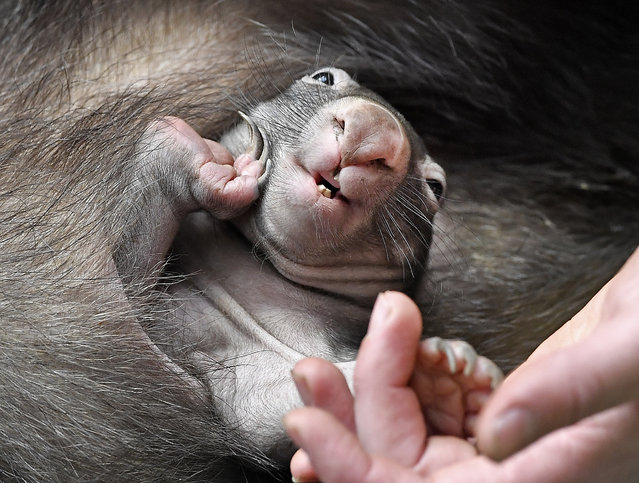
The little new born wombat baby APARI sitting in its mothers pouch at the zoo in Duisburg, Germany, Thursday, March 29, 2018. Wombat mother TINSEL once was found in the pouch of its dead mother on a street in Australia and was raised by zookeepers before she came to Germany. The zoo tried for 40 years in vain to breed a wombat, until APARI was born as the first one last week. (Photo by Martin Meissner/AP Photo)
Details
01 Apr 2018 00:03:00