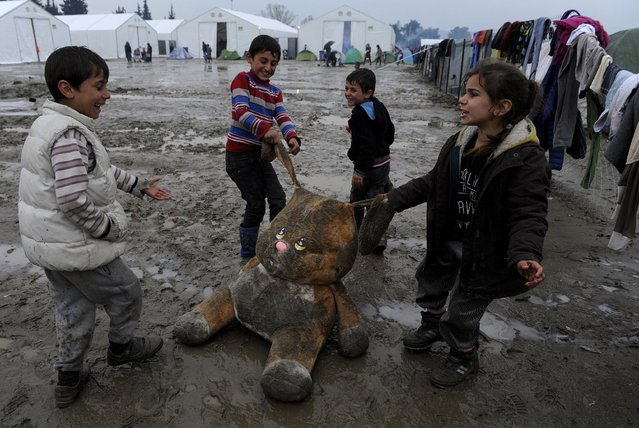
Refugee children play with a stuffed toy at a muddy makeshift camp at the Greek-Macedonian border, near the village of Idomeni, Greece March 15, 2016. (Photo by Alexandros Avramidis/Reuters)
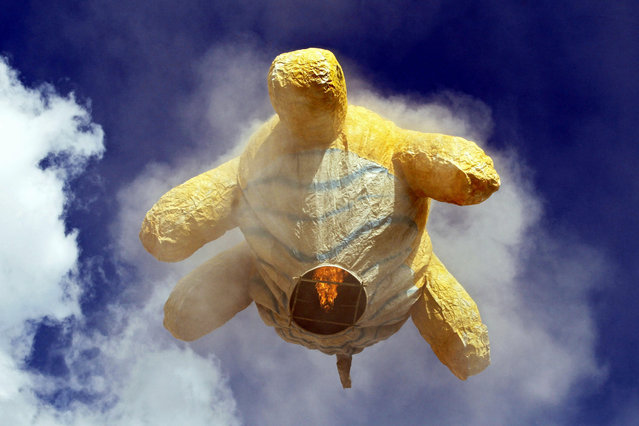
A hot air balloon in tortoise shape flies in the air during the Tazaungdaing air balloon festival in Pyin Oo Lwin, Myanmar, 25 November 2015. During the festival, hot air balloons made of multicolored papers and hung with paper lanterns, fireworks and fire sticks are exploded in mid-air. (Photo by Hein Htet/EPA)
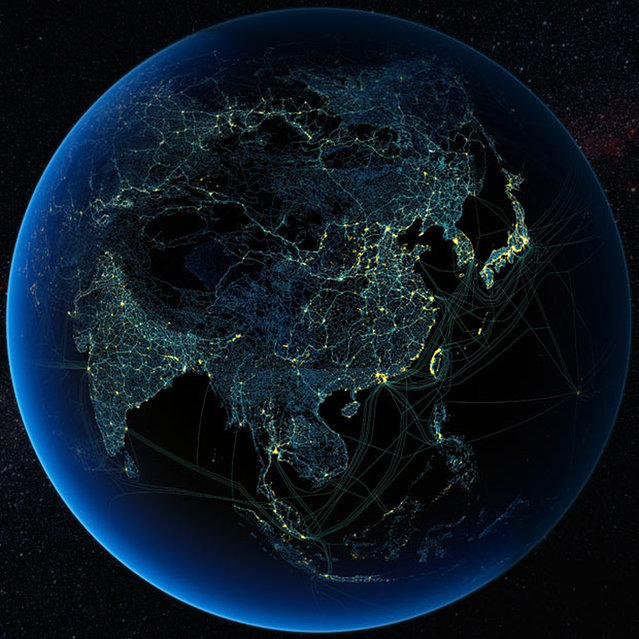
Defined according to wikipedia it is “a recent and informal geologic chronological term that serves to mark the evidence and extent of human activities that have had a significant global impact on the Earth’s ecosystems. The term was coined by ecologist Eugene Stoermer but has been widely popularized by the Nobel Prize-winning atmospheric chemist Paul Crutzen.”
The images here where created by Felix Pharand-Deschenes depicting how various human influences, from road and rail, to internet cables and airlines create significant patterns covering the Earth. What can we learn from these patterns in how they are influencing the environment
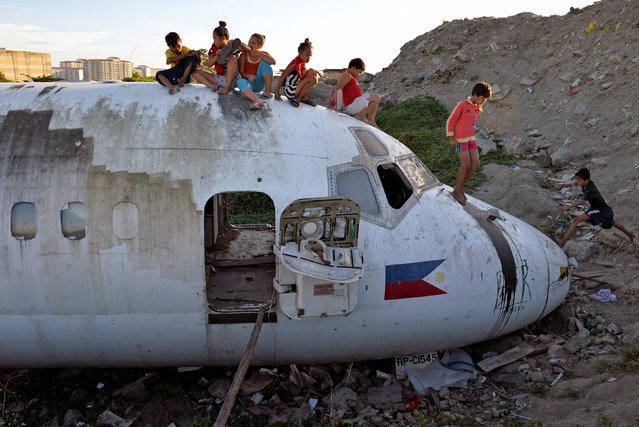
Children play on top of an old plane's fuselage at a dump site in Paranaque city, Metro Manila, Philippines January 21, 2017. (Photo by Ezra Acayan/Reuters)
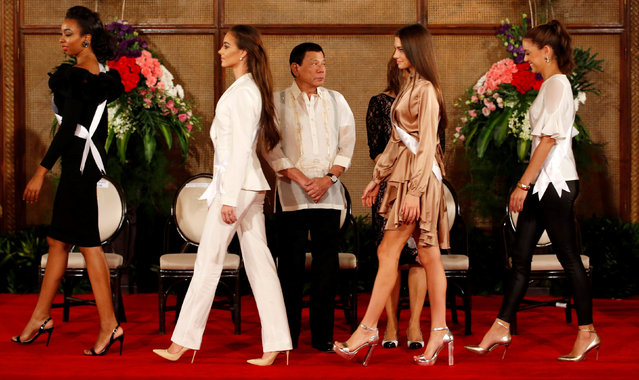
Philippine President Rodrigo Duterte looks at Miss Universe candidates at the presidential palace in Manila, Philippines January 23, 2017. (Photo by Erik De Castro/Reuters)
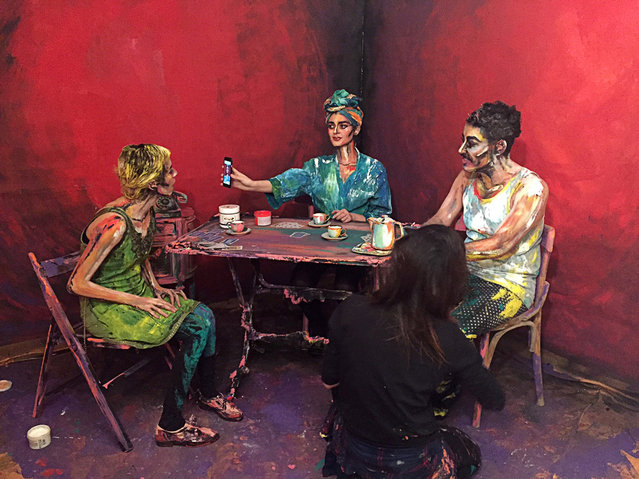
Cairo-based artist Chanel Arif's paints for her art project called After Dinner that uses humans and their surroundings as her canvas, in her gallery in the capital of Cairo, Egypt March 2, 2017. (Photo by Sherif Fahmy/Reuters)
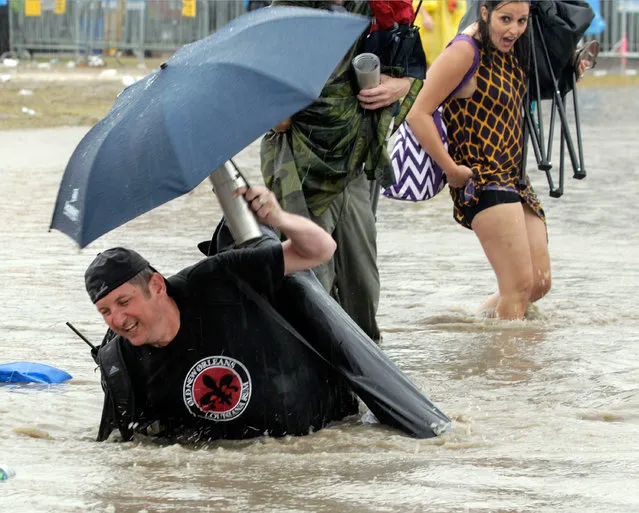
The Acura Stage area is flooded after a storm dumped several inches of rain on the second Saturday of the New Orleans Jazz Fest at the Fair Grounds, Saturday, April 30, 2016. (Photo by David Grunfeld/NOLA.com/The Times-Picayune via AP Photo)