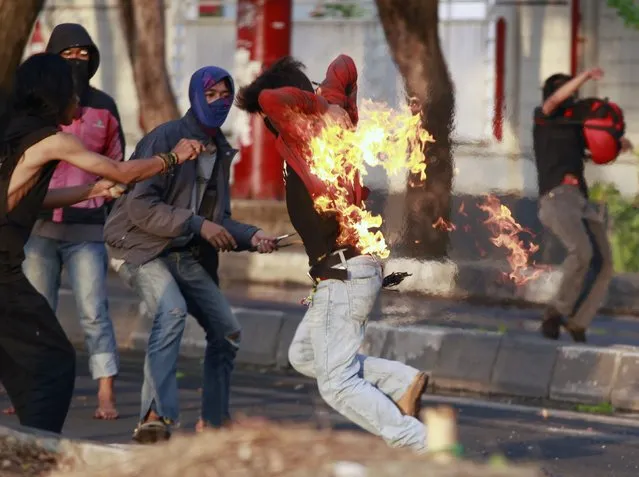
An Indonesian student protester runs after he caught fire while throwing a molotov cocktail towards police during a protest against the new president's decision to hike fuel prices this week in Makassar, South Sulawesi Province November 19, 2014. (Photo by Yusuf Ahmad/Reuters)
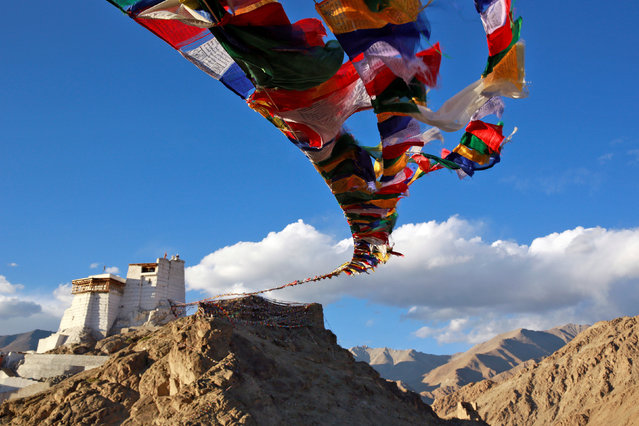
Prayer flags fly at Namgyal Tsemo Monastery above the town of Leh in Ladakh, India September 24, 2016. High in the Indian Himalayas, young novice monks in maroon robes take their lessons inside the 15th-century Thiksey monastery. (Photo by Cathal McNaughton/Reuters)
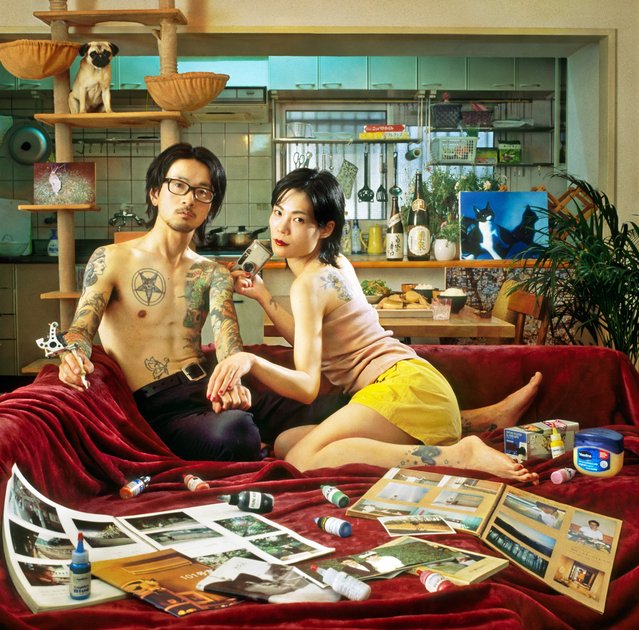
Japanese artist Mami Kiyoshi has spent 15 years creating vivid portraits of people surrounded by their belongings – from wine bottles and violins to the odd stray pet. Mami Kiyoshi’s ongoing series “New Reading Portraits” is, in part, a nod to the mise-en-scène found in traditional woodcut printing. Here: Sakura and Kazuhiro, Tokyo, 2015. (Photo by Mami Kiyoshi/Galerie Annie Gabrielli/The Guardian)
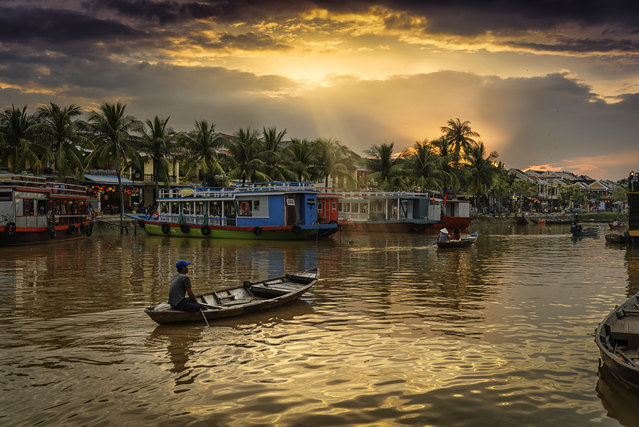
South Asian countries in terms of total contribution of travel and tourism to GDP. #6. Vietnam, Total GDP: USD 202.6 billion (2016). Contribution of Travel and Tourism to GDP: 9.1% . Here: A boat in the Thu Bon River, Hoi An, Vietnam. (Photo by Domingo Leiva/Getty Images)
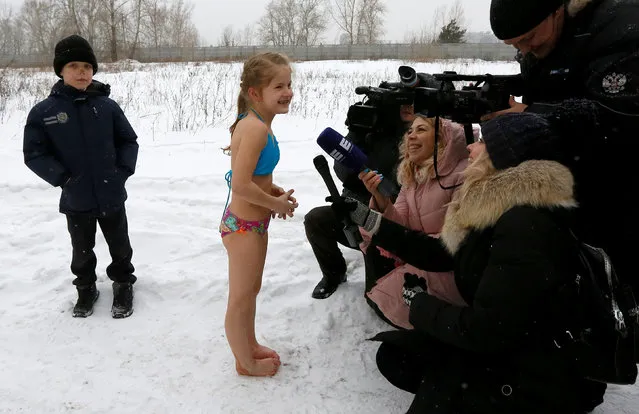
Journalists interview a girl, member of the Cryophile amateurs winter swimmers club, after bathing in the ice waters of the Yenisei River, during the celebrations for the upcoming Christmas and New Year, in Krasnoyarsk, Russia, December 23, 2017. (Photo by Ilya Naymushin/Reuters)
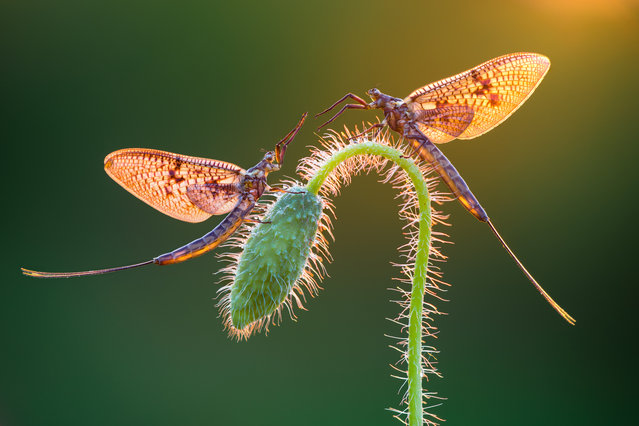
International photographic competition, which runs in association with the Royal Botanic Gardens in Kew, London, awards special prize for the best close-up images. Here: Winner – Mayflies by Petar Sabol, Goričan, Croatia. (Photo by Sabol Petar/International Garden Photographer of the Year)
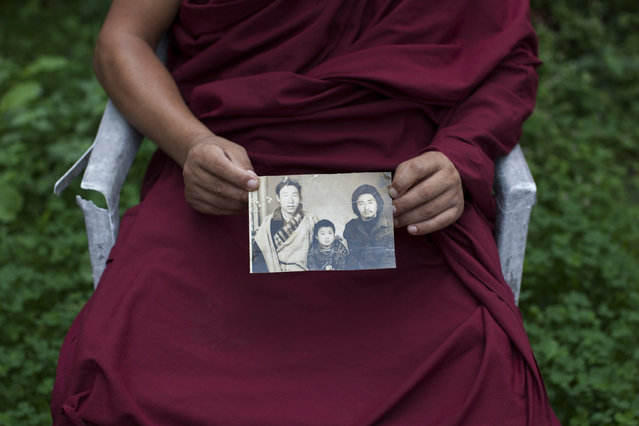
“When I was 8 years old, my parents paid a smuggler to take me across the Himalayas, a weekslong walk over the mountains from Tibet to India. It was a trek that tens of thousands of other Tibetans have taken since the Dalai Lama fled a failed 1959 uprising against Chinese rule. My parents must have had their reasons to send me here; they must have had the best of intentions. But 18 years later, I still don't know why they did it. They are not political people. They are small farmers who raise barley and a few yak in a rural area not far from Lhasa, the Tibetan capital. I have not seen them since I left...”. – Tsering Topgyal via The Associated Press. (Photo by Tsering Topgyal/AP Photo)