Loading...
Done
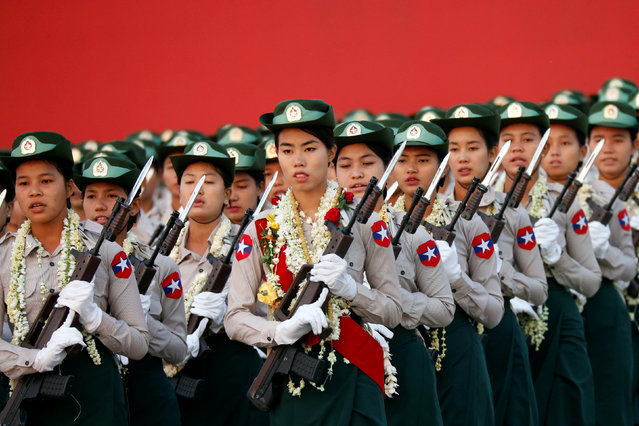
Myanmar's military parade to mark the 72nd Armed Forces Day in the capital Naypyitaw, Myanmar March 27, 2017. (Photo by Soe Zeya Tun/Reuters)

Myanmar's military parade to mark the 72nd Armed Forces Day in the capital Naypyitaw, Myanmar March 27, 2017. (Photo by Soe Zeya Tun/Reuters)
Details
27 Mar 2017 08:48:00
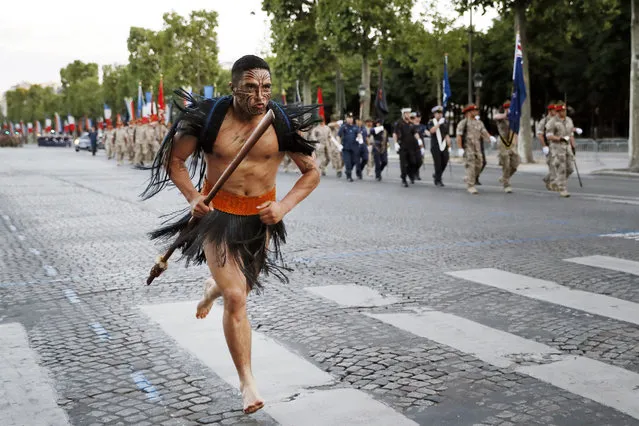
A Maori soldier runs as New Zealand's soldiers march down the Champs Elysees in Paris during a rehearsal of the annual Bastille Day military parade on July 12, 2016. (Photo by Thomas Samson/AFP Photo)

A Maori soldier runs as New Zealand's soldiers march down the Champs Elysees in Paris during a rehearsal of the annual Bastille Day military parade on July 12, 2016. (Photo by Thomas Samson/AFP Photo)
Details
13 Jul 2016 14:11:00
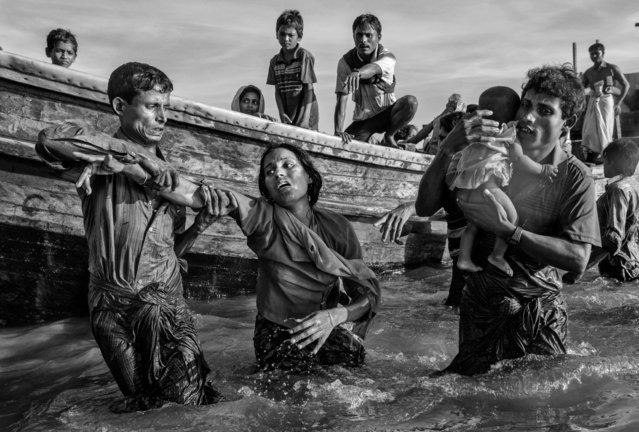
A Rohingya refugee woman is helped from a boat as she arrives exhausted on the Bangladesh side of the Naf River at Shah Porir Dwip after fleeing her village in Myanmar, on October 1, 2017 in Cox's Bazar, Bangladesh. (Photo by Kevin Frayer/Getty Images)

A Rohingya refugee woman is helped from a boat as she arrives exhausted on the Bangladesh side of the Naf River at Shah Porir Dwip after fleeing her village in Myanmar, on October 1, 2017 in Cox's Bazar, Bangladesh. (Photo by Kevin Frayer/Getty Images)
Details
17 Oct 2017 05:51:00
A sun bear is offered chocolate by a visitor in its enclosure at a zoo in Bandung on January 18, 2017. Animal rights activists on January 18 demanded the closure of an Indonesian zoo after skeletal sun bears were pictured begging for food from visitors and eating their own dung. (Photo by Timur Matahari/AFP Photo)

A sun bear is offered chocolate by a visitor in its enclosure at a zoo in Bandung on January 18, 2017. Animal rights activists on January 18 demanded the closure of an Indonesian zoo after skeletal sun bears were pictured begging for food from visitors and eating their own dung. (Photo by Timur Matahari/AFP Photo)
Details
20 Jan 2017 08:16:00
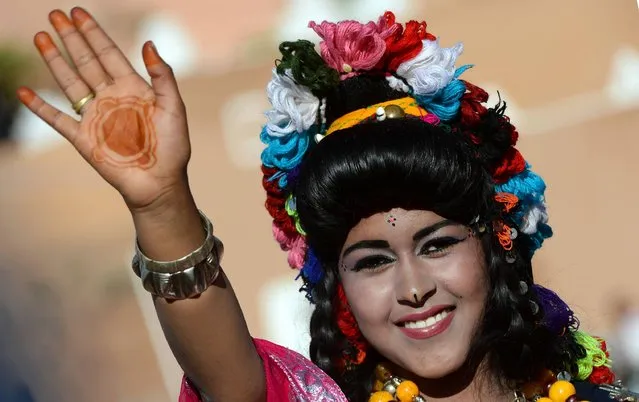
A Berber Moroccan woman, wearing traditional outfits, parades during the “Miss Rose” beauty contest as part of the yearly Rose Festival on May 13, 2016 in the town of Kelaat Mgouna, at the foot of the High Atlas Mountains in Morocco. (Photo by Fadel Senna/AFP Photo)

A Berber Moroccan woman, wearing traditional outfits, parades during the “Miss Rose” beauty contest as part of the yearly Rose Festival on May 13, 2016 in the town of Kelaat Mgouna, at the foot of the High Atlas Mountains in Morocco. (Photo by Fadel Senna/AFP Photo)
Details
16 May 2016 11:14:00
Mother and daughter volunteers Niki, right, and Rachel practice their pancake tossing technique in the streets of Wimborne model town and gardens before taking part in the Wimborne Minster virtual pancake race, in Wimborne, England, Tuesday February 16, 2021.  Although a physical race cannot take place this year due to the coronavirus restrictions, Wimborne Minster has invited people to film themselves tossing a pancake for 30 seconds and posting it to Facebook. (Photo by Andrew Matthews/PA Wire via AP Photo)

Mother and daughter volunteers Niki, right, and Rachel practice their pancake tossing technique in the streets of Wimborne model town and gardens before taking part in the Wimborne Minster virtual pancake race, in Wimborne, England, Tuesday February 16, 2021. Although a physical race cannot take place this year due to the coronavirus restrictions, Wimborne Minster has invited people to film themselves tossing a pancake for 30 seconds and posting it to Facebook. (Photo by Andrew Matthews/PA Wire via AP Photo)
Details
17 Feb 2021 10:01:00
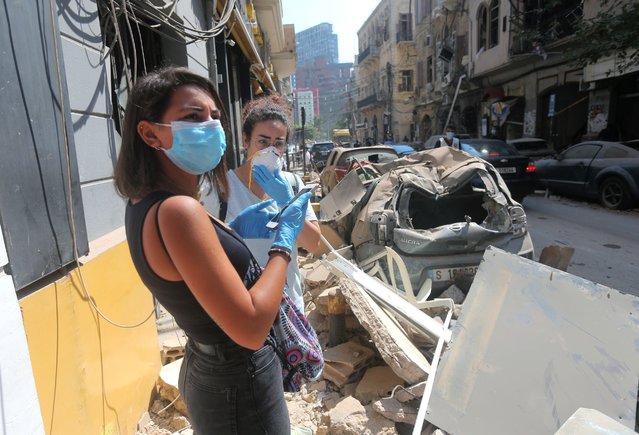
Young Lebanese women wearing protective masks and gloves against the coronavirus pandemic, stand on August 5, 2020 amid the rubble in Beirut's Gimmayzeh commercial district which was heavily damaged by the previous day's powerful explosion that tore through Lebanon's capital, resulting from the ignition of a huge depot of ammonium nitrate at the city's main port. Rescuers searched for survivors in Beirut after a cataclysmic explosion at the port sowed devastation across entire neighbourhoods, killing more than 100 people, wounding thousands and plunging Lebanon deeper into crisis. The blast, which appeared to have been caused by a fire igniting 2,750 tonnes of ammonium nitrate left unsecured in a warehouse, was felt as far away as Cyprus, some 150 miles (240 kilometres) to the northwest. (Photo by AFP Photo/Stringer)

Young Lebanese women wearing protective masks and gloves against the coronavirus pandemic, stand on August 5, 2020 amid the rubble in Beirut's Gimmayzeh commercial district which was heavily damaged by the previous day's powerful explosion that tore through Lebanon's capital, resulting from the ignition of a huge depot of ammonium nitrate at the city's main port. Rescuers searched for survivors in Beirut after a cataclysmic explosion at the port sowed devastation across entire neighbourhoods, killing more than 100 people, wounding thousands and plunging Lebanon deeper into crisis. The blast, which appeared to have been caused by a fire igniting 2,750 tonnes of ammonium nitrate left unsecured in a warehouse, was felt as far away as Cyprus, some 150 miles (240 kilometres) to the northwest. (Photo by AFP Photo/Stringer)
Details
10 Aug 2020 00:05:00
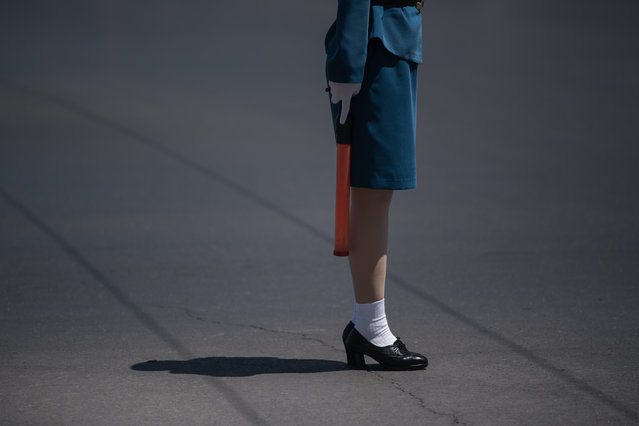
In a photo taken on June 5, 2017 a traffic security officer stands on duty at an intersection in Pyongyang. Officially known as traffic security officers but universally referred to as traffic ladies, they are chosen for their looks in a society that remains traditionalist in many respects. They must leave the role if they marry, and have a finite shelf-life, with compulsory retirement looming at just 26. The 300-odd ladies are unique to Pyongyang, which North Korean authorities are always keen to present in the best possible light despite their nuclear-armed country's impoverished status, and ensure a steady supply of photogenic young women who are the favourite subject of visiting tourists and journalists. (Photo by Ed Jones/AFP Photo)

In a photo taken on June 5, 2017 a traffic security officer stands on duty at an intersection in Pyongyang. Officially known as traffic security officers but universally referred to as traffic ladies, they are chosen for their looks in a society that remains traditionalist in many respects. They must leave the role if they marry, and have a finite shelf-life, with compulsory retirement looming at just 26. (Photo by Ed Jones/AFP Photo)
Details
21 May 2018 00:03:00