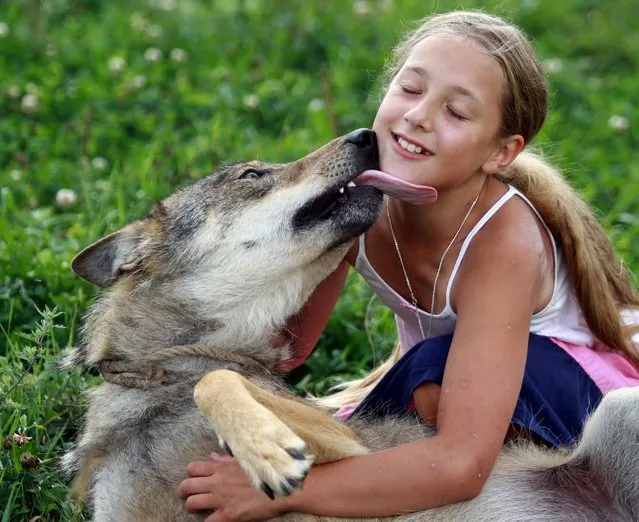
Alisa, 10, gets a kiss from one of the wolves her family tamed in the village of Zacherevye, Belarus, on August 17, 2014. (Photo by Sergei Gapon/AFP Photo)
Jennifer Lopez Gets Loud for Hillary Clinton at Get Out The Vote concert on October 29, 2016 in Miami, Florida. (Photo by Larry Marano/Rex Features/Shutterstock)
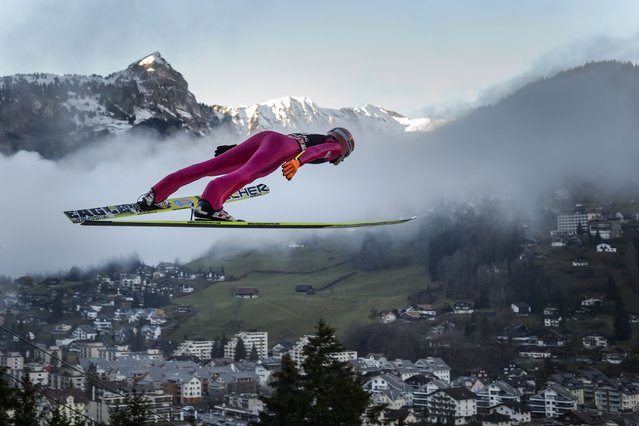
Poland's Dawid Kubacki soars through the air during the men's FIS Ski Jumping World Cup competition in Engelberg, central Switzerland, on December 20, 2014. (Photo by Fabrice Coffrini/AFP Photo)
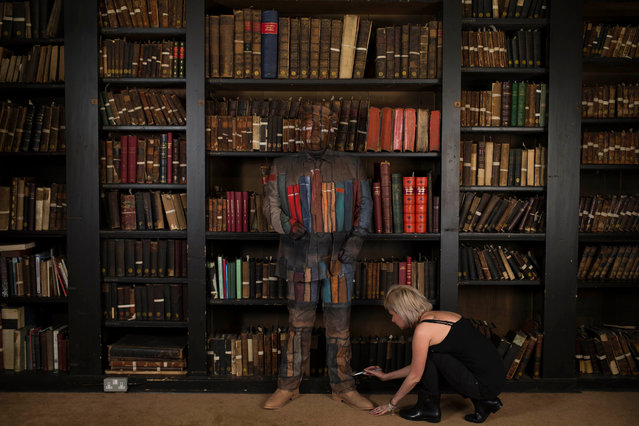
Armed forces veteran Frank Simpson at the Portico library being camouflaged by body artist Carolyn Roper in Manchester, UK on May 16, 2016 as part of the #CountThemIn campaign launched on Monday by the Royal British Legion. (Photo by Jon Super/Royal British Legion/PA Wire)
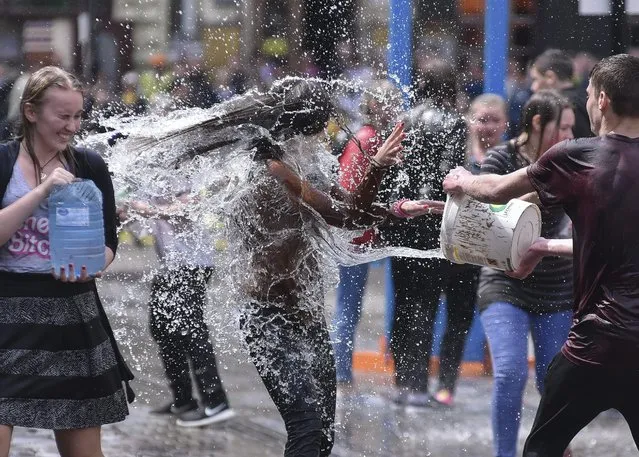
Ukrainians pour water on each other on a street in Lviv, Ukraine, 02 May 2016. The tradition of pouring water was an ancient spring ritual of cleansing on first Monday after Orthodox Easter. (Photo by Mykola Tys/EPA)
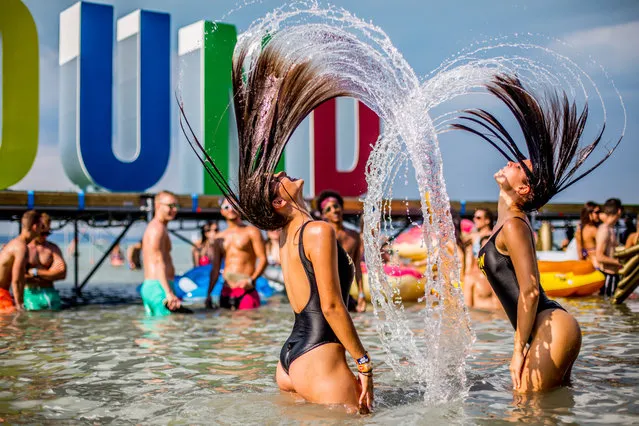
Girls play in the water during the Balaton Sound music festival held on the shore of lake Balaton in Zamardi, west Hungary, on July 9, 2017. (Photo by Sandor Csudai/Rockstar Photographers)
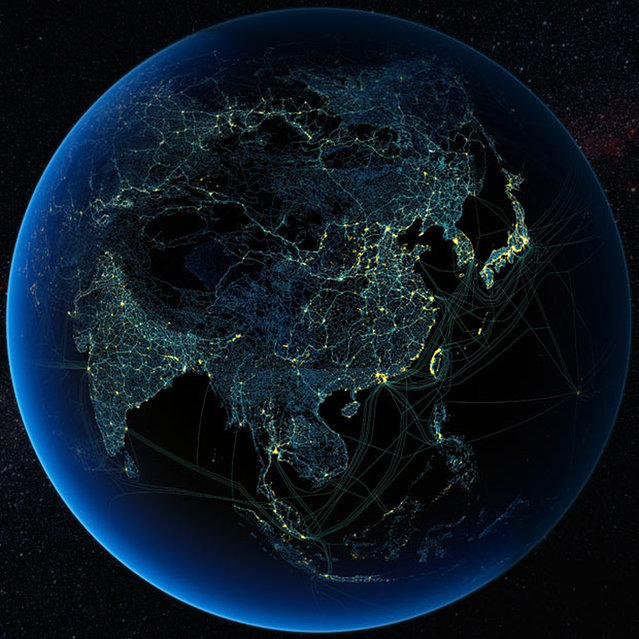
Defined according to wikipedia it is “a recent and informal geologic chronological term that serves to mark the evidence and extent of human activities that have had a significant global impact on the Earth’s ecosystems. The term was coined by ecologist Eugene Stoermer but has been widely popularized by the Nobel Prize-winning atmospheric chemist Paul Crutzen.”
The images here where created by Felix Pharand-Deschenes depicting how various human influences, from road and rail, to internet cables and airlines create significant patterns covering the Earth. What can we learn from these patterns in how they are influencing the environment