Loading...
Done
Giant panda Yu Ai enjoys fruit “kebabs” at Chongqing Zoo on November 30, 2024 in Chongqing, China. (Photo by Li Hongbo/VCG via Getty Images)

Giant panda Yu Ai enjoys fruit “kebabs” at Chongqing Zoo on November 30, 2024 in Chongqing, China. (Photo by Li Hongbo/VCG via Getty Images)
Details
12 Dec 2024 04:43:00
 National Zoo Celebrates Panda’s 1st Birthday

Bao Bao the panda, one of the National Zoological Park’s cutest inhabitants in Washington, D.C., recently celebrated her first birthday on August 23rd. As part of the celebration, Bao Bao got her very own cake. The large tiered cake showcased a big number 1.
Details
21 Sep 2014 09:34:00
People participate in the annual “No Pants Subway Ride” in New York City, U.S., January 12, 2020. (Photo by Brendan McDermid/Reuters)

People participate in the annual “No Pants Subway Ride” in New York City, U.S., January 12, 2020. (Photo by Brendan McDermid/Reuters)
Details
15 Jan 2020 00:07:00
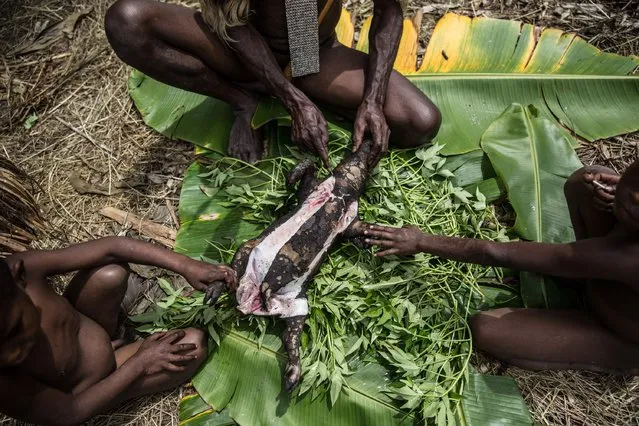
A man from the Dani tribe cuts the head of a pig after cooked by traditional way which is use burned hot stones at Obia Village on August 9, 2014 in Wamena, Papua, Indonesia. The stone-age Dani tribe live a traditional existence in the Baliem Valley, which is situated 1600 metres above sea level in the heart of the Cyclops Mountains. (Photo by Agung Parameswara/Getty Images)

A man from the Dani tribe cuts the head of a pig after cooked by traditional way which is use burned hot stones at Obia Village on August 9, 2014 in Wamena, Papua, Indonesia. The stone-age Dani tribe live a traditional existence in the Baliem Valley, which is situated 1600 metres above sea level in the heart of the Cyclops Mountains. (Photo by Agung Parameswara/Getty Images)
Details
14 Aug 2014 10:30:00
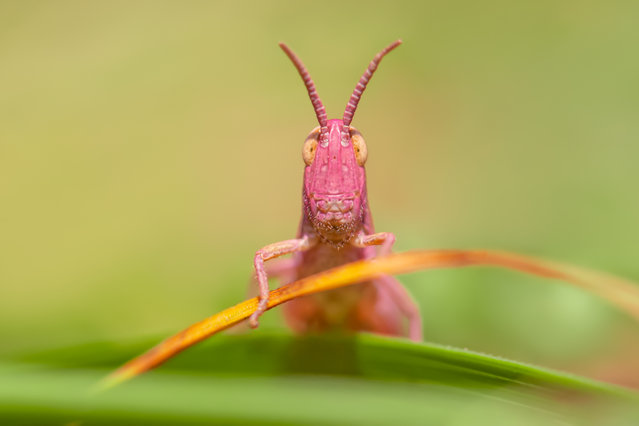
A rare grasshopper shines bright against its leafy background in North Holland, Netherlands in the first decade of October 2024. The insects are usually brown or green but turn pink due to a genetic mutation. (Photo by Roeselien Raimond/Media Drum Images)

A rare grasshopper shines bright against its leafy background in North Holland, Netherlands in the first decade of October 2024. The insects are usually brown or green but turn pink due to a genetic mutation. (Photo by Roeselien Raimond/Media Drum Images)
Details
09 Feb 2025 04:34:00
A member of the Diablada  Urus group attends  the carnival parade in Oruro, Bolivia February 25, 2017. (Photo by David Mercado/Reuters)

A member of the Diablada Urus group attends the carnival parade in Oruro, Bolivia February 25, 2017. (Photo by David Mercado/Reuters)
Details
28 Feb 2017 00:04:00
Staff of a boat restaurant on the Taedong River line up at the entrance as they wait to greet customers Sunday, June 18, 2017, in Pyongyang, North Korea. The boat is berthed along the river, which is the fifth longest river on the Korean Peninsula and runs through the country's capital, Pyongyang. (Photo by Wong Maye-E/AP Photo)

Staff of a boat restaurant on the Taedong River line up at the entrance as they wait to greet customers Sunday, June 18, 2017, in Pyongyang, North Korea. The boat is berthed along the river, which is the fifth longest river on the Korean Peninsula and runs through the country's capital, Pyongyang. (Photo by Wong Maye-E/AP Photo)
Details
29 Jun 2017 07:59:00
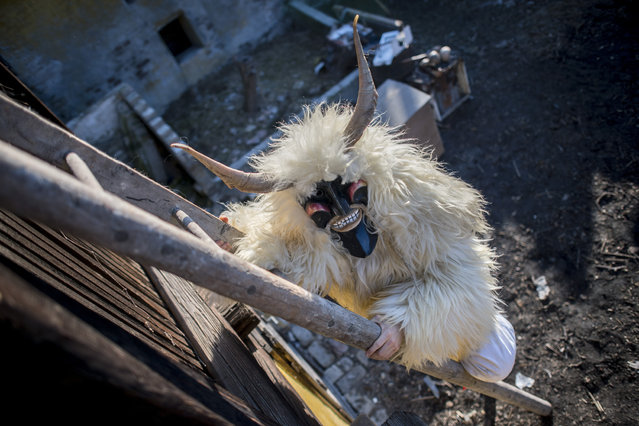
A man wears a busho mask and a costume made of sheep pelt while climbing up a ladder outside a barn in Mohacs, Hungary, 20 February 2020, on the first day of carnival. The traditional Busho carnival, which marks the end of winter, dates back to the 16th century. According to local legend, members of an ethnic South Slavic group living in Mohacs at the time dressed up in similar costumes and wore wooden masks to scare away Ottoman invaders, who mistook them for demons. (Photo by Tamas Soki/EPA/EFE)


A man wears a busho mask and a costume made of sheep pelt while climbing up a ladder outside a barn in Mohacs, Hungary, 20 February 2020, on the first day of carnival. The traditional Busho carnival, which marks the end of winter, dates back to the 16th century. According to local legend, members of an ethnic South Slavic group living in Mohacs at the time dressed up in similar costumes and wore wooden masks to scare away Ottoman invaders, who mistook them for demons. (Photo by Tamas Soki/EPA/EFE)

Details
23 Feb 2020 00:07:00