Loading...
Done
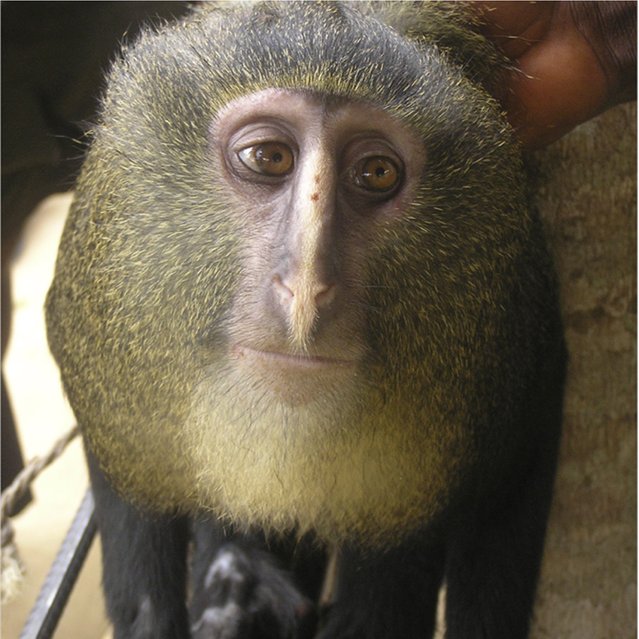
A new species of monkey found in the Democratic Republic of the Congo and identified as Lesula (Cercopithecus lomamiensis) is seen in this undated photograph from an article published September 12, 2012 in the science journal PLOS One. (Photo by Hart J. A., Detwiler K. M., Gilbert C. C./Reuters)

A new species of monkey found in the Democratic Republic of the Congo and identified as Lesula (Cercopithecus lomamiensis) is seen in this undated photograph from an article published September 12, 2012 in the science journal PLOS One. The monkey was first seen in 2007 by researchers John and Terese Hart of the Peabody Museum of Natural History at Yale Research Project. The finding of C. lomamiensis represents only the second new species of African monkey to be discovered in the past 28 years, according to the research article. (Photo by Hart J. A., Detwiler K. M., Gilbert C. C./Reuters)
Details
27 Sep 2012 08:17:00
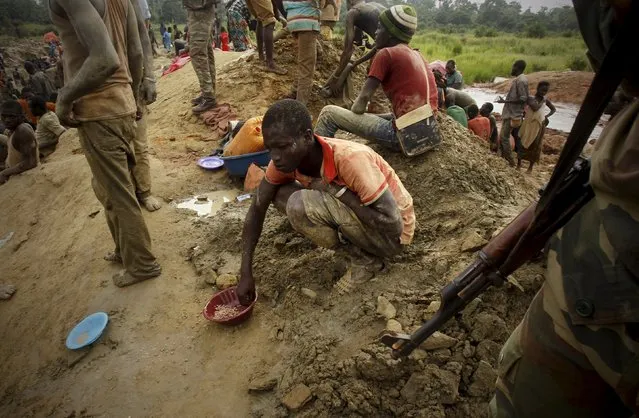
A gold prospector sits and eats close to a soldier at a gold mine near the village of Gamina, in western Ivory Coast, March 18, 2015. (Photo by Luc Gnago/Reuters)

Nestled among the cocoa plantations of western Ivory Coast is a gold mine that does not feature on any official maps. It is not run by an industrial mining company, nor does it pay taxes to the central government. The unlicensed mine is a key part of a lucrative business empire headed by the deputy commander of the West African nation's elite Republican Guard, United Nations investigators allege. Here: A gold prospector sits and eats close to a soldier at a gold mine near the village of Gamina, in western Ivory Coast, March 18, 2015. (Photo by Luc Gnago/Reuters)
Details
08 May 2015 13:54:00
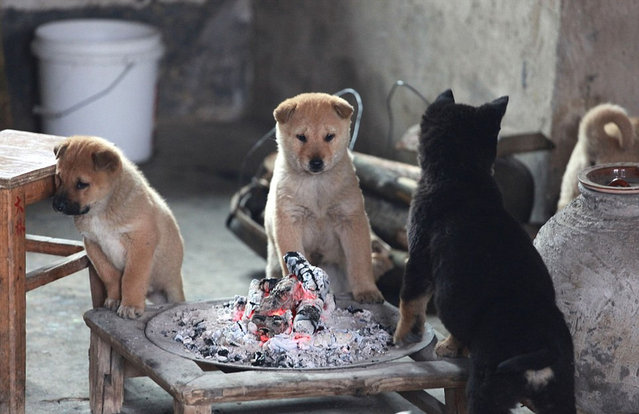
Puppies Around Fire Pit For Warmth

Despite their thick fur, this group of dogs and puppies in China feel the cold. Luckily, in the winter, they're allowed to huddle round a staff canteen stove in their home in Jiulongjiang Forest Park, Rucheng County.
Details
06 Mar 2014 13:39:00
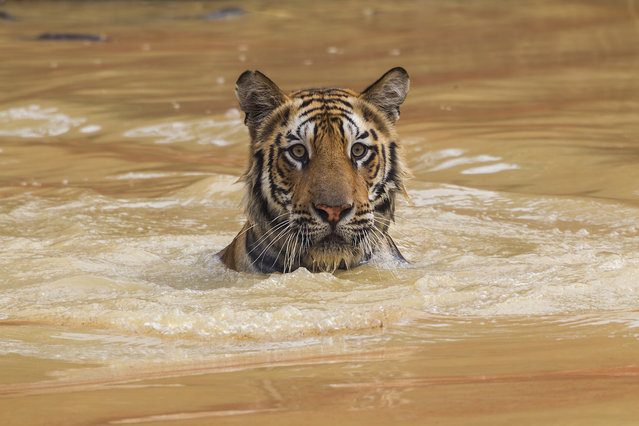
A 14-month-old cub, cooling off in a pond, is riveted by a deer that appeared near the shore. Tigers are powerful swimmers; they can easily cross rivers four to five miles wide and have been known to swim distances of up to 18 miles. (Photo by Steve Winter/National Geographic)

National Geographic photographer Steve Winter has spent most of his adult life shooting wild cats. Photo: A 14-month-old cub, cooling off in a pond, is riveted by a deer that appeared near the shore. Tigers are powerful swimmers; they can easily cross rivers four to five miles wide and have been known to swim distances of up to 18 miles. (Photo by Steve Winter/National Geographic)
Details
08 Apr 2014 11:52:00
Inside My Dreams By Achraf Baznani

Moroccan photographer and filmmaker Achraf Baznani carries on the traditions of Surrealism with his wild, imaginative, and wholly impractical imagery. Among his inventive scenarios, small human figures—often the artist himself—appear trapped within glass jars or the size of a camera lens; in other works, Baznani more or less dissects his body, as for example, in one, he cleanly removes his brain from his cranium, or in another, twists off his hand, much as if it were a light bulb. Imparted throughout such works are strong senses of humor and wonder, and as such, Baznani’s art offers a Surrealistic take on life experience in the digital age.
Details
03 Aug 2014 12:04:00
Bad Part of Town By Google Street View

Take a walk on the wild side around some of the most down right dangerous places in the world - and all without leaving your desk, courtesy of Google Street View. Since 2007, Google's amazing technology has given people the chance to visit the Eiffel Tower, peer out over San Francisco's Golden Gate Bridge or walk along a beach in the Bahamas. But as well as mapping the tourist-friendly hotspots, Google also ventured into places you really wouldn't want to find yourself. Here is a collection of some the most notorious areas captured by the infamous roaming camera cars from around the UK and the world.
Details
03 Oct 2013 11:05:00
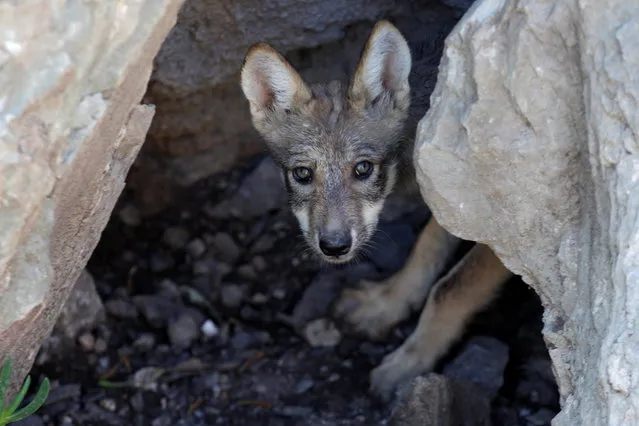
A newly born Mexican gray wolf cub, an endangered native species, is seen at its enclosure at the Museo del Desierto in Saltillo, Mexico, July 19, 2016. (Photo by Daniel Becerril/Reuters)

A newly born Mexican gray wolf cub, an endangered native species, is seen at its enclosure at the Museo del Desierto in Saltillo, Mexico, July 19, 2016. Though once held in high regard in Pre-Columbian Mexico, it is the most endangered gray wolf in North America, having been extirpated in the wild during the mid-1900s through a combination of hunting, trapping, poisoning and digging pups from dens. (Photo by Daniel Becerril/Reuters)
Details
21 Jul 2016 13:34:00
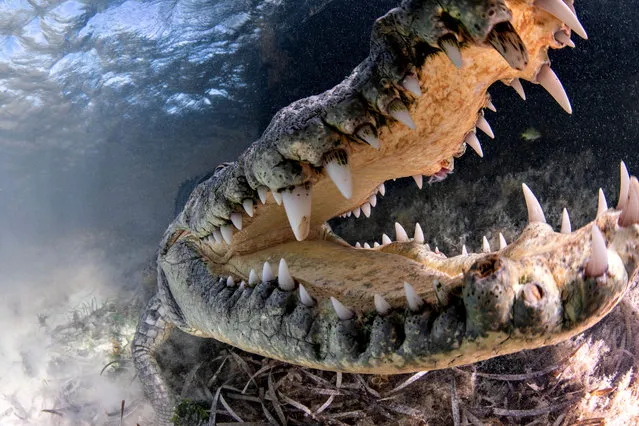
The trip to get to the reef takes eight hours by car and boat, and there is no luxury hotel at the other end. (Photo by Alex Suh/Caters News Agency)

A photographer with a passion for wild animals was able to get up close and personal with one of nature’s deadliest creatures. Alex Suh has traveled to Mexico’s Banco Chinchorro reef twice in the past three years to get into the waters and capture the crocodiles in their natural habitat after an invitation from Yucatan Dive Trek. (Photo by Alex Suh/Caters News Agency)
Details
24 Aug 2018 00:01:00